Sorry, you need to enable JavaScript to visit this website.
Skip to main content
The Importance of Regular Vet Check-ups for Cats
1 min read
Even if you keep a close eye on your cat's health it’s a good idea to take them to the vet for an annual wellness and cat health check-up. Looking after cats is fun but it's also full of responsibilities, including taking your pet to the vet. Sometimes it takes a professional eye to detect subtle changes in your pet’s health, especially as cats are very good at hiding their illnesses. Luckily, your vet will be very good at detective work. General cat health You already take your fluffy friend to the vet when they’re sick or injured but those appointments tend to focus mainly on one particular issue. ‘Check-up’ visits, on the other hand, work on the principle of ‘prevention is better than cure’ and they’re important to keep your cat healthy and prevent certain diseases. Your vet will want to check your cat over thoroughly at least once a year and more frequently as they get older or if they have special medical needs. This appointment will take an all-inclusive approach, making sure your cat is examined from their whiskers to the tip of their tail. Another advantage of these annual check-ups is to get your cat used to visiting the vet surgery when they’re well and this can help them form a bond with your vet. If they only visit when they’re hurt or ill they can become nervous, associating their trips with bad times or stressful experiences. It’s a good idea to pop into the vet practice every so often, even if it’s just for a flea check. The receptionists and vet nurses will always welcome a stroke as you pass by, and it will create a positive memory with no prodding and poking involved!
The History of Cats
1 min read
If you have a cat in your life, you may be wondering about their origins and where your domesticated kitty came from. Find out all you need to know about the history of cats in this article. Our cats have been members of our family for as long as we can remember. They’re amazing snuggle companions and their funny mannerisms constantly amuse us, but how much do we actually know about the history of cats? For many of us, the origins of our felines are a complete mystery and very little is known about the reasoning behind certain behaviours. To help you better understand the miniature tiger on your lap, we’ve put together this article that tells you everything from the origin of cats to why they possess certain instincts.
The Cat Health Checklist
1 min read
As a loving pet owner, you’re bound to want the absolute best for your cat, and this all starts with making sure that they are as happy and healthy as possible. Health checklist Every month you should “play vet” and conduct a careful check-up on your cat to make sure that all is well. By following our checklist, you have the opportunity to spot any unusual signs early on, meaning that you can seek treatment as soon as possible, if necessary. Not only does this help you keep your cat in tip-top condition, but also allows you to spend more hands-on quality time with your feline friend.
The Benefits of a Puppy Playpen
1 min read
New puppies are full of mischievous energy, and their endless curiosity means they get their little noses into everything. That’s how they learn but it’s also how they get into trouble! An expandable dog pen can be a great help. You get peace of mind knowing exactly where your furry friend is, and what they’re playing with, and they have lots of room to play safely. A dog playpen will also help your puppy feel more secure in their new surroundings and give them an area they can proudly call their own! Follow our helpful tips for everything that you’ll need to give your playful puppy their perfect dog pen. The basics of playpens You should be able to find a puppy playpen at most good pet shops or you can buy them online. Look for an expandable pen with high enough sides to stop your adventurous pup from escaping! Most come in small, medium or large, so choose the right one for your puppy’s breed or type.
10 ways to encourage cat exercise
1 min read
Find out how to encourage your cat to be active, even if they live indoors. Getting your beautiful cat to exercise can sometimes be a challenge. As any cat lover knows, cats have strong and independent personalities; they need alone time and are unlikely to do anything they don’t want to do. This can be especially worrying for a house cat, who has no outdoor exercise to help keep her healthy, or a kitten who has to be kept in the house for the first six months of their life. So how do you make your cat exercise? Enticement is the way forward: cats need to be engaged with their task or they can rapidly lose interest. Luckily, they all have a few personality traits that you can tickle to ensure they are having the time of their lives and are being active in the process. 1. Laser pointers Different cats have different preferences for the toys they like. Some are in love with the fishing pole, where you dangle a string above their heads and they bat at it. Others adore paper bags and boxes. But if your cat seems disinclined to play, then it is best to appeal to her feral nature-pouncing. Cats love to chase, especially items that move quickly. The laser point is an absolute favourite: point a laser at the wall and watch your cat try and catch that elusive red dot. 2. Battery-operated toys These are another great way to make your cat exercise, and are ideal solutions for busy owners. Just turn on a battery-operated toy, available from most pet shops or online, and your cat will be entertained for hours! 3. Outdoors While it may seem unusual, house cats can be encouraged to go outdoors and be walked. It is, of course, necessary to see if your cat is happy with this-don't do anything that might stress or upset her. If you plan on this form of cat exercise, try and introduce it when they are kittens (after the first six months!) when they seem more inclined to try new things. Older cats may be set in their ways and may take more convincing. Remember to use a leash when walking them, and make sure it fits comfortably.
Health
Strange Behaviour in Older Cats
1 min read
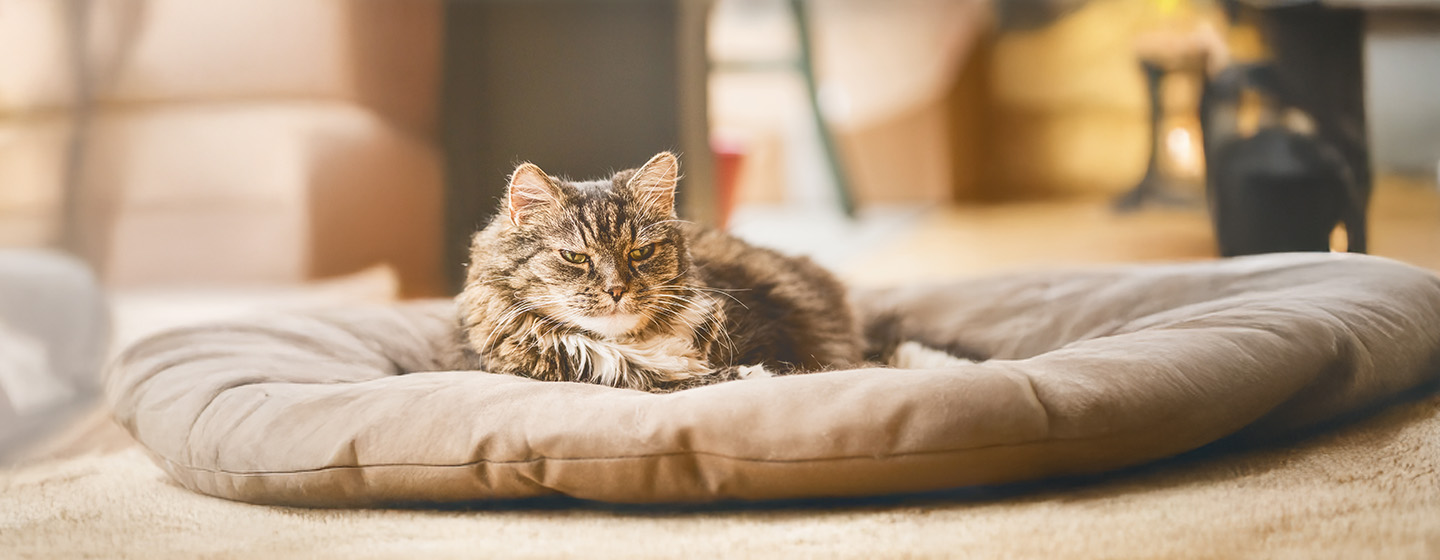
As your cat enters their senior years, you’re likely to notice some changes in their health, appearance, and behaviour. Ageing is, of course, a completely normal process. Just like us, senior cats may have less energy, be interested in different things, and experience age-related conditions such as arthritis. These changes are to be expected, and with some adjustments to their care (as well as regular check-ups with the vet) they should enjoy their senior years to the full. However, some senior cats may also undergo changes in their behaviour. Perhaps they don’t like playing anymore, they avoid being touched, or they even behave aggressively. Others may seem unusually confused, particularly if there are unexpected environmental changes. But how much of this is a normal part of ageing, and when is it time to see a vet? Read on to find out more about caring for old cats and how to spot any behaviour changes. Forgetting litterbox training If your usually fastidious cat begins to urinate in places other than their litterbox, it may be down to age-related changes. Elderly cats may seem to forget their years of training; this is called ‘cognitive dysfunction’, although many people think of this as a form of ‘cat dementia’. When this happens, your cat may be confused about where the litterbox is, or forget where they are supposed to urinate or defecate. There is very little you can do about this, apart from making it as easy as possible for your cat to find their litterbox. For example, if they always urinate in the same place, try moving the litterbox there. If they still don’t go to their litterbox, patience and understanding are key. However, urinating or defecating in inappropriate places can also be a sign of several other conditions, such as feline urinary tract infections, constipation, or even eyesight loss. For this reason, you should always take your cat to the vet for a check-up before assuming their new behaviour is down to age-related confusion.

Stomatitis In Cats
1 min read
Being a cat owner can be difficult when it comes to health issues – cats are notoriously secretive and can try to hide when they are in pain. This means you need to be on the lookout for symptoms that something is wrong. And dental issues can be a common problem. In this article, we’ll look at a condition called stomatitis and how to spot the signs of a dental health issue. What is stomatitis in cats? Stomatitis in cats is a medical condition which causes severe inflammation to the mouth and gums of felines. This inflammation will look reddish in colour and cause cats a significant amount of pain. In some extreme cases, it can even cause bleeding in the mouth. What causes stomatitis in cats? Multiple factors are suspected to cause stomatitis in cats and the causes have still not been definitively identified. Many believe the main cause of feline stomatitis is viral infections as many cats with stomatitis have a concurrent viral infection, particularly with a virus called 'calicivirus'. Plaque and calculus are also thought to be important contributory factors.
Unity2-D01S08A_FLOOR_DOG_DOG_ACAM-08415_FINA
Stimulating Toys for Older Dogs
5 mins read
As your dog ages their requirements change, whether that's thinking about a senior dog dietor adjusting schedules to fit around your older dog. This includes what toys they play with or activities they participate in. Your ageing friend may no longer be able to run and grab a Frisbee, or leap around playing fetch for hours on end, but that doesn’t mean that their urge to play has gone! Also consider that when dogs age, their sight and hearing may deteriorate, so when it comes to toys for older dogs it’s usually a good idea to get bright ones, which can also be scented, noisy or flavoured. Keep reading to find out the best stimulating dog toys for your older pooch. Toys for older dogs When your dog becomes older you may think that they’ll no longer want to play, or might not have the energy to play with you.
Sensitive Digestion in Dogs
1 min read
Does your dog have the healthiest digestive system possible? Are they eating happily, thriving, growing and making the most of life? To keep your dog healthy, it’s crucial the digestive system is working at its best. For some dogs, this may mean choosing a food that is specially formulated to support sensitive digestion.
Running With Your Dog
1 min read
Making a running partner out of your pet can be great. If you learn how to train your dog correctly, you’ll be improving your health, happiness, and your special bond… for both of you! Build up slowly to your ideal run. Just like humans, dogs need to acclimatise to levels of exercise. You could also research your dog’s breed to discover exactly what kind of running they might enjoy: you never know, they might just inspire you to achieve a marathon with time! Why run with your dog? There’s a whole host of research that tells us how great running can be for your health. It prevents helps obesity, helps you to get fit, and can increase your stamina. It’s even been shown to lift your mood. And it doesn’t require an expensive gym membership either. What’s good for you is also great for your dog: it’ll also help them to lose weight if their body condition isn’t ideal, build muscle, and keep healthy. Keeping your dog fit and healthy is the best way to avoid expensive vet bills in the future. It’s also fantastic for your dog’s mood: most dogs are built to run (albeit some breeds more than others). They all enjoy the sights, sounds and smells of the outdoors, and time spent pounding the pavement with you will always be time well spent in your pet’s mind. If you’ve noticed destructive behaviours creeping in, jogging with your dog might be a solution. Active breeds that are kept indoors for long periods of time can become bored, which may result in a bad behaviour. Keeping their mind and body active will help to get rid of that pent-up energy, and it’ll also build a great bond between the pair of you.

Pagination

  • First page
  • Previous page
  • …
  • Page 5
  • Page 6
  • Page 7
  • Page 8
  • Page 9
  • Page 10
  • Page 11
  • Page 12
  • Page 13
  • …
  • Next page
  • Last page
Purina Pet Club logo

Join Purina Pet Club for expert tips, helpful advice, exclusive offers and rewards.

Join the Club
Nourishing pets Purina pets grid card
Purina Pet Club logo

Join Purina Pet Club for expert tips, helpful advice, exclusive offers and rewards.

Join the Club
Nourishing pets Purina pets grid card
  • Cat
    • Care & Advice
    • Find a Pet
    • Food
    • Our Brands
  • Dog
    • Care & Advice
    • Find a Pet
    • Food
    • Our Brands
  • About Us
    • Our Mission
    • Our History
    • Our Purina Promise
    • Purina In The Community
  • Other
    • Join Purina Pet Club
    • Breed Selector
    • Contact Us
  • Cat
    • Care & Advice
    • Find a Pet
    • Food
    • Our Brands
  • Dog
    • Care & Advice
    • Find a Pet
    • Food
    • Our Brands
  • About Us
    • Our Mission
    • Our History
    • Our Purina Promise
    • Purina In The Community
  • Other
    • Join Purina Pet Club
    • Breed Selector
    • Contact Us
  • Cat
    • Care & Advice
    • Find a Pet
    • Food
    • Our Brands
  • Dog
    • Care & Advice
    • Find a Pet
    • Food
    • Our Brands
  • About Us
    • Our Mission
    • Our History
    • Our Purina Promise
    • Purina In The Community
  • Other
    • Join Purina Pet Club
    • Breed Selector
    • Contact Us
  • Cat
    • Care & Advice
    • Find a Pet
    • Food
    • Our Brands
  • Dog
    • Care & Advice
    • Find a Pet
    • Food
    • Our Brands
  • About Us
    • Our Mission
    • Our History
    • Our Purina Promise
    • Purina In The Community
  • Other
    • Join Purina Pet Club
    • Breed Selector
    • Contact Us
© 2026 Purina. All Rights Reserved.

©Reg. Trademark of Nestlé S.A.

Terms & Conditions
Privacy Policy
Cookies
© 2026 Purina. All Rights Reserved.

©Reg. Trademark of Nestlé S.A.

Terms & Conditions
Privacy Policy
Cookies
© 2026 Purina. All Rights Reserved.