Sorry, you need to enable JavaScript to visit this website.
Skip to main content
Why do dogs have whiskers?
1 min read
Some think that dogs whiskers have no purpose and they have them snipped off at the groomers, but whiskers are actually essential in helping your dog navigate the world! Keep reading to find out more. Many people don’t realise that the coarse, long whiskers on a dog’s face actually serve an important purpose. In fact, some dog owners try and snip off dog whiskers because they think they look untidy. Also known as vibrissae, these dog whiskers have several uses and can help your dog navigate the world around them. They help your dog in many aspects of their life and even can guide them in the dark and help them figure out the size of different objects! Keep reading to find out why dogs have whiskers and why you should never have them snipped off, no matter how untidy your pooch appears. What are dog whiskers? Whiskers or vibrissae are long, coarse hairs that usually occur around a dog’s muzzle, jaw and above their eyes. They’re deeply embedded into the skin, and the follicles at the base of these whiskers are packed full of nerves that send sensory messages to the dog’s brain.
Why Do Dogs Chase Their Tails?
1 min read
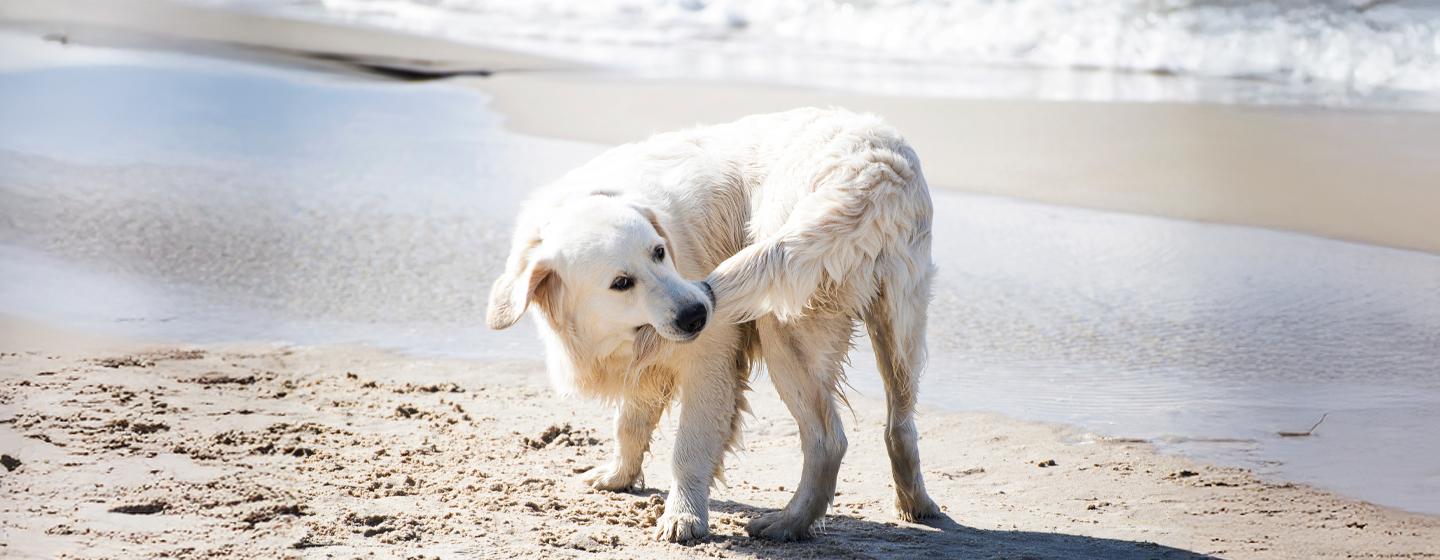
The image of a dog chasing their tail is one that’s been depicted time and time again, but have you ever stopped to wonder why they do it? Find out why do dogs chase their tails with our guide. If you’re a dog owner, you’ve probably witnessed your pup chasing their tail on occasion. Sometimes it may be just the odd, quick chase and other times your dog may resemble a tornado, whirling around and around in hot pursuit of their tail. When it’s only occasional and doesn’t seem to be doing your dog any harm, it’s usually harmless behaviour. However, if the tail chasing appears to be obsessive then there could be a health issue. For those that are wondering why do dogs chase their tails, we’ve put together this guide to tell you the most common reasons and when you should seek help from your vet. Why do dogs chase their tails? There are numerous reasons why your dog may chase their tail, from boredom to something more serious like an injury. It’s always best to consult a vet first to rule out anything health-wise, but six of the most common reasons why they exhibit this behaviour are as follows: 1. Boredom Sometimes dogs chase their tail simply because of boredom. This may be because they’re left alone most of the day or aren’t getting enough mental or physical stimulation. Tail chasing offers a way to entertain themselves – at least for a little while – and also allows them to expel some of that built-up energy. Luckily, if the chasing is due to boredom, it’s easy to fix. Increase their daily activity by adding more regular walks to their routine and bring in some physical and mental games. Every dog is powerless to resist a game of fetch and brain puzzles are an excellent way to engage their mind!
Why Do Cats Like Boxes?
1 min read
Owners are constantly baffled when they buy their cat a cool new toy and they're much more interested in the box it came in! But why do cats love boxes so much? Keep reading to find out why. It’s a widely known fact that cats love boxes. To them, no toy in the world, no matter how expensive or fancy it may be, compares to a simple cardboard box. It’s a phenomenon that baffles most cat owners, especially when they’ve just purchased a great new bed or cool toy, and their cat seems to prefer the packaging it came in. In this article, we explore why cats like boxes and tell you all about why they make the perfect snoozing and hunting ground for your cat. Why do cats like boxes? There are lots of reasons that cats love boxes, but the main one is because they’re confined, enclosed spaces. Cats are ambush predators and finding confined places where they can hide, hunt prey and feel safe and warm is an instinctive behaviour. Snug cardboard boxes fit the bill perfectly. Boxes are safe Cats get comfort and security from enclosed spaces, which is why they love spending time in cardboard boxes. Cats use boxes as hiding places where predators can’t sneak up on them from the side or behind. If your cat is in a box, any “intruders” like prey, humans or other pets have to come directly into their field of vision, meaning nothing can surprise them. And cats like boxes because they help to reduce stress and offer a safe zone where your cat can observe and not be seen. This is ideal for cats as their reaction to stressful situations is often to run and hide. Cats don’t have in-built conflict resolution strategies, so they much prefer to hide from their problems. The safety of the private, enclosed space is another possible answer to why do cats like boxes.
Why Do Cats Knead?
1 min read
Cat kneading, also known as 'making biscuits' is an adorable behaviour, usually seen when they're having a good fuss! You may be wondering why they do this and want to discover the reasoning behind the behaviour, which is why we've put together this handy guide to tell you everything you need to know. Cat kneading is a common cat behaviour, often displayed as the rhythmic pushing of their paws in and out at alternating times. Many people think that it looks like they’re kneading dough, which is why it’s also adorably known as ‘making biscuits’. Cats love to do this on soft surfaces like cosy blankets, squishy cushions, or most commonly your lap when they’re having a good fuss! If you have a cat that does this, you may be wondering why do cats knead? Which is why we’ve put together this article so you can find out the truth behind your feline friend’s baking habits. What is cat kneading? Most cats will knead, but not all will do it in the same way. Where the motion of their paws usually remains the same, the accompanying actions may differ. Some will purr really loudly, while others may do it quietly, others may do it with just their front paws, whereas some will put their all into it and use all four. Most cats will at least display the classic making biscuits action. Additionally, whilst cats knead it’s not unusual for them to appear to be in a trance-like state and look almost glazed over. This just means that they’re completely relaxed.
Why Do Cats Hiss?
1 min read
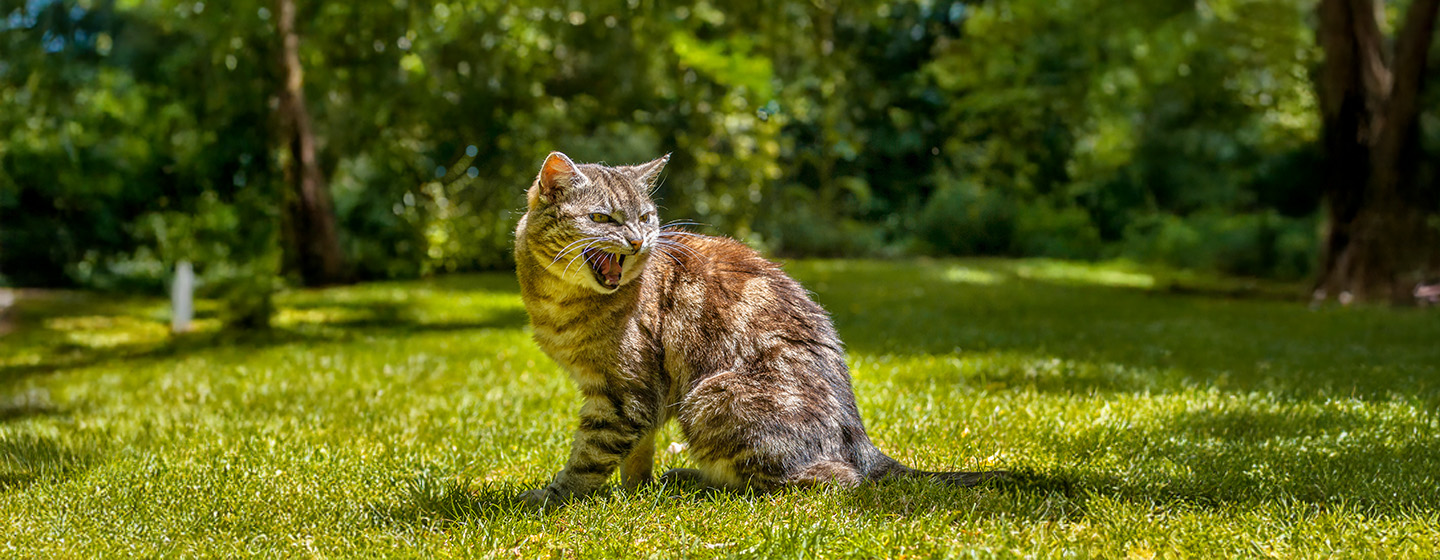
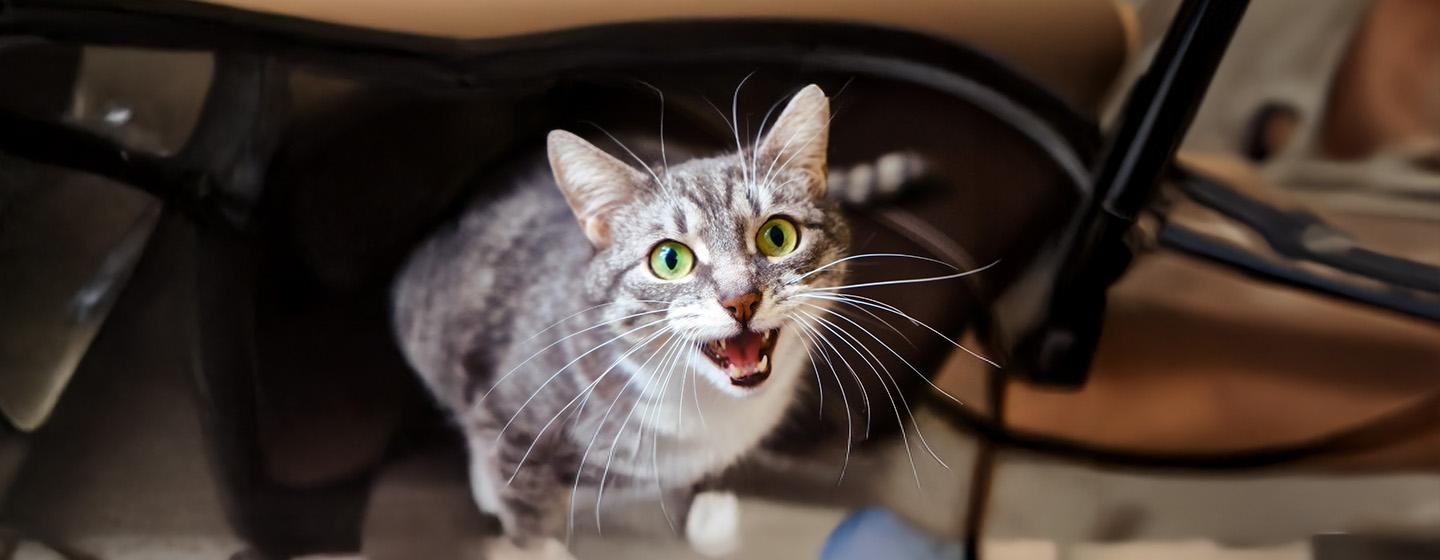
Cat hissing is a common behaviour which sort of resembles the sound a snake makes. We’ve come to associate this with them being extremely annoyed, but did you know there are numerous reasons why cats hiss? We’ve all seen our cats hiss, whether it’s at an intruder in the garden or when we’ve tried to pick them up when they’re not in the mood. As humans, we’ve learned to identify this as a sign that our cats are truly ticked off and not in the mood to be messed with, but there are other reasons why your kitty may be hissing. If you have a cat who keeps making these snake-like noises, you may be wondering why do cats hiss and what can you do about it? We’ve put together this guide to help you discover all the secrets behind cat hissing. How do cats hiss? When a cat feels threatened, they’ll release a burst of air through their mouth, and it’s this burst of air that makes a hissing sound. This sound will usually be paired with other cat body language signs such as bared teeth, flattened ears, an arched back and their fur will also stand on end (also known as piloerection). Why do cats hiss? When considering why cats hiss, it’s important to understand that hissing is a completely normal behaviour which helps your cat express themselves. Where humans can use speech to communicate, cats must rely on their body language to tell both us and other animals how they’re feeling. A few of the most common reasons behind cat hissing are as follows: 1. Warning shots First and foremost, cat hissing is usually a warning to another person or animal. It’s their way of telling them to back off or they’ll be forced to attack – cats characteristically want to avoid confrontation at all costs, so think of this as a warning shot. You may see them do this when there’s another cat on your cat’s turf, if a mother cat has kittens to protect or if the vet’s trying to handle them. According to Pets MD, this type of cat hissing is most common with un-neutered cats when they’re searching for a potential mate.
Why Do Cats Have Whiskers?
1 min read
Whiskers do a lot more than making your kitty look cute, they also serve many important purposes! From working as a built-in measuring tape to helping with their close-up vision, your cat's whiskers are truly amazing! Your cat’s whiskers are an iconic part of their anatomy. Not only do they look incredibly cute and tickle us during the night, but they also have an important purpose. Serving as the ultimate sensory tool, their whiskers are nothing like hair (although they might look like it) and are actually highly sensitive. You may be wondering why do cats have whiskers and want to find out more about your fuzzy friend’s built-in radar system. Keep reading to discover everything about whiskers, from how they work to how they help cats navigate in the dark! Why do cats have whiskers? Your cat’s whiskers are truly multifunctional, but their most important purpose is as a sensory tool. The official title for them is vibrissae, which comes from Latin ‘vibrio’ and means ‘to vibrate’. The hair follicle of your cat’s whiskers is loaded with nerves, and the whisker tip features a sensory organ known as a proprioceptor. Together, this makes them incredibly sensitive to vibrations and changes in their environment, so cats use them like an additional sense to understand the world. Additionally, whiskers are also much more deeply embedded in their body than normal fur hair, as they’re connected to the muscular and nervous system. This enables whiskers to send sensory messages to the brain about your cat’s surroundings, which is what makes them such savvy explorers! We think cat’s whiskers are, well, the cat’s whiskers. Which is why we’ve put together our top 10 facts to tell you everything you need to know about your clever cat’s face fuzz:
Why Do Cats Hate Water?
1 min read
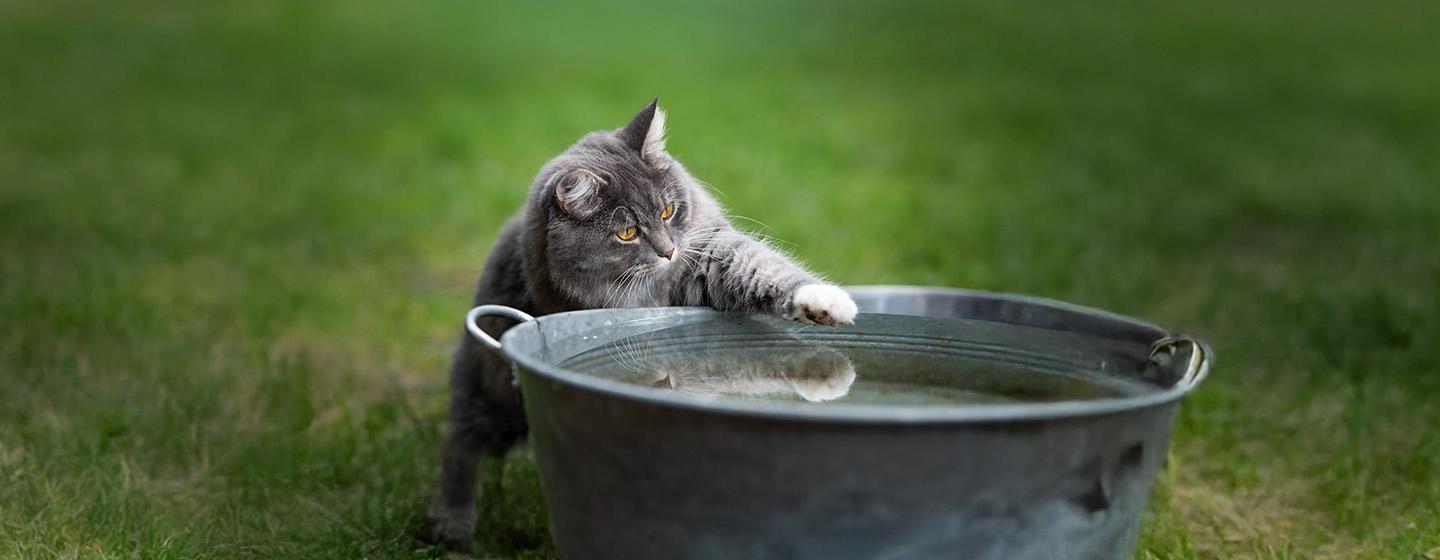
Cats and water don’t mix, or at least that’s how the old saying goes. But what is it about this banal liquid that makes them lose their mind as captured by so many “cats vs bathtubs” videos on the Internet? And do all cats hate water? Find out here. Our feline friends have mysterious ways that keep us guessing about plenty of things, but one of the most enduring conundrums has to do with a pretty basic element: water. Why do cats hate water? And how come they love the water dripping from a tap, but will fight teeth and claws if they come close to a bathtub full of water? We’ll probably never know for sure, but experts have a few ideas that can help baffled cat owners understand their pet’s behaviour a bit better. Why do cats hate water? Cats are fine with water to drink, but if it gets near their fur water can instantly turn a happy cat into a miniature lion. Here are some of the causes that help explain why.
Why Do Cats Eat Grass?
1 min read
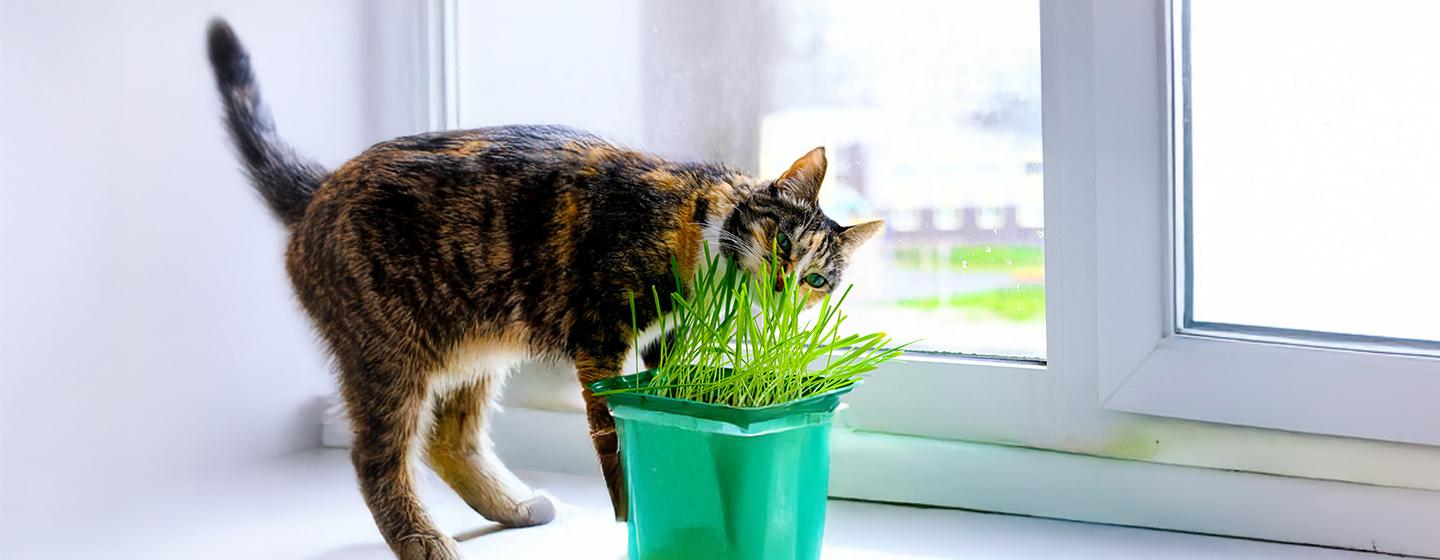
If you’re a cat owner, you may have noticed that they can be quite partial to a munch of grass sometimes. This may seem unusual as cats are obligate carnivores, but grass can actually have numerous benefits for them. Find out why do cats eat grass with Purina. All cat owners know that their kitty enjoys the odd nibble of grass – which is too often followed by their cat vomiting up their breakfast. Because of this reaction, it’s common for pet parents to think that grass is actually toxic to their felines and many will reprimand them for munching on the green stuff. It may surprise you to learn that when cats eat grass it can actually have numerous health benefits for them, including everything from relieving constipation and acting as natural stress relief. Find out all the reasons why cats eat grass with Purina. Why does my cat eat grass? The compulsion for cats eating grass is certainly a strange one, especially since they’re obligate carnivores and don’t require vegetation to survive. As it stands, researchers haven’t agreed on one definitive reason why your cat enjoys a munch of your lawn, but there are many theories why they may do this. The top three ones are as follows:
What You Need to Know about Kitten Vaccinations
1 min read
As a responsible cat owner, it’s important to keep up-to-date with your kitten’s vaccinations to protect them from a range of diseases. Read about when to vaccinate your cat or kitten and what to expect here. Cat vaccinations are vital to help protect them from common illnesses and to help keep them healthy. Additionally, kitten vaccinations are a condition of boarding for most reputable catteries and they are completely necessary if you want to travel abroad with your cat or kitten. Cat vaccines can be divided into two different types: core and non-core. Core vaccines are recommended for all kittens, and non-core vaccines are given depending on the risk to an individual cat. Discuss with your vet which vaccines are best suited to your cat. How kitten vaccinations work? The aim of the kitten vaccine is to immunise your cat against certain illnesses and diseases. The vaccines will help your cat’s immune system to recognise certain viruses and get to action quickly to fight the infection, before the disease can take hold. What are the core vaccinations for cats? Core vaccinations are those recommended for all cats. They’re designed to keep your pet safe and free from some very serious conditions, so it’s very important you get your cat vaccinated against these conditions as soon as possible. By vaccinating against these core diseases, you can also help to protect other cats living in your environment by helping to establish ‘herd immunity’. The more cats that are vaccinated in any one place, the harder it is for viruses to become established in a population. If too many cats are not vaccinated then those viruses become more of a risk to all the cats living there. Kitten vaccinations include: Feline Panleukopenia Virus (Feline Infectious Enteritis or Feline Parvovirus) This is a highly contagious virus and can often be fatal, particularly for young kittens. The most common symptoms are vomiting, diarrhoea, fever, dehydration (even if they keep drinking), loss of appetite and, less commonly, nervous signs associated with brain damage. Feline Calicivirus This virus causes cat flu (sneezing, nasal discharge, mouth ulcers and excess salivation/dribbling). Affected cats may be reluctant to eat and have a temperature. Feline Herpesvirus This also causes cat flu, fever, sneezing and nasal discharge as well as ulcers on the eye. Chronic infection can result in nasal diseases.

What to Do If Your Dog’s Stung by a Bee or a Wasp
1 min read
Bees and wasps are among the things that our dogs love to chase most. During the warmer months, we often find them in hot pursuit of these fuzzy insects, but sometimes if they catch them, they can be met with a nasty sting! Find out what to do if your dog’s been stung by a wasp or a bee with our guide. Dogs are fascinated by bees and wasps. Their lazy buzzing is irresistible to dogs who enjoy chasing games. However, these little insects pack a surprisingly powerful sting when caught. In most cases if a dog is stung by a bee or wasp, they will experience mild local irritation which should subside within a few hours. However, it can be more serious if dogs receive multiple stings, or if they occur inside the mouth, nose or other sensitive tissues. At Purina, we’ve put together this useful guide to tell you what to do if your dog’s stung by a wasp or bee, the possible symptoms and when to seek help from your vet.

Pagination

  • First page
  • Previous page
  • …
  • Page 2
  • Page 3
  • Page 4
  • Page 5
  • Page 6
  • Page 7
  • Page 8
  • Page 9
  • Page 10
  • …
  • Next page
  • Last page
Purina Pet Club logo

Join Purina Pet Club for expert tips, helpful advice, exclusive offers and rewards.

Join the Club
Nourishing pets Purina pets grid card
Purina Pet Club logo

Join Purina Pet Club for expert tips, helpful advice, exclusive offers and rewards.

Join the Club
Nourishing pets Purina pets grid card
  • Cat
    • Care & Advice
    • Find a Pet
    • Food
    • Our Brands
  • Dog
    • Care & Advice
    • Find a Pet
    • Food
    • Our Brands
  • About Us
    • Our Mission
    • Our History
    • Our Purina Promise
    • Purina In The Community
  • Other
    • Join Purina Pet Club
    • Breed Selector
    • Contact Us
  • Cat
    • Care & Advice
    • Find a Pet
    • Food
    • Our Brands
  • Dog
    • Care & Advice
    • Find a Pet
    • Food
    • Our Brands
  • About Us
    • Our Mission
    • Our History
    • Our Purina Promise
    • Purina In The Community
  • Other
    • Join Purina Pet Club
    • Breed Selector
    • Contact Us
  • Cat
    • Care & Advice
    • Find a Pet
    • Food
    • Our Brands
  • Dog
    • Care & Advice
    • Find a Pet
    • Food
    • Our Brands
  • About Us
    • Our Mission
    • Our History
    • Our Purina Promise
    • Purina In The Community
  • Other
    • Join Purina Pet Club
    • Breed Selector
    • Contact Us
  • Cat
    • Care & Advice
    • Find a Pet
    • Food
    • Our Brands
  • Dog
    • Care & Advice
    • Find a Pet
    • Food
    • Our Brands
  • About Us
    • Our Mission
    • Our History
    • Our Purina Promise
    • Purina In The Community
  • Other
    • Join Purina Pet Club
    • Breed Selector
    • Contact Us
© 2026 Purina. All Rights Reserved.

©Reg. Trademark of Nestlé S.A.

Terms & Conditions
Privacy Policy
Cookies
© 2026 Purina. All Rights Reserved.

©Reg. Trademark of Nestlé S.A.

Terms & Conditions
Privacy Policy
Cookies
© 2026 Purina. All Rights Reserved.