Sorry, you need to enable JavaScript to visit this website.
Skip to main content
How to support your cat’s digestion
1 min read
Good digestion is one of the keys to excellent health. By digesting and absorbing the goodness from food, your cat can take in all the nutrients needed to stay in top condition.
Health
How to Stop Your Dog Begging
1 min read
Dog begging is a pleading gaze, big doe eyes, or a cute little whine. If your dog behaves like this every time you sit down to have a meal, you know your dog is begging for food or a delicious treat! Dogs are brilliant at devising new and interesting ways to get exactly what they want from their owners at mealtimes: more food. However, this can be difficult for you as an owner, especially if it happens every time you want to eat. Fortunately, dog begging can be prevented using a few simple steps. Causes of dog begging If your dog or puppy looks uncharacteristically unhappy or hungry when they beg then you won’t be alone. Dogs perfect this method of asking because it is so effective. Playing on your caring nature, they use their best acting skills in the hope of being treated to scraps from the plate. This clever technique means that your dog can often get more food without exerting much effort. The first thing to realise is that your dog’s begging is a learned behaviour from when they are a puppy, which can be trained out of them. Your begging dog has probably realised at some point that certain behaviours yield certain rewards. Whether it’s pawing, whining or barking, if you reward your puppy begging with what they expect, they will only continue to behave in this way. Puppies don’t just beg for food, you may also witness your pet begging for affection, playtime or walks. You probably didn’t realise that you were teaching your puppy that begging was effective, but by giving in to their demands, you may have inadvertently promoted their behaviour, which will carry on with them through to adulthood.
Behaviour & Training
How to Stop Your Cat Biting
1 min read
It's not pleasant if you have a cat that always seems to bite you. Learn more about the reasons why cats bite and the best ways to stop it with our guide and tips. It’s not uncommon for cats to bite. There are many reasons why a cat might suddenly start biting, seemingly unprovoked. It’s important to understand that cat biting isn’t always done out of aggression. Cats are natural-born predators, and as such seemingly aggressive actions such as biting, pouncing and clawing make up a large part of their play. Allowing and encouraging this natural instinct is important for felines, but there is a fine line between engaging in stimulating play and allowing aggressive behaviour. Learn more about the reasons behind why cats bite in order to help to stop any unnecessary biting. Why do cats bite? There are many reasons why cats bite and it’s important to understand what your cat is trying to communicate by biting. They may be trying to send a message or want you to stop doing something. Figuring out why cats bite can be confusing as many owners complain that cats will bite unprovoked, and out of nowhere. One moment they can be enjoying a stroke, the next moment, the teeth are out! Most often, when cats bite they are trying to tell you that they aren’t enjoying the contact that they are currently receiving. For felines, there is a very fine line between enjoyable handling and irritating petting, so while an owner may think a bite has come from nowhere, for a cat the action is entirely justified. Sudden cat biting when petting One of the most common complaints from cat owners is the sudden change in attitude that can occur during petting: one second a cat may be loving the attention, the next they’re snapping at your fingers! It’s hard to tell when a cat has had enough of stroking, but learning to read your cat’s body language will help you to know when a bite might be coming. Your cat is sending a message in this situation: they’ve had enough. You decrease the likelihood that they will bite again by respecting this, and letting your cat do their own thing, rather than insisting on further affection. Cat biting when playing Cats often bite during play because they are expressing their natural hunting instinct.
Behaviour & Training
How to Stop Puppy Biting, Mouthing and Jumping up
1 min read
It’s only natural for your puppy to nip, mouth and jump up, but when left unchecked these can turn into serious problems that could have been avoided. It can sometimes come as a shock to find out that your adorable new puppy does some things you would rather they didn’t – like nip, jump up and chew things. This isn’t them being naughty, bad or aggressive in any way. In fact, these are all totally natural behaviours for a puppy. For example, your puppy is chewing as part of their exploratory games; they have to chew in order to learn. It’s up to teach them what is available for chewing and what isn’t. So far, your puppy has only had their littermates and their mum to play and interact with so you and your family need to take on the role of teachers and playmates. This helps with the bonding process between you and your puppy and it’s important that you use the opportunity to encourage good habits from the start. Without this, your puppy will continue all the behaviours that they have grown up thinking are acceptable, and even desirable, into adulthood. They’ll just be bigger, stronger and have adult teeth which mean your dog could accidentally cause an injury or frighten someone with their boisterous behaviour. So when your pup comes home with you, start to teach the behaviours you’d like to see straight away. Remember though, they are not being ‘naughty’; they are just behaving the natural way that they have learned in their early weeks of life. To teach your puppy to behave appropriately needs gentle, positive reinforcement. This means that you encourage your puppy to do the things you want them to do and reward them when they do so, usually with a tasty, healthy puppy treat, so it becomes their new default behaviour. Always reward the behaviours you’d like your puppy to repeat and if your puppy displays behaviours you’d rather not see, use our dog training guides to teach them an alternative. Never punish your puppy verbally or physically. You will just make them fearful of you, it will damage your relationship, and it will not have the effect you desire. Puppy biting Puppies in a litter play together and this play will involve lots of rough and tumble and play-biting. This is how puppies learn to interact with each other and also how to limit their biting. If they bite too hard or the play gets too rough, the other puppies or their mother will stop playing with them, and so in this way, they are learning a valuable lesson about appropriate interactions with others. Puppy teeth are sharp and their jaws are weak. This means that while bites hurt, they don’t cause injury and this helps them to learn bite-inhibition from their littermates and their mum. As a result, however the occasional painful nip might happen while you and your puppy are playing. When your puppy comes home with you and is living in a human family, they need to be taught that games with humans don’t include teeth! You don't want puppy biting to be a continued behaviour into adulthood but you do want to teach them appropriate ways for you to play and have fun together: • Don’t play rough games with your puppy or push them around with your hands, this is just encouraging them to use their teeth to grab at you. • All interactions with your hands should be gentle and soothing; stroking, ear rubs, back-scratching etc. Your puppy should learn that your hands are good things and not tug toys or dog chews. • For gentle games of tug, use toys and not your hands. Your puppy needs to chew (and when they are teething, this is ever more important) but you should be encouraging them that toys are for chewing, hands aren’t. • Give your puppy safe toys to chew on, stuffed Puppy Kongs are great and you can even make your own toys using treats inside old cardboard toilet rolls that will let them bite and chew safely. Even with your best intentions, your puppy will occasionally nip you. First of all, don’t over-react. Yes, it may have hurt but if you tell your puppy off, get annoyed or shout at them, you will make them scared of you, lead them to mistrust your hands, and it will break down the relationship you have. Instead, you have several options and the option(s) you choose will depend on your puppy’s character, breed/breed mix and a bit of trial and error: • If it was a one-off accident, ignore it and carry on playing. Everyone makes mistakes. • If it wasn’t a one-off or if it happens again immediately stop playing and turn away from your puppy for 10 seconds so they know that if they use their teeth, the fun stops. This way they learn that if they want to play with you, they can’t use teeth. • When you return to play, introduce a toy into the game that your puppy can bite instead. • If the play biting continues, remove yourself totally from the game for a minute so your puppy knows that if they bite, you really will stop the game and also take away your presence. • Don’t go for any longer than a minute, and then when you come back to your puppy, carry on as before. Dogs don’t hold grudges and neither should you. • Sometimes play-biting happens because the puppy is frustrated, has too much energy or conversely isn’t getting enough sleep. Make sure they are getting enough positive interactions, problem-solving brain games, lots of chances to succeed and lots of opportunities for good quality undisturbed sleep. • Make sure everyone in the household does the same thing. The puppy will just get confused if one person lets them bite and the others don’t. • Supervise all interactions between your puppy and children to ensure that play doesn’t get too boisterous and to prevent play-biting mistakes. • Puppies will teethe the same way as babies from around 12 weeks old up to about six months of age. Gradually their baby teeth will fall out to be replaced by their adult teeth. At this time they may have some discomfort from sore gums and teeth and may need to chew more than usual. Make sure you have safe toys that they can gnaw on, both to distract them from chewing furniture or hands, and to help relieve them from any discomfort they may be feeling. There are even some puppy teething toys you can buy that can be put in the fridge to help cool sore gums. With some consistency and reward-based training, your puppy will soon learn that games with people need to be gentle and tooth-free.
How to Stop Cats Scratching Furniture
1 min read
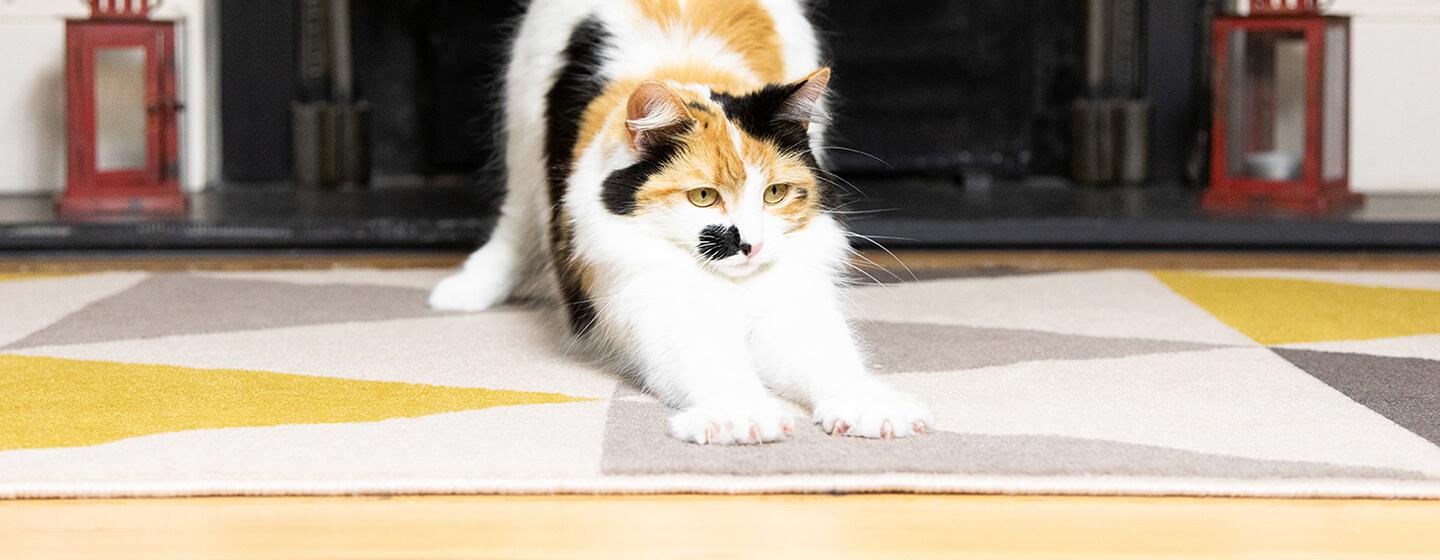
If you have a cat that won't stop scratching your furniture, you're probably wondering how to make them stop it, which is why we've put together this handy guide to help you prevent your cat from shredding your sofa! Keep reading to find out more. There’s nothing worse than getting a new sofa and coming home to find that your cat or kitten has ripped it into ribbons, or finding deep scratches in your freshly painted door frames. Cats’ scratching furniture can be a real problem, especially if you’re house-proud! Sometimes it may seem that your cat’s out to cause trouble, but it’s important to know that these scratching behaviours are deeply ingrained instincts and they have numerous benefits to both their health and well-being. Keep reading to find out how to stop cats from scratching furniture and to discover why they always seem to target your favourite spots. Why do cats scratch furniture? While it may seem that your cat just likes to destroy things, they actually scratch for a number of reasons. Firstly, scratching provides a full body workout for your cat and stretches out their muscles and tendons from their claws all the way down their back. Cats scratching furniture also helps to maintain their claws and keep them sharp by shedding their claw sheaths which keeps them in tip-top condition. Additionally, cats’ paws contain scent glands and when they scratch objects, they release a visible and chemical scent marker that identifies their territory in the home. They’re most likely to target prominent and frequently used areas such as sofas or your favourite armchair. This is because scratching these areas will make them feel more secure and relieve stress by putting their scent on things, making it feel more like their home. Sometimes cats may do it because they’re bored which is especially common with house cats who aren’t getting enough mental stimulation. So now you know what causes them to do it, how can you actually stop cats from scratching furniture?
How to Stop Cats Fighting
1 min read
It can be extremely distressing to see your cat get into a fight, whether that is with their playmates at home or with other cats outside of the house. But there are ways to stop cats fighting, both in the short-term and in the long-term. In this article, we’ll explore why cats fight, how to stop cats from fighting and what long-term solutions you can look towards if it keeps happening. Why do cats fight? Territory: Cats are territorial animals and they will often fight to defend what they believe is their territory. This is most common with cat fights that happen outside the house, where your cat believes another cat has encroached on their land. Alternately, a feral cat could believe your cat should not be here. But such fighting is also common among cats who live together. Cats mark their territories with scent, and your house is no exception. If you have more than one cat living at home, they will often fight about this issue. Aggression: Some cats can be aggressive by nature. Male cats are especially aggressive and these cats keep fighting. Sometimes, they also dominate female cats. Your cat may need to act out their aggression by picking fights with their brothers and sisters or by causing a fight with a strange cat. Rough play: Sometimes cats can be playing and it can get rough. Cats are rough when they play – this may look like aggression and fighting, but it is not. Still, such play could escalate into a fight or cause harm to both or one of the cats. In such cases, it is best to separate your cats if you can do so safely. Cats are not pack animals, and they don’t generally enjoy living in groups, small or large. There are ways to make space sharing less stressful including: provide separate feeding areas for each cat, provide numerous water stations, and create lots of quiet, private hiding areas for ‘me time’. Using cat-appeasing pheromone products (either sprays to use on furniture around the home or plug into diffusers) can help to reduce feelings of stress and therefore reduce aggressive behaviour. These techniques will help with the introduction of a new cat or to reduce any signs of aggression in household that already has multiple cats. What do you do if your cats are fighting? Watching your cats fighting can be heart-breaking; here are two animals that you adore and they are hurting each other! While your first instinct might be to jump in and separate them, do be careful. Cats can be aggressive when they are worked up like this, and you may get a lot of scratches for your efforts. We suggest trying to gently separate them, as long as you are sure you are not in harm’s way. Distract them: Cats can get very engrossed in fighting, but you can try and distract them. Find something you know they love, like a toy, and make a noise with it. This might get their attention and stop the fight. The most important thing to remember when stepping in to halt the fighting is: don’t get hurt and don’t make your cat(s) more stressed/scared with the techniques used. So don’t be aggressive towards your cat, and don’t use heavy-handed techniques. What do you do if another cat is fighting yours? Sometimes, when your cat is wandering outside, they could be attacked by another cat. These attacks can be systematic: owners have stories of a single cat that keeps fighting their cat every time they go outside. This is especially worrying if your cat is mild-mannered and gentle, and is unlikely to fight back. The injuries from these fights can require several trips to the vet and can be worrying. The best solution for how to stop cats from fighting in this situation is to keep your cat indoors. Letting them out after dark can be especially dangerous. If you cannot keep your cat indoors, you can try and find out if the other cat belongs to someone and if that cat can be controlled. Alternately, when you hear your cat is in distress, go outside to help. Most strange cats will run at the sight of a human, so you may not have to do much to stop the fight except turn up. Long-term solutions If your cat keeps fighting, whether with other cats in your house or with strange cats from the neighbourhood, you may need a more permanent solution. A cat that always gets into fights may be suffering from excess aggression or they may simply have poor socialisation skills. Here are some leads on how to help your cat in the long-term. Vets: Cats often fight because they have excess aggression. This aggression can be a symptom of an illness that you are not aware of. Take them to the vet and get them checked out. Your vet will be able to advise you on how to proceed. Animal behaviourists: If your cat is not ill but still has a large amount of unresolved aggression, you can take them to an animal behaviourist. These cat specialists are good at resolving issues for cats who keep fighting, and they can train your cat to manage their aggression better. Socialisation: One of the main reasons that cats fight is poor socialisation. These cats simply do not know how to share or get along with other cats. You may need to re-socialise these cats so that they know how to act around others. You can take them to cat training school to try and improve their behaviour. Alternately, there are books and You Tube tutorials on how to help your cat get along better with other cats. Watching your cats fight can be distressing, but it can be solved. Simply follow the guidelines in this article to try and separate your cats when the fight occurs. Moreover, try one of the long-term leads above if it seems like they may need a more permanent solution. Remember, these fights can be solved and do not have to be an enduring problem.
Behaviour & Training
How to Start Scent Training for Puppies
1 min read
Your dog's sense of smell is one of their most powerful senses, so it only makes sense to start nose training when they're puppies! Learn more about how to scent train your dog with our helpful guide and advice. For owners who really want to take their relationship with their dog to the next level, one of the best ways to do this is to focus on the most underappreciated of our dog’s senses… their incredible nose. That means it’s time for some puppy scent training! It’s probably because we don’t see the world in smell the same way that our dogs do, that we don’t understand how important the sense of smell is to our dogs. For that reason, we miss an entire way to interact with and stimulate them. It’s thought that the part of the dog’s brain that analyses smell is 40 times larger than ours. And if you compare our measly 5 million scent receptors to a Bloodhound’s 300 million, you can see that our noses are pretty pathetic in comparison! Scent is incredibly important to dogs – as much, if not more so, as sight and sound – and it tells them far more about their environment than we can ever begin to imagine. If we can incorporate this into some of our games and puppy training, we can discover a whole new way to interact with our pups. Scent training for dogs can be an incredibly enriching experience for both you and your puppy! You’ll probably find yourself wondering how to scent train a dog. Read on to find out some of our favourite puppy scent training games! Dog hide and seek This is a combination of scent work and basic problem-solving (and for some dogs, just trial and error!) but it is a fun starting point for nose work! Get someone to hold your dog, or ask them to wait, and then go and hide somewhere in the house. Don’t go too far at the beginning until your dog gets the hang of this fun new puppy scent training game. You can leave a trail of kibble or treats to start with to make it easier. When you are ready, your friend can let go of your puppy, and they can use their nose to follow the trail and discover where you are hiding.
Behaviour & Training
How to Spot and Treat Cat Anxiety
1 min read
Cats with separation anxiety can be a huge problem for pet owners. Read our guide to find out more about cat anxiety and how best to help your pet. Animals can be afraid of many things: loud noises, fireworks, and even a bath! But when it comes to cats, we don’t often hear about anxiety problems. Yet cat anxiety can be a big issue for many owners, even if they don’t know it’s actually happening. Just like in humans, anxiety in cats can manifest in many different ways, and it isn’t always as easy to identify as a straightforward illness – there’s no blood test for cat anxiety! Read on to find out more about what makes cats anxious and some cat calming methods. Can cats have anxiety? Cats can absolutely suffer from anxiety, just like all animals. Although cats can’t express themselves with words, they will show that they are suffering from anxiety through various signs and symptoms, and often through the development of destructive behaviours. Many of the signs of cat anxiety could be interpreted simply as bad behaviour, so it’s important to try and notice exactly when your pet starts to show signs of a problem. The development of anxiety in cats is often triggered by very specific events, objects, or changes in routine or environment. Being able to identify exactly when the problems started will really help when figuring out the best cat calming technique for your pet.
Behaviour & Training
How to Massage Your Cat
1 min read
Pamper your feline friend with a lavish cat massage that will make them feel like theyare living in the lap of luxury. There are a few things to keep in mind before you can become the resident specialist in premium cat massaging techniques. This article will give you the information you need to massage your way into your cat’s good graces. Why is massage important for your cat? We know – a massage is so good you don’t need reasons to have it. But there are also real benefits to offering your cat a massage. It’s not just a session of pampering – it has important consequences for the health and vitality of your feline friend. A cat massage improves circulation, promotes low blood pressure, supports joint mobility and it combats cat anxiety and stress like nothing else. So flex your fingers and get ready for all those lovely purrs of joy. If you are not sure where to start, we put together a short guide for all your cat massage questions. How to massage a cat in 3 steps The first thing you need to do before you start your cat massage is to wait to be approached. When you notice your cat starts rubbing against you, it means she’s relaxed enough to enjoy 5-10 minutes of quiet massage heaven. Start by talking to your cat. Change your voice, sing their favourite cat song or make any sounds you know puts your cat at ease. The key is to keep a calm and soothing voice. Then you can use our three-step CAT technique – Circle, Activate, Tap. 1. Circle: move around in circles Start your cat massage by lightly stroking your cat from the neck to the base of their tail by using an open and relaxed hand. This technique is also known as effleurage and it helps your cat get in a relaxed mood, warm-up the muscles and stimulate blood circulation. Once you feel the back muscles have eased up, move onto your cat’s shoulders. Using your thumbs, rotate your fingertips clockwise or counter-clockwise to make slow circles around her shoulder blades.
Health
How to Look After Your Cat's Teeth
1 min read
Did you know that eight out of ten cats over the age of three have tooth and gum problems? Just like our own teeth, your cat’s teeth accumulate plaque and if this isn’t kept under control, it can lead to tartar and even periodontal disease. You know how important it is to look after your teeth, so make sure you give that same care and attention to your furry friend’s cat dental care. Dental disease in cats Warning signs of dental problems Cats accumulate plaque on their teeth just like we do. If left, this hardens to form tartar, which irritates the gums causing gingivitis and can ultimately lead to tooth loss. If your cat has severe dental disease and it’s not dealt with, the build-up of the bacteria in the mouth can lead to further complications such as heart and kidney issues. So what signs do you need to look out for and how can you help to keep your feline friend’s teeth in tip-top condition? The first unusual thing you’ll probably notice is your cat’s bad breath – it can be hard to ignore! This is a sign of advanced dental disease. Other symptoms include reddened gums, yellowish-brown tartar on teeth and drooling. Have you noticed your cat dropping food from their mouth, chewing only on one side or losing weight because they’re unable to eat?
Health

Pagination

  • First page
  • Previous page
  • …
  • Page 9
  • Page 10
  • Page 11
  • Page 12
  • Page 13
  • Page 14
  • Page 15
  • Page 16
  • Page 17
  • …
  • Next page
  • Last page
Purina Pet Club logo

Join Purina Pet Club for expert tips, helpful advice, exclusive offers and rewards.

Join the Club
Nourishing pets Purina pets grid card
Purina Pet Club logo

Join Purina Pet Club for expert tips, helpful advice, exclusive offers and rewards.

Join the Club
Nourishing pets Purina pets grid card
  • Cat
    • Care & Advice
    • Find a Pet
    • Food
    • Our Brands
  • Dog
    • Care & Advice
    • Find a Pet
    • Food
    • Our Brands
  • About Us
    • Our Mission
    • Our History
    • Our Purina Promise
    • Purina In The Community
  • Other
    • Join Purina Pet Club
    • Breed Selector
    • Contact Us
  • Cat
    • Care & Advice
    • Find a Pet
    • Food
    • Our Brands
  • Dog
    • Care & Advice
    • Find a Pet
    • Food
    • Our Brands
  • About Us
    • Our Mission
    • Our History
    • Our Purina Promise
    • Purina In The Community
  • Other
    • Join Purina Pet Club
    • Breed Selector
    • Contact Us
  • Cat
    • Care & Advice
    • Find a Pet
    • Food
    • Our Brands
  • Dog
    • Care & Advice
    • Find a Pet
    • Food
    • Our Brands
  • About Us
    • Our Mission
    • Our History
    • Our Purina Promise
    • Purina In The Community
  • Other
    • Join Purina Pet Club
    • Breed Selector
    • Contact Us
  • Cat
    • Care & Advice
    • Find a Pet
    • Food
    • Our Brands
  • Dog
    • Care & Advice
    • Find a Pet
    • Food
    • Our Brands
  • About Us
    • Our Mission
    • Our History
    • Our Purina Promise
    • Purina In The Community
  • Other
    • Join Purina Pet Club
    • Breed Selector
    • Contact Us
© 2026 Purina. All Rights Reserved.

©Reg. Trademark of Nestlé S.A.

Terms & Conditions
Privacy Policy
Cookies
© 2026 Purina. All Rights Reserved.

©Reg. Trademark of Nestlé S.A.

Terms & Conditions
Privacy Policy
Cookies
© 2026 Purina. All Rights Reserved.