Sorry, you need to enable JavaScript to visit this website.
Skip to main content
How To Groom Your Cat Properly
1 min read
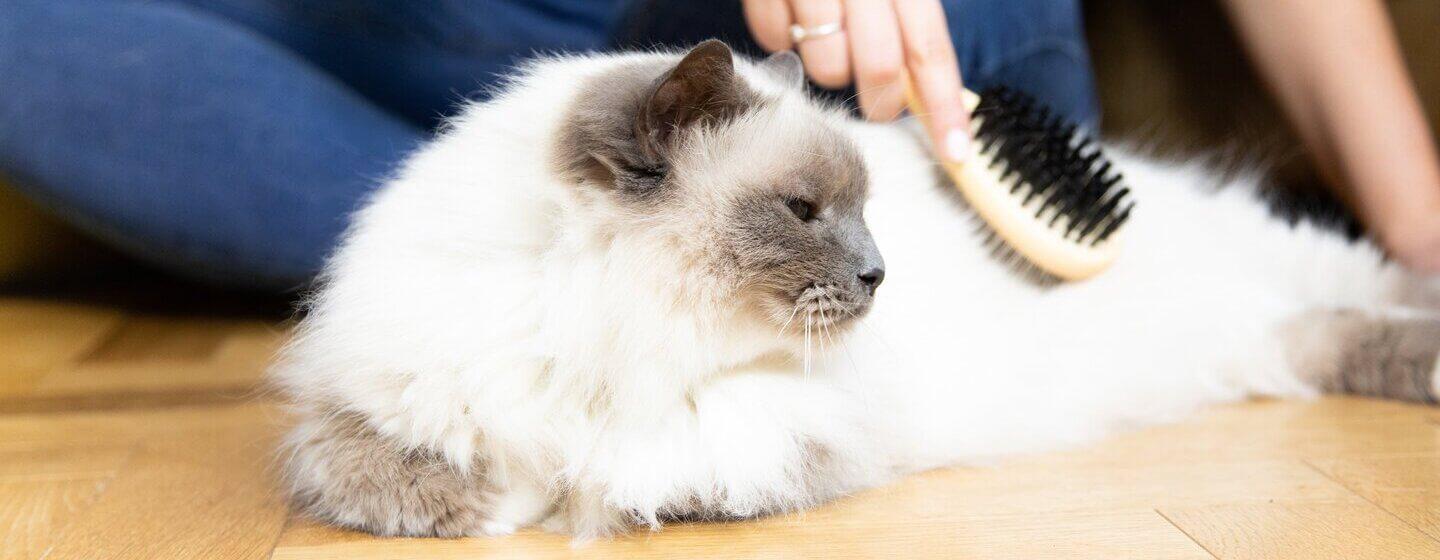
Most cats take real pride in their appearance, spending almost half their waking hours preening themselves to perfection. Being independent creatures, cats are keen to look after themselves, but that doesn’t mean you shouldn’t lend a hand in their pampering routine. Grooming your cat plays a big part in caring for your pet and regular maintenance will mean your cat looks great and feels great too! As well as helping to keep your cat looking beautiful, regular cat grooming allows you to spend quality time bonding with your pet, and gives you the opportunity to check their body condition and spot any unusual signs of health problems, such as lumps or bumps.
How to Groom a Kitten
1 min read
Although your cat is beautiful, they are so much more than a pretty face. Not only do they have a stunning coat, but they’re biologically designed to look after them. Their rough tongues act like mini brushes, removing dead hair and distributing oils through their coat. They’re also smart enough to know that when these biological grooming aids are not enough – for example, if they get fur-balls or tangles – you can be counted on to help. Kitten grooming Kitten grooming isn't just about making your feline look fancy - it removes dead hair, keeps their coat and skin healthy, helps you build an intimate bond, and gives you the opportunity to check their overall health. Grooming is an important part of looking after kittens, but thanks to their softer, fluffier and shorter coats, it should take next to no time to do, compared to adults. If you can get your kitten used to regular grooming from a young age, it will make life much easier for both of you in the future. The good news is that most cats love the gentle attention of being groomed, and as soon as they see a brush or comb in your hand, they’ll usually come running for the fuss. Brushing your kitten Long vs. short coats How thoroughly and how often you’ll end up brushing your kitten usually depends on their type of coat. A short-coated cat will usually only need a quick 'once-over' weekly while a long-coated breed will need daily attention with the right type of equipment - ask your breeder or a groomer for advice on specific coat types.
How to Exercise Your Puppy
1 min read
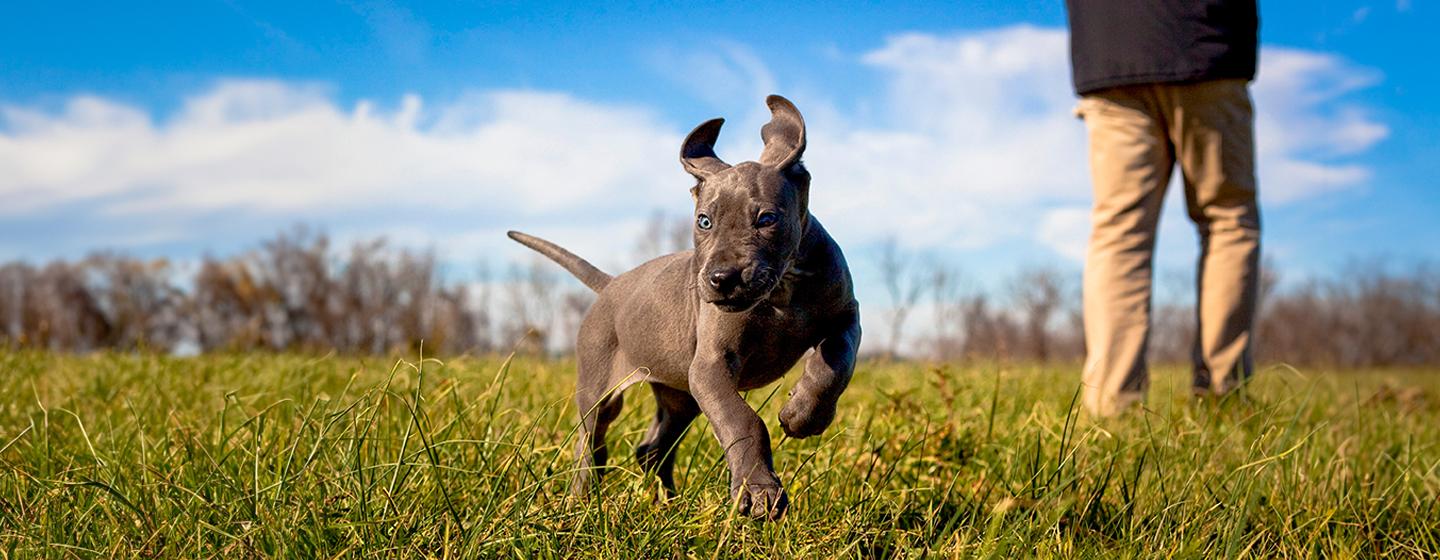
Healthy and happy puppies need their fair share of exercise. This is how to use play and walk effectively without going overboard. How to not over-exercise your puppy When we first get a dog, most of us dream of long rambling walks with our new companion - and there is no doubt that exploring the countryside or local parks together is a real joy of dog ownership. In our enthusiasm to ‘get out there’ however, we can sometimes forget that our new puppy is only a baby, and like any baby, their physical abilities are limited. This means that we can cause lasting damage by over-exercising a puppy or expecting too much in the early weeks and even months. Until a dog reaches sexual maturity – which is different in each breed – their bones are still growing. The growth plates within the bones, which allow them to lengthen as the dog gets larger, stay soft for a surprisingly long time, which is why over-exercising your pup might make them vulnerable to injury. Injuries at this time may not heal properly and can cause lasting problems for the dog. In addition to the soft growth plates, the rest of the puppy’s bones are softer too and so can break easily. It’s not just the bones that are developing either – these are held together with muscles, tendons and ligaments that are working hard to support the puppy’s growing bones and joints, and they can also be vulnerable to injury caused from over-exercising your puppy or from the wrong kind of exercise or play. Puppy exercise and puppy walking guidelines Knowing all this, it’s easy to panic and become overprotective but with a few guidelines, you can make sure you get it right! First of all, remember that puppy exercise is necessary because this is how they increase their bone density – which means strong bones and a decrease in the potential for injury as an adult. How long should you walk a puppy? This exercise shouldn’t be marching round the countryside or the local roads on a lead though. In fact, when it comes to continuous puppy walking a good rule of thumb is that puppies should have no more than 5 minutes of exercise for each month of age, two times a day. So a five-month-old puppy would have no more than 25 minutes of walking twice a day – and this should be decreased in larger breeds.
How to Discipline Your Cat
1 min read
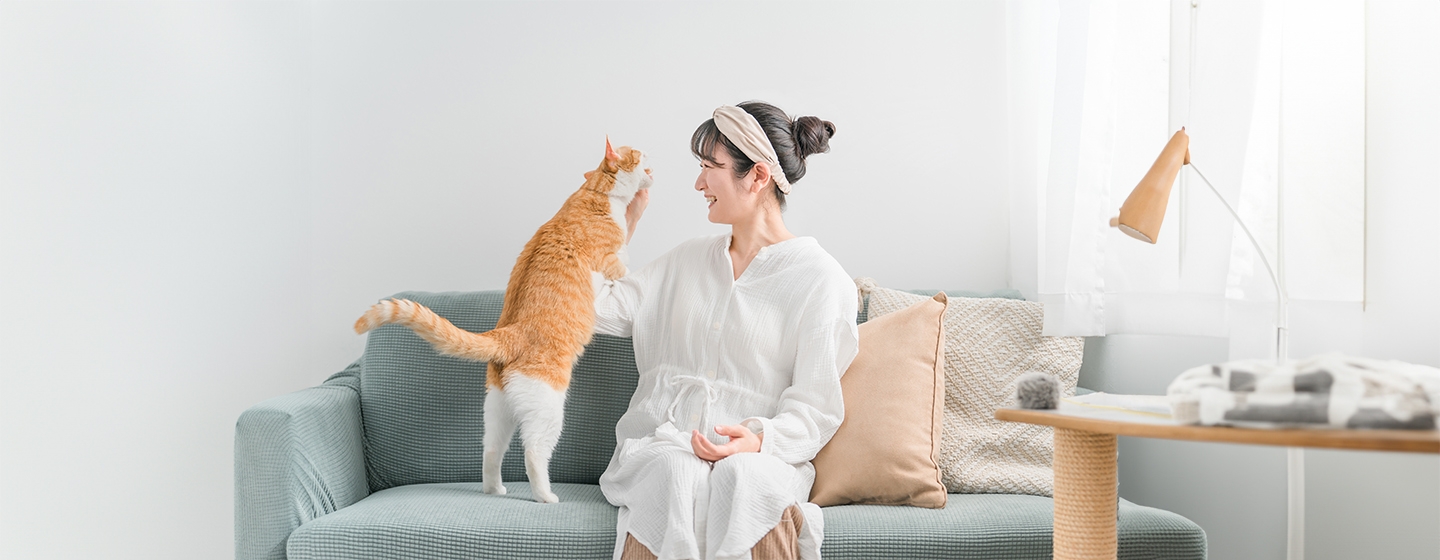
Learning how to discipline your cat correctly is something that’s really important for every cat owner to do. Cats react differently to dogs, so training them in the same way won’t always work. Instead there are a number of different cat training techniques that can be learnt and performed on your cat to try and encourage them to behave correctly. Undesirable cat behaviours Before we learn how to discipline a cat, let's take a look at the type of undesirable behaviours your cat may have and why they may behave that way.
How to Deal with Excessive Dog Barking
1 min read
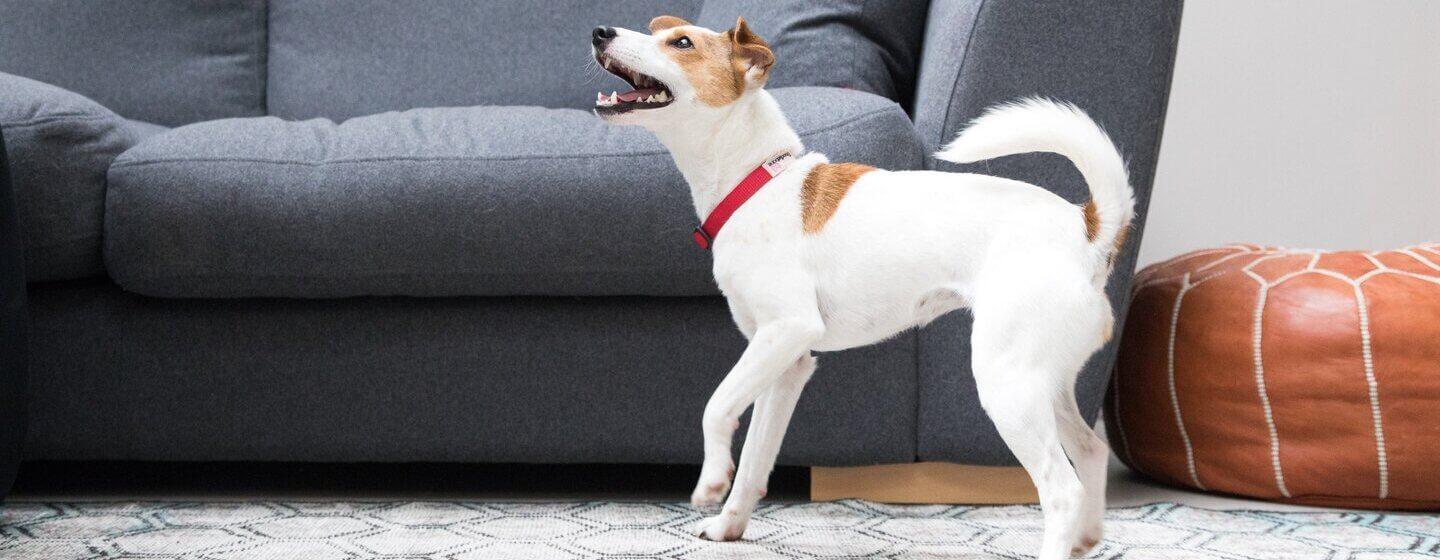
Dogs don’t rely on vocal communication in the same way humans do, but it still forms a major part of the way they express themselves and their emotions to other dogs – and to their human family. There’s more to a dog’s vocal repertoire than a simple ‘woof’ – our canine companions make use of whines, yips, yelps, whimpers, grumbles, howls and growls in their communication. Some are even fond of a big hearty sigh! There are lots of reasons why dogs bark, but remember, barking may only seem excessive to us – barking in any form is all part of a dog’s nature!
How to Clean a Dog’s Ears
1 min read
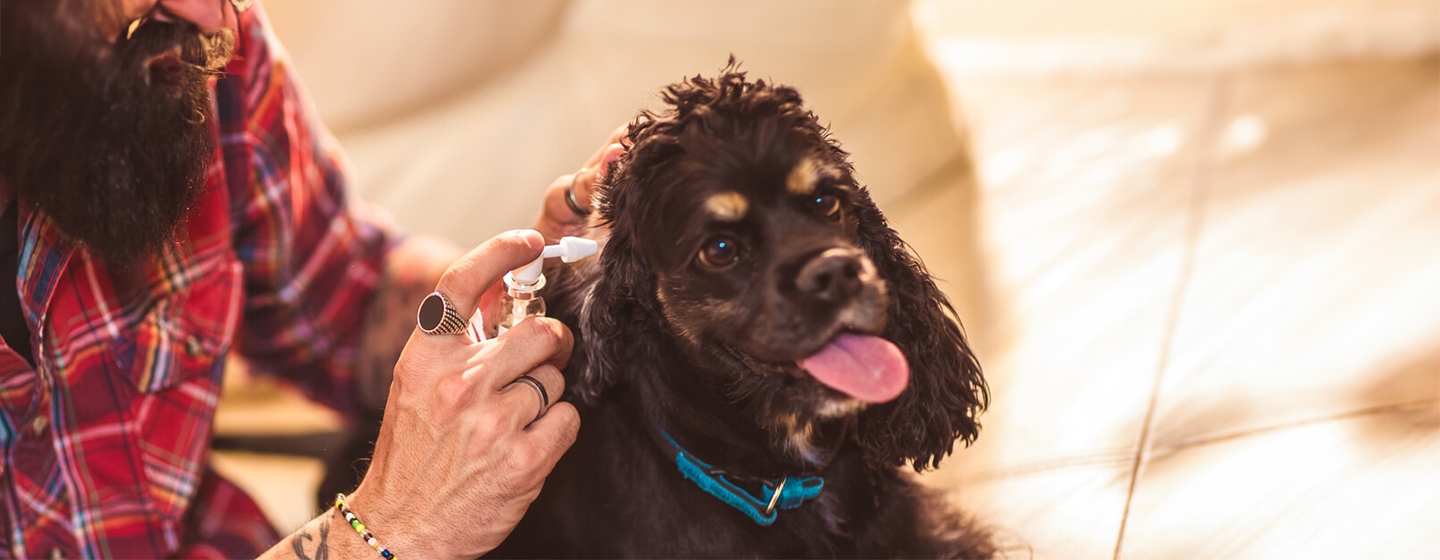
Many owners often wonder how do you clean a dog's ears? We've put together this handy guide to tell you everything you need to know about cleaning your dog's ears at home. Many dog owners often wonder: should I be cleaning my dog’s ears? The short answer is, usually, yes. It’s often an overlooked part of your dog’s grooming regime, but for many dogs it is extremely important as it allows you to regularly check for problems or ear infections. Cleaning your dog’s ears is incredibly easy to do and can be done at home (providing you and your dog are comfortable with it). If you’ve never done it before you may be wondering where to start, which is why we’ve put together this handy guide to tell you how to clean a dog’s ears. How often should I clean my dog’s ears? This often depends on your dog. Droopy-eared breeds such as Cocker Spaniels and Basset Hounds will require more regular ear cleaning as the can be more prone to ear infections. This is because longer droopy ears allow less air flow, and debris and moisture may easily become trapped in the ear canal, which can result in a yeast infection. Dogs that like to swim will also require regular ear cleaning as the extra moisture can predispose them to ear infections. Additionally, you should always be on the lookout for ear mites on your dog as they are also a potential cause of ear infections and can also be transmitted to other pets. In short, it’s important to clean your dog’s ears regularly enough to avoid infections, but not too often as this can damage the canal or cause irritation that can result in further problems. If you’re unsure, it’s best to ask your vet as they’ll be able to recommend a cleaning schedule that suits your dog’s unique needs. How to clean a dog’s ears When considering the best way to clean a dog’s ears, the most important thing is to ensure that your dog is comfortable with the entire process first.
How to Care for Your Dog After Surgery
1 min read
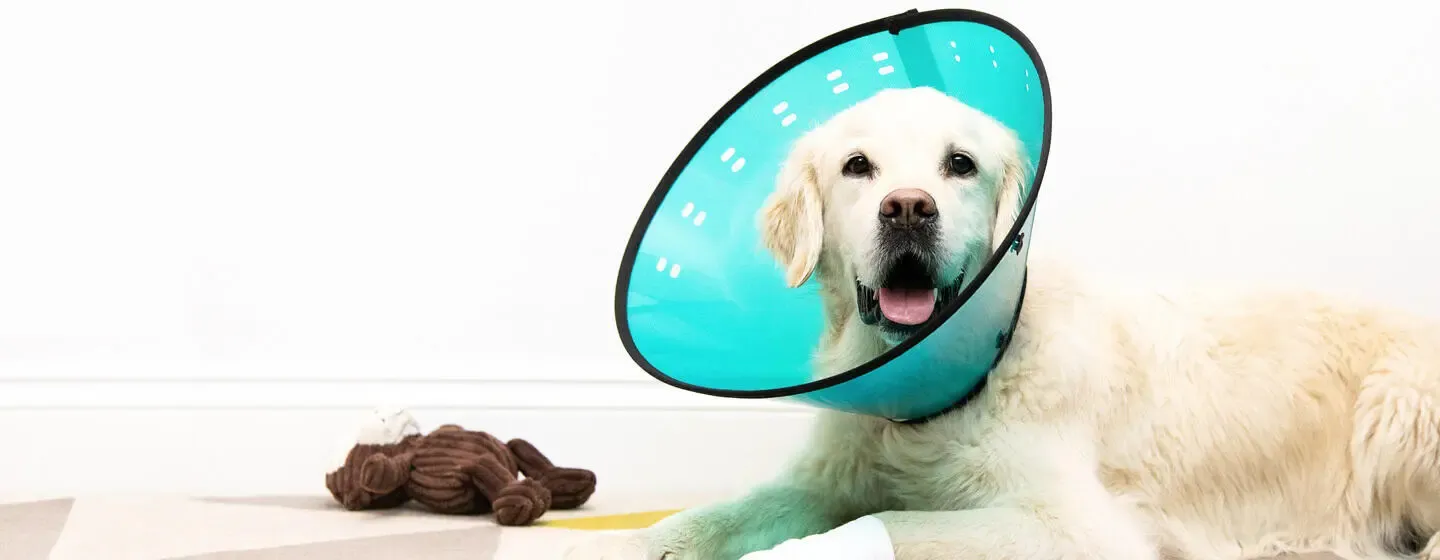
If your four-legged friend has to have surgery, it can be helpful to know what to expect post-dog operation so that you can make your pet as comfortable as possible. Your vet will give you specific advice relating to your particular pet’s ongoing treatment and recovery, to help them get back their usual selves. Dog surgery is a stressful time for the entire family. It’s not just worrying about the operation itself, it’s also what happens once your dog has undergone the procedure. Trying to make them as comfortable as possible as they’re recovering can be a bit daunting. From the anaesthetic effects to keeping your dog’s bandages dry and in place, here is what you can do to help your dog through a speedy recovery. Collecting your dog after surgery When you go to collect your dog after surgery, expect them to be a little sleepy if they’ve had a general anaesthetic. The vet will have given them something small to eat and some painkillers, so they may be a bit wobbly on their feet. You’re likely to be given some dog medication to take home with you such as anti-inflammatories, antibiotics and pain relief. Speak to your vet if you have any questions about how to give them their medicine. When you get them home it’s likely that your dog will just want to head straight to bed to sleep off the effects of the anaesthetic, so make sure they get some peace and quiet without being disturbed. Soon afterwards, they should be pain free, comfortable and happy to eat again. Occasionally the disorientation can cause some dogs to show aggressive behaviour after their operation. This should only be temporary but if it lasts for more than a few hours, it could suggest they’re in pain. If you have any concerns about the dog operation, your pet’s after-care, their aggressive behaviour or their recovery – or if your pet’s not back to normal after 12 hours or so – do get back in touch with your vet. Feeding after dog surgery Feeding your dog after operation will likely be different to the normal routine. Dogs, like humans, can feel nauseous after waking up from an anaesthetic so, after their operation, give your dog a small evening meal of something light, such as cooked chicken or fish. If that's not possible, then feed them just a quarter of their regular food portion. Your vet may give you a specific type of food, developed specially for dogs after surgery. Give them this food for their first few meals, or for as long as your vet recommends but, as soon as possible, get them back onto their normal, high quality food as this will help speed up their recovery. As always, make sure your pet has easy access to clean, fresh water at all times after their dog operation. Exercise as part of your dog’s surgery recovery The usual dog exercise routine will likely have to change as well. Your vet will tell you what sort of exercise your dog can return to, and how soon, depending on the type of dog surgery they’ve had. For example, if your dog had stitches post dog operation, they will need to be kept on a lead and only allowed the very minimum amount of exercise - ideally just a walk in the garden to go to the toilet - until a few days after the stitches have been removed. They will also need to be discouraged from jumping onto furniture and going up and down stairs. Always follow your vet’s instructions on exercise.
How to Bathe a Dog
1 min read
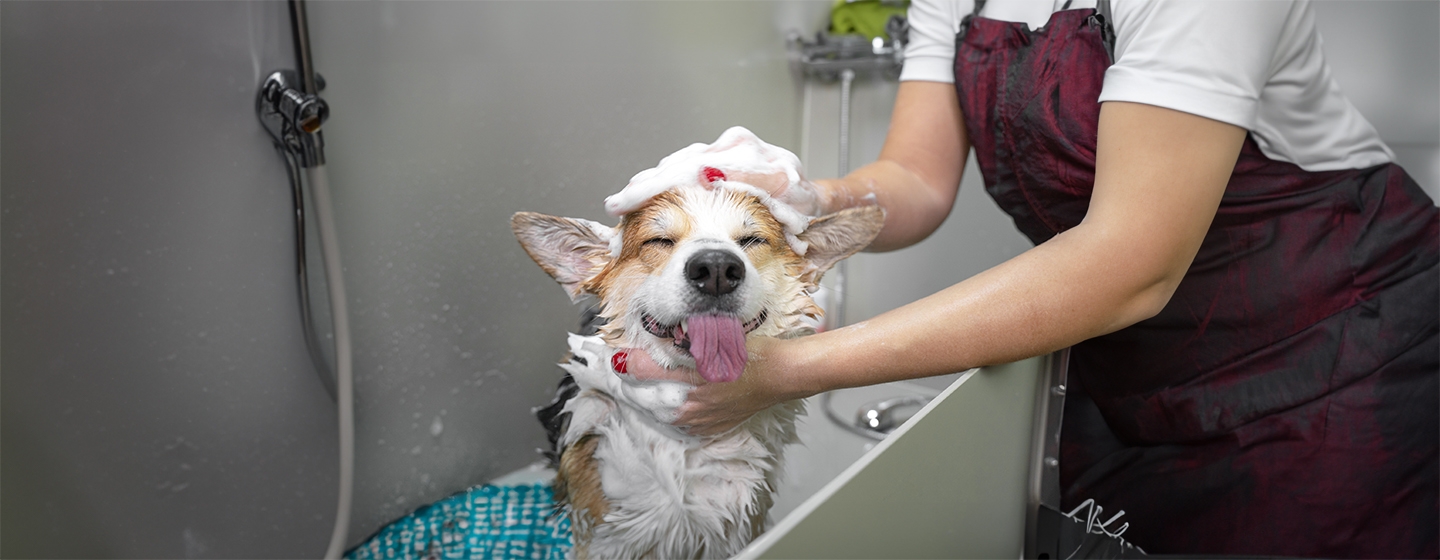
While some dogs don’t mind a warm, soapy bath, there are others dogs who’ll try anything to avoid being in the tub. Whichever category your dog falls into, it’s always good to know how to bathe a dog to avoid creating a big mess in the bathroom. Whether it’s a muddy walk or natural odour, dog bathing is sometimes a necessity so it’s important that you know how to do it properly. How often should you bathe a dog? Unlike people, dogs don’t need daily baths. That said, bathing your dog regularly is a good idea. How often you should bathe your dog depends on the type of dog you have. The good news is that long-haired dogs rarely need more than two to three baths a year, as too much bathing actually removes the natural oils from their coat. A quick paw wash will do most of the time but if your dog has a medical condition, has rolled in something unpleasant, or just smells a bit ‘off’, then a bath is probably on the cards. Most short-haired dogs can also go without being bathed for a long time, unless they get particularly dirty or smelly! For the majority of short-haired dog breeds, bathing once a month is often enough.
How Smart are Cats?
1 min read
Our cats seem extremely intelligent, they always seem to know exactly what we're up to and when their dinner time should be, but how intelligent are they really? Here at Purina we've researched everything you need to know about the topic, keep reading to find out how smart they really are. Cats certainly seem intelligent. Our cats always know exactly what time their breakfast should be and that the sight of the cat carrier means a dreaded trip to the vets. They seem to be able to anticipate our every move and know what we’re thinking, but we never feel like we know what’s going on in their brains. This is largely due to cats being mysterious creatures and the fact that they have eluded scientists because of their reluctance to participate in studies. So, the question still remains: how intelligent are cats? In this article, we take a look at the current research surrounding cat intelligence as well as the age-old debate of if cats are smarter than dogs. Keep reading to learn which are the smartest cat breeds and learn all about the cat mail delivery service in the late 19th century. How intelligent are cats? It turns out that cats have a brain structure that’s similar to other intelligent animals, including humans. It may come as a surprise to learn that your little cat’s brain structure is about 90 percent similar to yours! And according to Psychology Today, a cat’s cerebral cortex – where rational decision making and complex problem solving takes place – has around 300 million neurons. The cerebral cortex is involved in the planning of action, overall interpretation of language and is also responsible for storing both short- and long-term memory, which is why your cat tends to learn by doing rather than seeing. Not only that, but cats also possess more nerve cells in the visual areas of their brain than humans and most other mammals. However, calculating how intelligent cats are depends on how you measure intelligence in the first place.
How Long Do Cats Sleep
How Long Do Cats Sleep?
1 min read
If you’ve witnessed your kitten have a shut eye more frequently than not, you’ve naturally got some questions about your cat’s sleeping patterns. Find out how much sleep our dear feline friends need to feel refreshed and ready to play with their favourite owner. A cat’s sleeping habits can easily puzzle anyone less familiar with the feline lifestyle. For the best part of the day, a cat will act like the retired elderly on a well-deserved holiday, constantly on an all-day snoozing diet. If your cat’s always-off mode makes you feel like the world’s most boring housemate, you’ll be happy to know this is not personal. Cats sleep a lot, naturally. If you’ve been wondering ‘how long do cats sleep?’ and ‘why do cats sleep so much?’, we unpacked some of the amazing facts surrounding their siesta habits to help you better understand your kitty’s unconventional take on sleeping schedules. How long do cats sleep? Cats sleep on average 15 hours a day, with some sleepy kitties getting in up to 20 hours of shut-eye each day.

Pagination

  • First page
  • Previous page
  • …
  • Page 10
  • Page 11
  • Page 12
  • Page 13
  • Page 14
  • Page 15
  • Page 16
  • Page 17
  • Page 18
  • …
  • Next page
  • Last page
Purina Pet Club logo

Join Purina Pet Club for expert tips, helpful advice, exclusive offers and rewards.

Join the Club
Nourishing pets Purina pets grid card
Purina Pet Club logo

Join Purina Pet Club for expert tips, helpful advice, exclusive offers and rewards.

Join the Club
Nourishing pets Purina pets grid card
  • Cat
    • Care & Advice
    • Find a Pet
    • Food
    • Our Brands
  • Dog
    • Care & Advice
    • Find a Pet
    • Food
    • Our Brands
  • About Us
    • Our Mission
    • Our History
    • Our Purina Promise
    • Purina In The Community
  • Other
    • Join Purina Pet Club
    • Breed Selector
    • Contact Us
  • Cat
    • Care & Advice
    • Find a Pet
    • Food
    • Our Brands
  • Dog
    • Care & Advice
    • Find a Pet
    • Food
    • Our Brands
  • About Us
    • Our Mission
    • Our History
    • Our Purina Promise
    • Purina In The Community
  • Other
    • Join Purina Pet Club
    • Breed Selector
    • Contact Us
  • Cat
    • Care & Advice
    • Find a Pet
    • Food
    • Our Brands
  • Dog
    • Care & Advice
    • Find a Pet
    • Food
    • Our Brands
  • About Us
    • Our Mission
    • Our History
    • Our Purina Promise
    • Purina In The Community
  • Other
    • Join Purina Pet Club
    • Breed Selector
    • Contact Us
  • Cat
    • Care & Advice
    • Find a Pet
    • Food
    • Our Brands
  • Dog
    • Care & Advice
    • Find a Pet
    • Food
    • Our Brands
  • About Us
    • Our Mission
    • Our History
    • Our Purina Promise
    • Purina In The Community
  • Other
    • Join Purina Pet Club
    • Breed Selector
    • Contact Us
© 2026 Purina. All Rights Reserved.

©Reg. Trademark of Nestlé S.A.

Terms & Conditions
Privacy Policy
Cookies
© 2026 Purina. All Rights Reserved.

©Reg. Trademark of Nestlé S.A.

Terms & Conditions
Privacy Policy
Cookies
© 2026 Purina. All Rights Reserved.