Balinese

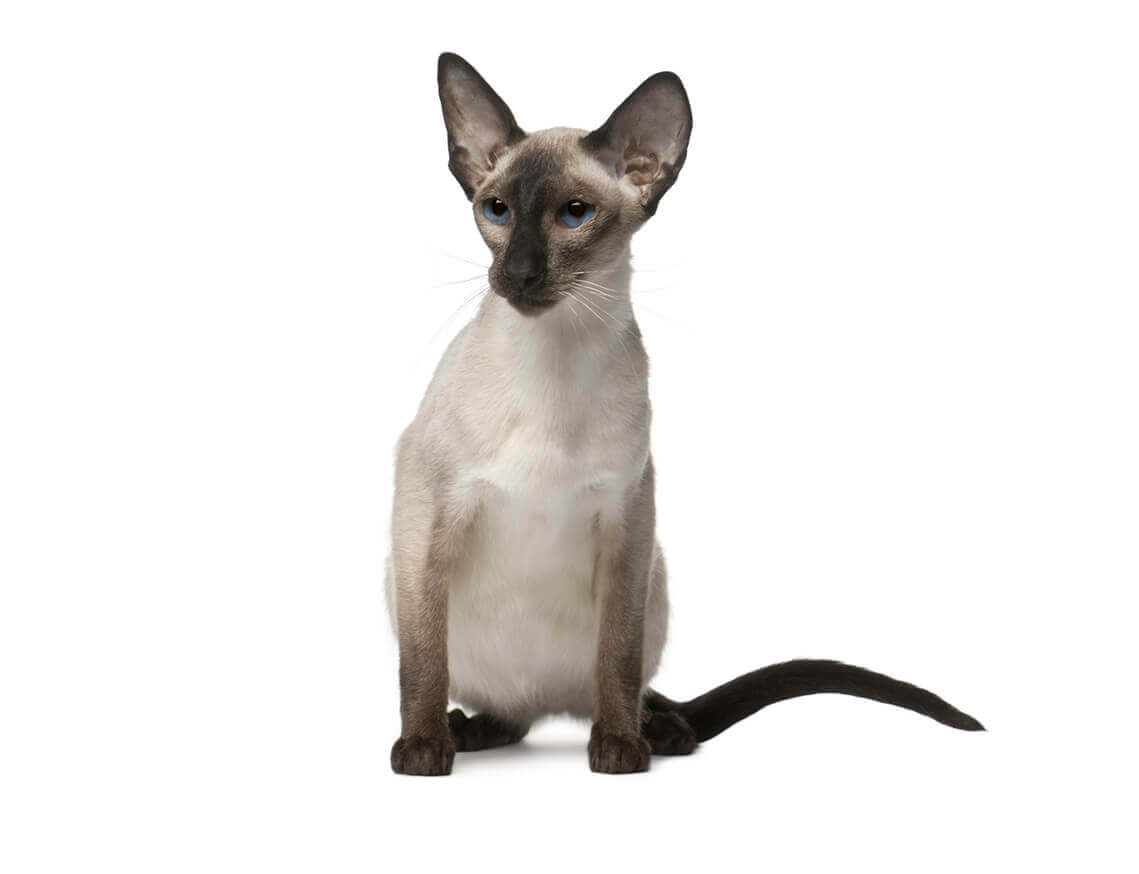
The Balinese cat is a beautiful, elegant, medium-sized cat breed with the same long svelte lines as the Siamese. The body is slender and graceful and the head has a straight profile with large ears which may have tufts. It has a fine, silky flowing coat which can be from one to several centimetres long and lies flat against the body. The tail is long and plumed with much longer hair. Th Balinese cat has no woolly undercoat and so it is classed officially as 'semi-longhaired'. The eyes are bright blue and oriental in shape and setting. The coat features the same coloured points (ears, face, legs, feet and tail) and mask as the Siamese. In the USA, Balinese-type cats with additional markings to those accepted for the Balinese are known as Javanese.


The need-to-know


  • Highly active and inquisitive cat
  • Friendly but independent cat
  • Very talkative cat
  • Lean and elegant cat breed
  • Requires grooming once a week
  • Hypoallergenic breed
  • Needs some out-door space
  • May require familiarisation before living with children
Personality

The temperament of the Balinese cat breed is similar to that of the Siamese, but some owners think the Balinese is somewhat quieter. However, it is likely that the Balinese cat will still be something of an extrovert and will demand attention from its human companions. Balinese cats are extremely vocal and almost seem to talk to their owners. They need to be part of the family and their need for attention means they like human company and suit someone who is not out all day.


History and Origins

Country of Origin: America


The Balinese cat is basically a longhaired Siamese. First noticed in the early 20th century, breeders at first gave away their longhaired kittens. After the Second World War, the breed was developed and originally called the 'Longhaired Siamese'. It was renamed 'Balinese', due to the cats' resemblance to elegant, Far Eastern temple dancers. In 1961, the Balinese cat was recognised in America, but it was not until the mid-1970s that the Balinese cat breed was imported into Europe.


Nutrition and Feeding

Every cat is unique and each has their own particular likes, dislikes, and needs when it comes to food. However, cats are carnivores and every cat must obtain 41 different and specific nutrients from their food. The proportion of these nutrients will vary depending on age, lifestyle, and overall health. So it's not surprising that a growing, energetic kitten needs a different balance of nutrients in her diet than a less active senior cat. Other considerations to bear in mind are feeding the right quantity of food to maintain 'ideal body condition' in accordance with feeding guidelines and catering to individual preference regarding wet or dry food recipes.

Other Information

Health and common issues


Because of its links to the Siamese, the Balinese cat breed may suffer from similar inherited disorders.


Best cat breeds for children


While this breed is not widely recognised as one of the best breeds for children, all cats are different and with the proper familiarisation may still be able to live with children.


Australian Mist

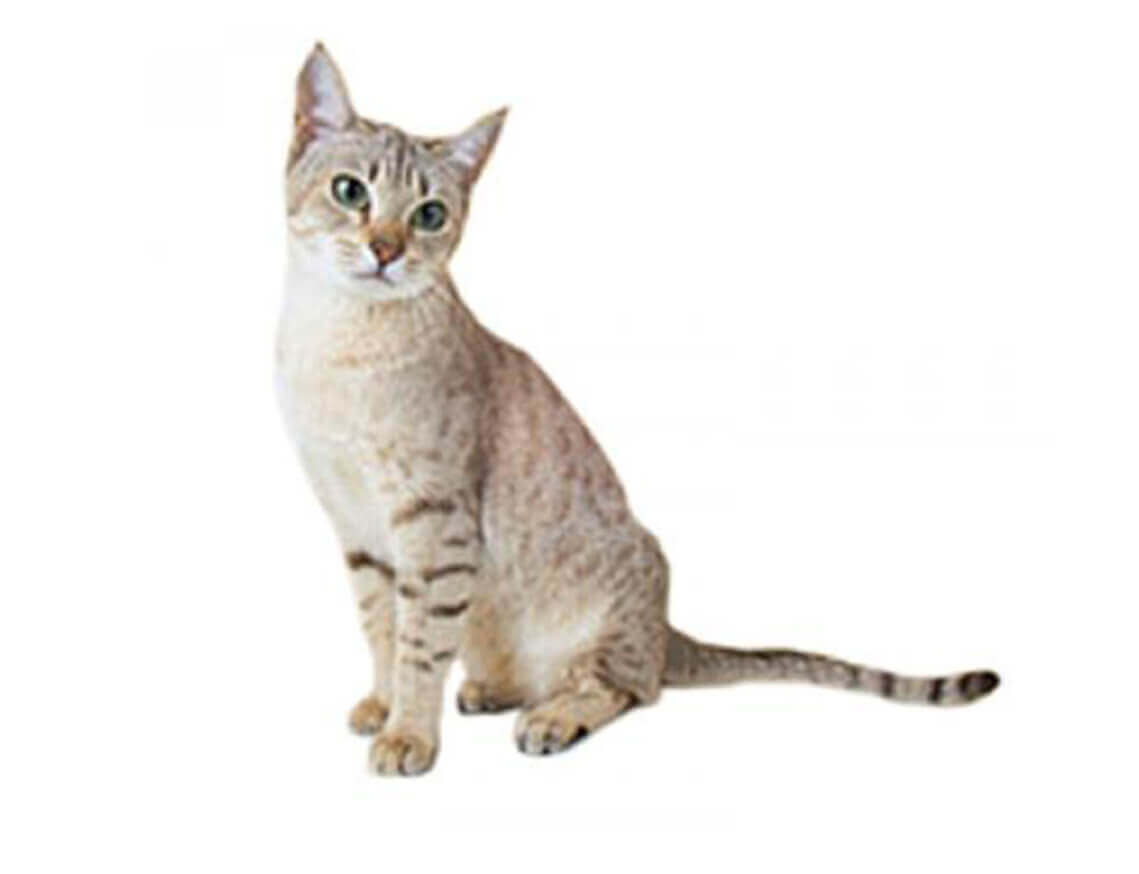
Australian Mist cats are a medium-sized short haired breed, with a round head and large, expressive eyes in a range of greens. There is nothing extreme about Australian Mist cats - they are of moderate size and medium boned with a friendly face. The coat has a pale background with some ticking which seems to give it a misted look, as well as a pattern of fine spots or marbled swirls, with legs and tail ringed and barred, and the face lined. Australian Mist cats come in seven colours: brown, blue, chocolate, lilac, caramel, gold and peach.


The need-to-know


  • Playful and curious cat
  • Sociable and dependent cat
  • Somehow talkative cat
  • Average build cat breed
  • Requires grooming every day
  • Non hypoallergenic breed
  • Needs some out-door space
  • Great family cat
Personality

Australian Mist cats are said to be affectionate and happy with people or other pets and easily fit in to become a member of the family.


History and Origins

Country of Origin: Australia


Other Names: : Spotted mist The Australian Mist cat is short haired breed that was developed in Australia in the 1970s by crossing Burmese, Abyssinian, and domestic shorthair cats to create a cat with a spotted coat and for this reason was initially called the Spotted Mist. As the Australian Mist cat breed developed and more patterns emerged, including marbled coats, the name was changed in 1998 to Australian Mist. There are not yet many Australian Mist cats in the rest of the world, but the breed is growing and breeders are working to have it recognized by cat fancy organizations.


Nutrition and Feeding

Every cat is unique and each has their own particular likes, dislikes, and needs when it comes to food. However, cats are carnivores and every cat must obtain 41 different and specific nutrients from their food. The proportion of these nutrients will vary depending on age, lifestyle, and overall health. So it's not surprising that a growing, energetic kitten needs a different balance of nutrients in her diet than a less active senior cat. Other considerations to bear in mind are feeding the right quantity of food to maintain 'ideal body condition' in accordance with feeding guidelines and catering to individual preference regarding wet or dry food recipes.

Other Information

Health and common issues


There are no reports of inherited problems in the Australian Mist cat breed.


Best cat breeds for children


While this breed is not widely recognised as one of the best breeds for children, all cats are different and with the proper familiarisation may still be able to live with children.


Asian

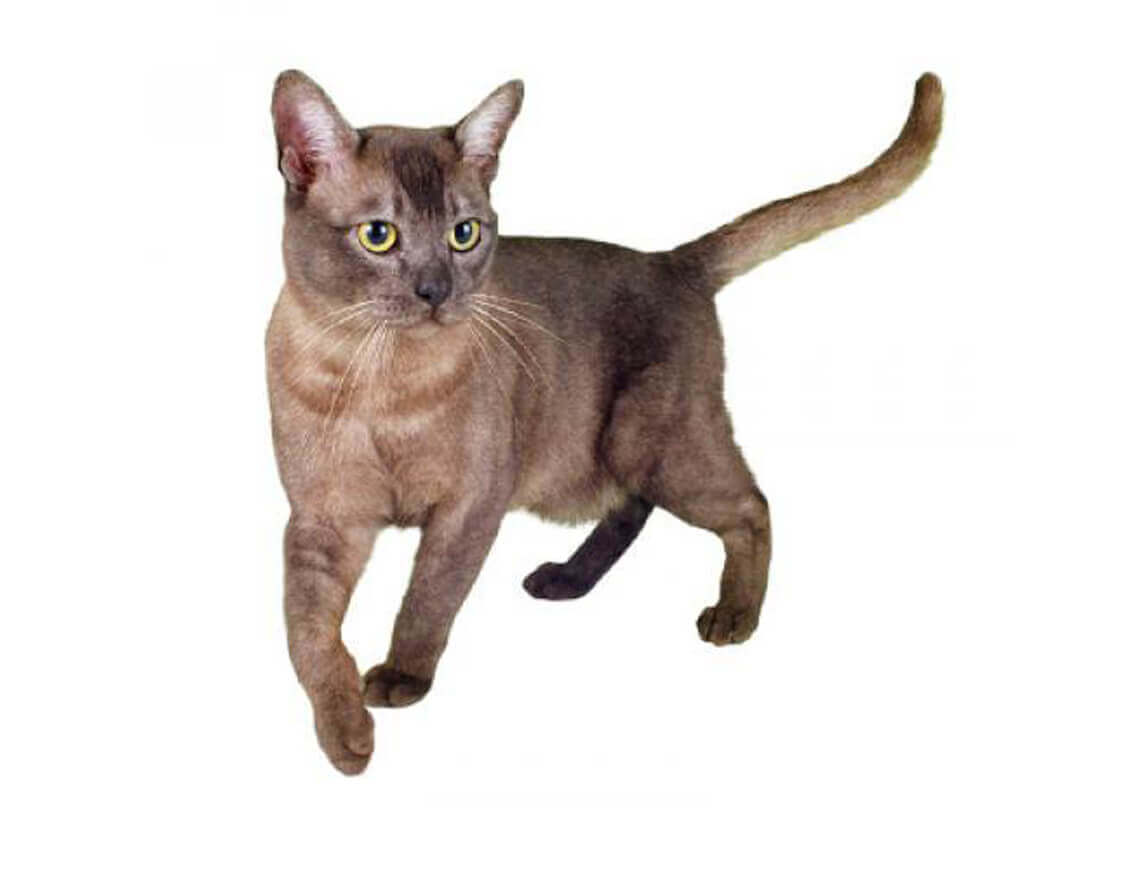
Asian cats have long medium-sized, quite muscular bodies and a tail that tapers to a rounded tip. Female Asian cats are much smaller and daintier than males. The head is wedge-shaped with a gently rounded dome, medium-sized wide-set ears, and large eyes with a silvery rim. The coat, which can look like watered silk, is short, fine and lies close to the body. A wide range of colours and patterns are available in this group.


The need-to-know


  • Playful and curious cat
  • Friendly but independent cat
  • Somehow talkative cat
  • Lean and elegant cat breed
  • Requires grooming once a week
  • Non hypoallergenic breed
  • Needs some out-door space
  • May require familiarisation before living with children
Personality

The Asian cat breed is very like the Burmese in temperament - extremely friendly and affectionate - but slightly less boisterous than the Burmese. Asian cats love attention and need to be part of the family. They can be quite demanding and often follow their owners around the house crying for attention. Asian cats are very intelligent and can often work out such problems as how to open doors. They can be very sensitive to their owner's feelings and this makes them excellent companions.


History and Origins

Country of Origin: Britain


Asian cats look similar to Burmese but with coats in colours not recognized in the Burmese breed. The Bombay cat is from this group, as is the Burmilla and the Tiffanie cats. This is a young and rapidly developing breed that is rising in popularity. The Asian cat breed includes the Bombay cat, Burmilla cat and Tiffanie cat breeds which are listed separately.


Nutrition and Feeding

Every cat is unique and each has their own particular likes, dislikes, and needs when it comes to food. However, cats are carnivores and every cat must obtain 41 different and specific nutrients from their food. The proportion of these nutrients will vary depending on age, lifestyle, and overall health. So it's not surprising that a growing, energetic kitten needs a different balance of nutrients in her diet than a less active senior cat. Other considerations to bear in mind are feeding the right quantity of food to maintain 'ideal body condition' in accordance with feeding guidelines and catering to individual preference regarding wet or dry food recipes.

Other Information

Health and common issues


There are no specific conditions relating to Asian cats in the veterinary literature. However, there may be a tendency for this group to develop conditions associated with the Burmese. Some lines of Burmese appear to be more susceptible to diabetes mellitus than other breeds.


Best cat breeds for children


While this breed is not widely recognised as one of the best breeds for children, all cats are different and with the proper familiarisation may still be able to live with children.


American Wirehair

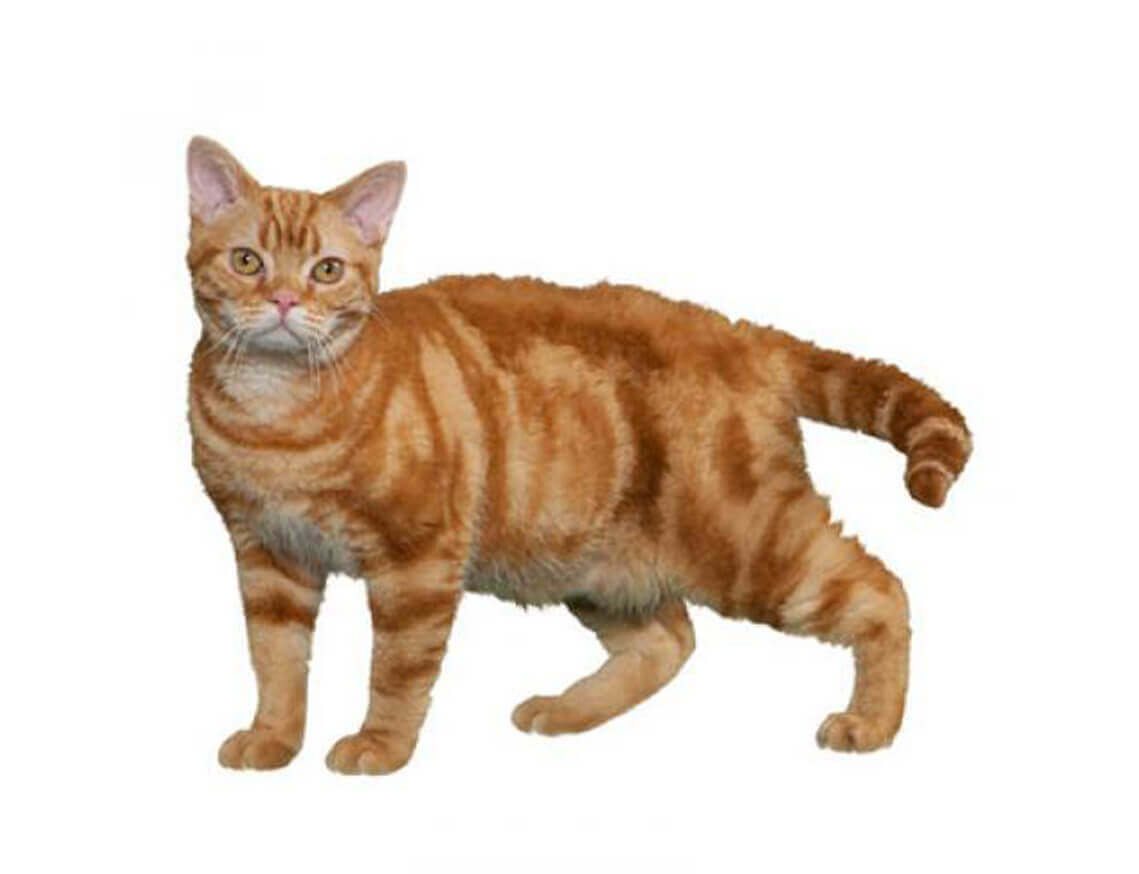
As its name suggests, it's the coat that characterises this American Wirehair cat breed. The American Wirehair is on the large size and has a harsh, springy and wiry coat - each short-to-medium hair is thin and crimped, or hooked. The whiskers are often curly. The full extent of the 'wiring' only becomes apparent when the cat is mature; American Wirehair kittens that appear to have very curly coats when they are young can grow up into merely wavy, rather than wiry adults, and vice versa. They come in all sorts of colours, patterns and markings.


The need-to-know


  • Highly active and inquisitive cat
  • Friendly but independent cat
  • Quiet cat
  • Average build cat breed
  • Requires grooming once a week
  • Non hypoallergenic breed
  • Outdoor cat
  • May require familiarisation before living with children
Personality

The American Wirehair cat is friendly and laid-back. It is relaxed, sweet natured, gentle and playful, enjoying toys, and games with its owner. This is not a particularly talkative cat breed.


History and Origins

Country of Origin: America


The American Wirehair cat breed began as a spontaneous mutation in a litter of New York farm cats in 1966 when one wirehaired kitten (named Adam) was produced among normal coated littermates. All American Wirehair pedigree cats can be traced back to Adam. The American Wirehair cat has become popular in the USA and Canada, but is little known elsewhere.


Nutrition and Feeding

Every cat is unique and each has their own particular likes, dislikes, and needs when it comes to food. However, cats are carnivores and every cat must obtain 41 different and specific nutrients from their food. The proportion of these nutrients will vary depending on age, lifestyle, and overall health. So it's not surprising that a growing, energetic kitten needs a different balance of nutrients in her diet than a less active senior cat. Other considerations to bear in mind are feeding the right quantity of food to maintain 'ideal body condition' in accordance with feeding guidelines and catering to individual preference regarding wet or dry food recipes.

Other Information

Health and common issues


American breeders claim that the American Wirehair cat is a robust breed with few health problems.


Best cat breeds for children


While this breed is not widely recognised as one of the best breeds for children, all cats are different and with the proper familiarisation may still be able to live with children.


Abyssinian

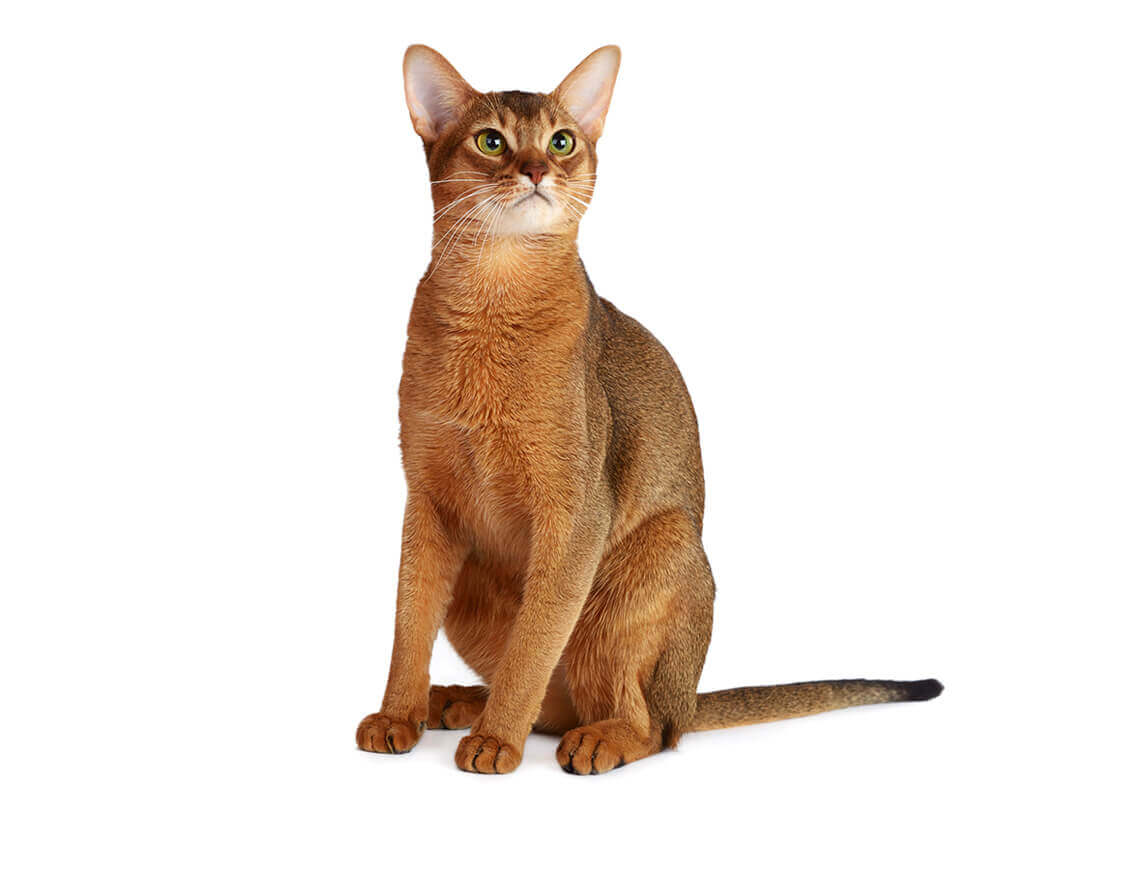
Abyssinian are elegant medium-sized cats with strong, lithe bodies and long, slender legs. They have round, wedge-shaped heads with distinctive small tufts on the tips of ears and large almond-shaped eyes. The short, close-lying coat of an Abyssinian cat, has a distinctive 'ticked' look caused by bands of colour on each hair. The most well known colour is 'ruddy' but there are several others.


The need-to-know


  • Highly active and inquisitive cat
  • Friendly but independent cat
  • Somehow talkative cat
  • Average build cat breed
  • Requires grooming once a week
  • Non hypoallergenic breed
  • Outdoor cat
  • Great family cat


Personality

The Abyssinian cat is quiet, intelligent and curious and is said to enjoy human company and become attached to its family. It enjoys space and activity, is a good climber, and will appreciate a garden full of trees and high places. Abyssinian cats are playful but tempered with some sense, so are not too reckless!


History and Origins

Country of Origin: Abyssinia (Ethiopia)


Other Names: : Abys, Bunny cat


The Abyssinian cat resembles the African wildcat, ancestor of the domestic cat. The history of the Abyssinian cat in the UK is a little obscure, but it is likely that it was brought back via army personnel from Abyssinia (now Ethiopia), in the 1860s. The early Abyssinian cats were crossed with British Shorthairs, and later with oriental breeds. Long-haired Abyssinian kittens have been found in litters for many years, and since the 1970s they have been developed as a separate breed called the Somali.


Nutrition and Feeding

Every cat is unique and each has their own particular likes, dislikes, and needs when it comes to food. However, cats are carnivores and every cat must obtain 41 different and specific nutrients from their food. The proportion of these nutrients will vary depending on age, lifestyle, and overall health. So it's not surprising that a growing, energetic kitten needs a different balance of nutrients in her diet than a less active senior cat. Other considerations to bear in mind are feeding the right quantity of food to maintain 'ideal body condition' in accordance with feeding guidelines and catering to individual preference regarding wet or dry food recipes.

Other Information

Health and common issues


Abyssinian cats can suffer from an inherited disease called pyruvate kinase deficiency that can cause anaemia. A reliable test is available for this and prospective owners should ask breeders if their cats have been tested and are clear of the problem. An eye problem, called progressive retinal atrophy, which causes progressive blindness has been identified in some countries, so it is worth asking the breeder about this as well.


Best cat breeds for children


While this breed tends to be excellent with kids, each cat has a different personality based on training and life experience. Please consult the adoption organisation, if you are adopting for details on a specific cat's character.