Devon Rex

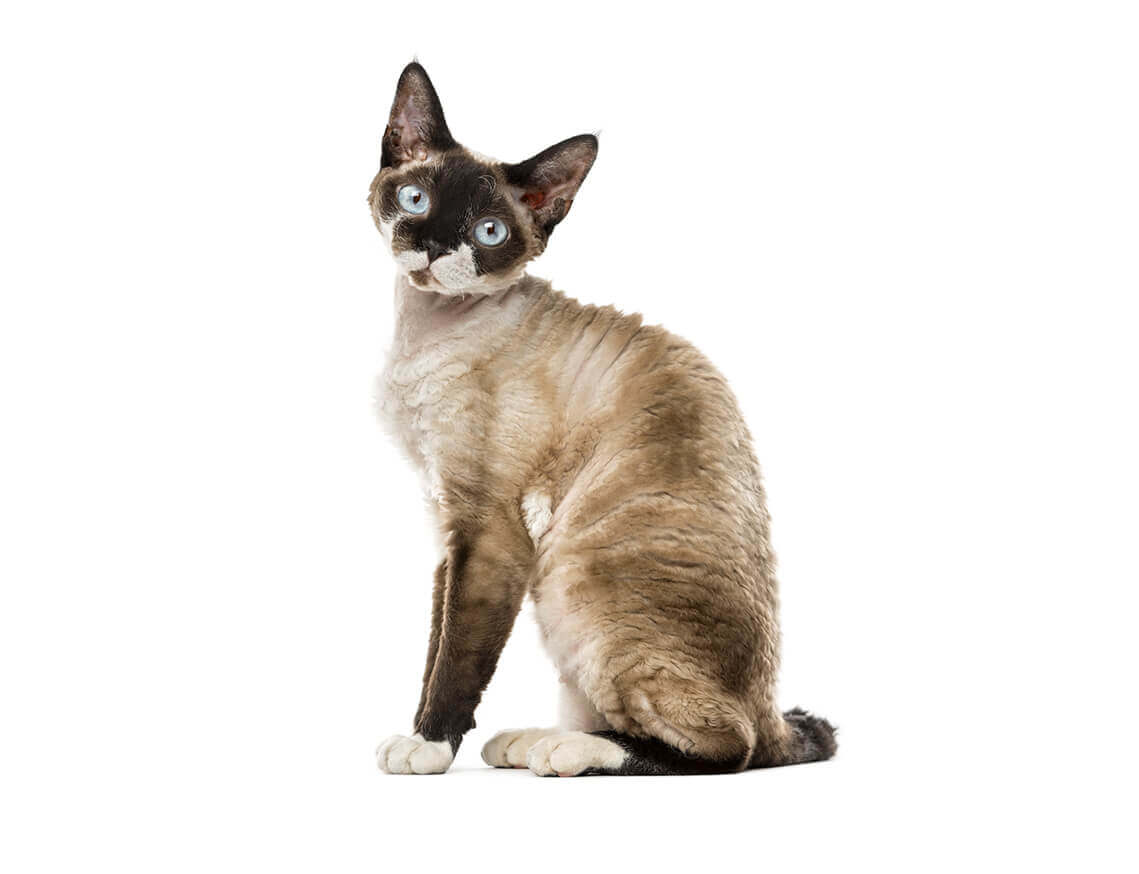
The first impression of a Devon Rex cat is of an impish face and a crinkly coat. The cheeks are wide, the eyes and ears are very large, and set low on the head. The short coat has guard hair that are wavy but is mostly made up of the undercoat of down hair. The Devon Rex cat has the characteristic Rex 'Marcel wave', and the fur forms ripples and waves, particularly on the back. The whiskers and eyebrows also curl. The Devon Rex cat breed can be any coat colour or pattern.


The need-to-know
 

  • Highly active and inquisitive cat
  • Friendly but independent cat
  • Quiet cat
  • Lean and elegant cat breed
  • Requires grooming once a week
  • Hypoallergenic breed
  • Needs some out-door space
  • May require familiarisation before living with children


Personality

Devon Rex cats are fondly described as 'little terrors' and 'monkeys in cats' clothing' with antics such as swinging from the curtains and climbing the wallpaper! They are lively and extroverted cats. They have several 'dog-like' qualities, such as fondness for fetching toys, and can be trained to walk on a harness and lead. They are very gentle and loving cats and hate to be bored or alone. Visitors to the house may be surprised to find that they are thoroughly investigated by a nosy Devon Rex cat before they have a chance to sit down!


History and Origins

Country of Origin: England (county of Devon)The Devon Rex cat breed stems from a curly-coated cat found in Devon in 1960. Like the Cornish Rex cat breed, the Devon Rex cat's coat is caused by a recessive gene, and inbreeding was necessary to perpetuate the breed. However, the Devon Rex cat gene is different to that which curls the coat of the Cornish Rex, and crossing Devon Rex cats and Cornish Rex cats produce litters of straight-coated kittens. The two mutations must have arisen independently, despite arising so close geographically, ie, in Devon and Cornwall. 


Nutrition and Feeding

Every cat is unique and each has their own particular likes, dislikes, and needs when it comes to food. However, cats are carnivores and every cat must obtain 41 different and specific nutrients from their food. The proportion of these nutrients will vary depending on age, lifestyle, and overall health. So it's not surprising that a growing, energetic kitten needs a different balance of nutrients in her diet than a less active senior cat. Other considerations to bear in mind are feeding the right quantity of food to maintain 'ideal body condition' in accordance with feeding guidelines and catering to individual preference regarding wet or dry food recipes.

Other Information

Health and common issues


Because of the nature of its coat, the Devon Rex cat can be prone to yeast infections of the skin that can cause ear problems, greasy deposits on the skin and itching. Devon Rexes can also be prone to baldness, a disorder known as hypotrichosis. Because of the back-crossing needed to establish the breed's initial gene pool, in the past there have been genetic spasticity problems associated with the breed (known as Devon Rex myopathy), but careful breeding has eliminated this now.


Best cat breeds for children


While this breed is not widely recognised as one of the best breeds for children, all cats are different and with the proper familiarisation may still be able to live with children.
 

Cymrics

The Cymric cat breed is solidly built and chunky with a similar body type to the British Shorthair cat breed with large eyes and widely spaced ears. The lack of a tail is the breed's most outstanding feature. Its hind legs are longer than the front legs. The Cymric cat's hair is thick and provides a layer of padding over the main body, adding to the round appearance. A rabbit-like hop can sometimes be seen in Cymric cats because of the spinal deformity, similar to spinabifida, which is associated with taillessness. Cymric cats come in all colours and patterns, except the pointed Siamese cat breed type.


The need-to-know
 

  • Playful and curious cat
  • Sociable and dependent cat
  • Quiet cat
  • Average build cat breed
  • Requires grooming every day
  • Non hypoallergenic breed
  • Needs some out-door space
  • Great family cat
Personality

The Cymric cat is very quiet, playful, and intelligent cat. It can be a little shy and reserved around strangers and tends to bond very closely with one individual. It is a breed that seems to keep its kitten-like behaviour well into adulthood.


History and Origins

Country of Origin: Isle of Man (UK)/Canada


The Cymric cat breed is a semi-longhaired version of the Manx cat. Though Cymric cat derives its name from Cymru the Celtic name for Wales, it originates from the Isle of Man. Tailless cats are common on the Isle of Man where inbreeding among the island cats allowed a naturally occurring tailless gene mutation to spread. As for the Manx cat, litters of Cymric kittens can have stumpy tails of various lengths (classed as rumpy-risers, stumpies, and longies) or no tails at all (rumpy). Breeding programmes in Canada in the 1960s lead to the popularity of Cymrics in the USA where only completely tailless animals are shown.


Other Information

Health and common issues


The lack of a tail is a severe genetic defect and the Cymric cat's 'deformed' spine may cause health problems including arthritis from an early age. In some cats, the anal passage may be narrowed and this can cause bowel blockages. As with all cats, Cymric cats and kittens need vaccinations, parasite control and annual veterinary health checks.


Best cat breeds for children


While this breed is not widely recognised as one of the best breeds for children, all cats are different and with the proper familiarisation may still be able to live with children.
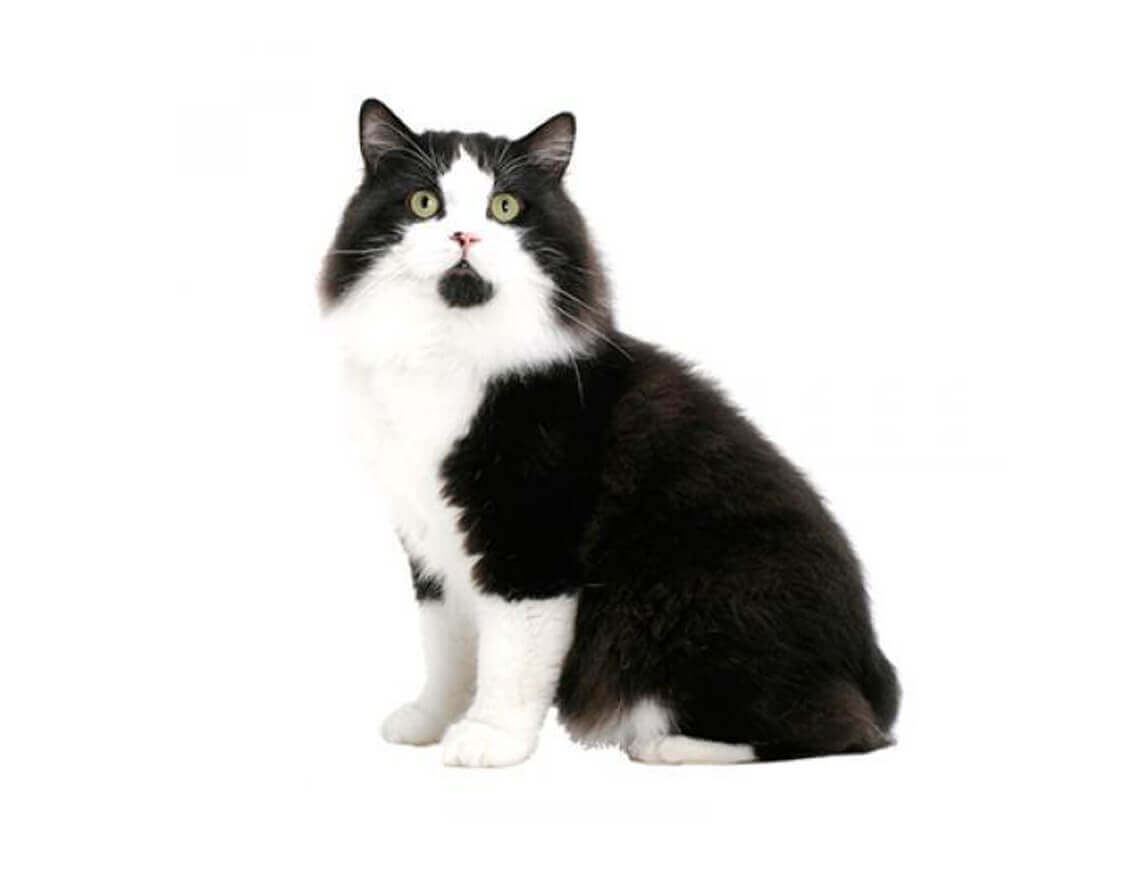
 

Cornish Rex

Cornish Rex cats are muscular and have a slender, rangy shape. They feel heavier than they look. The cat has a long wedge-shaped head, flat skull, and large ears set high. The most distinctive feature is its curly coat which is fine and soft to the touch. The curly coat has no guard hair and should wave and have a rippled look. The whiskers are curly like the coat. The Cornish Rex cat breed has a distinctive scent which some owners describe as slightly 'cheesy'. It can have any coat colour or pattern.


The need-to-know
 

  • Playful and curious cat
  • Friendly but independent cat
  • Somehow talkative cat
  • Lean and elegant cat breed
  • Requires grooming once a week
  • Hypoallergenic breed
  • Needs some out-door space
  • May require familiarisation before living with children
Personality

Cornish Rex cats have a mischievous side to their character and a personality that can almost be described as forever young! Rexes are very intelligent, enjoy playing and love to learn new tricks. They will happily play fetching games for hours on end. While they are lively cats, they do have quieter times when they are happy to curl up in a lap. Cornish Rex cats can become cold quickly and will always seek out the warmest place to sleep.


History and Origins

Country of Origin: England (county of Cornwall)The Cornish Rex cat breed owes its existence to a natural mutation that was discovered in a kitten born to a farm cat in Cornwall in 1950. It had a curly coat and was mated back to its mother and two of the resulting litter were born with the curly coats that are now associated with the breed. The Devon Rex cat and Cornish Rex cat breed curly hair mutations are different. Crossing Devon Rex cats and Cornish Rex cats produce litters of straight-coated kittens!


Nutrition and Feeding

Every cat is unique and each has their own particular likes, dislikes, and needs when it comes to food. However, cats are carnivores and every cat must obtain 41 different and specific nutrients from their food. The proportion of these nutrients will vary depending on age, lifestyle, and overall health. So it's not surprising that a growing, energetic kitten needs a different balance of nutrients in her diet than a less active senior cat. Other considerations to bear in mind are feeding the right quantity of food to maintain 'ideal body condition' in accordance with feeding guidelines and catering to individual preference regarding wet or dry food recipes.

Other Information

Health and common issues


One condition linked to the breed is hypotrichosis – hair loss leading to baldness. The unusual coat predisposes the cat to certain skin conditions including excessive yeast infection.


Best cat breeds for children


While this breed is not widely recognised as one of the best breeds for children, all cats are different and with the proper familiarisation may still be able to live with children.
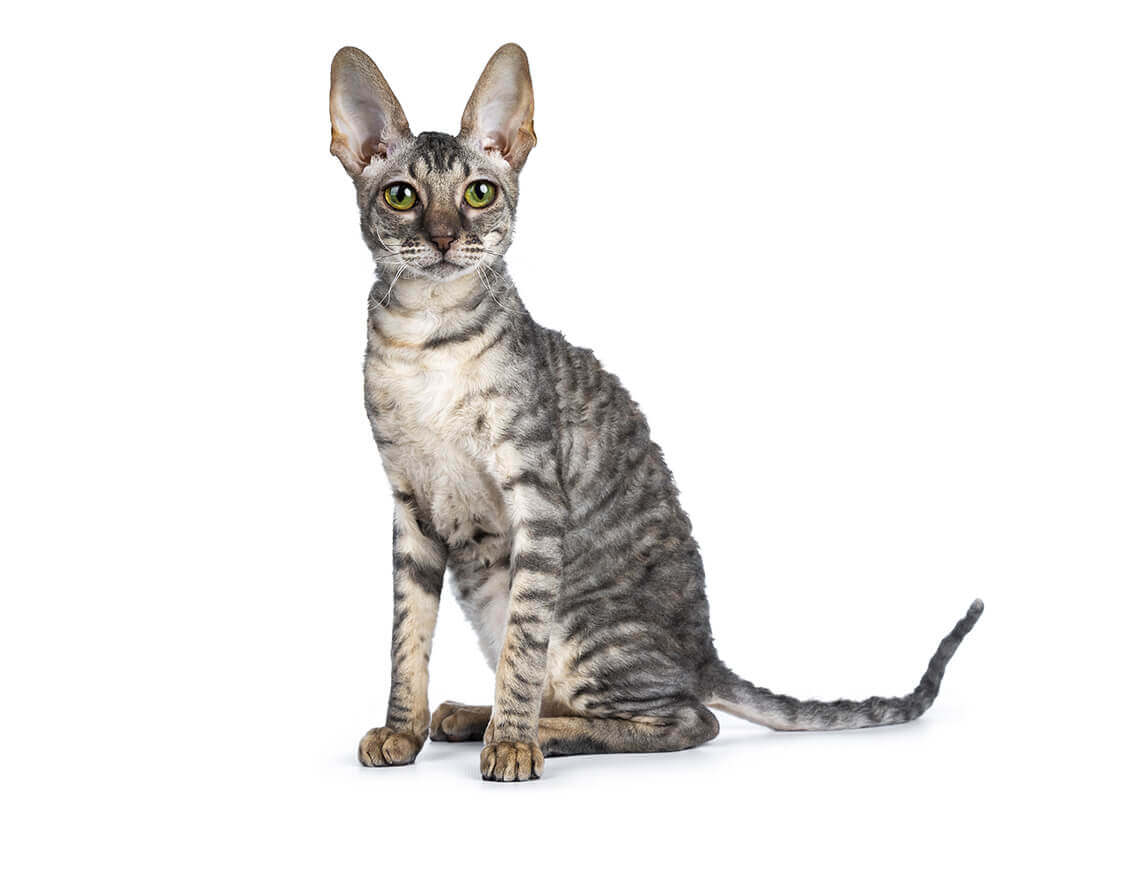
 

Chinchilla

The Chinchilla cat comes in one colour - white with green eyes. It has a broad head with small wide-set ears and a short open face. The eyes are large and round with brilliant colour. Although the Chinchilla cat tends to be more finely boned than most Persian cats, its legs are still fairly short, thick, and strong. The tail is short and bushy. The coat is long, thick and luxuriant with a dense, soft undercoat.


The need-to-know
 

  • Calm cat
  • Sociable and dependent cat
  • Quiet cat
  • Average build cat breed
  • Requires grooming every day
  • Non hypoallergenic breed
  • Needs some out-door space
  • May require familiarisation before living with children
Personality

The Chinchilla cat is sweet tempered, loving and affectionate. Persian-types are generally known to be fairly inactive and quiet. The Chinchilla cat breed is said to be more outgoing and extrovert than most Persian cats.


History and Origins

Country of Origin: England


The Chinchilla cat breed is really a specific type of Persian cat. The breed comes in one colour - a pure white coat that is subtly tipped with black to produce a silvery sheen. Its emerald green eyes are distinctively lined with black. The Chinchilla cat breed was the first cat to have been selectively bred for a specific colour. It was first shown in 1894 in Crystal Palace, London.


Nutrition and Feeding

Every cat is unique and each has their own particular likes, dislikes, and needs when it comes to food. However, cats are carnivores and every cat must obtain 41 different and specific nutrients from their food. The proportion of these nutrients will vary depending on age, lifestyle, and overall health. So it's not surprising that a growing, energetic kitten needs a different balance of nutrients in her diet than a less active senior cat. Other considerations to bear in mind are feeding the right quantity of food to maintain 'ideal body condition' in accordance with feeding guidelines and catering to individual preference regarding wet or dry food recipes.

Other Information

Health and common issues


The Chinchilla cat breed is a type of Persian and there is some overlap between the Chinchilla cat type and other Persian Longhairs, so many of the problems of the Persian cat can also occur in the Chinchilla cat breed. Because the head shape has been shortened and the face flattened, there can be jaw deformities which can lead to dental disease and potential problems with eating and drinking. Small nostrils and a soft palate which is too long can also lead to severe breathing problems. The tear ducts may not follow their natural path and so the eyes run and wet the face constantly – this can lead to skin rashes and sores on the face. The flat nature of face also increases the chances of eye disease. Persians can carry a gene that leads to kidney failure (called autosomal dominant polycystic kidney disease) through the development of cysts in the kidney. This condition was found in more than a third of all Persian cats and Exotic shorthaired cats in the 1990s when screening tests became available and although it seemed less prevalent in Chinchillas, it was still there. Using screening, breeders are now working to try to eradicate the problem – always ask the breeder to show the PKD certificates for the cats used to produce your kitten.


Best cat breeds for children


While this breed is not widely recognised as one of the best breeds for children, all cats are different and with the proper familiarisation may still be able to live with children.
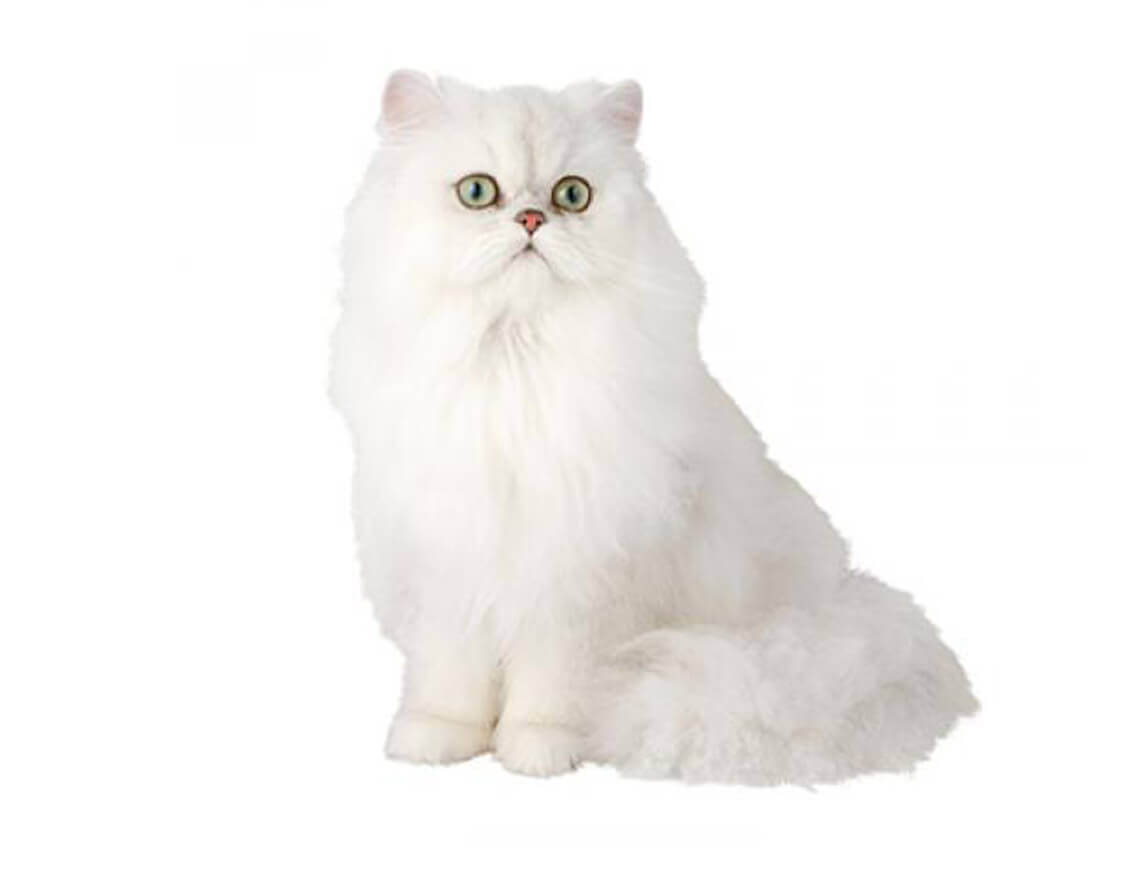
 

Burmilla

The Burmilla cat breed is of medium build, similar to Burmese cats, with a sturdy, well-muscled body and a strong straight back. The female is much smaller and daintier than the male. The head has a gently rounded dome, a wedge-shaped muzzle and wide-set ears. The expressive eyes may be any colour from gold through to green. The coat is short and close lying with a pale undercoat and even 'tipping' (darker colour at the tip of the hair) over the rest of the body and a distinct 'M' marking on the forehead.


The need-to-know
 

  • Playful and curious cat
  • Friendly but independent cat
  • Somehow talkative cat
  • Average build cat breed
  • Requires grooming once a week
  • Non hypoallergenic breed
  • Needs some out-door space
  • May require familiarisation before living with children
Personality

There are no specific conditions relating to Asians in the veterinary literature, however, there may be a tendency for this group to develop conditions associated with the Burmese. Some lines of this breed appear to be more susceptible to diabetes mellitus than other breeds.


History and Origins

Country of Origin: Britain


The Burmilla cat is a shorthaired member of the Asian cat breed group. The breed was created in 1981 by an accidental mating between a male Chinchilla cat and a lilac female Burmese cat. The kittens looked and behaved like Burmese cats but they had the stunning silver colouring and the tipped markings of the Chinchilla cat breed. It gained so much interest that the pair were allowed to mate again, and a new breed was formed.


Nutrition and Feeding

Every cat is unique and each has their own particular likes, dislikes, and needs when it comes to food. However, cats are carnivores and every cat must obtain 41 different and specific nutrients from their food. The proportion of these nutrients will vary depending on age, lifestyle, and overall health. So it's not surprising that a growing, energetic kitten needs a different balance of nutrients in her diet than a less active senior cat. Other considerations to bear in mind are feeding the right quantity of food to maintain 'ideal body condition' in accordance with feeding guidelines and catering to individual preference regarding wet or dry food recipes.

Other Information

Health and common issues


There are no specific conditions relating to Asians in the veterinary literature. However, there may be a tendency for this group to develop conditions associated with the Burmese. Some lines of this breed appear to be more susceptible to diabetes mellitus than other breeds.


Best cat breeds for children


While this breed is not widely recognised as one of the best breeds for children, all cats are different and with the proper familiarisation may still be able to live with children.
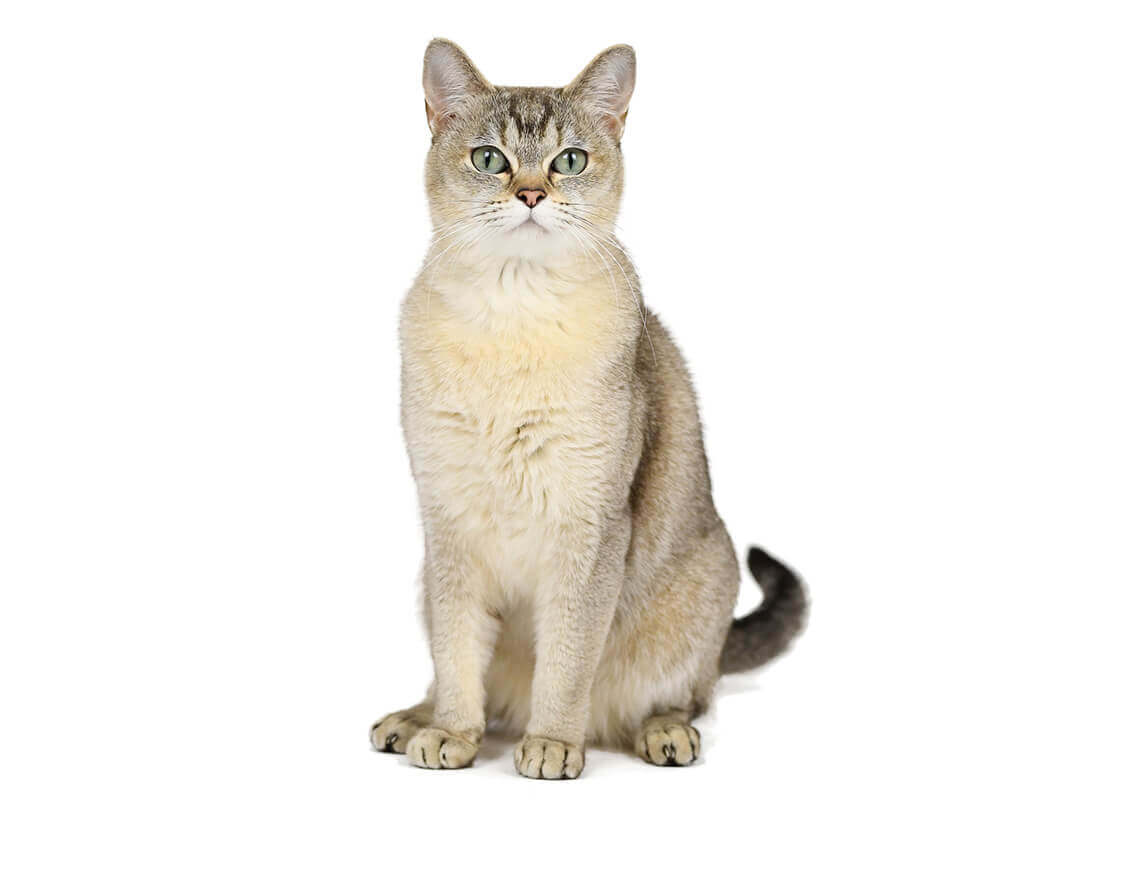
 

Burmese

The Burmese cat is medium-sized, with a rounded head and an elegant yet well-muscled body. The breed is not as large and sturdy as the British Shorthair cat breed nor as slender and dainty as Siamese cats. The eyes are large and lustrous and may be any shade of yellow often seeming to change in variations in light quality. The tail is straight and ends in a rounded paintbrush tip. The fine, short glossy coat is a distinctive feature of the Burmese cat and lies close to the body. The Burmese cat comes in 10 colours but in all colours, the underparts will be lighter than the back and the shading will be gradual.


The need-to-know
 

  • Highly active and inquisitive cat
  • Sociable and dependent cat
  • Very talkative cat
  • Lean and elegant cat breed
  • Requires grooming once a week
  • Non hypoallergenic breed
  • Outdoor cat
  • Great family cat
Personality

The Burmese cat is an extremely friendly and affectionate creature that needs attention from human beings to be happy. The Burmese cat breed is very demanding and Burmese cats will follow owners around the house crying for attention – they might even climb their owner's leg begging to be picked up and cuddled! As very vocal cats, they will often greet owners when they return home or demand what they want and join in with all activities. Loyal to their owners, they are sometimes known as the 'dog cat' as many are happy to play retrieve. They are very intelligent and can work out problems such as opening doors are often successful escape artists!


History and Origins

Country of Origin: Burma


A dark brown cat resembling a Siamese cat in shape was first taken from the far east to California in the 1930s. As there were no other Burmese cats in America at the time, the 'Wong Mau' breed was mated with a Seal Point Siamese cat. Through selective breeding, a new dark-coated breed became known as the Burmese cat we know today. The Burmese cat was first recognised as a breed in America and came to Europe in the 1940s. Breeding programmes have since developed a range of coat colours.


Nutrition and Feeding

Every cat is unique and each has their own particular likes, dislikes, and needs when it comes to food. However, cats are carnivores and every cat must obtain 41 different and specific nutrients from their food. The proportion of these nutrients will vary depending on age, lifestyle, and overall health. So it's not surprising that a growing, energetic kitten needs a different balance of nutrients in her diet than a less active senior cat. Other considerations to bear in mind are feeding the right quantity of food to maintain 'ideal body condition' in accordance with feeding guidelines and catering to individual preference regarding wet or dry food recipes.

Other Information

Health and common issues


Burmese cats are quite robust healthwise but some lines of the breed do seem to be susceptible to diabetes mellitus. Hypokalaemic polymyopathy (muscle weakness due to low levels of blood potassium) is seen occasionally in young Burmese cats. A few Burmese cats have developed an unusual condition called feline orofacial pain syndrome. This condition causes exaggerated licking and chewing movements, and pawing at the mouth, which can be very distressing for the cat. In the USA there has been a problem with a head and brain deformity, but this is not reported in other countries. Some lines of Burmese cat breeds also have unusual eating habits and will eat wool garments and other inedible items (this is known as pica).


Best cat breeds for children


While this breed tends to be excellent with kids, each cat has a different personality based on training and life experience. Please consult the adoption organisation, if you are adopting for details on a specific cat’s character.


British Shorthair

The British Shorthair cat is a largish breed which could be described as chunky or cobby. Many of its contours are rounded – face and cheeks, ears, eyes and head. Its short broad nose sits above a deep strong chin and these, along with its deep chest and short, thick tail, all convey a strong and sturdy cat. The coat is short and dense without being fluffy and comes in over 100 colours and coat pattern combinations.


The need-to-know


  • Highly active and inquisitive cat
  • Sociable and dependent cat
  • Quiet cat
  • Average build cat breed
  • Requires grooming once a week
  • Non hypoallergenic breed
  • Outdoor cat
  • Great family cat
Personality

Some consider British Shorthair cats as the 'gentle giants' of the cat world. They are loving and affectionate with people and other animals. British Shorthair cats do not continuously demand human attention and are quieter than their Oriental counterparts, nor do they have the curious nature that gets many Oriental cat breeds into trouble!


History and Origins

Country of Origin: Britain


Although there are only written records for the British Shorthair cat that date back to the beginning of the century, the breed has been in existence for hundreds of years. They were exported in large numbers to the New World where they were very popular. The variety of colours and coat patterns available today have come from the selective breeding of the best street cats during the nineteenth century and careful breeding plans to the present day.


Nutrition and Feeding

Every cat is unique and each has their own particular likes, dislikes, and needs when it comes to food. However, cats are carnivores and every cat must obtain 41 different and specific nutrients from their food. The proportion of these nutrients will vary depending on age, lifestyle, and overall health. So it's not surprising that a growing, energetic kitten needs a different balance of nutrients in her diet than a less active senior cat. Other considerations to bear in mind are feeding the right quantity of food to maintain 'ideal body condition' in accordance with feeding guidelines and catering to individual preference regarding wet or dry food recipes.

Other Information

Health and common issues


British Shorthair cats are generally a robust breed without too many problems. Because they have been bred with Persian cats in the past there is a small chance of a being affected by polycystic kidney disease. This disease causes kidney problems because of the cysts or holes which develop progressively. There is a gene test available, so it is worth asking the breeders about the status of their cats. Good breeders should know about it.


Best cat breeds for children


While this breed is not widely recognised as one of the best breeds for children, all cats are different and with the proper familiarisation may still be able to live with children.
 

Bombay

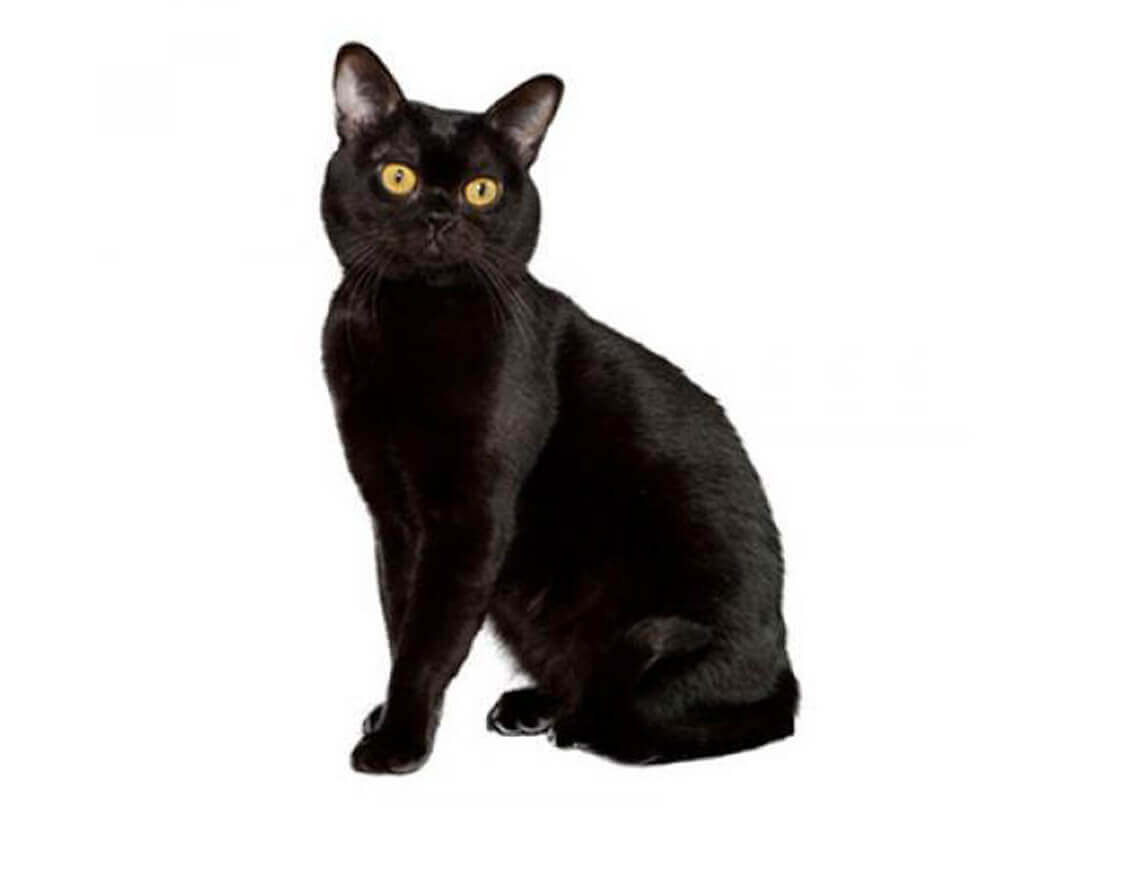
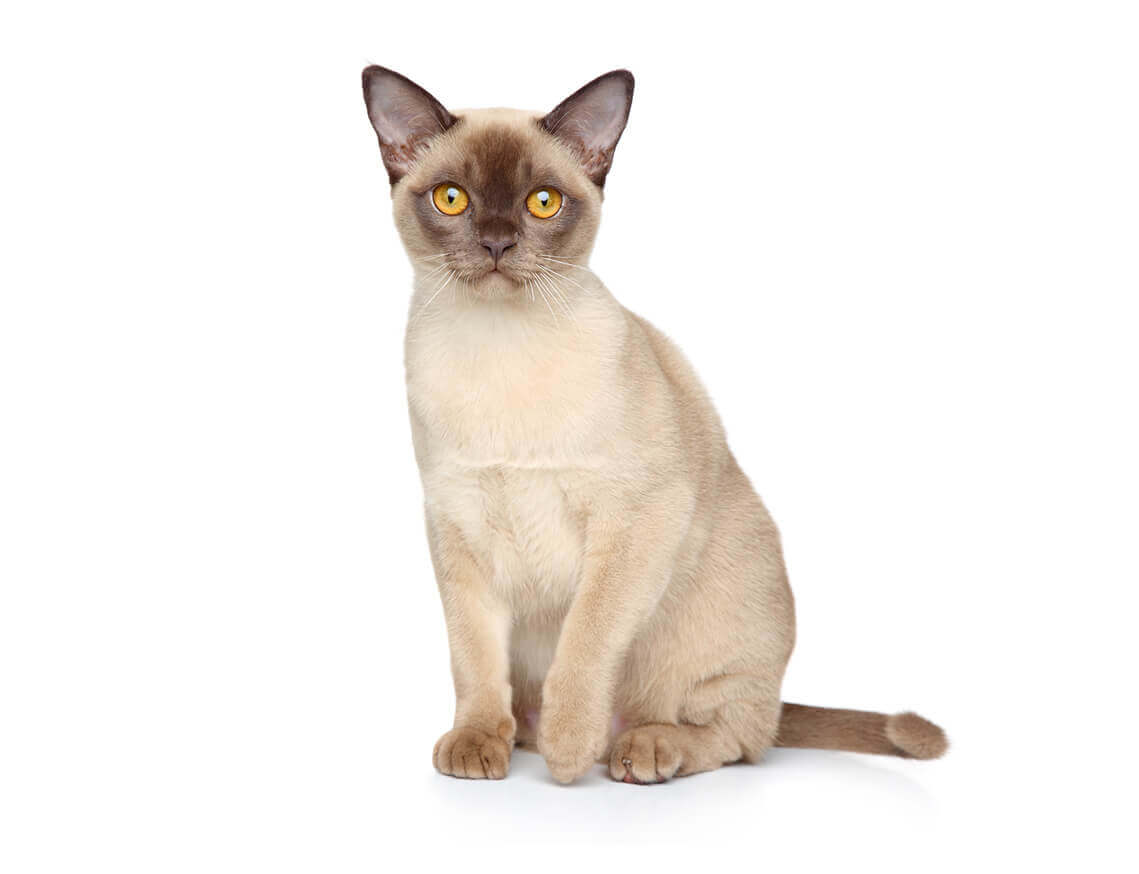
The Bombay cat is medium built, with a glossy, jet black coat that shimmers like patent leather. Its head has a gently rounded dome, rounded ears and a broad blunt muzzle. The beautiful copper/gold eyes are set well apart and are full and expressive. The body is firm and muscular with a strong straight back. The nose leather and eye rims are black and the paw pads are black or dark brown.


The need-to-know
 

  • Calm cat
  • Sociable and dependent cat
  • Somehow talkative cat
  • Average build cat breed
  • Requires grooming once a week
  • Non hypoallergenic breed
  • Needs some out-door space
  • Great family cat
Personality

Cats in the Asian cat breed group are extremely friendly and affectionate. Bombay cats have unique voices and are usually very vocal. They are not a traditional.


History and Origins

Country of Origin: Britain and USAThe Bombay cat is one of the Asian group of cats brought about by breeders attempting to create cats of Burmese type, in colours not recognised in the Burmese.


Nutrition and Feeding

Every cat is unique and each has their own particular likes, dislikes, and needs when it comes to food. However, cats are carnivores and every cat must obtain 41 different and specific nutrients from their food. The proportion of these nutrients will vary depending on age, lifestyle, and overall health. So it's not surprising that a growing, energetic kitten needs a different balance of nutrients in her diet than a less active senior cat. Other considerations to bear in mind are feeding the right quantity of food to maintain 'ideal body condition' in accordance with feeding guidelines and catering to individual preference regarding wet or dry food recipes.

Other Information

Health and common issues


Bombay cats are generally long lived and can live well into their late teens. Currently, there are no known diseases associated specifically with this breed.


Best cat breeds for children


While this breed is not widely recognised as one of the best breeds for children, all cats are different and with the proper familiarisation may still be able to live with children.
 

Birman

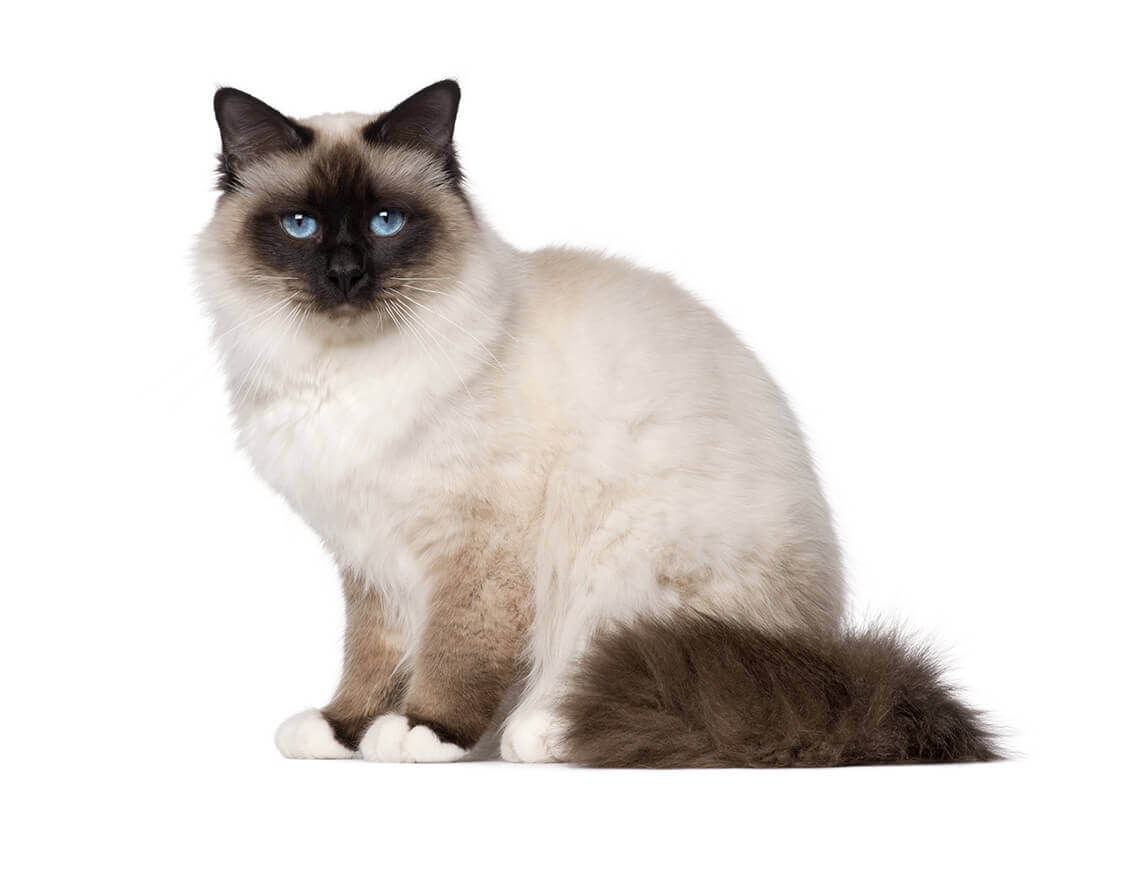
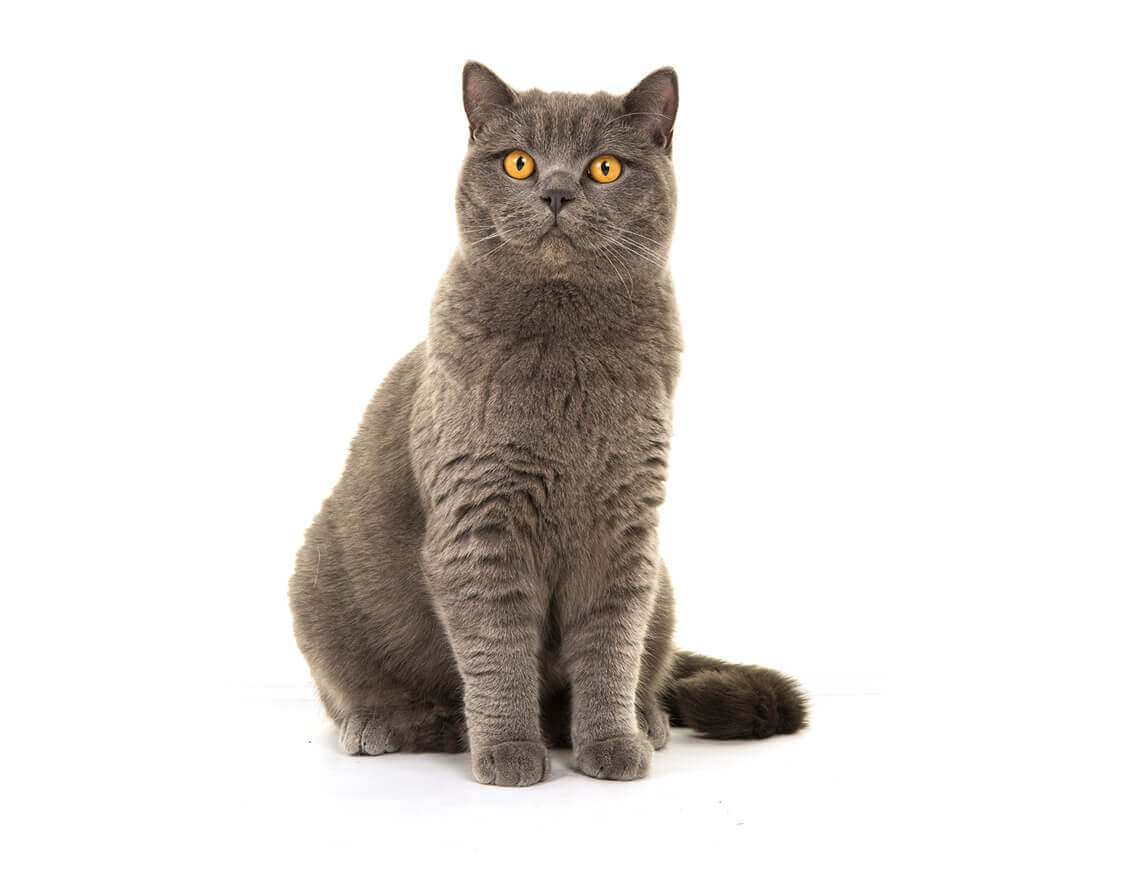
A Birman cat is semi-longhaired with darker colouring to the points, face, legs, ears and tail, and a pale toning body colour. It is a largish cat with thickset body and short legs. The Birman cat has blue eyes and four pure white feet. The front gloves covering only the feet, but the rear socks are longer. The head is broad and rounded with medium size ears . Birman cats come in lots of different colours.


The need-to-know


  • Highly active and inquisitive cat
  • Sociable and dependent cat
  • Quiet cat
  • Average build cat breed
  • Requires grooming every day
  • Non hypoallergenic breed
  • Needs some out-door space
  • Great family cat
Personality

Birman cats are known as especially loving and affectionate breeds, having been bred as companion cats for many generations. They are docile and quietly spoken. Birman cats are sociable, smart and friendly cats, curious and people-oriented, but not too noisy.


History and Origins

Country of Origin: Burma/France


Other Names: : Sacred cat of Burma


While there is no clear record of the origin of Birman cats, one pair was taken to France around 1919, from which the breed became established in the western world. However, Birman cats were almost wiped out as a breed during World War II and were heavily outcrossed with long-hair breeds (mainly Persians) and also Siamese lines to rebuild the breed. By the early 1950s, pure Birman cat litters were once again being produced.


Nutrition and Feeding

Every cat is unique and each has their own particular likes, dislikes, and needs when it comes to food. However, cats are carnivores and every cat must obtain 41 different and specific nutrients from their food. The proportion of these nutrients will vary depending on age, lifestyle, and overall health. So it's not surprising that a growing, energetic kitten needs a different balance of nutrients in her diet than a less active senior cat. Other considerations to bear in mind are feeding the right quantity of food to maintain 'ideal body condition' in accordance with feeding guidelines and catering to individual preference regarding wet or dry food recipes.

Other Information

Health and common issues


Some young Birman cats show evidence of impaired kidney function on blood tests – the significance is not certain but some may go on to develop kidney failure.


Best cat breeds for children


While this breed tends to be excellent with kids, each cat has a different personality based on training and life experience. Please consult the adoption organisation, if you are adopting for details on a specific cat’s character.


Bengal

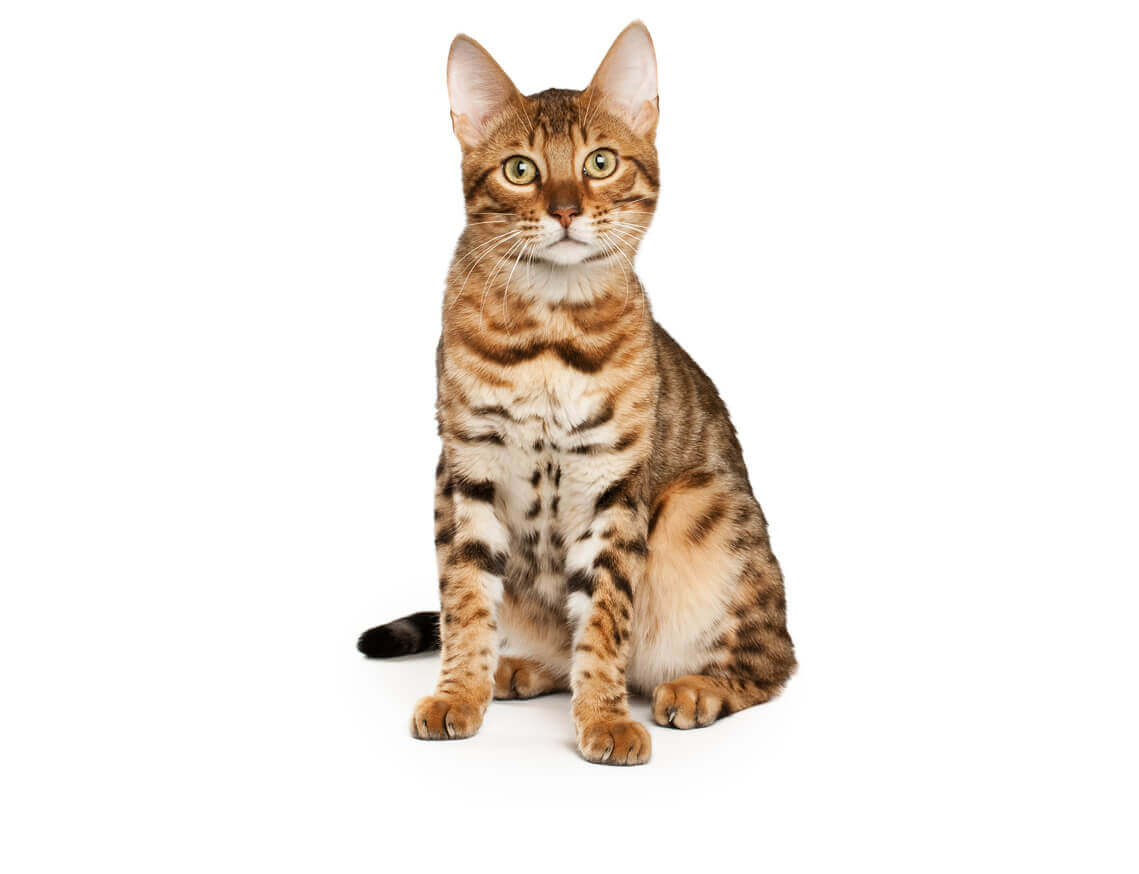
The Bengal cat is a large, sleek and very muscular cat with a thick tail that is carried low. The Bengal cat's wild appearance is enhanced by its distinctive, thick and luxurious, spotted or marbled coat. Its broad head has small ears and pronounced whisker pads and eyes are black rimmed and almond-shaped. The tail is thick, tapering to a black tip. There is no other breed of cat which displays the gold or pearl dusting effect (glitter) found on some Bengal cats and can be very demanding because of high activity levels.


The need-to-know


  • Highly active and inquisitive cat
  • Friendly but independent cat
  • Very talkative cat
  • Lean and elegant cat breed
  • Requires grooming once a week
  • Non hypoallergenic breed
  • Outdoor cat
  • May require familiarisation before living with children


Personality

Bengal cats have an affectionate disposition. They have an extremely energetic, playful nature. Bengal cats are intelligent and seem to look at everything around them as, 'can this be played with?' They are agile, love to climb and can be vocal with a distinctive voice which has been described as a cooing or chirping, or as a strange gravelly sound. Bengal cats are a very vocal breed and have a wide vocabulary that may on occasion be quite strident, especially in unfamiliar situations. They need companionship during the day to prevent boredom as well as opportunities to climb and simulate hunting.


History and Origins

Country of Origin: USAThe Bengal cat is a relatively new breed of cat that was originally created by crossing an Asian Leopard Cat with a domestic cat in the USA. The Bengal cat derives its name from the Latin name of its wild ancestor, Felis Bengalensis (Asian Leopard Cat). The goal in developing the domestic Bengal cat breed was to preserve a strong physical resemblance to its beautiful wild ancestor and, at the same time, the new domestic breed was designed to be a pleasant and trustworthy family companion.


Nutrition and Feeding

Every cat is unique and each has their own particular likes, dislikes, and needs when it comes to food. However, cats are carnivores and every cat must obtain 41 different and specific nutrients from their food. The proportion of these nutrients will vary depending on age, lifestyle, and overall health. So it's not surprising that a growing, energetic kitten needs a different balance of nutrients in her diet than a less active senior cat. Other considerations to bear in mind are feeding the right quantity of food to maintain 'ideal body condition' in accordance with feeding guidelines and catering to individual preference regarding wet or dry food recipes.

Other Information

Health and common issues


There are no inherited defects listed for the Bengal cat breed yet but it is suggested that they may have a higher prevalence of a heart condition called hypertrophic cardiomyopathy than some breeds. Some Bengal cats also seem to be more susceptible to feline infectious peritonitis.


Best cat breeds for children


While this breed is not widely recognised as one of the best breeds for children, all cats are different and with the proper familiarisation may still be able to live with children.