Sorry, you need to enable JavaScript to visit this website.
Skip to main content
Essential Dog Accessories for Your Adolescent Puppy
1 min read
When your little puppy grows up their requirements change, which means that you need to think about what kind of dog equipment they need as they become a teenager! Read our guide for our top tips and advice to make the teenage years a breeze. Now your puppy is growing up and has approached what we call dog adolescence, most of the things you bought when they were a young puppy have been outgrown, and it’s time to go shopping again! Just like when they were smaller, you may start wondering: what dog accessories do I need? Read on for our guide to knowing what kind of puppy equipment to choose for your pup as they become an adolescent. Choosing the right collar and lead as your puppy gets older By now your teenage dog will have grown out of their puppy collar, as with lots of their other puppy equipment, and will probably be ready for their first adult collar. You need to make sure you get a collar that is going to be comfortable for your dog to wear - so find a soft material or padded leather one that doesn’t have hard edges. The wider the collar the better, as it will spread any pressure over a greater area – making it gentler around your dog’s neck. You will be doing more training with your dog when you are out and about, so finding a 6-inch training lead with clips on both ends and various D-rings to adjust the length will be a great investment. They are wonderful to add to your selection of dog equipment: great for walks, classes, and also useful if you need to secure your dog to anything. Find one that is strong but also comfortable for you to hold. Stay away from any collars that can tighten around the dog’s neck, such as choke chains, and extendable leads.
Puppy Care
Enriching You and Your Dog’s Life
1 min read
Enrichment is a word that’s used quite often when talking about ways to engage with your dog but what does it really mean and why is it so important? Enrichment activities will channel your dog’s natural behaviours in a way that can be encouraged and celebrated. It’s vital for a dog’s welfare that they are encouraged to be, well, DOGS! It provides both mental and physical stimulation and one of the reasons it’s discussed as part of training and behaviour modification plans is because it’s a means of reducing boredom, which can often lead to behaviours that humans consider undesirable. Would you rather your dog gets their chewing fun through a massive Kong* filled with nutritious and delicious food, or by dismantling your sofa? Walkies, while vital for your dog’s well-being isn’t enough. A slow-feeder, while probably a good thing for your dog, isn’t enough. One training session, while fabulous, isn’t enough for their mental well-being. Enrichment is something that needs to be considered each and every day. It’s not an ‘added extra’ when you share your life with a dog; it underpins their mental and physical health needs. If you don’t provide things to enrich their lives, they’ll find their own entertainment or coping mechanisms and we can almost guarantee you won’t like what they come up with. Getting to know your dog, taking into account their breed or breed mix and learning about their favourite things to do will help you choose the best ways to keep them occupied and entertained. Some dogs would rather de-stuff a toy than chew a bone. Some dogs need a few different toys and other dogs have a favourite. Some dogs love relaxing with a food toy and other dogs will enjoy scent games around the garden before snoozing. Most of the so-called ‘problem’ behaviours that are displayed by dogs and cause headaches for humans are actually perfectly normal dog behaviours that need an outlet, or they’re providing an outlet for a bored dog. My dog barks at everything. My dog keeps digging in the garden. My dog chews my favourite things. Dogs need to bark, dig and chew; it’s your job to provide a fun and interactive way for them to do what they need to do.
Ear Mites in Dogs: Symptoms and Treatment
1 min read
Have you noticed your dog scratching and shaking their head more than usual? The culprit might be an almost invisible insect causing irritation and making your dear pet friend extremely uncomfortable. Dog ear mites are unfortunately a common thing in the canine world. Find out what to do when they choose your dog as their host. What are ear mites? Ear mites are insects similar to ticks that live inside the ear canal but can also be found on the skin. Barely visible to the naked eye, they can only survive for a very limited time without a host to live on, which makes them extremely eager to find a welcoming dog. This means that ear mites are extremely contagious, hopping from dog to dog or even from cat to dog in no time. What are the symptoms of ear mites in dogs? Ear mites are irritable little creatures, so one of the first symptoms of dog ear mites will be an intense itch. You will notice your pup shaking their head or rubbing their ear against the carpet. The symptoms of ear mites in dogs typically include: • Ear scratching • Head shaking • Dark discharge from the affected ear • Skin lesions around the ear However, these symptoms are common for many parasitic infections, so the best thing to do before starting any sort of treatment is to book an appointment with your vet to rule out other possible conditions. What causes ear mites in dogs? Dogs will usually pick up ear mites from another pet. It can be another dog or cat, and mites can pass very quickly between animals. They can only live in the environment for a limited time and with such a small window of time at their disposal, they’re quick to find an unsuspecting dog to claim as their host. Mites hop around from host to host, so if you are lucky enough to have multiple pets in the family, it’s very likely that once one of them gets ear mites, the rest will follow shortly.
Down Syndrome-Like Symptoms in Cats
1 min read
As cats can suffer from many of the same disorders as humans, many often find themselves wondering, can cats have down-syndrome? In this article we explore the topic and provide the answers to all of your questions. Can cats have Down syndrome? This question has become more common in recent years due to the easier sharing of images afforded by the Internet. Getting to see more cat photos means that we have the opportunity to get to know unique cats that we wouldn’t otherwise have seen. You might have seen or heard about cats that look and behave a little ‘differently’, becoming known on the Internet for being ‘Down syndrome cats.’ Although the physical and behavioural symptoms of these cats may present like a type of feline Down syndrome, it is impossible for them to truly be ‘Down syndrome’, as this is something that exists solely in humans. What is Down syndrome? Down syndrome is a congenital disorder in humans, affecting the people that have it both physically and intellectually. It arises from a chromosomal defect. In humans, the nucleus of each cell contains 23 pairs of chromosomes, and people with Down syndrome have three copies - either complete or partial - of chromosome 21. They tend to have certain physical characteristics like low muscle tone, short stature and a flat nasal bridge, and will also exhibit some degree of learning difficulty.
Most breeders will ask that you wait until your new puppy is eight weeks old before they’ll let you pick them up – which migh
Dog Proof Your Home with a Dog Friendly Garden
1 min read
Most breeders will ask that you wait until your new puppy is eight weeks old before they’ll let you pick them up – which might feel like an eternity! This is a great opportunity to start dog-proofing your home and preparing for your new arrival, so that when you bring your puppy or new dog home, your house will be a safe and welcoming environment.
Puppy Care
Dog Hot Spots and How to Treat Them
1 min read
Hot spots in dogs are a common skin condition. Find out what they are and how to treat them once they show up, so you can get your dog back to their usual happy self. If you’ve noticed your dog itching more than usual and discovered a moist red spot on their skin under their fur, your beloved canine friend might be dealing with a skin condition known as dog hot spots. In this article we will look at what they are and how they can be treated effectively so your dog can get back to their normal happy self. What are dog hot spots? Dog hot spots are areas of infected skin that look red, wet and sometimes raised. Officially known as Moist Dermatitis, hot spots can be found anywhere on the body and can increase in size very quickly. Your dog will experience them as itchy and sometimes painful patches and will often try to soothe hot spots with scratching, licking or biting.
Dog Feeding and Loss of Appetite in Your Dog
1 min read
Although dogs have a reputation for eating anything and everything, some are quite fussy and others can suddenly go off their food. Discover what you can do about your picky dog below. Does your dog shuffle up to their food bowl and sniff disapprovingly, yet the minute you sit down to eat they stare at you with big, begging eyes? If so, it’s probably down to one of two things: your dog may have lost their appetite because they’re feeling unwell, or they’re simply a fussy eater. What causes dogs to lose their appetites? The first thing you need to do is consult your vet to rule out illness, dental problems or a reaction to a vaccination or allergen. If they get the all clear from the vet, it’s time to address the pickiness – for both of your sakes!
Dog Ear Problems: Symptoms, Causes & Treatment
1 min read
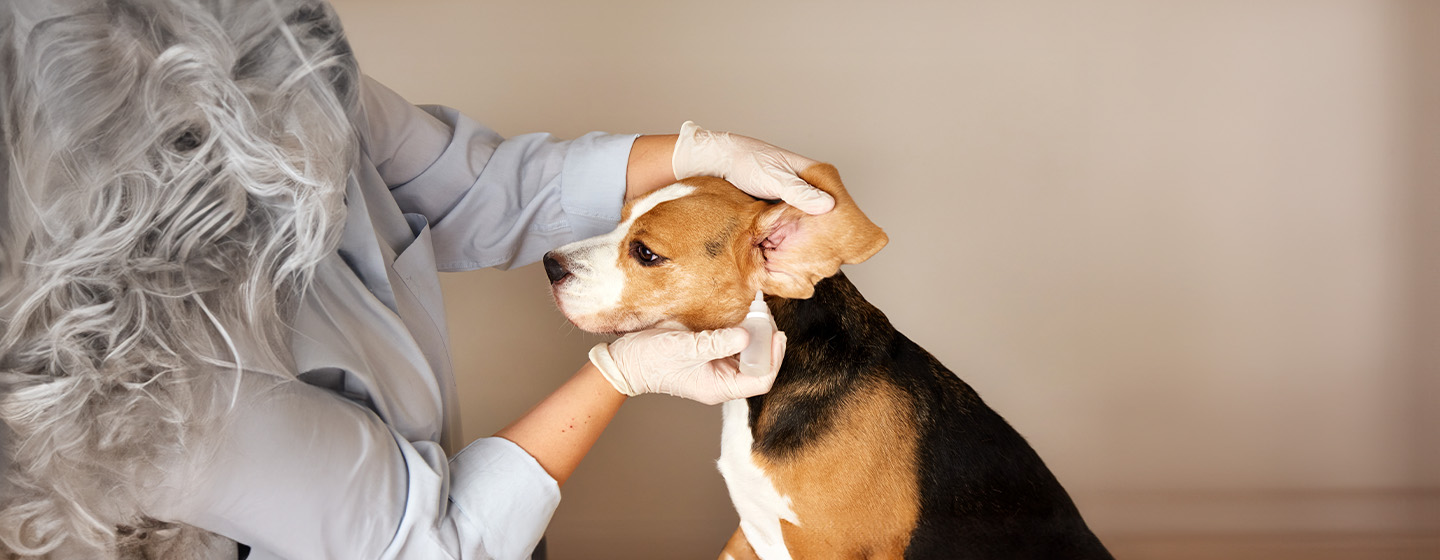
Ear infections in dogs aren’t uncommon, but with the right care and treatment you can keep your dog’s ears nice and clean, and prevent further earache for both of you! Symptoms of dog ear problems Your dog’s ears really benefit from a regular check-up, which is something you can share with them as part of an enjoyable grooming routine. Look out for any changes in your dog’s ear health; you know them best. Your dog's ears should always be clean and without any thick brown or green waxy discharge. There should also be no redness, itchiness or unusual smells coming from them. Unusual behaviour in your canine companion might also indicate a problem. If they start to scratch their ears frequently, shake their head more than normal, hold their head to one side, or rub one side of their face along the carpet or grass, it’s best to take them to your vet for a thorough ear examination. Severe ear problems and ear infections in dogs can have a more serious effect, such as loss of balance, which can be distressing for you both. (Bear in mind that balance loss may also be due to other causes, so always visit your vet for advice in such instances – that way you’ll know if something else is wrong.)
Dog Brain Games
1 min read
Classic games like ‘fetch’ are lots of fun for you and your dog, but exercise isn’t just about running around. Mental exercise is important too, as it can help fight boredom and teach your dog great new skills. Dog brain games can help keep your pet on their toes when it’s too rainy to play outside. They’re also great for dogs of any age – brain games for puppies challenge their developing brains and keep them learning new skills. They can also help keep adult dogs stimulated and may even help senior dogs stay alert and active. We’ve put together five of our favourite brain games for dogs. 1. Treasure hunt This is a great brain game to test your dog’s thinking skills! Hide pieces of your dog’s favourite treat around the house (or if it’s nice outside, the garden) and let them hunt for a tasty reward. Your dog will have to use their nose to scent out the prize. Every time you play this dog brain game, hide the treats in increasingly difficult places to keep things interesting. If your dog loves to follow scents (for example, if you have a scent hound) try leaving a ‘trail’ around the house or garden for them to follow. Just take a delicious-smelling treat, touch it on surfaces around the house in a continuous trail, and hide it at the end. 2. Brain training toys A really simple brain game for dogs involves hiding treats inside a special toy. There are many toys you can buy for this purpose – just put some of your dog’s favourite treat inside, and watch them try to release it. This may involve rolling their toy a certain way, squeezing it, or using sheer determination. Whichever toy you choose, it will help spread their treats or food out over a longer period of time, as well as keeping them occupied.
Dog Allergies: Symptoms, Triggers and Treatment
1 min read
Just like us, our dogs can suffer from certain allergies. Discover what the most common dog allergies are and how they’re diagnosed with Purina. Dog allergies are a reaction to foreign substances in your dog’s immune system – which is the same cause of allergic reactions in humans! Unfortunately, where it’s relatively simple to diagnose allergies in humans, it’s usually quite difficult for dogs as there are many different types of allergies and the symptoms often overlap. This makes it hard to understand which allergies they’re actually suffering from. If you suspect that your dog may be suffering from allergies, you may be wondering about the potential dog allergy symptoms and when to seek help from your vet. Keep reading to find out everything you need to know. Dog skin allergies Skin allergies, also known as allergic dermatitis is one of the most common types of dog allergies. These are usually caused by reactions to flea bites or their surrounding environment such as pollen, dust or mould.

Pagination

  • First page
  • Previous page
  • …
  • Page 12
  • Page 13
  • Page 14
  • Page 15
  • Page 16
  • Page 17
  • Page 18
  • Page 19
  • Page 20
  • …
  • Next page
  • Last page
Purina Pet Club logo

Join Purina Pet Club for expert tips, helpful advice, exclusive offers and rewards.

Join the Club
Nourishing pets Purina pets grid card
Purina Pet Club logo

Join Purina Pet Club for expert tips, helpful advice, exclusive offers and rewards.

Join the Club
Nourishing pets Purina pets grid card

Footer

  • Cat
    • Care & Advice
    • Find a Pet
    • Food
    • Our Brands
  • Dog
    • Care & Advice
    • Find a Pet
    • Food
    • Our Brands
  • About Us
    • Our Mission
    • Our History
    • Our Purina Promise
    • Purina In The Community
  • Other
    • Join Purina Pet Club
    • Breed Selector
    • Contact Us

Footer

  • Cat
    • Care & Advice
    • Find a Pet
    • Food
    • Our Brands
  • Dog
    • Care & Advice
    • Find a Pet
    • Food
    • Our Brands
  • About Us
    • Our Mission
    • Our History
    • Our Purina Promise
    • Purina In The Community
  • Other
    • Join Purina Pet Club
    • Breed Selector
    • Contact Us

Footer

  • Cat
    • Care & Advice
    • Find a Pet
    • Food
    • Our Brands
  • Dog
    • Care & Advice
    • Find a Pet
    • Food
    • Our Brands
  • About Us
    • Our Mission
    • Our History
    • Our Purina Promise
    • Purina In The Community
  • Other
    • Join Purina Pet Club
    • Breed Selector
    • Contact Us

Footer

  • Cat
    • Care & Advice
    • Find a Pet
    • Food
    • Our Brands
  • Dog
    • Care & Advice
    • Find a Pet
    • Food
    • Our Brands
  • About Us
    • Our Mission
    • Our History
    • Our Purina Promise
    • Purina In The Community
  • Other
    • Join Purina Pet Club
    • Breed Selector
    • Contact Us
© 2026 Purina. All Rights Reserved.

©Reg. Trademark of Nestlé S.A.

Terms & Conditions
Privacy Policy
Cookies
© 2026 Purina. All Rights Reserved.

©Reg. Trademark of Nestlé S.A.

Terms & Conditions
Privacy Policy
Cookies
© 2026 Purina. All Rights Reserved.