Zoomed product photo

Chihuahua (Long Coat)

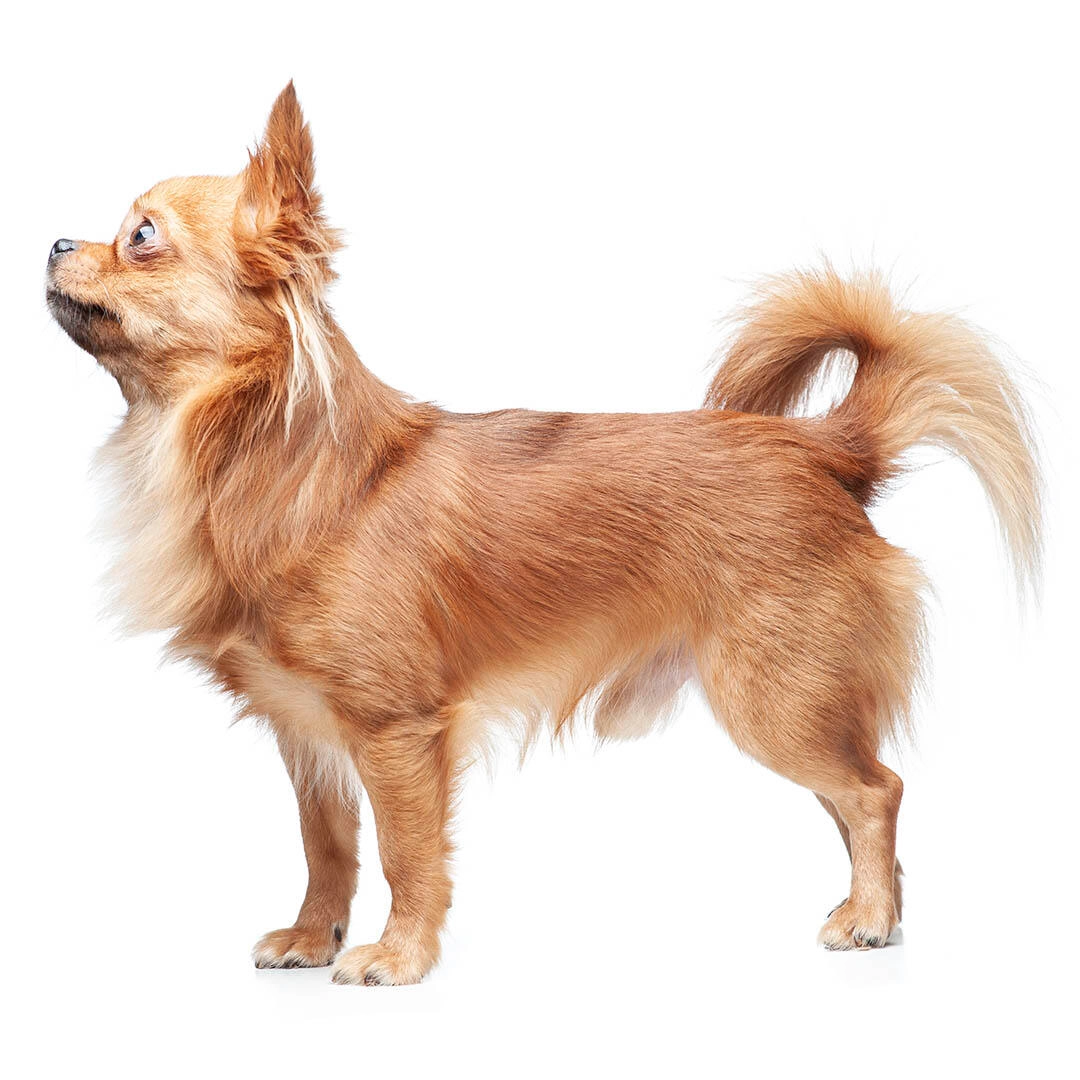
The Toy-sized long-haired Chihuahua has a flat or slightly wavy coat that comes in a variety of colours from fawn to black. The ears should be dripping with fringe, a substantial ruff encircles the neck, and the legs should be well feathered. A dainty, compact dog, adults measure 15-23cm and weigh between 1.8-2.7kg.

The need-to-know

  • Dog suitable for experienced owners
  • Basic training required
  • Enjoys gentle walks
  • Enjoys walking half an hour a day
  • Little toy dog
  • Minimum drool
  • Requires grooming once a week
  • Non hypoallergenic breed
  • Very vocal dog
  • Guard dog. Barks and alerts
  • Great with other pets
  • Great family dog
Lifespan:
10–18 years
Weight:
1.8–2.7kg
Height:
15–23cm
Colours:
The Chihuahua has two coat types: short-haired and long-haired and comes in a variety of colours including solid colours such as: black; white; fawn; chocolate; grey or silver and tricolours such as: chocolate, black or blue with tan and white. They may a
Size:
Small
Kennel Club Group:
Toy
Personality

The long-haired Chihuahua tends to bond closely with one or two people, with whom he will be curious, lively and intelligent, as well as deeply and constantly affectionate. However, without adequate early socialisation, the breed will not take kindly to strangers and can appear nervous, yappy and even snappy. Chihuahuas must be socialised as early as possible or they will become anxious in new environments and will not get along with strangers, children and other household pets. They are a clannish breed and enjoy being with other Chihuahuas.

History and Origins

The Toy-sized long-haired Chihuahua has a flat or slightly wavy coat that comes in a variety of colours from fawn to black. The ears should be dripping with fringe, a substantial ruff encircles the neck, and the legs should be well feathered. A dainty, compact dog, adults measure 15-23cm and weigh between 1.8-2.7kg.

Nutrition and Feeding

Toy dogs have a fast metabolism, meaning they burn energy at a high rate, although their small stomachs mean that they must eat little and often. Small-breed foods are specifically designed with appropriate levels of key nutrients and smaller kibble sizes to suit smaller mouths. This also encourages chewing and improves digestion.

Exercise

The long-haired Chihuahua can adapt to however much exercise you would like to give it, within reason. Chihuahuas tend to have bursts of energy where they play excitedly, but do not need a lot of walking – half an hour daily should suffice. It is recommended that Chihuahuas wear a harness instead of a collar due to their fragile tracheas (windpipes).

Other Information

Health and common issues

As with many small breeds, the Chihuahua can suffer from kneecaps that may temporarily slip out of place (luxating patellas) and a windpipe problem. The shape of their head can make them prone to water on the brain (hydrocephalus), and some eye problems.

Best family dog breeds

While many dogs are traditionally thought of as being good with children , all dogs and children need to be taught to get on with and respect each other, and be safe together. Even so, dogs and young children should never be left alone together and adults should supervise all interactions between them.

Zoomed product photo

Cesky Terrier

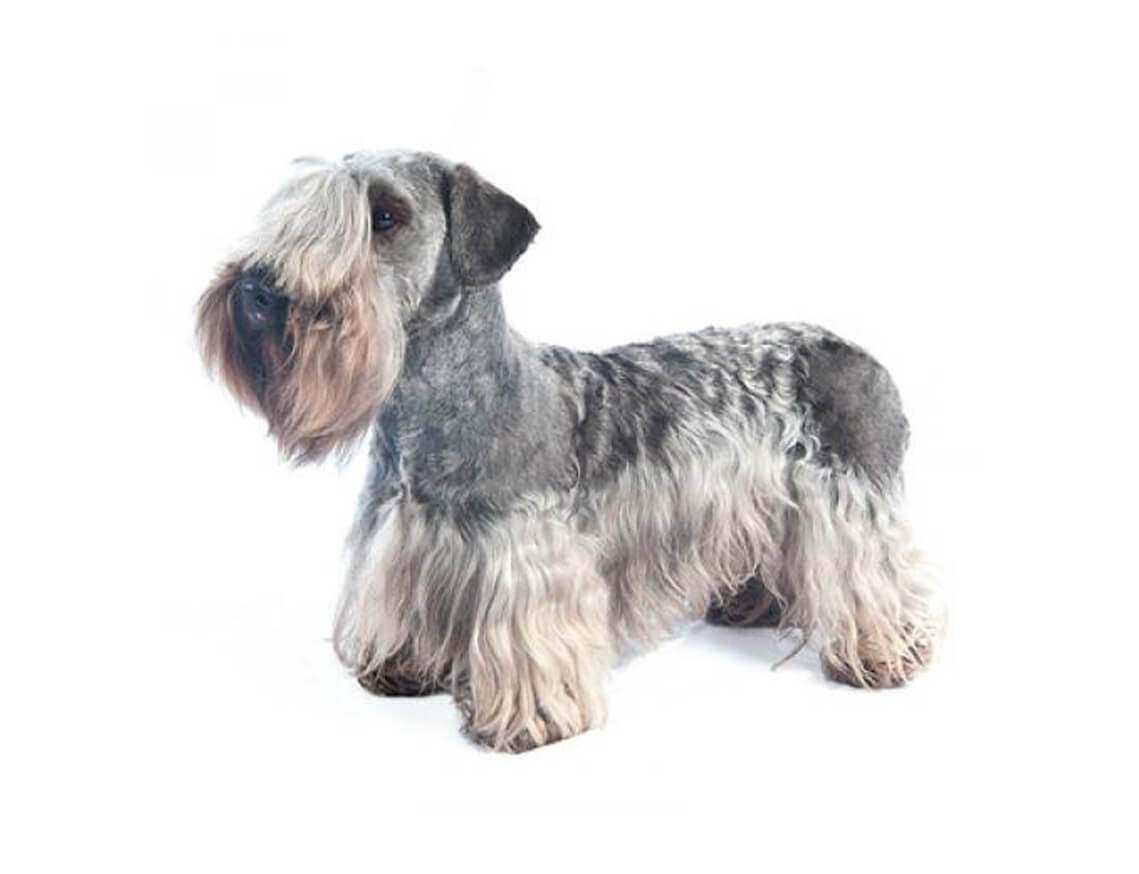
The Cesky Terrier is a small/medium-sized, short-legged dog standing at 25-32cm when fully grown and weighing 6-10kg. The ideal height for adult dogs is 29cm and for females 27cm. The long coat comes in grey-blue or light brown.

The need-to-know

  • Dog suitable for owners with some experience
  • Some training required
  • Enjoys gentle walks
  • Enjoys walking an hour a day
  • Small dog
  • Minimum drool
  • Requires grooming every other day
  • Non hypoallergenic breed
  • Very vocal dog
  • Guard dog. Barks and alerts
  • May require training to live with other pets
  • May require training to live with kids
Personality

The Cesky Terrier is a gentle-natured terrier when it comes to people. He can be reserved with those he doesn't know, but is friendly with those he's acquainted with. His working instincts are still keen – he is a tough and agile dog, with a fair amount of energy and stamina. He can be stubborn, but with the right motivation can show off his versatility and has competed in the canine sports of obedience and agility.

History and Origins

A relatively new breed, this national dog of the Czech Republic was created by Frantisek Horak, a breeder and geneticist, in 1949. Horak enjoyed hunting and decided to cross the Scottish Terrier with a Sealyham Terrier, to produce a smaller dog that would work in a pack and also go to ground, fitting into burrows that defeated the Scottie and Sealyham. The Cesky Terrier dog breed was used for hunting everything from fox, rabbit and game to wild boar!

Nutrition and Feeding

Small dogs have a fast metabolism, meaning they burn energy at a high rate, although their small stomachs mean that they must eat little and often. Small-breed foods are specifically designed with appropriate levels of key nutrients and smaller kibble sizes to suit smaller mouths. This also encourages chewing and improves digestion.

Exercise

The Cesky Terrier breed needs about an hour's exercise a day. His hunting instincts can come to the fore on an off-lead walk, so do ensure his recall is reliable before letting him off the lead in public areas.

Other Information

Health and common issues

The Cesky Terrier is generally a healthy dog. However, in common with many smaller breeds, they can also suffer from kneecaps that may temporarily slip out of place (luxating patellas).

Best family dog breeds

While many dogs are traditionally thought of as being good with children , all dogs and children need to be taught to get on with and respect each other, and be safe together. Even so, dogs and young children should never be left alone together and adults should supervise all interactions between them.

Zoomed product photo

Cavalier King Charles Spaniel

A small spaniel with a short, but definite muzzle, large brown eyes and silky fur, the Cavalier dog's colours are black and tan, ruby, red and white (Blenheim) and tricolour (chestnut markings on a pearl white background). Adults measure 30-33cm and weigh 5.5-8kg.

The need-to-know
 

  • Dog suitable for non-experienced owners
  • Basic training required
  • Enjoys active walks
  • Enjoys walking one to two hours a day
  • Medium dog
  • Some drool
  • Requires grooming once a week
  • Non hypoallergenic breed
  • Chatty and vocal dog
  • Not a guard dog
  • May require training to live with other pets
  • Great family dog
Lifespan:
10–15 years
Weight:
4.5–10kg
Height:
30–40cm
Colours:
The colours of the Beaglier can be any combination that’s common to the Beagle or Cavalier King Charles Spaniel, including: tricolour; blue, white and tan; white and tan; badger pied; hare pied; lemon pied; lemon and white; red and white; tan and white; b
Size:
Small to Medium
Personality

This is an affectionate, undemanding family dog that is friendly with everyone, so he makes a good companion for sensible children and the more active elderly. They are not excessive barkers but will announce strangers. They are no guard dogs however, as they greet most people warmly. Cavalier King Charles Spaniels get along with everyone, including cats and other small pets. Being relatively small and easygoing, they make good travel companions.

History and Origins

The original Cavalier King Charles Spaniel dog breed was developed from the toy spaniels pictured in the work of 16th, 17th and 18th century painters such as Titian and Gainsborough. They were very common as a ladies' pet and were used to warm laps. King Charles II was so fond of his spaniels he could not be parted from them. By 1800, the snub-nose variety had taken over in popularity and the original spaniel was nearly lost. Only the Duke of Marlborough kept a line alive, breeding them at Blenheim castle. In 1926, an American, Roswell Eldridge, tried to re-establish the original dog of the Cavalier King Charles Spaniels by offering a prize for a dog with the appearance of the dogs in the historical portraiture. The prize was given out at Crufts for the then substantial sum of £25.

Nutrition and Feeding

Small dogs have a fast metabolism, meaning they burn energy at a high rate, although their small stomachs mean that they must eat little and often. Small-breed foods are specifically designed with appropriate levels of key nutrients and smaller kibble sizes to suit smaller mouths. This also encourages chewing and improves digestion.

Exercise

A King Charles Spaniel will adapt to whatever amount of exercise you feel able to give but do need some regular exercise or they will put on the pounds. About an hour's daily exercise is a good guide but they also enjoy games and training in which they can excel.

Other Information

Health and common issues

The most common inherited problems affecting the Cavalier King Charles Spaniel are heart disease, and a brain/spinal disorder (syringomyelia). As with many breeds, they can also suffer from various hereditary eye disorders, and hip dysplasia (a condition that can lead to mobility problems). Eye testing, hip scoring, brain/spine and heart assessment of dogs prior to breeding is therefore very important.

Best family dog breeds

While many dogs are traditionally thought of as being good with children , all dogs and children need to be taught to get on with and respect each other, and be safe together. Even so, dogs and young children should never be left alone together and adults should supervise all interactions between them.

Zoomed product photo

Canadian Eskimo Dog

A large spitz-type dog, with a broad chest, thick coat, large bushy tail (that can be carried over the back) and erect ears, this is a striking, powerful dog that comes in black and white, grey and white, red and white, sable and white, and white and black. Males stand at 58-70cm and weigh 30-40kg when fully grown and females are 50-60cm tall and weigh 18-30kg.

The need-to-know
 

  • Dog suitable for experienced owners
  • Extra training required
  • Enjoys active walks
  • Enjoys walking more than two hours a day
  • Large dog
  • Heavy drool
  • Requires grooming daily
  • Non hypoallergenic breed
  • Very vocal dog
  • Guard dog. Barks and alerts
  • May require training to live with other pets
  • May require training to live with kids
Personality

The Canadian Eskimo dog is very much a specialist working breed rather than an average pet dog. Bred to pull weights of up to 80kg over 70 miles a day in the harshest of Arctic conditions, he does not thrive in an ordinary domestic set-up! Pack-orientated, he is nevertheless affectionate to people and is playful, curious and vocal.

History and Origins

The Canadian Eskimo dog breed worked with Inuit hunters to find seal breathing holes and hold large predators at bay, such as polar bears. It was also used as a sled dog. It is said there were 20,000 Canadian Eskimo dogs in its native homeland in the 1920s, but in just 50 years, with the development of the snowmobile, this number dropped to just 200, as sled dogs were simply no longer needed. A dedicated breeder set out to save the breed, but the Canadian Eskimo dog remains quite a rarity outside of Canada.

Nutrition and Feeding

Large breed dogs, as well as having large appetites, benefit from a different balance of nutrients including minerals and vitamins compared to smaller-breed dogs.

Exercise

The Canadian Eskimo dog needs a great deal of exercise to fulfil his needs – at least two hours of daily exercise. An energetic hobby such as sled-racing is a must, though warm-weather energetic exercise should be avoided because of the possibility of heat exhaustion.

Other Information

Health and common issues

The Canadian Eskimo dog is generally a robust dog with few breed specific health problems.

Best family dog breeds

While many dogs are traditionally thought of as being good with children , all dogs and children need to be taught to get on with and respect each other, and be safe together. Even so, dogs and young children should never be left alone together and adults should supervise all interactions between them.

Zoomed product photo

Canaan Dog

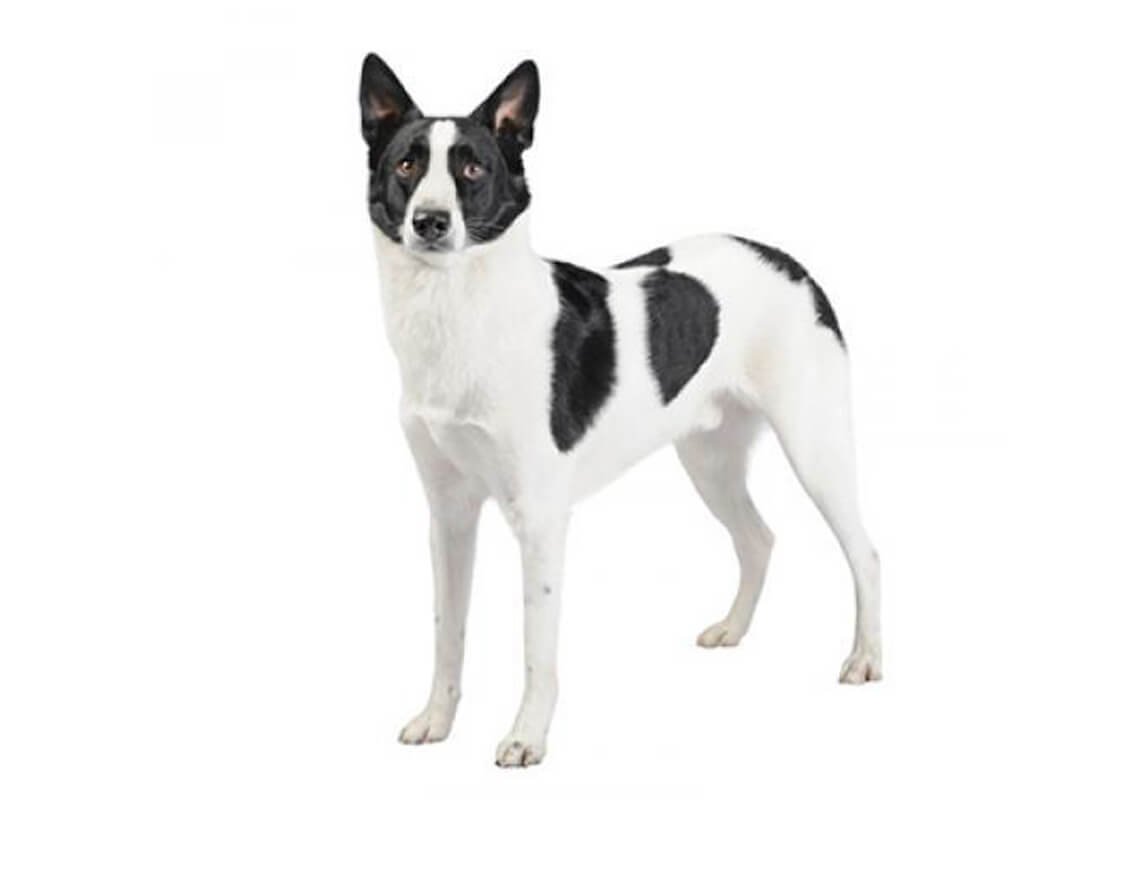
The Canaan dog is a medium-sized, square dog that is spitz-like in appearance, with a thick, profuse coat and a tail curled over the back when excited or moving. The harsh, straight short/medium-length coat comes in sandy to red-brown, white or black in colour. Ideally, the Canaan Dog should measure between 50-60cm and weigh between 18-25kg.

The need-to-know
 

  • Dog suitable for experienced owners
  • Extra training required
  • Enjoys active walks
  • Enjoys walking one to two hours a day
  • Medium dog
  • Minimum drool
  • Requires grooming once a week
  • Non hypoallergenic breed
  • Quiet dog
  • Guard dog. Barks and alerts
  • May require training to live with other pets
  • May require training to live with kids
Personality

Canaan dogs are one of the few 'natural' breeds in existence today. They have become domesticated over the years but still possess extremely strong survival instincts, which can make them independent and wary. They are territorial, but not aggressive to people, and protective of their family, both adults and children. They can be quarrelsome with other dogs and same-sex aggression is not unknown, so early and ongoing socialisation is essential.

History and Origins

The Canaan dog is an ancient breed from the Middle East. They were used to guard and herd the flocks of the ancient Israelites. When the Israelites dispersed so did their dogs, and only the strongest survived the harsh environment. The Bedouin tribes adopted some of the dogs to guard their camps and herds. During the 1930s, a guard dog was required by the isolated settlements of Israel. The Canaan dog breed was the ideal choice. They were semi-wild and could survive in harsh conditions. Today this dog is still seen guarding the Bedouin tribes and also the Israeli army used them for guard and patrol work.

Nutrition and Feeding

Your dog's diet needs to have the right balance of all the main nutrient groups including a constant supply of fresh water. It's important to conduct regular body condition scores to ensure you keep your dog in ideal shape, and remember to feed him at least twice daily in accordance with the feeding guidelines of his particular food.

Exercise

They enjoy exercise and are very agile and athletic. They will adapt to however much exercise they are given, whether they are indoors or out but they need at least one good long run, for a minimum of an hour, every day.

Other Information

Health and common issues

The Canaan dog is generally a healthy breed, with few widely recognised specific breed related problems. Hip scoring and eye testing in breeding dogs in advisable to prevent problems arising in the breed.

Best family dog breeds

While many dogs are traditionally thought of as being good with children , all dogs and children need to be taught to get on with and respect each other, and be safe together. Even so, dogs and young children should never be left alone together and adults should supervise all interactions between them.

Zoomed product photo

Cairn Terrier

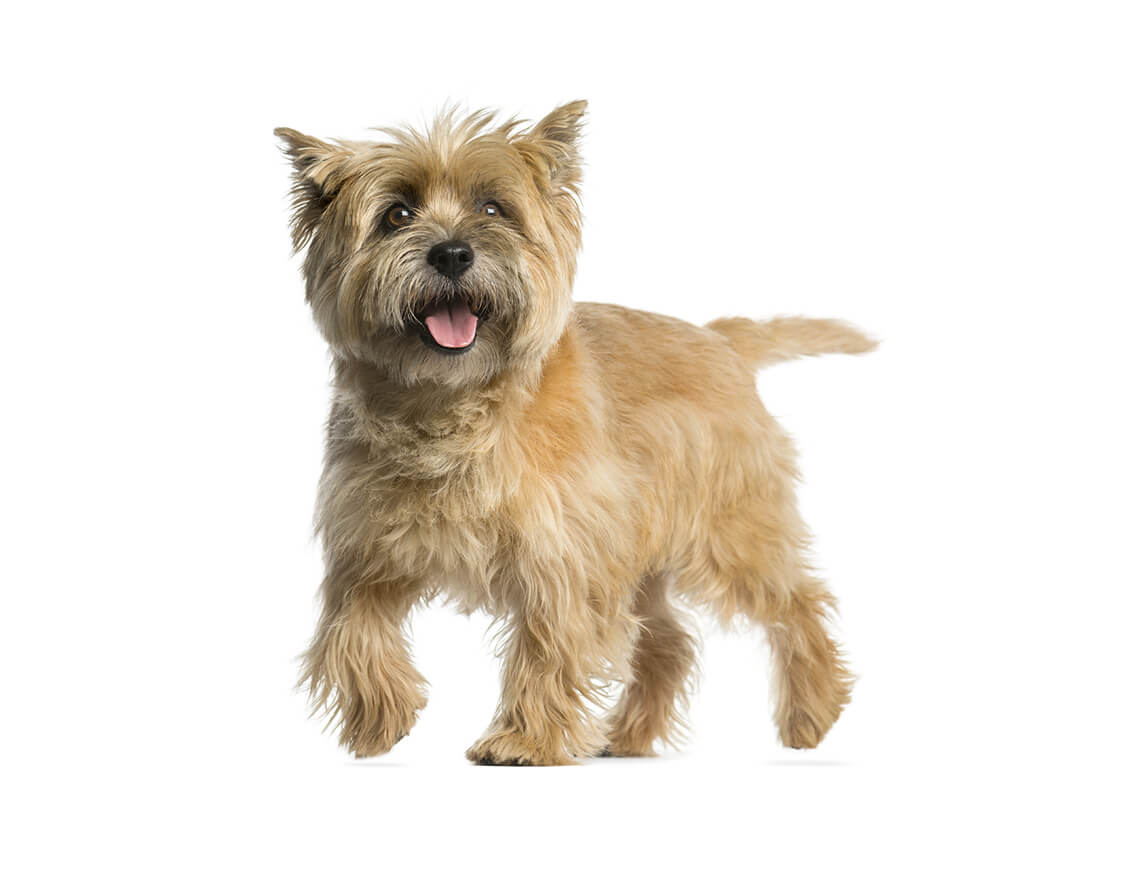
Short-legged and strongly built, Cairn Terriers have a foxy expression, hard coats and small, pointy ears. Whilst not heavily built, they are well-muscled, workman-like little dogs, with hard, profuse outer coats and short, soft, close undercoats.

Personality

Cairn Terriers are a cheerful, alert, lively and extrovert breed that can be trained to happily live with children and, thanks to their history as a pack terrier, with other dogs too. Like most terriers, however they may not be safe with small furry animals or strange cats. They are affectionate, bonded to their owners and enjoy being a part of everything they do.

History and Origins

Country of Origin:  Scotland

Scotland has always had a variety of vermin-killing terriers and the ancestors of the Cairn have been known in the Western Highlands since the 17th century.By 1887, the Cairn Terrier was first being mentioned as a specific breed with their job being to hunt the rodents that infested the cairns (piles of stones) that were found on the bleak game moors and that threatened the game there. They were also used in packs to rout out otters, foxes and even badgers - which they were more than happy to do despite being the smallest of the working Scottish terriers. The thick shaggy coat that protected them from the harsh elements and their plucky nature meant that they were perfectly suited for their role. The Cairn Terrier breed has changed little over the years.

Nutrition and Feeding

Small dogs have a fast metabolism, meaning they burn energy at a high rate, although their small stomachs mean that they must eat little and often. Small-breed foods are specifically designed with appropriate levels of key nutrients for a balanced dog nutrition and smaller kibble sizes to suit smaller mouths. This also encourages chewing and improves digestion.

Exercise

When it comes to dog exercise, the Cairn Terrier breed is bursting with energy and must be given time to run and play, at least an hour’s walking daily ideally with lots of interesting smells. They are typical terriers and so will also need plenty of things to occupy their minds and bodies. This includes dog games, interactive toys, enrichment opportunities and, for many, a chance to dig!

Other Information

Health and common concerns

While the Cairn Terrier is generally a healthy breed, they can suffer from various hereditary eye disorders and so eye testing of dogs prior to breeding is therefore important. Like many small dog breeds they can also suffer from kneecaps that may temporarily slip out of place (luxating patellas). There are other issues affecting the breed, some of which have DNA tests available. The breed club monitors health closely and so should be consulted for up to date information.

Space requirements

The Cairn is a small dog and so doesn’t need a big house. They do enjoy having a garden however - and if that can include a digging pit, they will be even happier. They also love to explore the sights and sniffs of the countryside and so a rural or semi-rural home (or at least regular access to the countryside) may suit them best.

Training cairn terriers

The Cairn takes a typical terrier view of dog training but they are more biddable than many and if you can motivate them with reward-based, fun training, they can achieve a surprisingly high level and may even become experts at sports like mini-agility. As they have an instinct to hunt and chase, training a reliable recall is vitally important but even then, it is generally wise to keep them on the lead unless you are in a secure safe area.

Best family dog breeds

The Cairn Terrier can make a really fun family dog but they may not have the best patience with younger unruly children who may want to grab or chase them. While many dogs are traditionally thought of as being good with children, all dogs and children need to be taught to get on with each other and be safe together. Even so, dogs and young children should never be left alone together and adults should supervise all interactions between them.

Did you know?

Probably one of the most iconic Cairn Terrier is Toto in the film The Wizard of Oz. It may be interesting to note that if Dorothy had just kept him on a lead, she’d have had far less trouble. But then also far fewer adventures!
Zoomed product photo

Bullmastiff

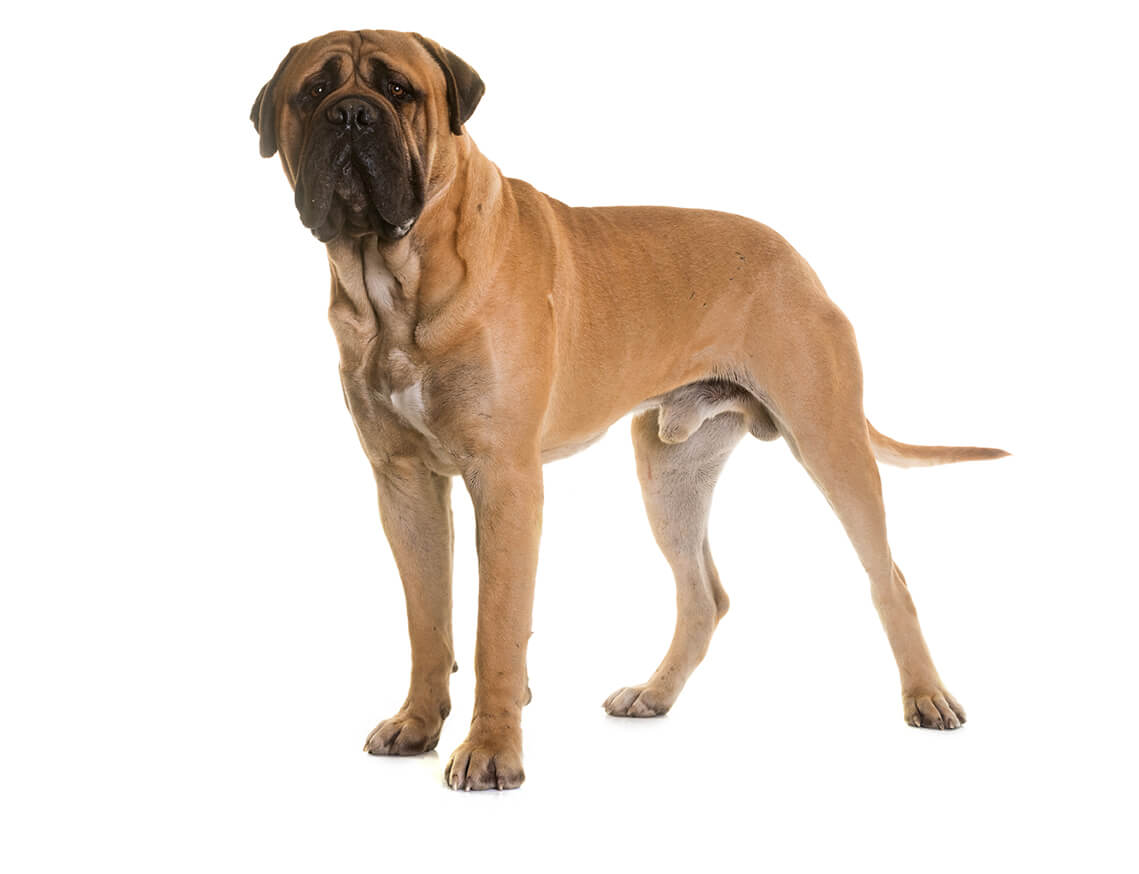
The Bullmastiff breed is a compact, powerful, muscular dog with a large, square head. The coat is short, hard and weather proof and comes in fawn, red or brindle, with a black muzzle. Adult dogs measure 64-69cm and weigh 50-59kg; adult females measure 61-66cm and weigh 41-50kg.

The need-to-know
 

  • Dog suitable for experienced owners
  • Extra training required
  • Enjoys active walks
  • Enjoys walking an hour a day
  • Large dog
  • Minimum drool
  • Requires grooming once a week
  • Non hypoallergenic breed
  • Quiet dog
  • Guard dog. Barks, alerts and it's physically protective
  • May require training to live with other pets
  • May require training to live with kids
Personality

These dogs are very protective of their family and other household pets, and so have to be socialised from an early age. The Bullmastiff will only accept strangers if they are introduced to them by someone they trust. Other visitors/strangers will be quickly halted in their tracks. It is not really a breed for the novice owner, due to its strength, stubbornness and over-protective nature.

History and Origins

The Bullmastiff dog breed was originally called the 'Gamekeeper's Night Dog' as they were used to catch poachers. The base stock of the Bullmastiff was 60% English Mastiff and 40% Bulldog. They were created in the late 1800s. When the need for gamekeepers and the Bullmastiff declined they were used in sport. Someone would run off into the undergrowth and, after a short time, a muzzled Bullmastiff would be released to see if the person could be found. They were not trained to maul or kill, but to overpower their target.

Nutrition and Feeding

Large breed dogs, as well as having large appetites, benefit from a different balance of nutrients including minerals and vitamins compared to smaller-breed dogs. The Bullmastiff is prone to bloating and stomach problems; smaller, more frequent meals can help minimise this risk.

Exercise

This dog should be carefully controlled until at least 12 months old. Too much exercise too young can lead to bone and joint problems in later life. They do enjoy exercise and games with the family, and a couple of hours of exercise daily will keep an adult Bullmastiff content.

Other Information

Health and common issues

As with many breeds, Bullmastiffs can suffer from various hereditary eye disorders, and hip and elbow dysplasia (joint conditions that can be painful and lead to mobility problems). Eye testing and hip scoring of dogs prior to breeding is therefore important. They are also prone to a particular bladder condition and ligament problems in the knee (cruciate disease).

Best family dog breeds

While many dogs are traditionally thought of as being good with children , all dogs and children need to be taught to get on with and respect each other, and be safe together. Even so, dogs and young children should never be left alone together and adults should supervise all interactions between them.

Zoomed product photo

Bulldog

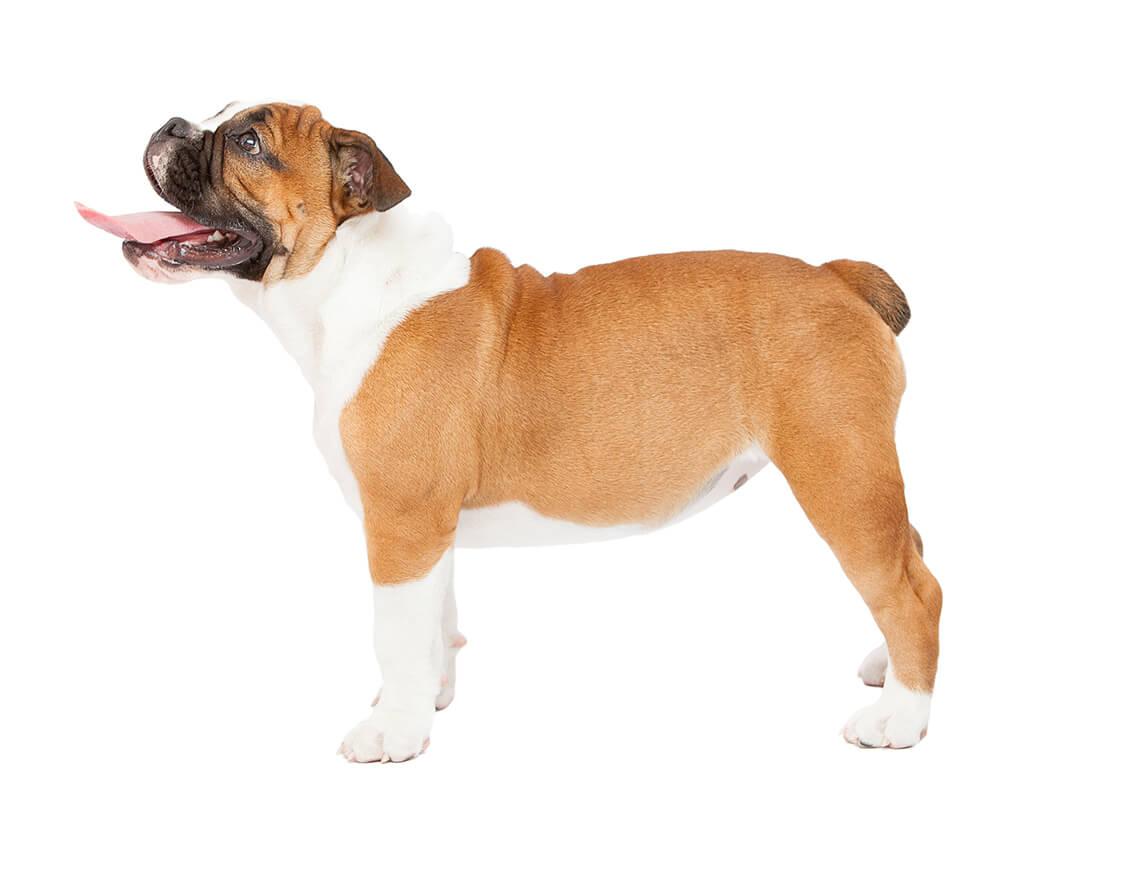
The Bulldog breed has a short, sturdy body and fairly loose skin, especially at the head, neck and shoulders. Another distinctive feature is the large skull. The Bulldog can be brindle, shades of red, fawn or white with any of the aforementioned colours. The adult Bulldog stands at 31-36cm and weighs 23-25kg.

The need-to-know
 

  • Dog suitable for experienced owners
  • Some training required
  • Enjoys gentle walks
  • Enjoys walking half an hour a day
  • Medium dog
  • Minimum drool
  • Requires grooming every other day
  • Non hypoallergenic breed
  • Quiet dog
  • Guard dog. Barks, alerts and it's physically protective
  • May require training to live with other pets
  • May require training to live with kids
Personality

This is a family dog that loves children and will even learn to get along with other pets if introduced to them at an early age. The Bulldog is a bit too friendly to be a good guard dog but would defend a family member in need. He can be peaceful, pensive, goofy, stubborn, and have a well-developed sense of humour.

History and Origins

Bulldogs come from the ancient breed of Bullenbeissers, a mastiff-like dog used for guarding and attacking wild animals in Assyria, Greece, Egypt and Rome. The Bullenbeisser came in various sizes.

Nutrition and Feeding

Your dog's diet needs to have the right balance of all the main nutrient groups including a constant supply of fresh water. It's also important to conduct regular body condition scores to ensure you keep your dog in ideal shape, and remember to feed him at least twice daily in accordance with the feeding guidelines of his particular food.

Exercise

Bulldogs should never be exercised in the heat of the day. Two relatively short walks at a steady but not terribly brisk pace should be adequate.

Other Information

Health and common issues

The most common health problems encountered in the Bulldog relate to their very flat face, which results in obstruction of their airways and a difficulty in breathing. Over-exercising and over-heating is therefore to be avoided. They are also prone to skin infections, eye problems and hip and elbow dysplasia (joint conditions that can be painful and lead to mobility problems).

Best family dog breeds

While many dogs are traditionally thought of as being good with children , all dogs and children need to be taught to get on with and respect each other, and be safe together. Even so, dogs and young children should never be left alone together and adults should supervise all interactions between them.

Zoomed product photo

Bull Terrier Miniature

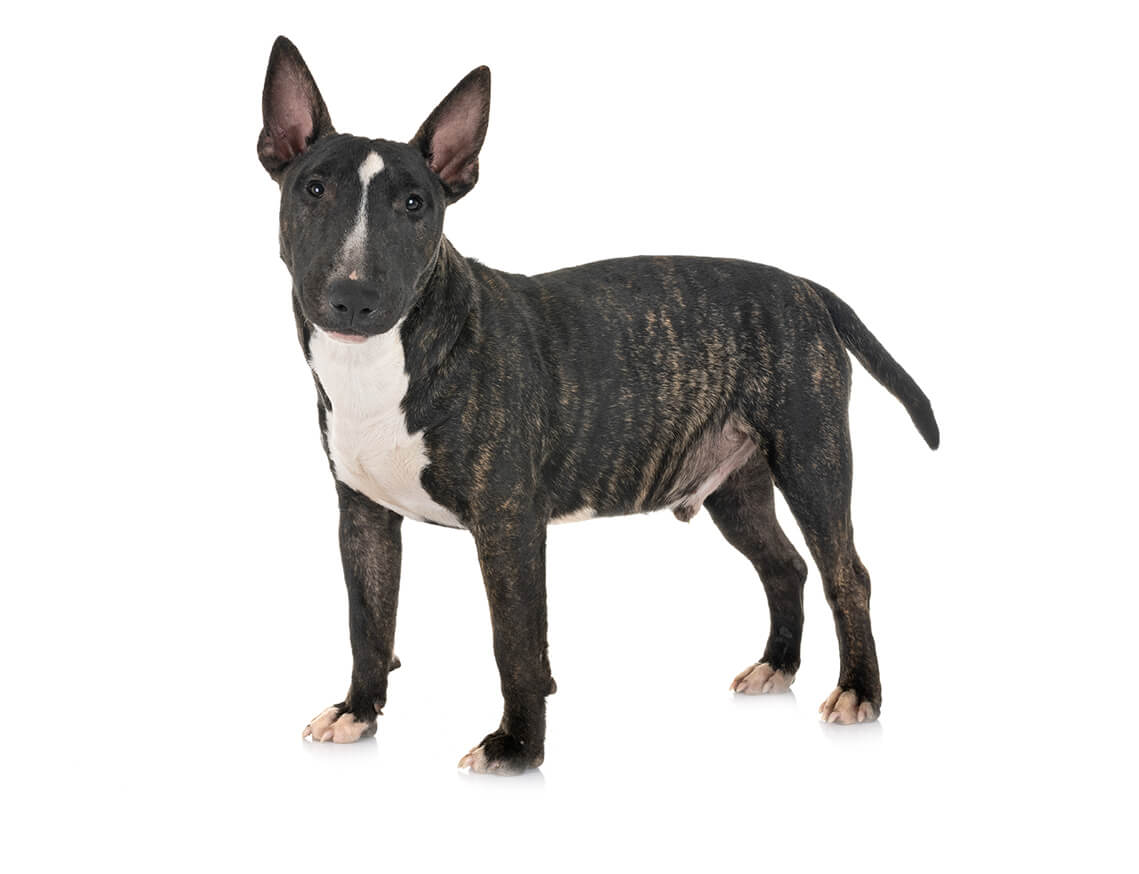
The Miniature Bull Terrier is identical to the Bull Terrier in everything but size, with adults standing at under 35.5cm and weighing about 11-15kg. He is a muscular, powerful-looking dog, with an egg-shaped head. The short coat comes in a variety of combinations, including white, black, brindle, red, fawn and tricolour.

The need-to-know
 

  • Dog suitable for owners with some experience
  • Some training required
  • Enjoys active walks
  • Enjoys walking an hour a day
  • Medium dog
  • Minimum drool
  • Requires grooming once a week
  • Non hypoallergenic breed
  • Chatty and vocal dog
  • Guard dog. Barks and alerts
  • May require training to live with other pets
  • May require training to live with kids
Personality

Known for his affinity with people, the Miniature Bull Terrier is full of fun and spirit, though can be stubborn if not properly motivated. He might be smaller than his full-sized counterpart, but this bold, energetic dog doesn't know it! He is a big dog in a small body – and won't be intimidated by larger dogs if confronted. Early, thorough socialisation is especially important, therefore, as is lead training, as he loves to pull!

History and Origins

Small examples of the Bull Terrier were selectively bred from the early 1800s to produce the Miniature Bull Terrier dog breed, a dog used as a ratter as well as a companion. The larger 'Bully' proved more popular, however, and lack of interest in the smaller sized dog by the beginning of the 20th century resulted in it being removed from the Kennel Club breed register in 1918. Thankfully, dedicated breed enthusiasts continued to keep the breed alive and a club was formed in 1938.

Nutrition and Feeding

Your dog's diet needs to have the right balance of all the main nutrient groups including a constant supply of fresh water. It's also important to conduct regular body condition scores to ensure you keep your dog in ideal shape, and remember to feed him at least twice daily in accordance with the feeding guidelines of his particular food.

Exercise

About one hour's exercise per day is required, though the Mini Bull Terrier is capable of much more if you can offer it.

Other Information

Health and common issues

Deafness is the most common health problem within the breed, most frequently encountered in white Bull Terriers. Dogs can be tested for deafness from a young age. Inherited kidney problems, and heart problems can occur, and skin disorders arise relatively frequently.

Best family dog breeds

While many dogs are traditionally thought of as being good with children , all dogs and children need to be taught to get on with and respect each other, and be safe together. Even so, dogs and young children should never be left alone together and adults should supervise all interactions between them.

Zoomed product photo

Bull Terrier

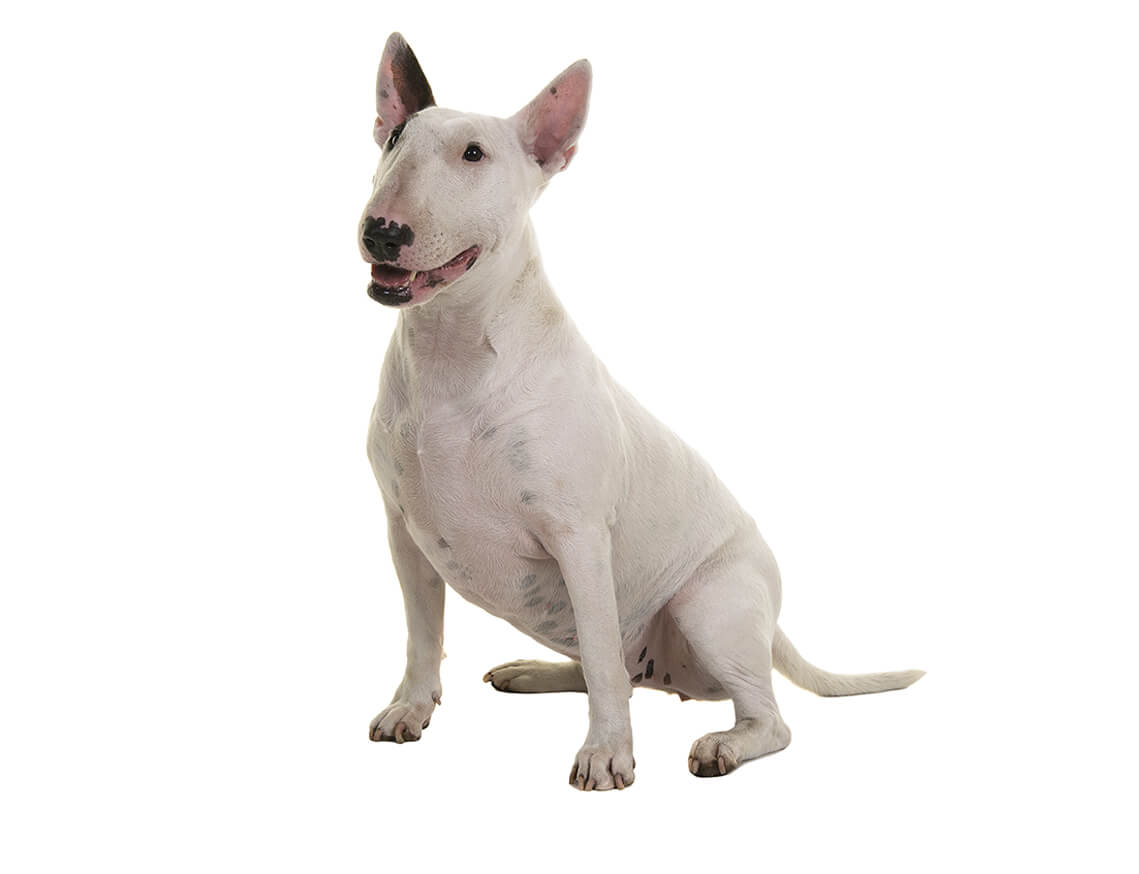
The Bull Terrier is a strongly built, deep-chested muscular dog. They have a long, strong, egg-shaped head with a Roman nose. The most usual colour for this breed is white, often with a coloured marking on the head or sometimes on the back. They can also be black, brindle, red, fawn or tricolour. Adults are about 45cm in height and 33kg in weight.

The need-to-know
 

  • Dog suitable for owners with some experience
  • Some training required
  • Enjoys active walks
  • Enjoys walking one to two hours a day
  • Medium dog
  • Minimum drool
  • Requires grooming once a week
  • Non hypoallergenic breed
  • Chatty and vocal dog
  • Guard dog. Barks and alerts
  • May require training to live with other pets
  • May require training to live with kids
Lifespan:
12–14 years
Weight:
Adult males weigh 13–17kg and females 11–15.4kg
Height:
36–41cm
Colours:
Red, fawn, white, black or blue, brindle, or any of these with white
Size:
Small/Medium
Kennel Club group:
Terrier
Personality

Bull Terriers are friendly dogs with a seemingly wonderful sense of humour. They can be obstinate and are not ideal dogs for the first-time owner. As a breed, they are generally placid, but it always remember that they were originally bred as fighting dogs and will react if challenged, but they will not normally make the first move. They are very affectionate dogs and love company, so it is not a good idea to leave them alone for long time as with their strong jaws they can cause lots of damage if bored.

History and Origins

Bred by crossing a bulldog with a terrier, this dog was produced to fight to the death in the bloody sport of bull baiting. They are now one of the most popular dog breeds and have proved to be an impeccable guard dog. The Miniature Bull Terrier breed has existed for as long as the Standard breed and was recognised as a separate breed by the British Kennel Club in 1939.

Nutrition and Feeding

Your dog's diet needs to have the right balance of all the main nutrient groups including a constant supply of fresh water. It's also important to conduct regular body condition scores to ensure you keep your dog in ideal shape, and remember to feed him at least twice daily in accordance with the feeding guidelines of his particular food.

Exercise

Bull Terriers are an active breed that require a fair amount of exercise, both free running and roadwork. An hour's daily exercise should be considered a minimum, though this breed will happily accept more!

Other Information

Health and common issues

Deafness is the most common health problem within the breed, most frequently encountered in white Bull Terriers. Dogs can be tested for deafness from a young age. Inherited kidney problems, and heart problems can occur, and skin disorders arise relatively frequently.

Best family dog breeds

While many dogs are traditionally thought of as being good with children , all dogs and children need to be taught to get on with and respect each other, and be safe together. Even so, dogs and young children should never be left alone together and adults should supervise all interactions between them.