Bedlington Terrier

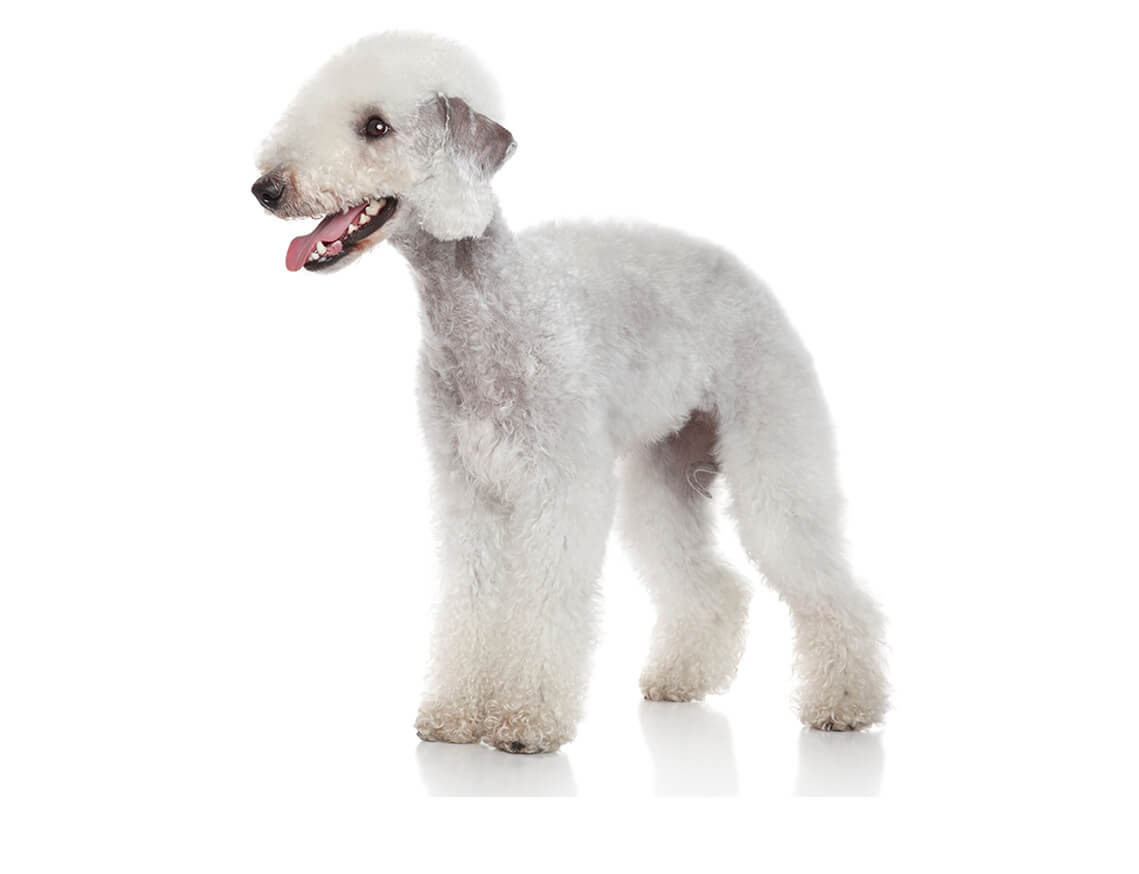
This small-sized long-legged terrier is easily recognised - given that they are sometimes described as looking like a cross between a dog and a lamb! They have a narrow skull and a lamb-like coat.


The need-to-know
 

  • Dog suitable for owners with some experience
  • Some training required
  • Enjoys active walks
  • Enjoys walking an hour a day
  • Small dog
  • Minimum drool
  • Requires grooming every other day
  • Hypoallergenic breed
  • Quiet dog
  • Guard dog. Barks and alerts
  • May require training to live with other pets
  • May require training to live with kids
Lifespan:
12–14 years
Weight:
8–10kg
Height:
38–43cm
Colours:
Blue, liver or sandy, with or without tan
Size:
Small
Kennel Club group:
Terrier
Personality

The Bedlington is affectionate and full of fun, being loyal and gentle to their owners. They are however very much a typical terrier, and can be rather reactive as well as acting as an effective watchdog, being quite courageous once roused. In general, they will be fairly placid if they are receiving a regular amount of mental and physical stimulation.


History and Origins

Country of Origin: England


Originally bred from a combination of local terriers, with an outcross to both Whippets and Dandie Dinmonts, workers in the Rothbury area of Northumberland developed the Bedlington Terrier in the 18th century. A little like a wolf in sheep’s clothing, the gentle appearance of the Bedlington Terrier was rather at odds with their tough working natures, and they developed a reputation as a killer of vermin, a poacher's sidekick and a fighter.They entered the show ring in 1870 and since then their appearance and their natures have changed to give us the dog we have today.


Nutrition and Feeding

Small dogs have a fast metabolism, meaning they burn energy at a high rate, although their small stomachs mean that they must eat little and often. Small-breed foods are specifically designed with appropriate levels of key nutrients and smaller kibble sizes to suit smaller mouths. This also encourages chewing and improves digestion.

Exercise

The Bedlington Terrier needs at least an hour's daily exercise ideally more. They excel in games that involve running, jumping and retrieval - including agility. They must be kept mentally stimulated to avoid behavioural problems developing that arise from boredom or frustration.

Other Information

Health and common issues


The Bedlington Terrier can suffer from an inherited liver disease ('copper storage disease'). A DNA test is available, and so all breeding dogs should be tested. As with many other breeds, they can also suffer hereditary eye disorders and so eye testing of breeding dogs is recommended. The breed club monitor the health of the breed carefully and should be contacted for the most up-to-date information and details of any DNA or additional testing they recommend. Breed Clubs can be found on the Kennel Club website.


Space requirements


The Bedlington Terrier does not need much space at all - but they do need access to open safe places to get all the daily exercise they need.


Training bedlington terriers


Bedlington Terriers are surprisingly trainable especially in sports such as agility where they can excel and this helps to keep their busy minds and bodies occupied. Early and ongoing socialisation is needed as they can be unfriendly with other dogs. A good recall is essential to prevent them from getting into trouble chasing squirrels or rabbits, and they do need a lot of time and patience to train them to live with cats. They may never be reliable with strange cats or small animals.


Best family dog breeds


Bedlington Terriers can make good family dogs but like many terriers they can get overly aroused by rough or noisy games so are better in families with older sensible children. While many dogs are traditionally thought of as being good with children, all dogs and children need to be taught to get on with and respect each other, and be safe together. Even so, dogs and young children should never be left alone together and adults should supervise all interactions between them.


Did you know?


  • Originally there were two different types of Bedlington Terrier - the ones that made use of the Whippet to give them longer legs designed for chasing rabbits and hare-coursing, and the ones that used the Dandie Dinmont Terrier to give them shorter legs for going to ground. Now the Bedlington is a mixture of both.
  • Bedlington Terriers used to be known as ‘Gypsy Dogs’ as they were used by Romanies for poaching.
  • They’re often referred to as ‘the smartest and quickest’ of the terrier breeds.
  • The first ever Bedlington Terrier was called Piper and was said to still be hunting at the grand age of 14, despite being nearly blind and toothless.


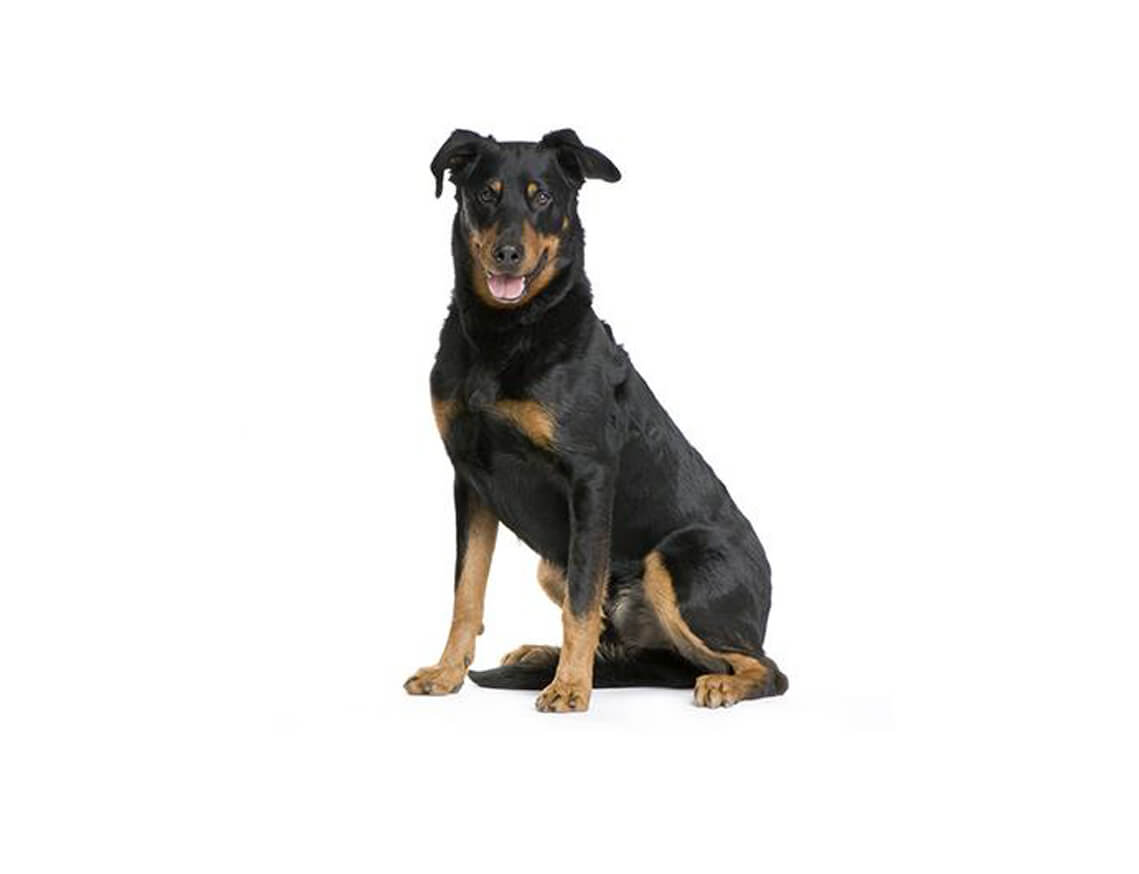
Beauceron

Impressive, large and muscular, the Beauceron is an attractive dog with a smooth short coat and drop ears.


The need-to-know
 

  • Dog suitable for experienced owners
  • Extra training required
  • Enjoys vigorous walks
  • Enjoys walking more than two hours a day
  • Large dog
  • Some drool
  • Requires grooming every other day
  • Non hypoallergenic breed
  • Chatty and vocal dog
  • Guard dog. Barks and alerts
  • May require training to live with other pets
  • May require training to live with kids
Lifespan:
10 – 12 years
Weight:
30 – 38.5kg
Height:
65 – 70cm
Colours:
Coats come in black and tan (see Kennel Club breed standard for specific marking details) or harlequin (grey and black with tan markings)
Size:
Large
UK Kennel Club Groups:
Pastoral
Personality

Bold, courageous and quick to learn, the Beauceron is a people dog and a working dog. They dislike being left alone too long and benefit greatly from having a job to do. Strong-willed and capable of independent decision making, the Beauceron is not suited to first-time dog owners but will excel with those who enjoy training and canine sports. Naturally a little suspicious of strangers due to their livestock guardian history, they will benefit from early and thorough socialisation and habituation to people and household life.


History and Origins

Country of Origin:  France


Originating from the Beauce region of France, the Beauceron became a popular livestock herding and guarding breed throughout most of the north of the country. Thought to be closely related to the long-coated Briard and one of the founding breeds of the Doberman Pinscher, the Beauceron is the largest of the French sheepdogs. Also, known as the ‘Bas Rouge’ (Red Stockings) because of their rich red coat markings, the Beauceron was used in the World Wars for multiple jobs including guarding, carrying messages and supplies and for land mine detection.


Nutrition and Feeding

Large breed dogs, as well as having large appetites, benefit from a different balance of nutrients including minerals and vitamins compared to smaller-breed dogs.

Exercise

This is still a working dog, with lots of energy and a clever, independent mind. Two hours of exercise per day with plenty of additional training and mental stimulation is needed for the adult Beauceron. As their history as a working dog suggests, they do well in a variety of canine sports and competitions, although they may find the busy atmosphere of competition over-stimulating if not well socialised. They thrive when spending most of their time engaged with their human family, doing something together.

Other Information

Health and common issues


The Beauceron is generally a very healthy breed, but it is advised that breeding dogs are hip scored and eye tested to ensure the breed remains free of these problems. The breed club monitor the health of the breed carefully and should be contacted for the most up-to-date information and details of any DNA or additional testing they recommend. Breed Clubs can be found on the Kennel Club website.


Space requirements


This is a big dog that likes to spend a lot of time outdoors, so the home should be able to accommodate those needs. A secure garden is essential as these are large, athletic animals easily capable of jumping or climbing insubstantial fencing. Access to interesting and varied local walks will help keep your Beauceron entertained, and while in the right house and with the right management they can live almost anywhere with enough space, they are likely to do better living in the country or very close to it.


Training beaucerons


Easily trained using positive, modern methods, the Beauceron can turn a paw to any activity you’d care to try, including agility, man-trailing, rally, canicross, obedience, and much more. Careful attention should be paid to teaching a good recall and care should be taken around livestock. Early socialisation with other family pets, visitors and children is vital. This is a dog for someone who enjoys exercise and training in their own right, rather than as a means to a quiet dog!


Best family dog breeds


The Beauceron is excellent with its own family, but this is a large dog who as a puppy is likely to be clumsy and boisterous. They may also be suspicious of visitors. This in conjunction with the amount of exercise and training they require is likely to mean, they are not suited to very busy families or those with younger children. While many dogs are traditionally thought of as being good with children, all dogs and children need to be taught to get on with and respect each other, and be safe together. Even so, dogs and young children should never be left alone together and adults should supervise all interactions between them.


Did you know?


  • The Beauceron was used to protect sheep and other farm livestock against wolves, which were once common across rural northern France.
  • Despite being relatively rare, the Beauceron has racked up several film appearances, including a James Bond movie, Moonraker; the 1990 Luc Besson film Nikita, and in Martin Scorsese’s Gangs of New York.
  • Sometimes the Beauceron is known as the ‘Berger de Beauce’ which translates to ‘sheepdog of Beauce’.
  • This dog breed has double dewclaws which gives them better traction on rough terrain.
  • The Beauceron was used in both World Wars and took on a range of tasks from messengers to transporters and even land mine detectors!


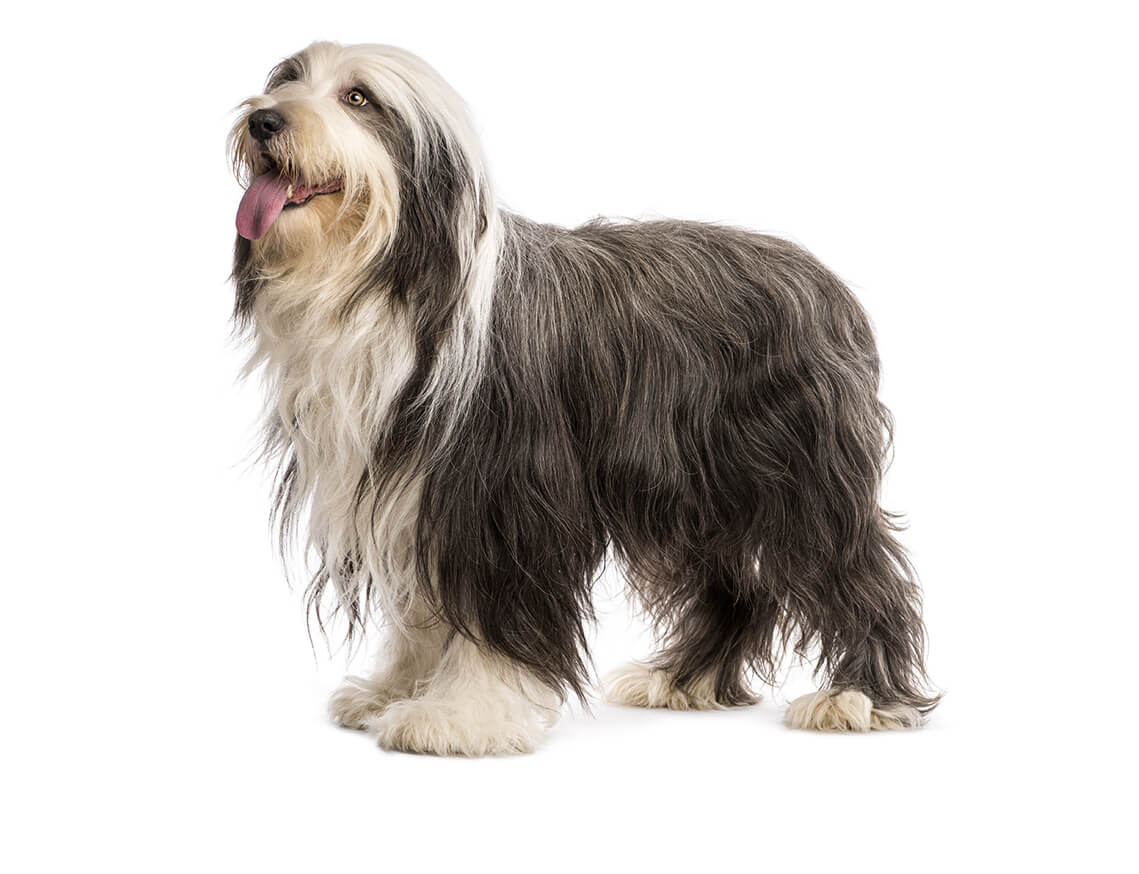
Bearded Collie

The Bearded Collie or ‘Beardie’ is a lean and active dog. Rectangular in outline being slightly longer than they are tall, with a long, harsh top coat that is never trimmed or styled but naturally parts down the middle.


The need-to-know


  • Dog suitable for owners with some experience
  • Some training required
  • Enjoys vigorous walks
  • Enjoys walking more than two hours a day
  • Medium dog
  • Minimum drool
  • Requires grooming daily
  • Non hypoallergenic breed
  • Chatty and vocal dog
  • Guard dog. Barks and alerts
  • Great with other pets
  • Great family dog
Lifespan:
14 – 15 years
Weight:
18 – 28kg
Height:
51 – 56cm
Colours:
Black, blue, reddish-fawn, all shades of grey, brown and sandy, with or without white markings
Size:
Medium
UK Kennel Club Groups:
Pastoral
Personality

Affectionate, eager to learn and gentle, the Bearded Collie loves being around people, and being involved in all aspects of family life. Typically accepting of other dogs and household pets, they will welcome visitors with delight, and can be quite vocal in their greeting.‘Enthusiastic’ is an excellent word to describe the Beardie, they approach everything in life with enthusiasm, and very much wear their hearts on their sleeves.


History and Origins

Country of Origin: Scotland


As with many working dogs, developed for function rather than appearance, there are a variety of origins for the Bearded Collie. They are however most likely a result of mixing local Scottish sheepdogs with three Polish Lowland Sheepdogs who were brought into the country by Polish sailors in the 16th century. The Beardie quickly became an effective working dog, and unlike other collie types who herd, the Beardie’s particular role was as a droving dog, driving animals long distances from the highlands down to market towns, over sometimes very long distances indeed.The Bearded Collie was, and remains, an adaptable, clever and hard working dog, capable of independent thinking and extreme endurance.


Nutrition and Feeding

Your dog's diet needs to have the right balance of all the main nutrient groups including a constant supply of fresh water. It's also important to conduct regular body condition scores to ensure you keep your dog in ideal shape, and remember to feed him at least twice daily in accordance with the feeding guidelines of his particular food.

Exercise

Under the glorious coat of the Beardie there lies an active dog, who will enjoy at least an hour’s exercise, ideally much more per day. This applies no matter the weather, in fact under that coat the Beardie will be unaware of anything but the vilest of conditions, so be prepared to get wet and muddy. An adaptable and intelligent breed, the Bearded Collie will enjoy whatever activity you have in mind, as long as they can come too.

Other Information

Health and common issues


As with many breeds, the Bearded Collie can suffer from hip and elbow dysplasia (joint conditions that can be painful and lead to mobility problems) and hereditary eye disorders. Eye testing and hip scoring of dogs prior to breeding is therefore important. The breed club monitor the health of the breed carefully and should be contacted for the most up-to-date information and details of any DNA or additional testing they recommend. Breed Clubs can be found on the Kennel Club website.


Space requirements


Whilst not a particularly large dog, the Bearded Collie’s coat collects and holds a lot of water, mud, and detritus; so space for a dog to dry off and space to groom is necessary. A large secure garden would be best and access to a variety of rural walks, with space for free running is must. This is a country dog at heart and better suited in the suburbs or countryside rather than city or town.


Training bearded collie


The Bearded Collie while not having quite the mental agility of the Border Collie, is still a clever problem solver, who will enjoy training using reward-based methods, and can do very well in dog sports and activities. They love working with their owner and this means they are a joy to train – although they can be very vocal about it!


Best family dog breeds


The Bearded Collie can make an excellent family pet for those willing to put in the work to meet their exercise and grooming requirements. Keep in mind, this is a pastoral breed and their natural inclination is to keep other animals in a group and keep them moving, so are perhaps better with older children. A Bearded Collie makes no distinction between cattle, sheep, or toddlers – all will be gathered, and moved around! While many dogs are traditionally thought of as being good with children, all dogs and children need to be taught to get on with and respect each other, and be safe together. Even so, dogs and young children should never be left alone together and adults should supervise all interactions between them.


Did you know?


  • Commonly believed to be descended from the Old English Sheepdog, in fact the Beardies origins are far older than the Old English Sheepdogs and it is likely both owe much to the early Polish Lowland Sheepdogs.
  • In reviving the breed in the 1940s, Mrs Willison, owner of Jeannie of Bothkennar (who almost all modern Beardies can be traced back to) did use some Old English Sheepdog blood to improve her stock. Bearded Collie’s are quite popular in movies and TV shows and have appeared in “The Shaggy Dog” and “The Brady Bunch”, to name a couple! The popularity of the Bearded Collie boomed when they won Best in Show at Crufts in 1989.
  • They are known to be quite stubborn, so this is something to bear in mind if you’re considering one!


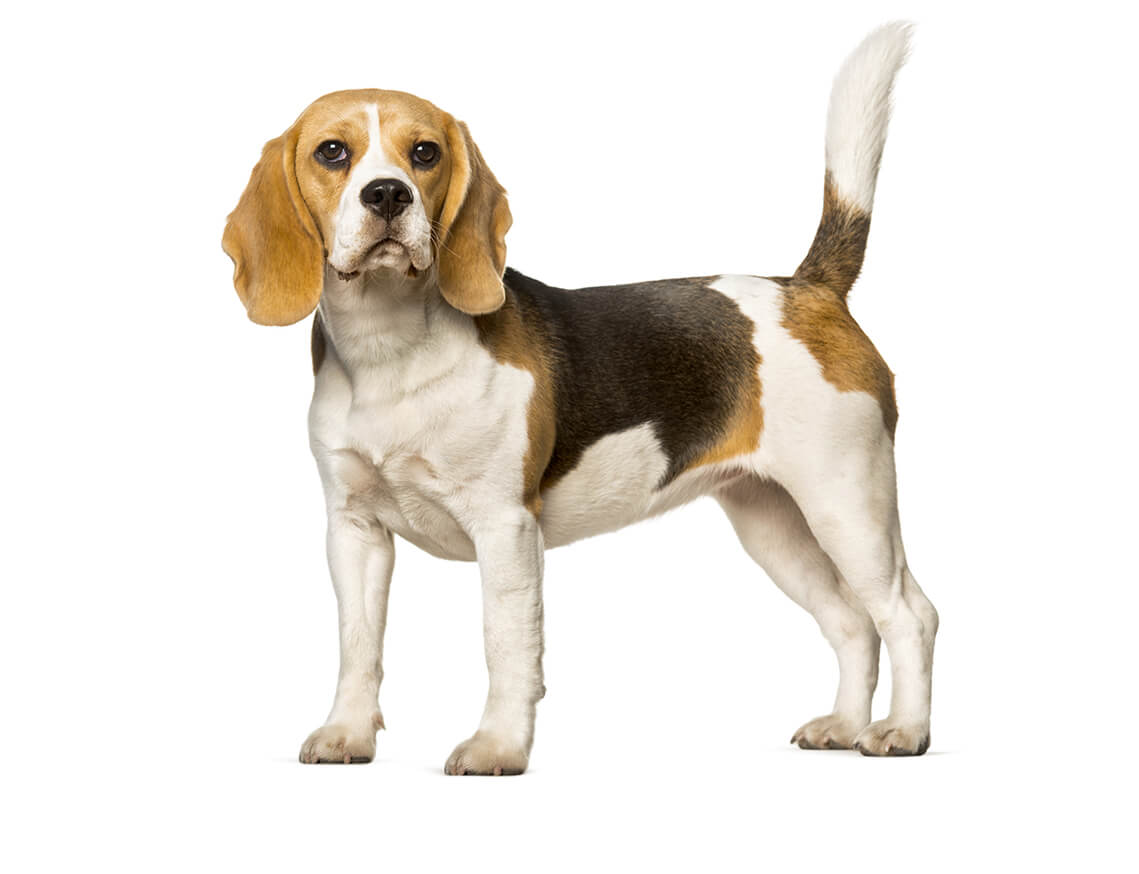
Beagle

The Beagle is one of the best known and loved of all the hound groups. These sturdy and bold little scent hounds have kindly expressions and are compact and athletic. They have short coats that are dense and weather-resistant and come in a range of colours and patterns.


The need-to-know
 

  • Dog suitable for owners with some experience
  • Extra training required
  • Enjoys active walks
  • Enjoys walking one to two hours a day
  • Medium dog
  • Some drool
  • Requires grooming once a week
  • Non hypoallergenic breed
  • Very vocal dogNot a guard dog
  • May require training to live with other pets
  • Great family dog
Lifespan:
12-15 years
Weight:
10-11kg
Height:
33-40cm
Colours:
Tricolour (black, tan and white); blue, white and tan; badger pied; hare pied; lemon pied; lemon and white; red and white; tan and white; black and white; all white. These colours can also be mottled, with the exception of all white
Size:
Medium
Kennel Club group:
Hound
Personality

This is a happy, easy-going dog who is full of life and fun to be around. Beagles are good-natured and, as they were bred to be pack animals, will get along with most other dogs. They love children but need to be exposed to cats at an early age to develop good relationships with them and may never be safe with strange cats or small furries. The Beagle is a good watchdog, barking at anything unusual, although once the burglar is indoors, the Beagle may prefer a game with him! The Beagle suits an owner or family who wants an active, affectionate, cheerful dog who loves getting involved in games and activities but who can cope with their selective attitude to obedience and lack of reliable recall.


History and Origins

Around the mid-16th century, hounds began to be classified according to their purpose, i.e. sight hounds, scent hounds, etc. Around this time a small hound, bred to kill rabbit and hare, was assigned the name 'Begles', a French term meaning 'gape throat.' This referred to the animals' tendency to 'tongue', i.e. bay as a pack. The anglicised version where these dogs have their origins of course, is 'Beagle'. The breed owes its ancestry to the Foxhound, the Harrier and a small bloodhound known as a 'Kerry Beagle.'

Nutrition and Feeding

Your dog's diet needs to have the right balance of all the main nutrient groups including a constant supply of fresh water. It's important to conduct regular body condition scores to ensure you keep your dog in ideal shape, and remember to feed him at least twice daily in accordance with the feeding guidelines of his particular food.

Exercise

The Beagle needs a great deal of exercise – around two hours a day. For many Beagles, this will be on-lead and because of his strong hunting instinct, he should not be let off-lead until owners are confident he will return when called, or else (and more likely!) only in a safe enclosed area. One of the best ways to keep your Beagle happy and well-exercised, is to play scenting games and give him a chance to use his exceptional nose.

Other Information

Health and common issues


Beagles are generally a robust and healthy breed. However as with many breeds, they can suffer from hip dysplasia (a condition that can lead to mobility problems). Hip scoring of dogs prior to breeding is therefore important. Epilepsy and a type of meningitis (Beagle pain syndrome) also occur more frequently in this breed.


Space requirements


Like most hounds, Beagles are happiest in the countryside as they love the scents and open spaces of the great outdoors - and need a lot of exercise. A medium house with a decent-sized, well-fenced garden is a must with lots of close-by walks. They enjoy living with other Beagles too which increases the space you need!


Training beagles


Beagles are a challenge to train because of their natural scenthound instincts. Scenthounds were developed to find a trail and then follow it to the exclusion of everything else and not be distracted no matter what might happen. This means that your Beagle is likely to tune you out totally, if his mind is occupied with an interesting sniff! This isn’t him being ‘disobedient’, it is him doing what he was bred for. Recall is a real challenge for Beagles - and while you should spend as much time as possible teaching your Beagle to come back when you call him, it’s wise not to rely on that! He is an escape artist too so good fencing is vital. What a Beagle can do is sniff - and so find a reward-based training class that can teach you how to play scent games and exercises with your dog as this will improve the bond between you and give you both something you can excel at.


Best family dog breeds


Happy and friendly, but still solid and robust the Beagle makes a great family dog. He is gentle enough not to frighten smaller children and active enough to join in games and family activities. Just watch out for children leaving doors and gates open as the Beagle is an expert escape artist! While many dogs are traditionally thought of as being good with children , all dogs and children need to be taught to get on with and respect each other, and be safe together. Even so, dogs and young children should never be left alone together and adults should supervise all interactions between them.


Did you know?


The Beagle is one of the healthiest of pedigree dog breeds, and this coupled with his good nature has not always been good for him, as it has sadly led to the breed being widely used in vivisection and animal experiments. As the Beagle is such a manageable size, and has such an incredible nose, he has found work around the world as a drugs and food sniffer dog in many airports. He is extremely successful in this work – and his appealing look means he doesn’t frighten the passengers. The most famous Beagle of all is Snoopy – who, while he may not look like a Beagle, has made the breed very popular.


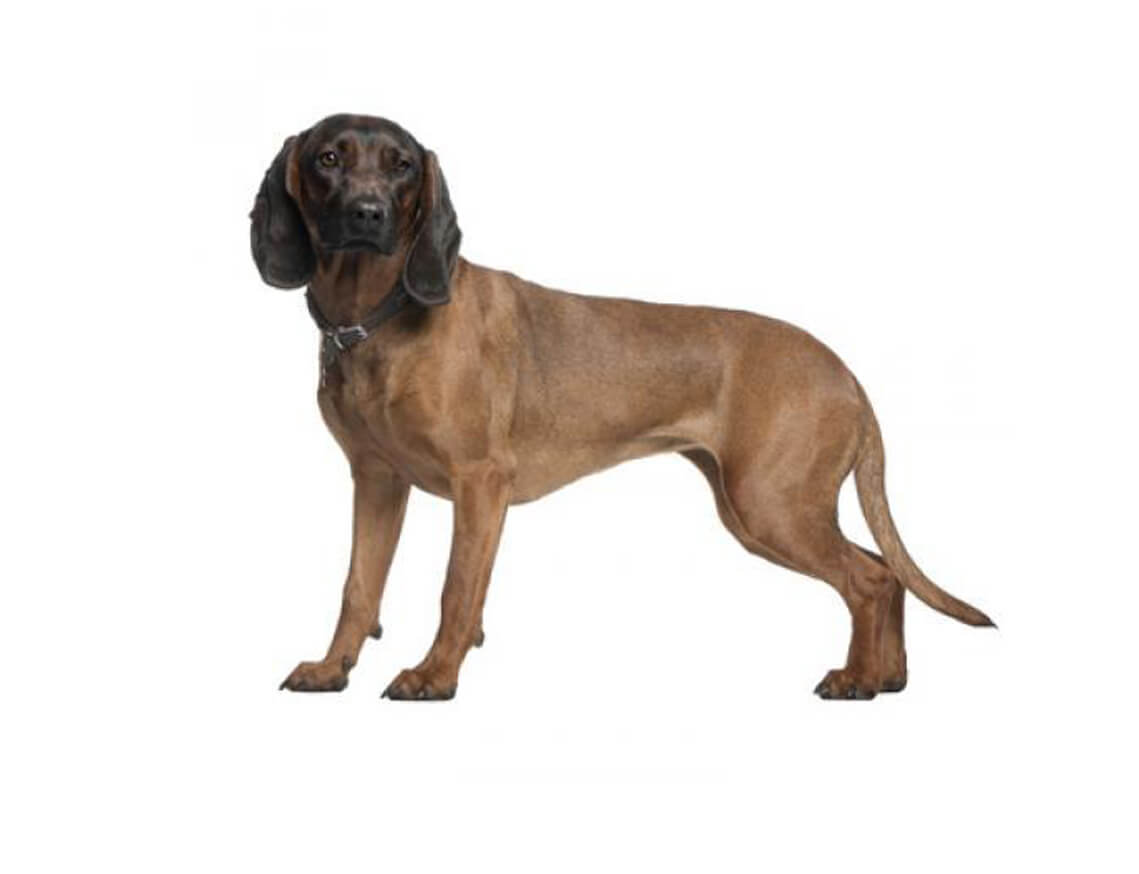
Bavarian Mountain Hound

This muscular, medium-sized hound is slightly longer than he is tall and weighs 20-25kg when fully grown. Adult dogs stand at 47-52cm and females at 44-48cm. The short coat comes in brown, red with a black mask, and stag red with or without a black mask.


The need-to-know


  • Dog suitable for owners with some experience
  • Extra training required
  • Enjoys active walks
  • Enjoys walking one to two hours a day
  • Large dog
  • Minimum drool
  • Requires grooming once a week
  • Non hypoallergenic breed
  • Chatty and vocal dog
  • Not a guard dog
  • May require training to live with other pets
  • Great family dog
Personality

The Bavarian Mountain Hound breed is courageous, calm, loyal and devoted to his owner. He can be reserved with strangers, so early, thorough socialisation is especially important. Training is a must to ensure a good recall, along with giving him the chance to use his nose.


History and Origins

The Bavarian Mountain Hound dog breed is descended from medieval hunting scenthounds. Various breeds and types came from these original hounds, including the Hanoverian Scenthound. To produce a lighter dog, the Hanoverian Scenthound was crossed with red Mountain Scenthounds and, in the 1870s, the Bavarian Mountain Hound was formed. A bloodhound breed that could track the cold scent of wounded game in mountainous areas. A club for the breed was established in Munich in 1912.

Nutrition and Feeding

Your dog's diet needs to have the right balance of all the main nutrient groups including a constant supply of fresh water. It's also important to conduct regular body condition scores to ensure you keep your dog in ideal shape, and remember to feed him at least twice daily in accordance with the feeding guidelines of his particular food. The Bavarian Mountain Hound is prone to bloating and stomach problems; smaller, more frequent meals can help minimise this risk.

Exercise

Bred to hunt wounded game, sometimes over days, this dog has lots of stamina and will need at least two hours or more exercise a day. A working breed, the Bavarian Mountain Hound will enjoy tracking and other canine sports that will exercise his mind, body and nose! A reliable recall is essential, as he can become deaf to all entreaties to return if he starts to follow a scent.

Other Information

Health and common issues


As with many breeds, the Bavarian Mountain dog can suffer from hip dysplasia (a condition that can lead to mobility problems). Hip scoring of dogs prior to breeding is therefore important.


Best family dog breeds


While many dogs are traditionally thought of as being good with children , all dogs and children need to be taught to get on with and respect each other, and be safe together. Even so, dogs and young children should never be left alone together and adults should supervise all interactions between them.


Basset Hound

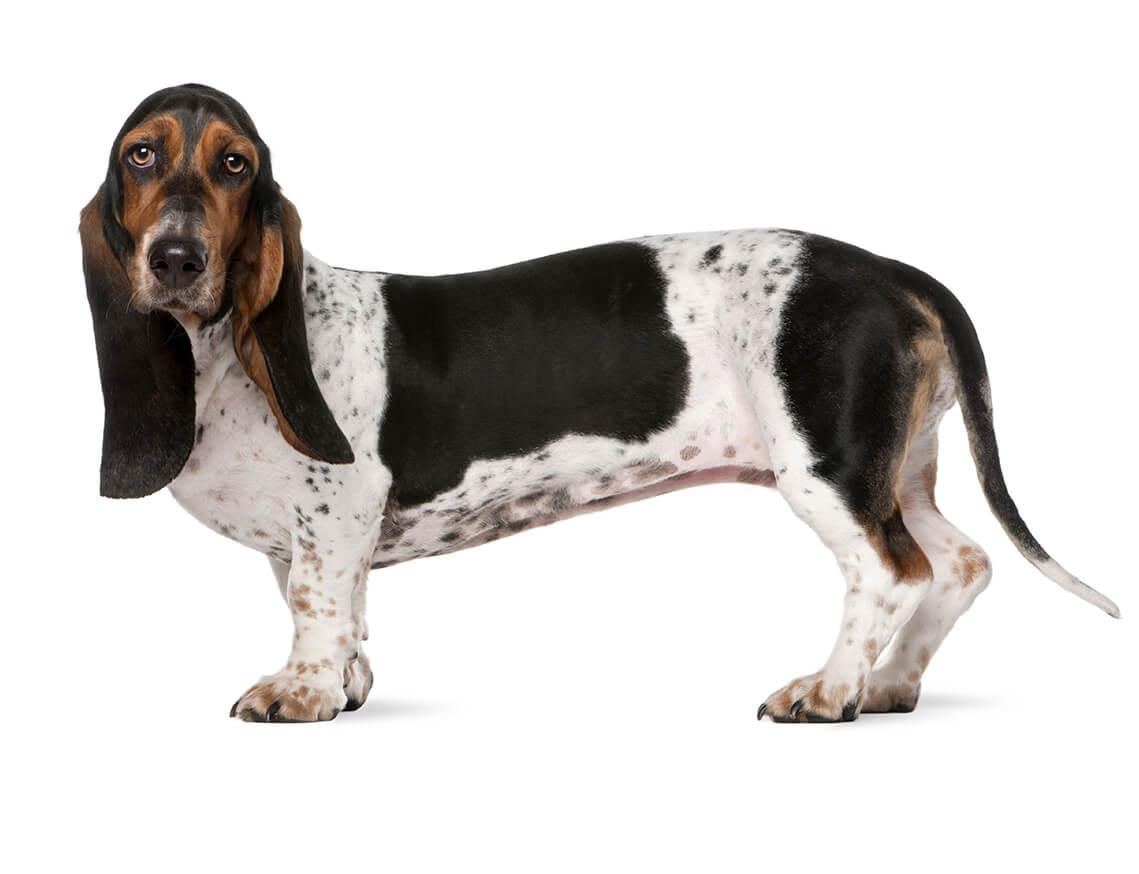
Basset Hounds are substantial dogs on short legs. From the scent hound group, this breed was originally used for hunting small game but are now popular as family dogs due to their relaxed and affectionate demeanours.


The need-to-know
 

  • Dog suitable for owners with some experience
  • Some training required
  • Enjoys active walks
  • Enjoys walking an hour a day
  • Medium dog
  • Minimum drool
  • Requires grooming every other day
  • Non hypoallergenic breed
  • Very vocal dog
  • Not a guard dog
  • May require training to live with other pets
  • Great family dog
Lifespan:
10–12 years
Weight:
18–27kg
Height:
33–38cm
Colours:
Their short, smooth coat comes in any hound colour, but is usually tricolour (black, tan and white) or bicolour (lemon and white)
Size:
Medium
Kennel Club group:
Hound
Personality

Despite looking morose and serious, the Basset Hound dog breed is sociable, calm, polite and quietly playful. Affectionate with people they know and reserved with others, they love children and get on well with other dogs and with some training, other animals in the home. They are very companionable dogs who hate to be left alone and so always need some company - whether human or canine.


History and Origins

Country of Origin: France


The Basset Hound originated in France where they were used to hunt rabbit, hare and wild boar, and the name ‘basset’ translates to ‘short’ or ‘low’.Their history is somewhat accidental coming from short-legged mutations appearing in traditional scent hound breeds. Rather than rejecting these dogs, it became clear that they were useful for hunters who were following dogs on foot rather than horseback and couldn’t move as fast. Often this was because there was heavy cover where horses couldn’t go or else poverty following the French Revolution meant that many people could no longer afford horses.The Basset Hound came to England in 1866 where it was crossed with the Bloodhound to give a heavier bodied version than the original French dog - and this is the Basset Hound we see today.


Nutrition and Feeding

Your dog's diet needs to have the right balance of all the main nutrient groups including a constant supply of fresh water. It's also important to conduct regular?body condition?scores to ensure you keep your dog in ideal shape, and remember to feed them at least twice daily in accordance with the feeding guidelines of their particular food. The deep-chested Basset is prone to bloating and stomach problems; smaller, more frequent meals can help minimise this risk.

Exercise

About an hour's daily exercise is needed. Basset Hounds can tend to be lazy if given half a chance, but they do need exercise to ensure they do not put on too much weight, which can cause back problems in later life. During the rapid growth periods, however, exercise must be limited as joint complications may occur. Because of the length of their bodies, Bassets should not be allowed to go up and down stairs until they are 18 months old. As well as walking exercise, regular/daily scent work enrichment is a real joy for these dogs.

Other Information

Health and common issues


The most common health problems seen in the Basset Hound are related to their body shape. They are prone to spinal disorders and abnormal joint development, particularly of the elbows, and obesity can make these disorders more problematic. They are also predisposed to ear and skin infections, as well as various eye conditions and so should be regularly assessed for these.


Space requirements


The Basset Hound is a country dog. While they don’t need a huge amount of exercise, they do need daily country walks where they can get to use their incredible nose. The joy of exercise for a Basset Hound is following scents and sniffing. So owners need to indulge them in that and enjoy watching them and not get frustrated. They enjoy having their own garden to wander around and sniff in too. Given their joy of howling, it’s best if you don’t have close neighbours!


Training basset hounds


The Basset Hound looks on training with some amusement and largely feels it is a pointless exercise. As they tend to go deaf when they find a great scent, training them to walk on a harness and lead is important as once in the great outdoors their recall is likely to be less than reliable, no matter how much time you spend training. The Basset Hound excels in scent work, so find a training class that will help you explore and celebrate your dog’s strengths and never focus on their training failings. Separation related problems can be an issue, if they are left alone without company. .paragraph--type--c-text .field--name-field-summary-text a {display:initial;}


Best family dog breeds


Basset Hounds make wonderful family dogs as they are kind and patient as well as being friendly to all. It is important however that children are taught not to take advantage of this good nature. While many dogs are traditionally thought of as being good with children, all dogs and children need to be taught to get on with and respect each other, and be safe together. Even so, dogs and young children should never be left alone together and adults should supervise all interactions between them.


Did you know?


  • The Basset Hound has found fame in a variety of unexpected places - including advertising Hush Puppy shoes and also in the cartoon character of Fred Basset.
  • Basset Hounds are the second-best sniffers in the canine world, second only to the Bloodhound.
  • This dog breed has difficulty swimming because of their small legs and dense bodies.
  • Marilyn Monroe had a Basset Hound called Hugo.
  • Their long, floppy ears help to lift scents off the ground right to their nose to help them track things better.


Basset Griffon Vendeen (Petit)

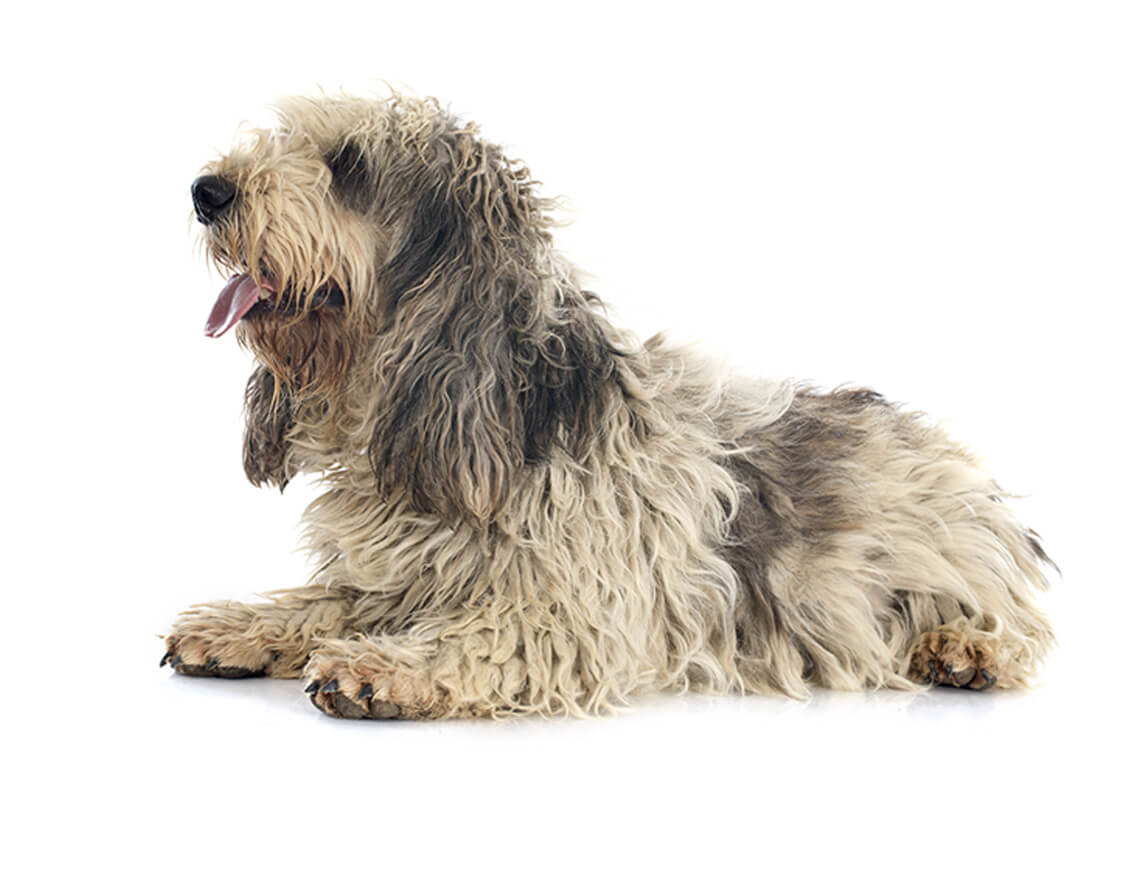
The Petit Basset Griffon Vendeen is a small/medium-sized, strong, deep-chested scent hound. He has a typical basset-type shape – being longer than he is tall and low to the ground. Adults stand at approximately 34-38cm. The rough, medium-length coat comes in white with lemon, orange, sable, grizzle or black markings, or tricolour.


The need-to-know


  • Dog suitable for owners with some experience
  • Some training required
  • Enjoys active walks
  • Enjoys walking one to two hours a day
  • Medium dog
  • Some drool
  • Requires grooming every other day
  • Non hypoallergenic breed
  • Very vocal dog
  • Not a guard dog
  • May require training to live with other pets
  • Great family dog
Personality

The Petit Basset Griffon Vendeen is a fun, extrovert dog who loves to be kept active. He can be stubborn, independent and bold, so requires an owner with patience and tolerance, but he is always willing to please. He gets on well with other dogs, children and strangers.


History and Origins

The Petit Basset Griffon Vendeen dog breed can be traced back to the 16th century and originates from the Vendee region of western France. There are two varieties of the basset type of Griffon Vendeen, the Petit and the Grand. These two originally occurred in the same litters, and it wasn't until the 1970s that the cross breeding of these two varieties was forbidden. Today, these dogs are still used, as individuals or in packs, to hunt wild boar and to scent rabbit and hare.

Nutrition and Feeding

Your dog's diet needs to have the right balance of all the main nutrient groups including a constant supply of fresh water. It's important to conduct regular body condition scores to ensure you keep your dog in ideal shape, and remember to feed him at least twice daily in accordance with the feeding guidelines of his particular food.

Exercise

The Petit Basset Griffon Vendeen requires an hour's exercise or more a day, as well as games and time outside. A country-loving dog, his hunting instincts are still in evidence, and he loves putting his nose to the ground and following any scents he detects – sometimes developing 'hound selective deafness' at the same time!

Other Information

Health and common issues


As with many breeds the Petit Basset Griffon Vendeen can suffer various inherited eye conditions and so eye testing is recommended in all dogs prior to breeding. Epilepsy is also known to occur in both Grands and Petits.


Best family dog breeds


While many dogs are traditionally thought of as being good with children , all dogs and children need to be taught to get on with and respect each other, and be safe together. Even so, dogs and young children should never be left alone together and adults should supervise all interactions between them.


Basset Griffon Vendeen (Grand)

The Grand Basset Griffon Vendeen (or GBGV for short) is a robust, medium height hound, built slightly longer than they are tall. Consider this a large dog on medium-length legs rather than a medium sized dog. The weather-resistant coat is rough and shaggy, hiding a solidly built, hefty hound beneath. They are known for their characteristic hair over the eyebrows, beard and moustache, giving them a friendly and happy appearance.


The need-to-know


  • Dog suitable for owners with some experience
  • Extra training required
  • Enjoys active walks
  • Enjoys walking one to two hours a day
  • Medium dog
  • Some drool
  • Requires grooming every other day
  • Non hypoallergenic breed
  • Very vocal dog
  • Not a guard dog
  • May require training to live with other pets
  • Great family dog
Lifespan:
12 – 14 years
Weight:
20 – 30kg
Height:
40 - 44cm for males, and 39 - 43cm for females
Colours:
White with lemon, orange, black, sable, tri-colour, or grizzle.
Size:
Medium
Kennel Club Group:
Hound
Personality

The Grand Basset Griffon Vendeen is truly a happy-go-lucky dog, believing whole heartedly that they are adored by all humans. Whilst still at heart a working dog, the Grand Basset is typically a very tactile dog who adores physical contact – in particular, they are known for the ‘Grand Hug’ putting their forelegs into a person’s lap and then flopping all their weight into that person. This forces the person to wrap their arms around the hound rather than let it slide to the floor! As the Grand Basset can carry a lot of water and slobber in their beard and face, this can be an unpleasant experience for some and a true delight for others!


History and Origins

Country of Origin: France The Grand Basset Griffon Vendeen can be traced back to 16th century France. Their French name translates to ‘large, low, hairy, from the Vendee region’ and this accurately describes the breed and differentiates it from the various French hunting hounds. Developed first by the Comte d’Elva at the end of the 19th Century and refined further by Paul Dézamy who required a shorter dog for hunting hare, originally the Grand and the Petit Basset Griffon Vendeen would occur in the same litters and crossbreeding between the two occurred regularly. In the 1970s’, this was stopped and efforts were made to ensure the breeds remained separate. Due to the influence of longer-legged hounds in the development of the Grand Basset (Grand Griffon Vendeen and Briquet Griffon Vendeen), there are still occasionally long-legged pups in Grand Basset litters. In the UK today the Grand Basset is gaining popularity as a pet and show dog, in France they are still used for their original purpose, hunting wild boar, deer, rabbit and hare through rough terrain and harsh undergrowth.


Nutrition and Feeding

Large breed dogs, as well as having large appetites, benefit from a different balance of nutrients including minerals and vitamins compared to smaller-breed dogs.

Exercise

An hour of exercise per day, ideally much more, the Grand Basset Griffon Vendeen is still a working hound designed to cover a lot of rough ground and heavy undergrowth. Make sure to spend time playing scent-based games to keep the hound mind (and nose) active and fulfilled. A variety of walking routes with interesting scents will keep your hound happy.

Other Information

Health and common concerns


Generally a robust and healthy dog, this is a breed with a long back and relatively short legs; so care must be taken with young, growing puppies, and elderly dogs.


Space requirements


The Grand Basset Griffon Vendeen does not demand a huge or lavish home, however a secure garden is vital, as these robust hounds are bred to force their way through heavy undergrowth, and they will find a way out to follow a scent if they possibly can. Better suited to the rural suburbs or truly countryside home, as they require long rural walks and safe, secure places for off lead play and running.


Training basset griffon vendeens


Using positive reinforcement and motivating the GBGV with food and the opportunity to follow scents or find hidden scented items, they will work all day long for you, with a happy and willing attitude. Training a recall is vital, as they will easily follow a scent trail for miles, oblivious to the fact you are no longer behind them. Even with a well-trained recall, off lead exercise needs to be in safe secure areas as the joy of following a scent will mean that even the best recall training can easily be forgotten! The Grand Basset should never be trained with a heavy hand or aversive methods. They are a tough, independent thinker, bred to take on game such as wild boar. Attempts to use punishment-based methods will result in an unhappy hound, and they will not tolerate intimidation or bullying tactics.


Best family dog breeds


Better suited to families who are either home most of the time or can take their dog with them, the Grand Basset does not like to be left out of things or left alone. As they can be rather hefty, and also quite bouncy, they may be better suited to homes with older children who are resistant to being flattened or knocked over! While many dogs are traditionally thought of as being good with children, all dogs and children need to be taught to get on with and respect each other, and be safe together. Even so, dogs and young children should never be left alone together and adults should supervise all interactions between them.


Did you know?


The Grand Basset Griffon Vendeen was developed for hunting wild boar, but also for hunting hare, on foot rather than from horseback. These low-slung hounds could follow a hare (who tend to run in large circles) until the hare gave up and tried to hide by squatting in the undergrowth. Persistence and scenting ability were therefore much more important than speed so despite the reputation hares have for being extremely fast, the GBGV was in fact ideal for this job. 
 

Basset Fauve de Bretagne

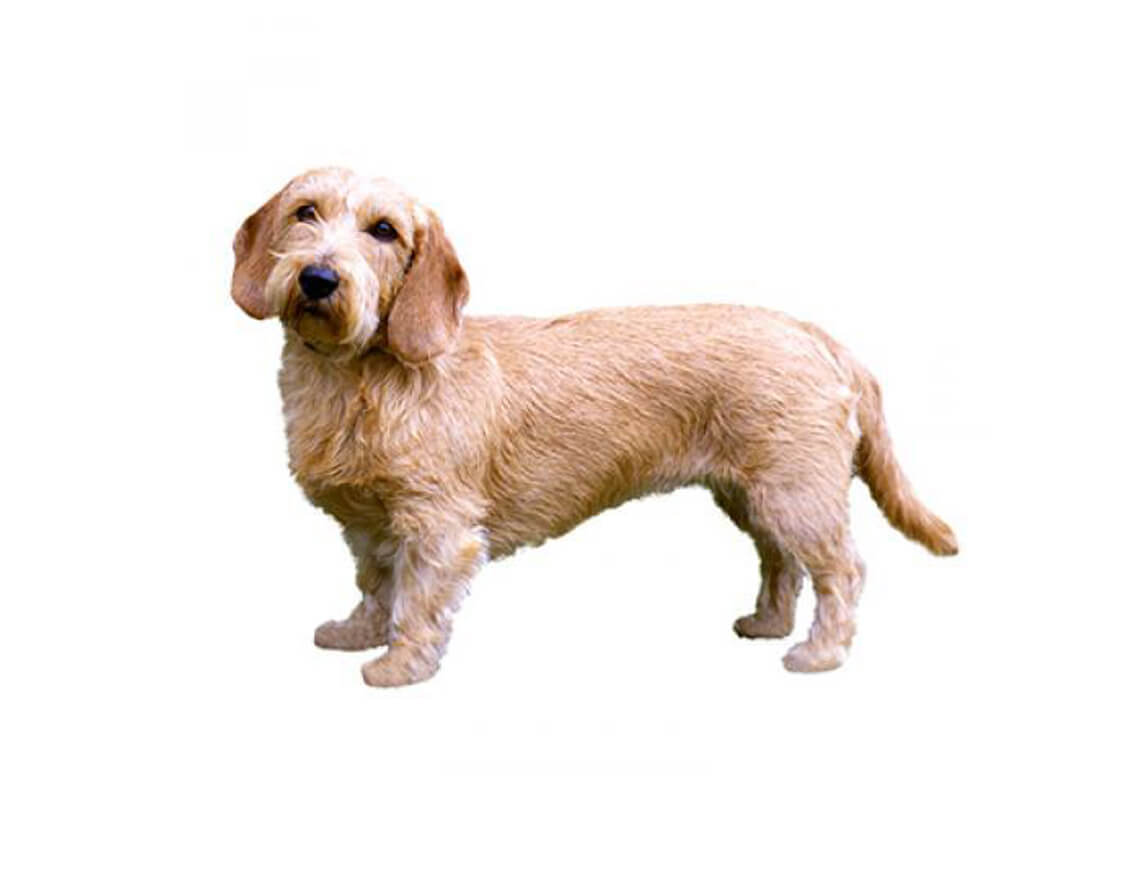
This medium-sized, rough-coated dog is a typical basset shape, though not as low to the ground as the Basset Hound, standing at 32-38cm when fully grown. He weighs about 16-18kg as an adult. The coat comes in fawn, gold-wheaten or red-wheaten. Some may have a little white on the chest.
 

The need-to-know


  • Dog suitable for owners with some experience
  • Extra training required
  • Enjoys active walks
  • Enjoys walking one to two hours a day
  • Medium dog
  • Minimum drool
  • Requires grooming once a week
  • Non hypoallergenic breed
  • Chatty and vocal dog
  • Not a guard dog
  • May require training to live with other pets
  • Great family dog
Personality

These are cheerful little dogs, intelligent, friendly, brave and very active. The Basset Fauve de Bretagne breed gets along well with children and other household pets. Not really guard dogs, they will however announce strangers at the door. They are unhappy if kept confined for too long and love to have busy, full lives and to be involved with all family matters.


History and Origins

The Basset Fauve de Bretagne dog breed is the smaller of the two hounds that come from the Brittany area of France in the 1800s. They were achieved by crossing the larger version, the Griffon Fauve de Bretagne, and Brittany Bassets and were originally used for hunting everything from rabbit to wild boar. The earlier versions of the breed probably looked more like the terriers than they do today. 

Nutrition and Feeding

Your dog's diet needs to have the right balance of all the main nutrient groups including a constant supply of fresh water. It's also important to conduct regular body condition scores to ensure you keep your dog in ideal shape, and remember to feed him at least twice daily in accordance with the feeding guidelines of his particular food.

Exercise

For their size, Basset Fauve de Bretagnes need a reasonable amount of exercise – about two hours a day or more. These nimble dogs love to play and have a passion for hunting, so care must be taken when they are off the lead and they must be trained to recall as puppies or they will turn a 'deaf ear' on you and come back when it suits them!

Other Information

Health and common issues


This is a hardy breed with no specific breed related problems reported to date.


Best family dog breeds


While many dogs are traditionally thought of as being good with children , all dogs and children need to be taught to get on with and respect each other, and be safe together. Even so, dogs and young children should never be left alone together and adults should supervise all interactions between them.


Basset Bleu de Gascogne

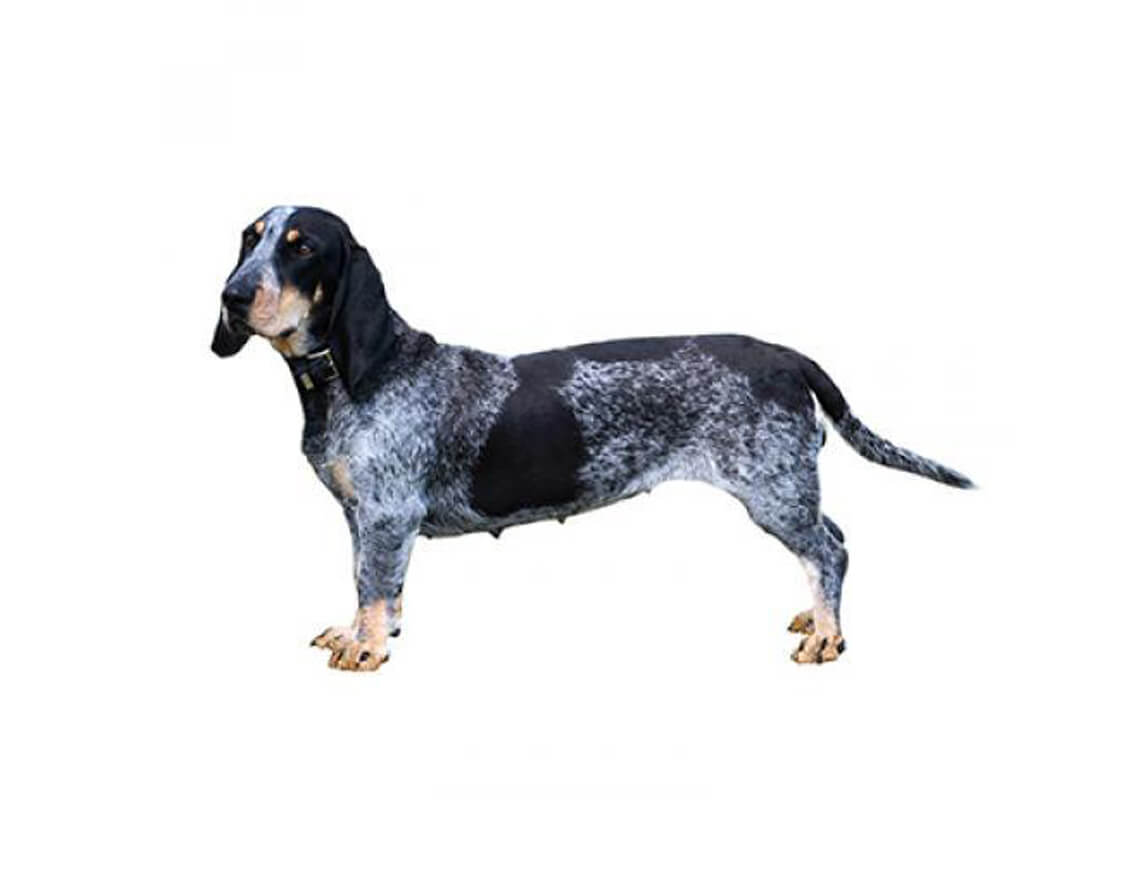
Athletic and aristocratic, the Basset Bleu de Gascogne is a powerful hound without the heaviness of some basset types. The body is long and low, but also lean and dry, without excess skin or exaggerated ears.


The need-to-know
 

  • Dog suitable for owners with some experience
  • Extra training required
  • Enjoys active walks
  • Enjoys walking more than two hours a day
  • Medium dog
  • Some drool
  • Requires grooming once a week
  • Non hypoallergenic breed
  • Chatty and vocal dog
  • Not a guard dog
  • May require training to live with other pets
  • Great family dog
Lifespan:
10 years
Weight:
16 – 18kg
Height:
30 – 38cm
Colours:
A mottled black and white that appears slightly blue. Tan markings may also be seen
Size:
Medium
Kennel Club Groups:
Hound
Personality

Described as sagacious and audacious, the Basset Bleu de Gascogne a working hound. Never happier than when their noses are to the ground, tail up in the air following a scent. Reserved with strangers but affectionate to the point of comical with loved ones, this is a hound-lovers hound, suited to those who expect a dog to check all available options and consult a higher power before complying with a request! Provided the opportunity to follow scent, run and find hidden toys or treats, this is a happy, highly amusing dog to live with.


History and Origins

Country of Origin: France


France can lay claim to many hounds, and over the centuries have, it seems, provided a hound for every occasion! The Basset Bleu de Gascogne comes from the Gascogny region in the south-west of France. Mentioned in records as far back as the 12th Century, the ‘bleu’ hounds were used for hunting boar, wolf and deer. In 1911, it was realised that the Basset version of the breed had all but died out. Dedicated breed supporter Alain Bourbon set about recreating the breed, using the longer legged Bleu de Gascogne and any suitable Basset type bitches he could find, until he arrived at a true-breeding replica of the original Basset Bleu de Gascogne.


Nutrition and Feeding

Your dog's diet needs to have the right balance of all the main nutrient groups including a constant supply of fresh water. It's important to conduct regular body condition scores to ensure you keep your dog in ideal shape, and remember to feed him at least twice daily in accordance with the feeding guidelines of his particular food.

Exercise

This is still at heart a working hound, so will thrive on two hours or more of walking per day. Be sure to include time to follow a scent trail, games that involve scenting out hidden food or toys, and the opportunity to run freely in secure locations. This is a dog who will want to spend much of their waking time outdoors doing something, but if this need is met, will happily spend the rest of the time upside down on the sofa!

Other Information

Health and common concerns


The Basset Bleu is not known to suffer widely from many inherited conditions. Like other dogs with this body shape, they can be expected to be more prone to spinal disorders and abnormal joint development.


Space requirements


The Basset Bleu de Gascogne does not require a vast home, however a large secure garden is vital. Better suited to country or at least rural suburban living, as this dog wants long walks and access to a variety of routes to follow scent trails, plus somewhere secure to run off lead. They are likely to find a very busy urban area overwhelming and stressful.


Training basset bleu gascogne dogs


Although very responsive to food and positive training methods, this is still an independent-minded scent hound. Ears are functional only in a mutually exclusive relationship to the nose – if the nose is down, the ears are firmly switched off! Once you understand that the ears on a scent hound are merely decorative and serve little purpose for listening, it becomes easier to understand how to engage with your hound. The nose is the route to all compliance! Work hard on early training, instilling check-ins and recall as a matter of habit rather than involving any active thought process, socialise well it livestock, pets and children! For those who enjoy competitive activity, any of the scent-based competitions such as Tracking and Man-trailing will prove fun with a Basset Bleu de Gascogne.


Best family dog breeds


This is a great family dog, as long as you have the time to spend exercising and reinforcing training, and understand that hounds are rarely if ever traditionally obedient! They are better with slightly older children as a young hound is quite a boisterous bouncy creature, and not well suited to homes where they will be left alone for more than brief occasions. While many dogs are traditionally thought of as being good with children, all dogs and children need to be taught to get on with and respect each other, and be safe together. Even so, dogs and young children should never be left alone together and adults should supervise all interactions between them.


Did you know?


  • France takes its scent-hounds very seriously. There is almost a type for each region, available in a variety of sizes, coat types and colours. The names are usefully descriptive, unlike many of the UK hounds who are named for some obscure gentleman or historic mansion.
  • The Basset Bleu de Gascogne translates to ‘low, blue, from Gascogny’; the Grand Bleu de Gascogne translates to ‘large, blue, from Gascogny’. When it comes to French hounds, a grasp of the language gives you all the physical descriptions you need. Petit means small, Briquet means middle sized, Grand means large, Basset means low, Griffon means hairy, Bleu means blue coloured, Fauve means tawny or fawn. If you like hounds, there is sure to be a French hound for you!