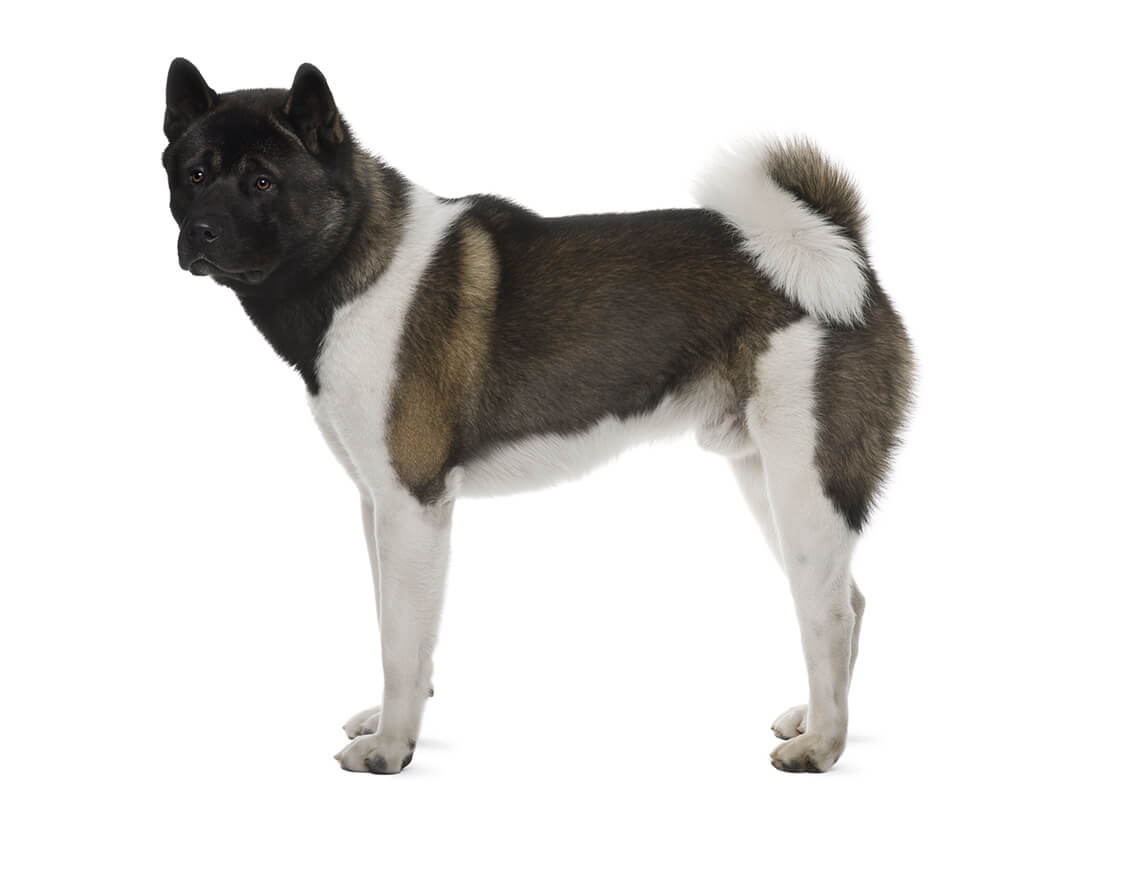
Lakeland Terrier

A smart, workmanlike dog, the Lakeland Terrier is a compact dog with a thick, harsh coat.


The need-to-know
 

  • Dog suitable for owners with some experience
  • Some training required
  • Enjoys active walks
  • Enjoys walking an hour a day
  • Small dog
  • Minimum drool
  • Requires grooming every other day
  • Hypoallergenic breed
  • Chatty and vocal dogGuard dog. Barks and alerts
  • May require training to live with other pets
  • May require training to live with kids
Lifespan:
12 – 16 years
Weight:
7 – 8kg
Height:
34 – 48cm
Colours:
Black and tan, blue and tan, red, wheaten, red grizzle, liver, blue or black
Size:
Medium
Kennel Club Group:
Terrier
Personality

Because of their working roots, the Lakeland Terrier is fearless and fast when they need to be – but in the home, as a pet, they are friendly, loving and affectionate dogs, who are fun and mischievous and love being involved with everything and everyone. Some Lakeland Terriers can be feisty with other dogs and so early and ongoing socialisation is essential.


History and Origins

Country of Origin: England


As the name suggests, this terrier breed comes from the Lake District, where they were bred by farmers to work with hounds and go to ground after foxes to protect their lambs.Various breeds have contributed to their make-up, including the old Black and Tan Terrier, the Bedlington Terrier, the Welsh Terrier and the Border Terrier - the idea being to breed a long-legged terrier that could keep up with hounds but still be small and agile enough to be able to crawl into holes and rocky crevices.


Nutrition and Feeding

Small dogs have a fast metabolism, meaning they burn energy at a high rate, although their small stomachs mean that they must eat little and often. Small-breed foods are specifically designed with appropriate levels of key nutrients and smaller kibble sizes to suit smaller mouths. This also encourages chewing and improves digestion.

Exercise

The Lakeland Terrier needs about an hour's daily exercise, but will happily accept much longer walks if you can offer them. In addition, they will enjoy games and playing in the garden, but with their history of being bred to squeeze down small holes and through tiny gaps, it goes without saying that garden boundaries should be fully escape-proof.

Other Information

Health and common issues


Like many small breeds, they can suffer from kneecaps that may temporarily slip out of place (luxating patellas). The breed club monitor the health of the breed carefully and should be contacted for the most up-to-date information and details of any DNA or additional testing they recommend. Breed Clubs can be found on the Kennel Club website.


Space requirements


The Lakeland Terrier is equally happy as a town or country dog - although as they alert their owners to any intruders (real or imagined), they might be better without close neighbours! They aren’t good for the garden-proud though as many enjoy digging.


Training lakeland terriers


The Lakeland Terrier is smart and clever - although surprisingly sensitive - and will enjoy reward-based training and can do surprisingly well. They should be taught a reliable recall and also to walk on a harness and lead.


Best family dog breeds


The Lakeland is one of the terriers that has more patience with children than many and is affectionate with their families. While many dogs are traditionally thought of as being good with children, all dogs and children need to be taught to get on with and respect each other, and be safe together. Even so, dogs and young children should never be left alone together and adults should supervise all interactions between them.


Did you know?


  • A Lakeland Terrier called Stingray of Derryabah won Best in Show at Crufts in 1967 and then the next year went on to win Best in Show at America’s Westminster Dog Show. This is the only dog ever to win the ‘double crown’ of the dog world.
  • The first president of the Lakeland Terrier Association had a Lakeland Terrier that pursued an otter into a 23-foot burrow and it took three days to rescue the dog!
  • They’re thought to be a threatened native breed and are becoming increasingly rare.
  • One of the top-winning show dogs of all time was a Lakeland Terrier owned by Jean L. Health and Bill Cosby.
  • Before being called the Lakeland Terrier, this breed was known as the Patterdale, Fell and Elterwater Terrier.


Kooikerhoundje

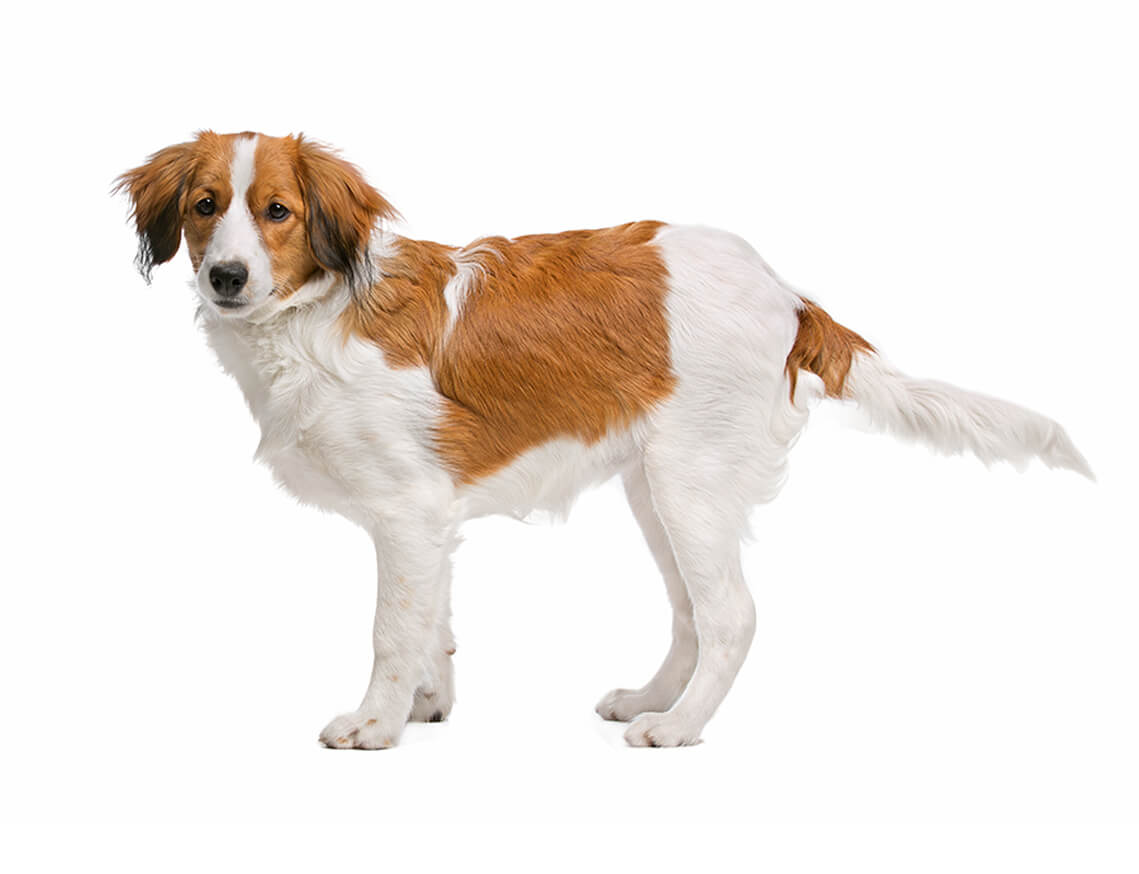
A very attractive small/medium-sized dog, the Kooiker dog holds his head proudly and is slightly longer than he is tall, with adult dogs standing at 35-40cm and weighing 9-11kg. He has a medium-length coat that is straight or slightly wavy and is white with orange-red patches. The ears are tipped with black and have longer hair, known as 'earrings'.


The need-to-know
 

  • Dog suitable for owners with some experience
  • Some training required
  • Enjoys vigorous walks
  • Enjoys walking more than two hours a day
  • Medium dog
  • Some drool
  • Requires grooming every other day
  • Non hypoallergenic breed
  • Chatty and vocal dog
  • Not a guard dog
  • May require training to live with other pets
  • May require training to live with kids
Personality

A friendly, alert and good-natured dog with people, the Kooikerhondje can be aloof with those he doesn't know but is loving to his family. He can be problematic with other dogs, so early, thorough socialisation is especially important. The Kooiker loves training and being given new challenges.


History and Origins

The Kooikerhondje dog breed ('kooiker's dog', also known as a 'Kooiker' dog) has been a recognised breed in the Netherlands since the 17th century, thought to descend from spaniel-type dogs that arrived in the area from Spain in the 16th century. The breed's originally function was as a decoy dog – a job that some still perform to this day. The dog would attract the ducks' attention and lure them to the kooiker (the person in charge of the hunt) and his nets. The breed has changed little over the centuries, as shown in art from the Dutch masters.

Nutrition and Feeding

Your dog's diet needs to have the right balance of all the main nutrient groups including a constant supply of fresh water. It's also important to conduct regular body condition scores to ensure you keep your dog in ideal shape, and remember to feed him at least twice daily in accordance with the feeding guidelines of his particular food.

Exercise

The Kooiker dog needs at least an hour's daily exercise. Unsurprisingly, he loves the water and will often dive into any he finds on a walk. As well as the canine sports (agility etc.), some Kooikers still work as duck decoys – either for hunting or for the birds to be tagged.

Other Information

Health and common issues


As a result of careful breeding, most previously recognised inherited conditions in the breed (such as epilepsy and slipping kneecaps) are now rarely encountered.


Best family dog breeds


While many dogs are traditionally thought of as being good with children , all dogs and children need to be taught to get on with and respect each other, and be safe together. Even so, dogs and young children should never be left alone together and adults should supervise all interactions between them.


Komondor

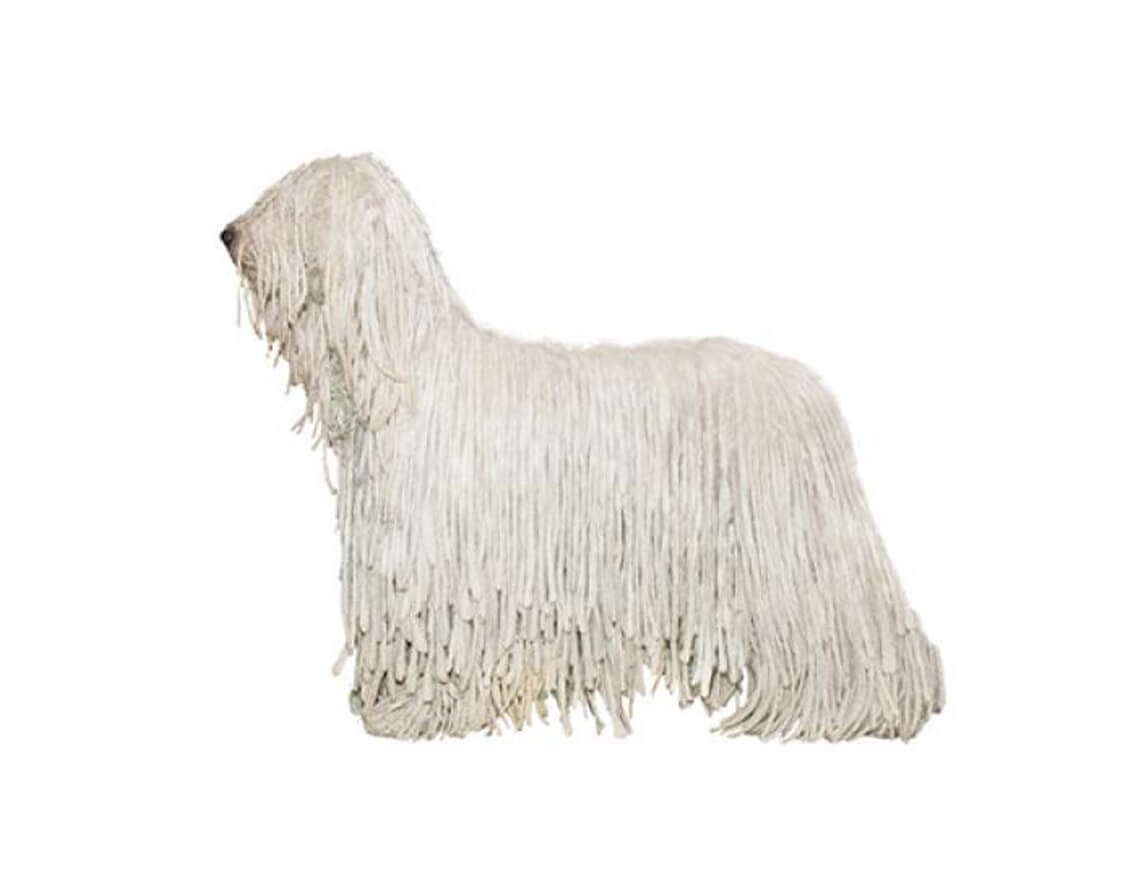
The Komondor is a large, powerful dog with an extremely distinctive white coat that is allowed to mat, patiently split by hand and formed into long cords.


The need-to-know
 

  • Dog suitable for experienced owners
  • Extra training required
  • Enjoys active walks
  • Enjoys walking an hour a day
  • Large dog
  • Minimum drool
  • Requires grooming every other day
  • Hypoallergenic breed
  • Chatty and vocal dog
  • Guard dog. Barks, alerts and it's physically protective
  • May require training to live with other pets
  • May require training to live with kids
Lifespan:
10-12 years
Weight:
50-61kg for males and 36-50kg for females
Height:
80cm for males and 70cm for females
Colours:
White
Size:
Large
UK Kennel Club Groups:
Pastoral
Personality

Centuries of breeding to treat strangers with suspicion and possibly aggression, and protect and guard what they consider to be theirs mean this is not a breed for everyone. Even an easy going Komondor is still a large, powerful dog with a coat that demands a lot of time and attention to keep sweet smelling and easy to live with. Devoted to their family they will guard and protect but this may mean they make errors of judgement that could land themselves and their owners into trouble!


History and Origins

Country of Origin: Hungary


Known in their native homeland of Hungary for over a thousand years, the Komondor is a livestock guardian, bred to live with the flock and protect them from theft and predation. The corded coat would keep them warm and dry no matter the weather and provides a thick body armour effective against the fiercest of predators including wolves. Thought to have arrived in Hungary with the nomadic Magyars and possibly descended from the Ovtcharka, another livestock guardian breed from the Caucasian regions of Russia.


Nutrition and Feeding

Large breed dogs, as well as having large appetites, benefit from a different balance of nutrients including minerals and vitamins compared to smaller-breed dogs. The Komondor is prone to bloating and stomach problems; smaller, more frequent meals can help minimise this risk. Discover more about how to offer your dog a balanced diet with our easy-to-follow guide.

Exercise

About an hour of daily dog exercise will be needed for the Komondor, with additional time for training and puzzle solving exercises. Access to secure places to run free and a large, securely fenced garden are important.

Other Information

Health and common issues


The Komondor dog is generally a healthy, robust breed with no widely recognised breed specific health problems.


Space requirements


Big dog, big coat, capable of collecting a lot of water and debris, a large property with extremely secure fencing is vital. The Komondor will take hours to dry out fully after a bath so their own dedicated room or a home set up for a large, hairy, wet dog is a must. Better suited to remote rural locations, the Komondor is likely to feel constantly on alert and stressed in a busy urban environment.


Training komondor


Not an easy dog to train! Given their history, the Komondor has had many generations of breeding for suspicion towards strangers and a willingness to use aggression against any animal (including humans) that offers a perceived threat or confrontation. Very careful management must be in place to ensure these dogs do not make a mistake. The usual methods of positive reinforcement, patience and kindness are applicable in the Komondor’s dog training, but this is not a dog inclined to enjoy training for its own sake, or to repeat behaviours for the sake of a treat.


Best family dog breeds


Suited to families with a lot of secure rural space, few visitors and a lot of time and energy for exercise, training and grooming. If they are to live as family dogs, they are better with dog savvy older teenagers – especially as the Komondor’s heavy corded coat makes their body language hard to read and their temperament is not given to tolerance of typical small child behaviour! While many dogs are traditionally thought of as being good with children, all dogs and children need to be taught to get on with each other and be safe together. Even so, dogs and young children should never be left alone together and adults should supervise all interactions between them.


Did you know?


  • A Komondor impressively clearing a high jump features on the 1996 album Odelay by the American artist Beck.
  • It takes five years for the Komondors cords to reach full length and a fully coated corded Komondor can take 24 hours to dry after a bath!


King Charles Spaniel

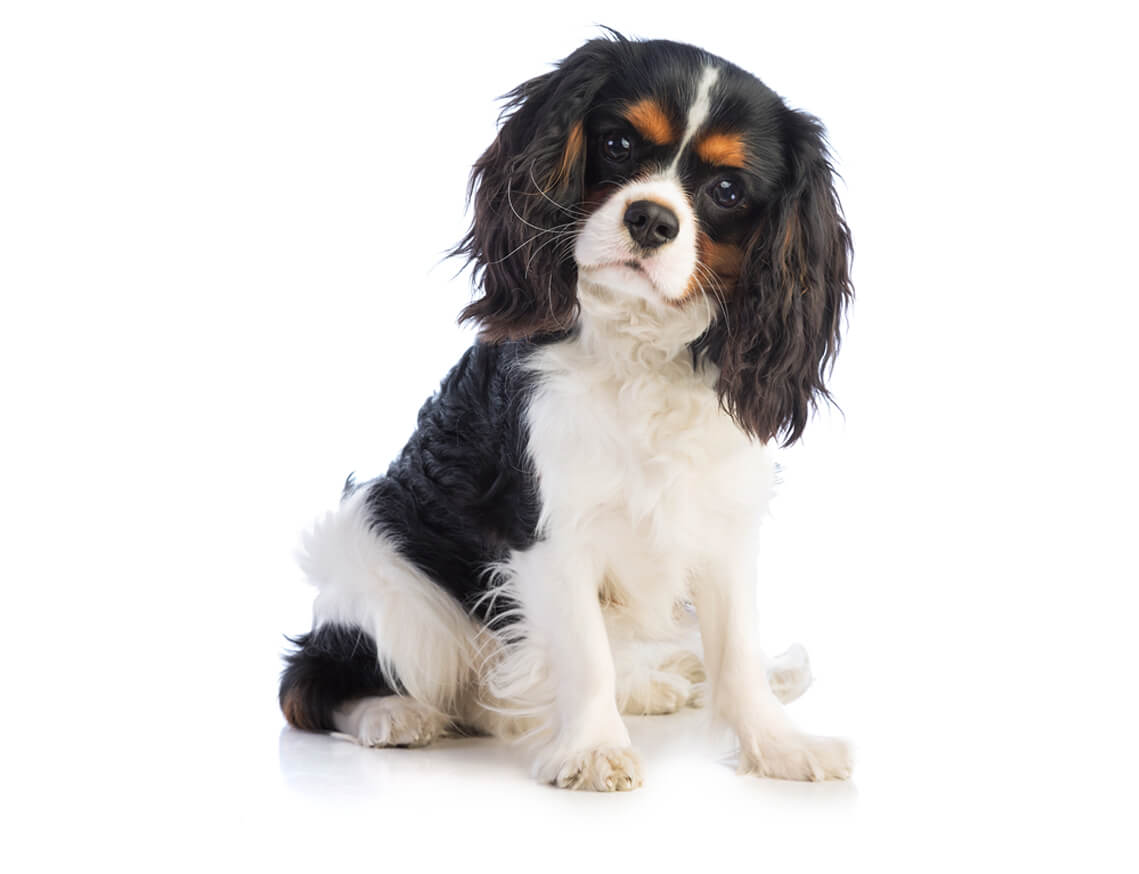
A noble-looking, compact dog, the King Charles Spaniel has a short, sturdy build and a long, silky coat that is straight or slightly waved. The coat comes in black and tan; tricolour (black, white and tan); Blenheim (white with red); and ruby. Adult King Charles Spaniels stand at approximately 30-33cm and weigh 3.6-6.3kg.


The need-to-know
 

  • Dog suitable for non-experienced owners
  • Basic training required
  • Enjoys gentle walks
  • Enjoys walking an hour a day
  • Small dog
  • Minimum drool
  • Requires grooming every other day
  • Non hypoallergenic breed
  • Chatty and vocal dog
  • Guard dog. Barks and alerts
  • Great with other pets
  • Great family dog
Personality

A gentle, happy and loving dog, the King Charles Spaniel is a rewarding companion dog. He can be reserved with those he doesn't know, but with friends and family, he is most affectionate. He gets along with other dogs and pets, and enjoys the company of old and young alike, but children must be careful around him, as his size makes him vulnerable to accidental injury.


History and Origins

Originating from working gundogs, the Toy Spaniel dog was miniaturized to be the companion dog of aristocratic ladies and it is from this centuries-old type that the King Charles Spaniel dog breed descends. Crossed with Oriental toy breeds, such as the Pug and Japanese Chin, he has the large eyes, domed skull and flattened face that was popular with toy dogs from the Far East. His most famous fan, of course, was King Charles II, after whom he takes his name.

Nutrition and Feeding

Toy dogs have a fast metabolism, meaning they burn energy at a high rate, although their small stomachs mean that they must eat little and often. Small-breed foods are specifically designed with appropriate levels of key nutrients and smaller kibble sizes to suit smaller mouths. This also encourages chewing and improves digestion.

Exercise

A small breed, the King Charles doesn't need very much exercise and will be happy with half an hour's daily walking, though he will accept more if you can offer it. They enjoy games with their owners, and they are clever dogs who also enjoy training.

Other Information

Health and common issues


Syringomyelia, a serious, painful neurological condition, has been reported in some King Charles Spaniels. In common with many small breeds, the King Charles Spaniel may suffer slipping kneecap(s), and those with a very flat face may also experience respiratory problems.


Best family dog breeds


While many dogs are traditionally thought of as being good with children , all dogs and children need to be taught to get on with and respect each other, and be safe together. Even so, dogs and young children should never be left alone together and adults should supervise all interactions between them.


Kerry Blue Terrier

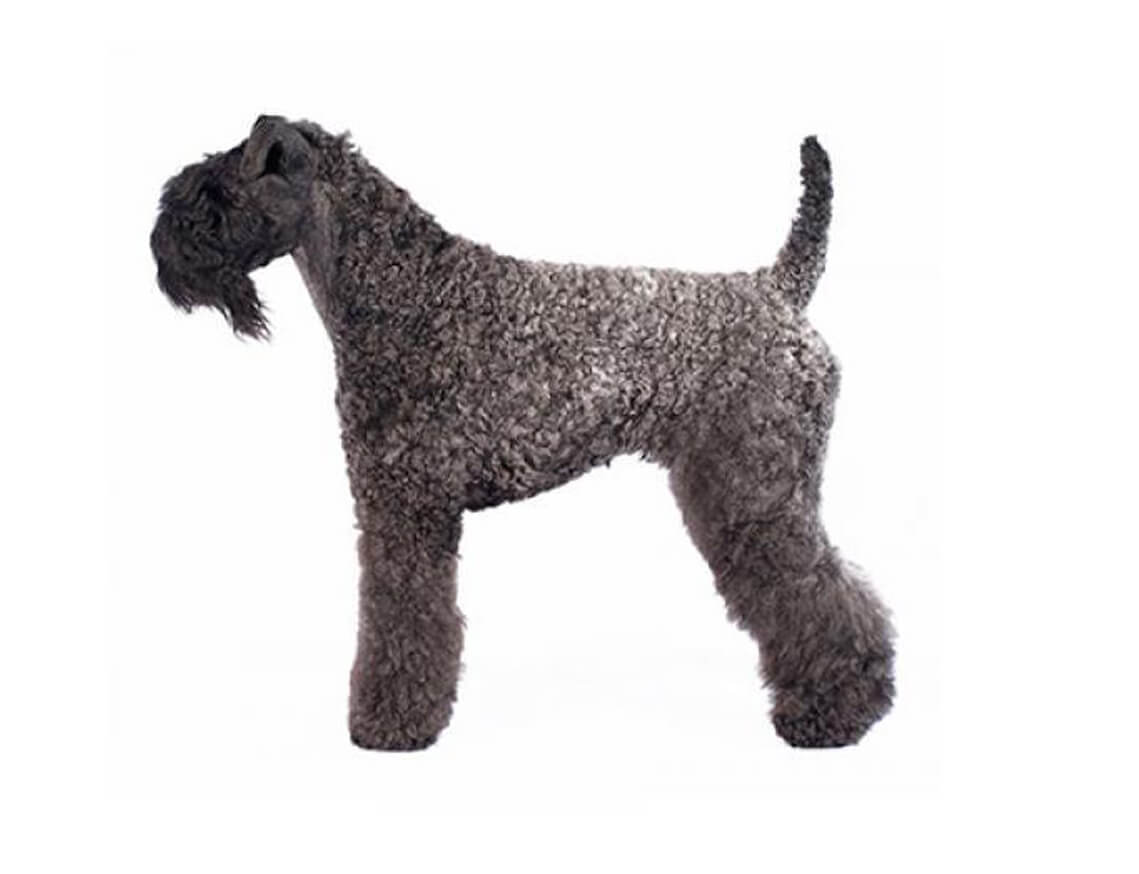
Short-coupled, compact and muscular, the Kerry Blue Terrier is a strong, medium-sized dog, although one of the larger terriers. The coat has a soft, silky texture, profuse and wavy, and comes in a blue-grey colour, with or without black points. This colour fades over time with puppies being born black and fading out to blue-grey as they mature.


The need-to-know
 

  • Dog suitable for experienced owners
  • Some training required
  • Enjoys active walksEnjoys walking an hour a day
  • Medium dog
  • Minimum drool
  • Requires grooming every other day
  • Hypoallergenic breed
  • Chatty and vocal dog
  • Guard dog. Barks and alerts
  • May require training to live with other pets
  • May require training to live with kids
Lifespan:
13-15 years
Weight:
15-17kg
Height:
46-48cm
Colours:
Blue-grey colour, with or without black points
Size:
Medium
UK Kennel Club Groups:
Terrier
Personality

Described as fierce, intelligent, charming and trust-worthy, the Kerry Blue is still a formidable character even though they are more popular as a show dog than working dog today. Bred to deal with vermin and guard property, the Kerry Blue is an independent thinker, and if left untrained may make decisions by themselves that lead owners into trouble!


History and Origins

Country of Origin:  Ireland


Originating from County Kerry in the south-west of Ireland, the Kerry Blue is the National Dog of Ireland. A versatile, hard-working farm dog, the Kerry Blue was and is, excellent as a guard/watch dog, and was originally bred to kill rats and even take to the water after otters.  Their origins are slightly hazy and may originally have been a cross between existing Irish Terriers and Bedlington Terriers but this is uncertain enough that romantic legends still talk of the Kerry Blue’s ancestor swimming ashore from a shipwreck. 


Nutrition and Feeding

The Kerry Blue Terrier needs to have a balanced diet including all the main nutrient groups and a constant supply of fresh water. It's also important to conduct regular?body condition?scores to ensure you keep your dog in ideal shape, and remember to feed your pet at least twice daily in accordance with the feeding guidelines of their particular food.

Exercise

An hour a day of dog exercise, walking and free running is the bare minimum, ideally much more, particularly training that engages the Kerry Blue’s exceptional brain. Any activity that can recreate hunting and catching rats will be a hit, as will scent based work such as tracking, scent discrimination and man-trailing.

Other Information

Health and common issues


Generally, quite a healthy breed, the most common health problems for Kerry Blue dogs are some particular eye and skin problems.


Space requirements


The Kerry Blue will fit into any sized home, but does need a garden with secure fencing, they are agile and determined in pursuit of quarry and will jump over, dig under or squeeze through inferior fencing! As a guarding and vocal terrier, the Kerry Blue is better suited to a quieter home or more rural environment, the constant stimulation in a busy, city or town household may well result in a very loud, stressed dog who cannot relax.


Training kerry blue terrier


Early socialisation to other dogs, children and livestock is essential but even then, they are unlikely to mix well with cats - and may even consider resident cats as prey outside the comfort of the house or if their predatory instincts are aroused. A well socialised and habituated Kerry Blue is easily capable of many canine sports and activities, but they are not a dog to ignore a challenge or perceived threat and owners should always remain aware of their game, feisty nature. When it comes to dog training, they respond well to positive reinforcement and are quick learners once they believe that what you want from them was their idea in the first place!


Best family dog breeds


Due to their independent nature and strong desire to hunt, the Kerry Blue is better suited to families without children or with older teenagers. The Kerry Blue Terrier is unlikely to tolerate the wobbliness of toddlers or the noise of babies well and this will result in a stressed dog who is unhappy and difficult to manage. Older teenagers who have an interest in dog training may enjoy the challenge of getting the Kerry Blue ‘on-side’. While many dogs are traditionally thought of as being good with children, all dogs and children need to be taught to get on with each other and be safe together. Even so, dogs and young children should never be left alone together and adults should supervise all interactions between them.


Did you know?


Although they are National Dog of Ireland, the Kerry Blue is on the UK’s Vulnerable breed list, with well under 200 puppies registered in any of the last five years. Despite this, a Kerry Blue, “Torums Scarf Michael” won Best in Show at Crufts in 2000.
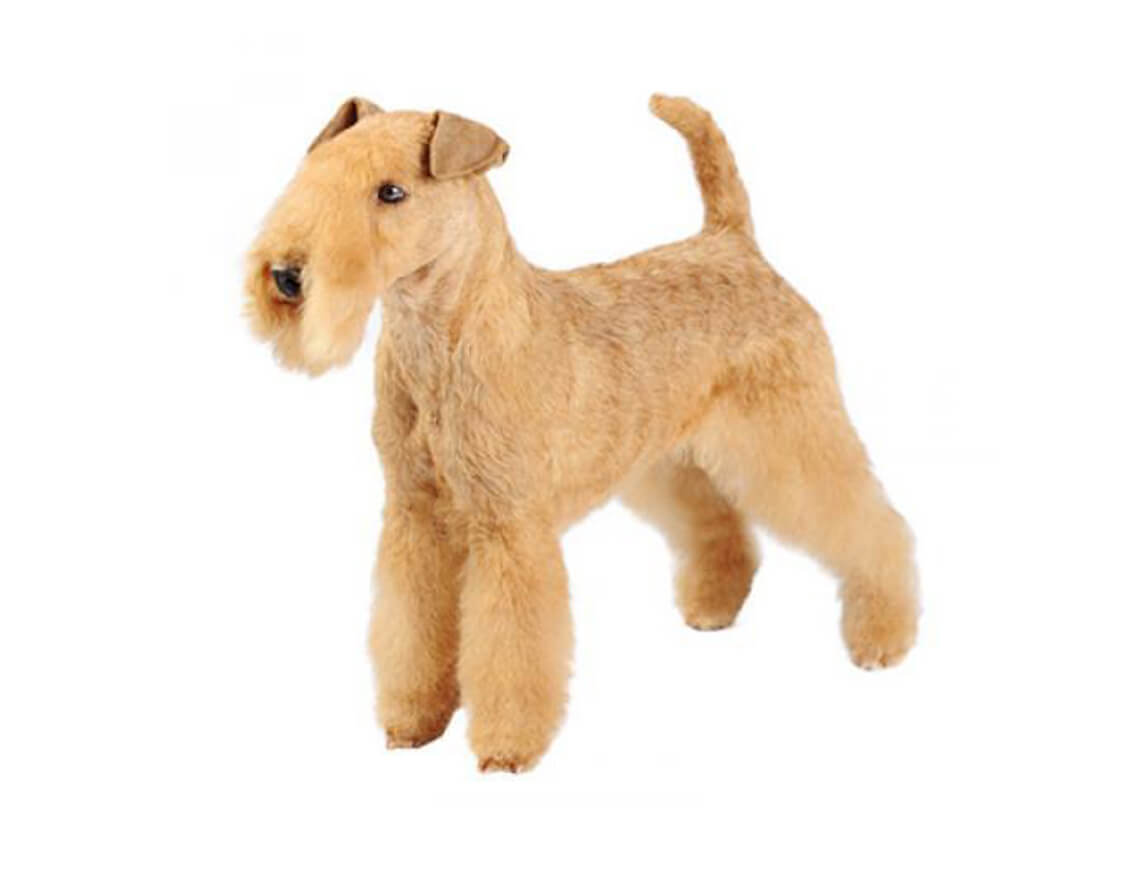
 

Keeshond

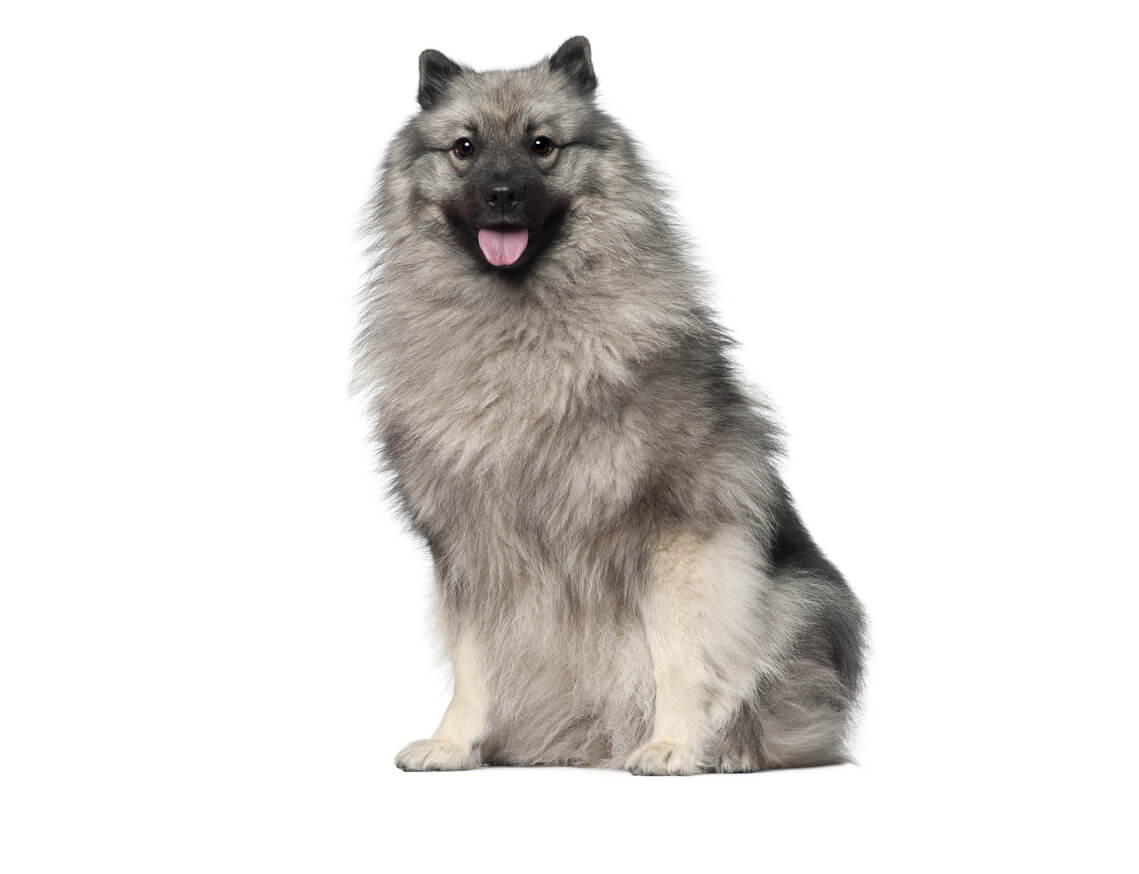
The Keeshond is typical of the spitz type, with a foxy face, prick ears, thick stand-off coat and a plumed tail that curls over the back. The coat forms a huge and spectacular ruff around the neck and chest. This is a medium-sized dog, under the plush coat they are a lean, muscular, and sturdy dog.


The need-to-know
 

  • Dog suitable for owners with some experience
  • Some training required
  • Enjoys active walks
  • Enjoys walking an hour a day
  • Medium dog
  • Some drool
  • Requires grooming daily
  • Non hypoallergenic breed
  • Very vocal dog
  • Guard dog. Barks and alerts
  • May require training to live with other pets
  • May require training to live with kids
Lifespan:
13-15 years
Weight:
16-18kg
Height:
46cm for males and 43cm for females
Colours:
Black and grey with a cream or very pale grey undercoat
Size:
Medium
UK Kennel Club Groups:
Utility
Personality

Alert, cheerful and described as impertinent by those who know the breed well, the Keeshond is still a natural watchdog, and remains very keen to let their owners know that trouble is a-foot! Friendly and companionable and very adept at living in small spaces, they are often called the ‘Smiling Dutchman’ due to their appealing bright eyed, happy face.


History and Origins

Country of Origin:  Holland


Closely linked to other spitz types such as the German Wolfspitz and the Pomeranian, the Keeshond takes his name from Kees de Gyselaer, the leader of the 18th century Dutch Patriots party. Their original function was as a working guard and companion, living and working on the Dutch barges. For this reason, they are also known as the Dutch Barge Dog. It is likely they also performed useful functions as ratters and vermin deterrents but their main job was to bark and alert their owners to intruders.


Nutrition and Feeding

The Keeshond needs to have a balanced diet including all the main nutrient groups and a constant supply of fresh water. It's also important to conduct regular?body condition?scores to ensure you keep your dog in ideal shape, and remember to feed your pet at least twice daily in accordance with the feeding guidelines of their particular food.

Exercise

The Keeshond is happy with an hour of dog exercise a day although will enjoy more if you are willing to offer it. With their dense coat, the Keeshond is not deterred by extreme weather, even if you are, so they are very much an all-weather dog. Exercise should include keeping the Keeshond well occupied with training, puzzle solving and other dog related activities as otherwise they will go self-employed in a very vocal manner.

Other Information

Health and common issues


The Keeshond is generally a healthy breed. There are a couple of known inherited conditions that affect the breed; epilepsy and a hormonal problem (primary hyperparathyroidism). Genetic tests are available for both of these conditions and should be carried out in all breeding dogs. The Kennel Club and the breed club will have the most up to date health testing information.


Space requirements


Bred to live in the confined living quarters aboard the Dutch barges, the Keeshond does not require a large house however they do shed like all the spitz types, so you may prefer more space with your Keeshond! A secure garden is a must as this is an agile, clever and intelligent breed that can climb, dig and squeeze through anything but the most robust of fencing. Rural or quiet suburban living is best as the Keeshond feels the need to bark about anything they can hear or see moving, anything they believe to be suspicious and anyone they suspect to be up to no good which can be irritating for owners and downright unpleasant for neighbours.


Training keeshond


Training the Keeshond is a matter of engaging and motivating them to believe they want to do whatever it is you wanted them to do, that it was in fact their idea in the first place! Achieve this with cunning use of positive reinforcement, using toys and food to reward them well for behaviour you like. Careful socialisation with people, other animals and habituation to a variety of situations is important as the Keeshond is inclined to shout about anything they are unfamiliar with or deem at all suspicious! Pay particular attention to recall as in common with most spitz types, disappearing on the hunt for something small and furry is naturally more amusing than returning promptly! Find out more about dog training with our easy, step-by-step guide.


Best family dog breeds


Fun and intelligent, the Keeshond can make an excellent pet for the active home with older children or teenagers. Their propensity towards barking means they are probably not suited to a home with very young children or babies who need to sleep. While many dogs are traditionally thought of as being good with children, all dogs and children need to be taught to get on with each other and be safe together. Even so, dogs and young children should never be left alone together and adults should supervise all interactions between them.


Did you know?


  • One of the less obvious roles the Keeshond had on the barges was to act as a foghorn, sitting on the bows of the barge the Keeshond would bark as soon as they spotted another barge approaching through the fog. Since barges move slowly and are between 70 and 120ft long, this gave the bargee plenty of warning.
  • Despite being relatively rare outside the Netherlands, the Keeshond has had some celebrity owners including Walt Disney, Irish poet W.
  • B. Yeats and Princess Diana.


Japanese Spitz

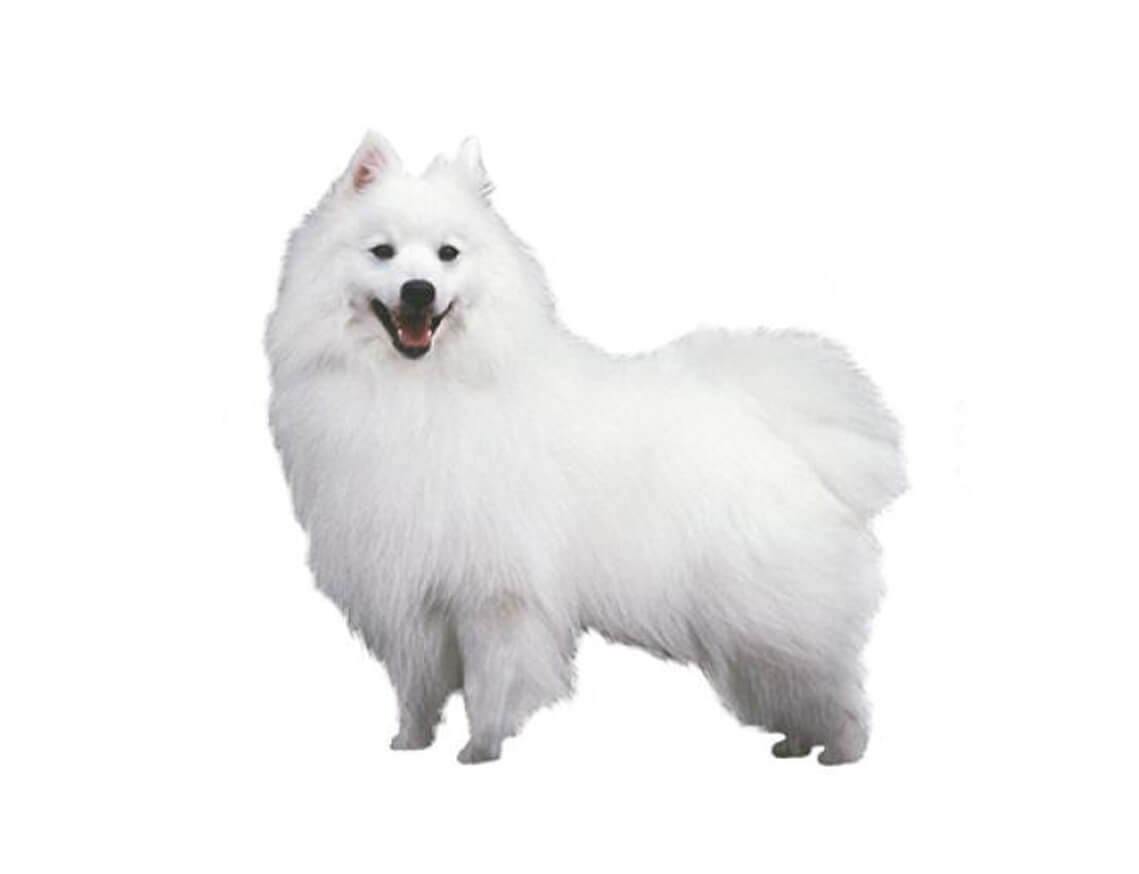
The Japanese Spitz is an attractive small to medium-sized dog, very typical of the spitz type with a foxy face, pricked ears, and tail held curled up over the back. Their plush, stand off coat is pure white, and the contrast between the white of the coat and their dark pigmented eyes and nose lend an attractive expression of laughter and merriment.


The need-to-know
 

  • Dog suitable for non-experienced owners
  • Basic training required
  • Enjoys gentle walks
  • Enjoys walking an hour a day
  • Small dog
  • Some drool
  • Requires grooming every other day
  • Non hypoallergenic breed
  • Very vocal dog
  • Guard dog. Barks and alerts
  • May require training to live with other pets
  • May require training to live with kids
Lifespan:
10-16 years
Weight:
5-6kg
Height:
Adult dogs are 34-37cm tall, females 30-34cm
Colours:
White
Size:
Small
UK Kennel Club Groups:
Utility
Personality

The Japanese Spitz is affectionate and loyal to loved ones and familiar friends, but may be a little reserved with those they don’t know well. Typical of the spitz type, this is an alert, lively breed who will bark if they hear anything unusual or startling.  They enjoy the company of family, and are generally a gregarious type, getting on well with other family pets and other dogs, though as with all dogs, should be socialised well as puppies. If you want to find out more about dog socialisation, check out our handy article.


History and Origins

Country of Origin: Japan


Although the spitz type has been around in the northern hemisphere for some considerable time, the Japanese Spitz is a relatively modern breed that has found a niche as a lively household companion and also an eye-catching show dog. It is thought their ancestors arrived in Japan first in the form of smaller Samoyeds via Mongolia and then later in the form of white coated German Spitz dogs. It’s also possible that some American Eskimo dogs from Canada added to the mix along with some Russian Spitz in the 1930’s, and these all contributed to this new breed which was finalised by the Japan Kennel Club in 1948.  The Japanese Spitz was recognised by the Kennel Club in 1977.


Nutrition and Feeding

Small dog breeds, such as the Japanese Spitz, have a fast metabolism, meaning they burn energy at a high rate, although their small stomachs mean that they must eat little and often. Small-breed foods are specifically designed with appropriate levels of key nutrients and smaller kibble sizes to suit smaller mouths. This also encourages chewing and improves digestion. Discover more about how to offer your dog a balanced diet with our easy-to-follow guide.

Exercise

Although not a particularly large dog, the Japanese Spitz is a fit, active animal who will need an hour or more of dog exercise per day. They will enjoy training for fun, and puzzle solving games that exercise their clever, curious minds. Japanese Spitz do well at agility and other dog sports.

Other Information

Health and common issues


The Japanese Spitz is generally a healthy breed. In common with many small breeds they may suffer kneecaps that temporarily slip out of place (patella luxation).


Space requirements


The Japanese Spitz does not require a lavishly sized home, but secure outside space for play and training and toilet trips is a must. Consider the proximity of your neighbours and how busy your location is, as the Japanese Spitz can be quite a barky dog, particularly if over-stimulated by constant passing traffic. You will need space to dry off a wet dog, and to groom them regularly. Suitable for most locations except where noise will be an issue.


Training japanese spitz


The Japanese Spitz is a bright, intelligent dog with an independent streak so will need motivation in the form of positive reinforcement dog training, using treats and games to keep them interested. Pay particular attention to recall as Spitz types no matter how small, can be keen to go off hunting!


Best family dog breeds


Suitable for active families who have time to train and entertain, caution is recommended with very small children as it is with most breeds. This is a barky dog, and in a busy, loud household this could encourage nuisance barking so do keep this in mind. While many dogs are traditionally thought of as being good with children, all dogs and children need to be taught to get on with each other and be safe together. Even so, dogs and young children should never be left alone together and adults should supervise all interactions between them.


Did you know?


The Japanese Spitz is sometimes nicknamed the Cloud Dog due to their fluffy white cloudlike appearance. They are also often described as having a ‘self-cleaning’ coat, referring to the fact that once dry, mud and dirt brushes off or drops off very easily.


Japanese Shibu Inu

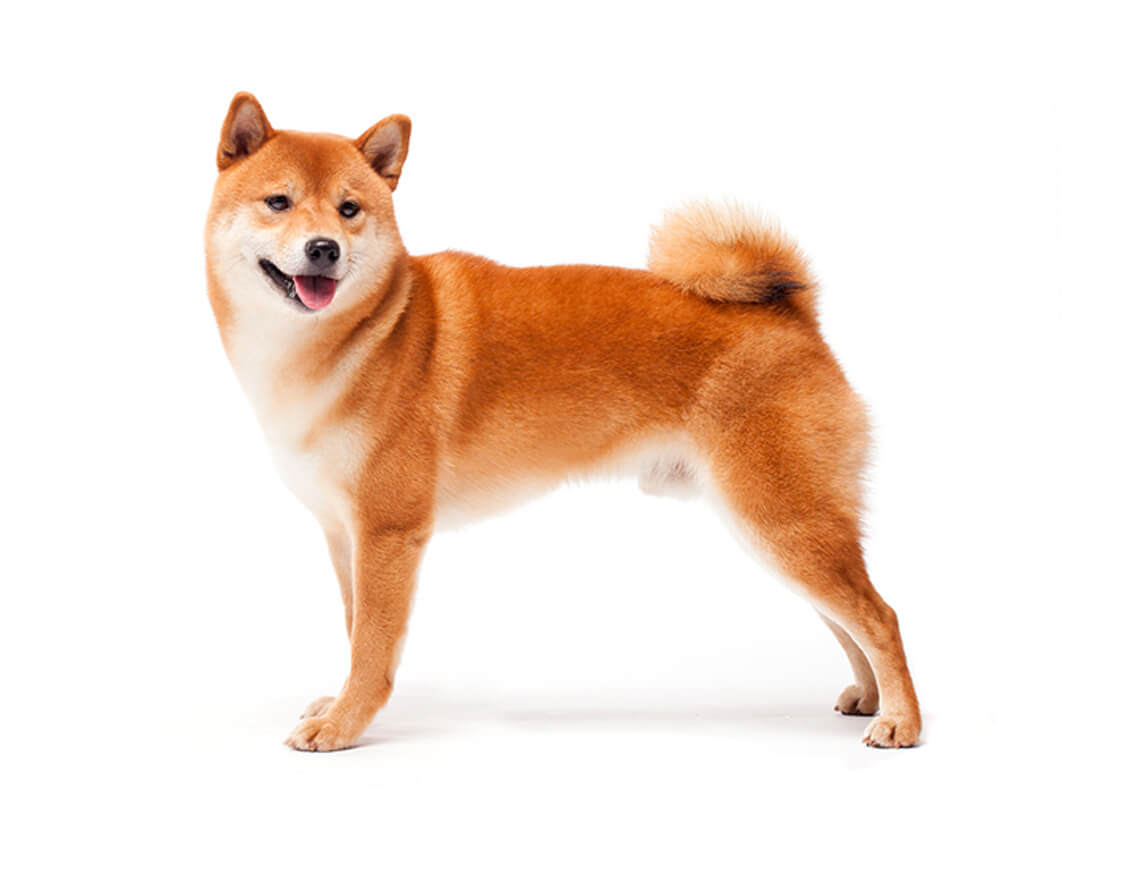
The Shiba Inu is a sturdy, medium-sized, Spitz-type dog (i.e. he has prick ears, a thick coat, and a curled tail). A smaller version of the Akita, the adult male stands at around 39.5cm and adult females at 36.5cm. The thick, soft undercoat is covered in a hard, straight topcoat that comes in red, red sesame (red with black guard hair), black and tan, or white.


The need-to-know
 

  • Dog suitable for experienced owners
  • Some training required
  • Enjoys active walks
  • Enjoys walking an hour a day
  • Small dog
  • Some drool
  • Requires grooming every other day
  • Non hypoallergenic breed
  • Chatty and vocal dog
  • Guard dog. Barks and alerts
  • May require training to live with other pets
  • May require training to live with kids
Personality

An alert, active and friendly dog, the Japanese Shiba Inu dog breed can be quite independent and often has a strong hunting instinct. Early, thorough socialisation is essential, particularly to help them be sociable with other dogs. An unusual feature of the breed is 'the Shiba scream' – a high-pitched vocalisation emitted when excited or agitated.


History and Origins

Bred to hunt and flush small game in the mountains of Japan, the Shiba Inu dog breed is a smaller version of the Akita – indeed, Shiba Inu translates as 'small dog'. One of the oldest known breeds, dating back to the 3rd century BC, the Shiba Inu dog almost died out entirely in the Second World War but the small number of dogs who had survived bombing raids and a distemper epidemic were bred to save the breed.

Nutrition and Feeding

Your dog's diet needs to have the right balance of all the main nutrient groups including a constant supply of fresh water. It's also important to conduct regular body condition scores to ensure you keep your dog in ideal shape, and remember to feed him at least twice daily in accordance with the feeding guidelines of his particular food.

Exercise

About an hour's daily exercise is needed. Because of their potential desire to chase, do ensure you have a reliable recall before letting them off the lead and only exercise in safe, enclosed areas.

Other Information

Health and common issues


The Shiba Inu is generally a healthy, robust breed. Like many breeds inherited eye problems can occur and breeding dogs should be routinely eye tested.


Best family dog breeds


While many dogs are traditionally thought of as being good with children , all dogs and children need to be taught to get on with and respect each other, and be safe together. Even so, dogs and young children should never be left alone together and adults should supervise all interactions between them.


Japanese Chin

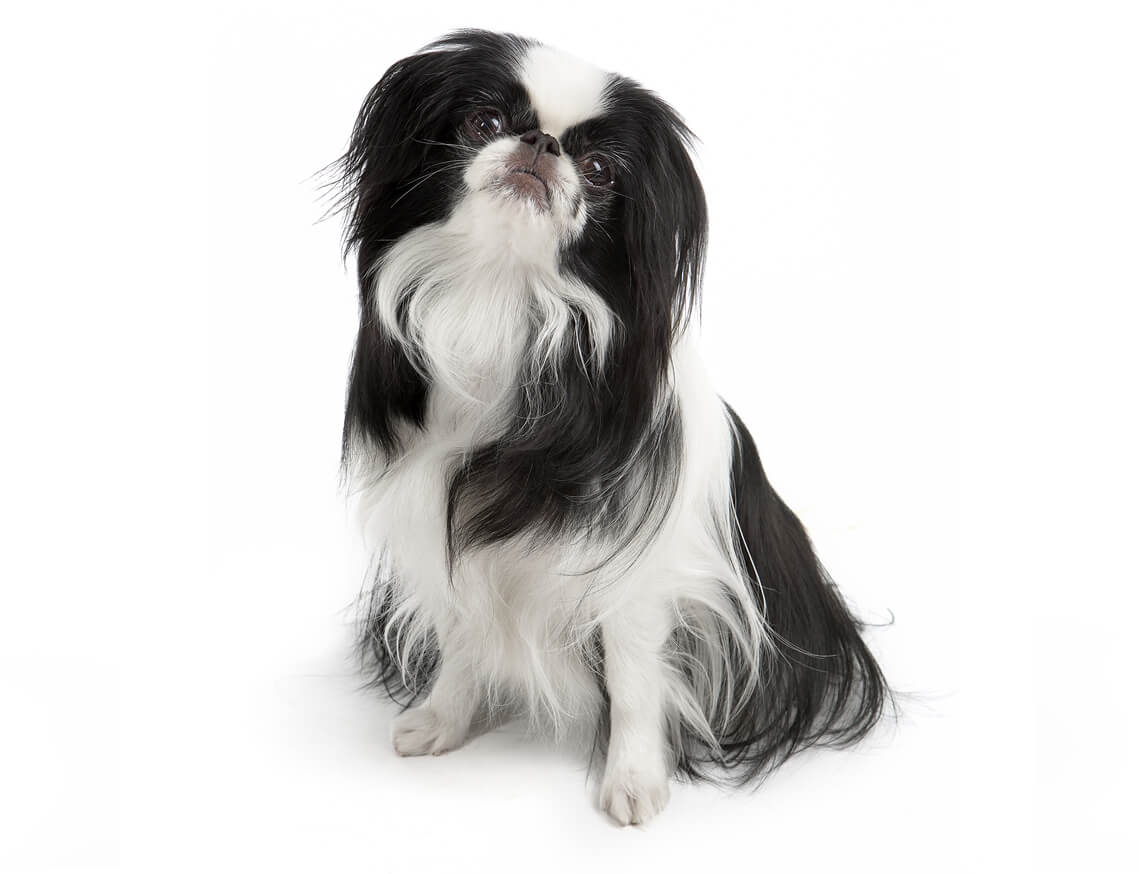
The Japanese Chin is an elegant, aristocratic, and compact little dog with a profuse coat. As a short-faced breed, they should have large eyes and open nostrils giving an appealing if slightly astonished-looking expression. The soft, silky coat is long and straight.


The need-to-know


  • Dog suitable for non-experienced owners
  • Basic training required
  • Enjoys gentle walks
  • Enjoys walking half an hour a day
  • Little toy dog
  • Some drool
  • Requires grooming every other day
  • Non hypoallergenic breed
  • Quiet dog
  • Not a guard dog
  • Great with other pets
  • Great family dog
Lifespan:
12-14 years
Weight:
1.8-3.2kg
Height:
20-27cm
Colours:
Black and white or red and white which includes all shades of red from sable through to lemon. Tricolour is not permitted nor is white flecking within the coloured markings
Size:
Small
UK Kennel Club Groups:
Toy
Personality

The Japanese Chin is a happy, intelligent and lively little dog. Bred to be a companion, they thrive with human company and struggle to cope with separation from their family members. Affectionate and gentle, and undemanding as far as exercise goes, they are full of character despite their tiny size.


History and Origins

Country of Origin: Japan


The Japanese Chin is one of several tiny, hugely appealing toy dogs kept as companions and given as diplomatic gifts between royalty, nobility and families of high standing. Various theories exist as to their true origins, with suggestions they came from China, Korea or via traders from the West but all theories link them closely with both royalty and Eastern monastic life.  


Nutrition and Feeding

Toy dogs such as the Japanese Chin have a fast metabolism, meaning they burn energy at a high rate, although their small stomachs mean that they must eat little and often. Small-breed foods are specifically designed with appropriate levels of key nutrients and smaller kibble sizes to suit smaller mouths. This also encourages chewing and improves digestion. Discover more about how to offer your dog a balanced diet with our easy-to-follow guide.

Exercise

The Japanese Chin will not require much daily dog exercise, however around half an hour a day should be given, plus training and mental stimulation. This is an intelligent little breed and although exercise in very weather should be avoided due their flattened face and the breathing problems this can cause. Time should be spent on training and mental stimulation daily to keep this clever little dog’s mind active and satisfied. Most of their exercise however will be had following their beloved owner absolutely everywhere they go.

Other Information

Health and common issues


The flat face of the Japanese Chin means they may be more prone to breathing problems. Over-exertion and over-heating are therefore to be avoided. Like many small dog breeds, they can suffer from kneecaps that may temporarily slip out of place (luxating patellas).


Space requirements


Compact and cobby, the Japanese Chin can live in small homes very happily however a secure garden is a must as these small dogs are able to slip through the tiniest of gaps. Town or country, the Japanese Chin won’t care as long as their people are always around.


Training japanese chin


The Japanese Chin is perfectly capable of learning quickly and should be trained in all the useful life skills. Many enjoy learning some fun tricks as well, so make sure you add them to your dog training routine as well. Positive reinforcement using food, toys, and the opportunity to perform enjoyable behaviours will help to engage this bright little dog. Good socialisation with other dogs, household pets and children (along with care and management) is vital to give this small dog the confidence they need to navigate life in a world that is giant to them!


Best family dog breeds


Being small, delicate and sensitive, the Chin is better suited to older families, child-free homes or those with older sensible children. With care they can live in with a busy or quiet household as long as they can accompany their owners wherever they go as the Japanese Chin is truly a companion dog and won’t do well left alone. While many dogs are traditionally thought of as being good with children, all dogs and children need to be taught to get on with each other and be safe together. Even so, dogs and young children should never be left alone together and adults should supervise all interactions between them.


Did you know?


The Japanese Chin was developed to resemble both in looks and behaviour, a cat-dog hybrid. The word ‘Chin’ means cat-like, and they have been noted for their feline-like behaviours, being remarkably silent and washing their faces with the front paws. They are also agile jumpers and deft climbers.


Japanese Akita

Japanese Akita dogs are large, powerful dogs with much substance and dignity. Their proud head carriage and stance are enhanced by their small ears and dark eyes. They make a striking picture with their thick, plush coats.


The need-to-know
 

  • Dog suitable for experienced owners
  • Extra training required
  • Enjoys active walks
  • Enjoys walking one to two hours a day
  • Large dog
  • Heavy drool
  • Requires grooming daily
  • Non hypoallergenic breed
  • Quiet dog
  • Guard dog. Barks, alerts and it's physically protective
  • May require training to live with other pets
  • May require training to live with kids
Lifespan:
10–15 years
Weight:
The weight range is 34–50kg
Height:
Adult males stand at 64–70cm and females at 58–64cm
Colours:
Red-fawn, sesame, brindle, and white
Size:
Large
Kennel Club group:
Utility
Personality

Not unexpectedly, Akita are strong dogs – in body and character – and are not recommended for the novice owner. They need experienced handling and early and ongoing socialisation and training. They are, however, very loyal to their own family, while aloof and reserved - and generally suspicious - of strangers. Courageous, they make good but often silent watchdogs - a trait that was much admired in their homeland. Their hunting and protective instincts are strong and this must be remembered at all times.


History and Origins

Country of Origin:  Japan


The Akita, the largest of all the Japanese breeds, was originally bred in the province of Akita in the 1600 and was originally developed as a highly successful fighting dog. In the late 19th century however, other breeds were imported into the fighting scene making the Japanese breeds suffer in popularity. As dog fighting fell out of favour, the Akita needed to find other jobs to do in order to survive, and managed this effortlessly by multi-tasking as a hunting dog, a guard dog, a police dog, a show dog and a much-loved companion.


Nutrition and Feeding

Large breed dogs, as well as having large appetites, benefit from a balanced diet with many different nutrients including minerals and vitamins compared to smaller-breed dogs. The Japanese Akita is prone to bloating and stomach problems; smaller, more frequent meals can help minimise this risk.

Exercise

Akitas will enjoy as much dog exercise as you want to give them but need one to two hours every day.

Other Information

Health and common issues


As with many breeds, the Japanese Akita can suffer from hereditary eye disorders and hip dysplasia (a condition that can lead to mobility problems). Eye testing and hip scoring of dogs prior to breeding is therefore important.


Space requirements


This is a large dog who needs space and who enjoys having a large secure garden to wander around in and patrol. With their aloofness towards strangers, the Akita does best without close neighbours and constant disruptions and so a more rural home is perfect.


Training japanese akita dogs


As with most big, powerful working dogs, Akitas need a lot of dog training and ongoing socialisation to ensure they are under control and safe around other dogs and people. They have a strong hunting instinct so while a good recall is extremely important to train, it shouldn’t always be relied upon and management is equally as important. While some Akitas enjoy training, many are far less interested in traditional obedience although they are strongly bonded to their owners and rarely wander far from them.


Best family dog breeds


The Japanese Akita doesn’t make a great family dog - as while devoted to their own family, they do not enjoy visitors and the disruptions that come with family life. They can however make good companions in a quiet house with older sensible children. All dogs and children need to be taught to get on with each other and be safe together. Even so, dogs and children should never be left alone together and adults should supervise all interactions between them.


Did you know?


The most famous Japanese Akita was Hachi, the loyal companion of a Tokyo professor Eizaburo Ueno. Each day Hachi would accompany his master to the train station and would also be waiting for him when he got back from work. On 25th May 1925, Professor Ueno died in his office but for the next nine years and until his own death, Hachi made the lonely journey back and forward to the station waiting for his master who never came. There is a statue at the station in his memory.