Health and common issues
The Keeshond is generally a healthy breed. There are a couple of known inherited conditions that affect the breed; epilepsy and a hormonal problem (primary hyperparathyroidism). Genetic tests are available for both of these conditions and should be carried out in all breeding dogs. The Kennel Club and the breed club will have the most up to date health testing information.
Space requirements
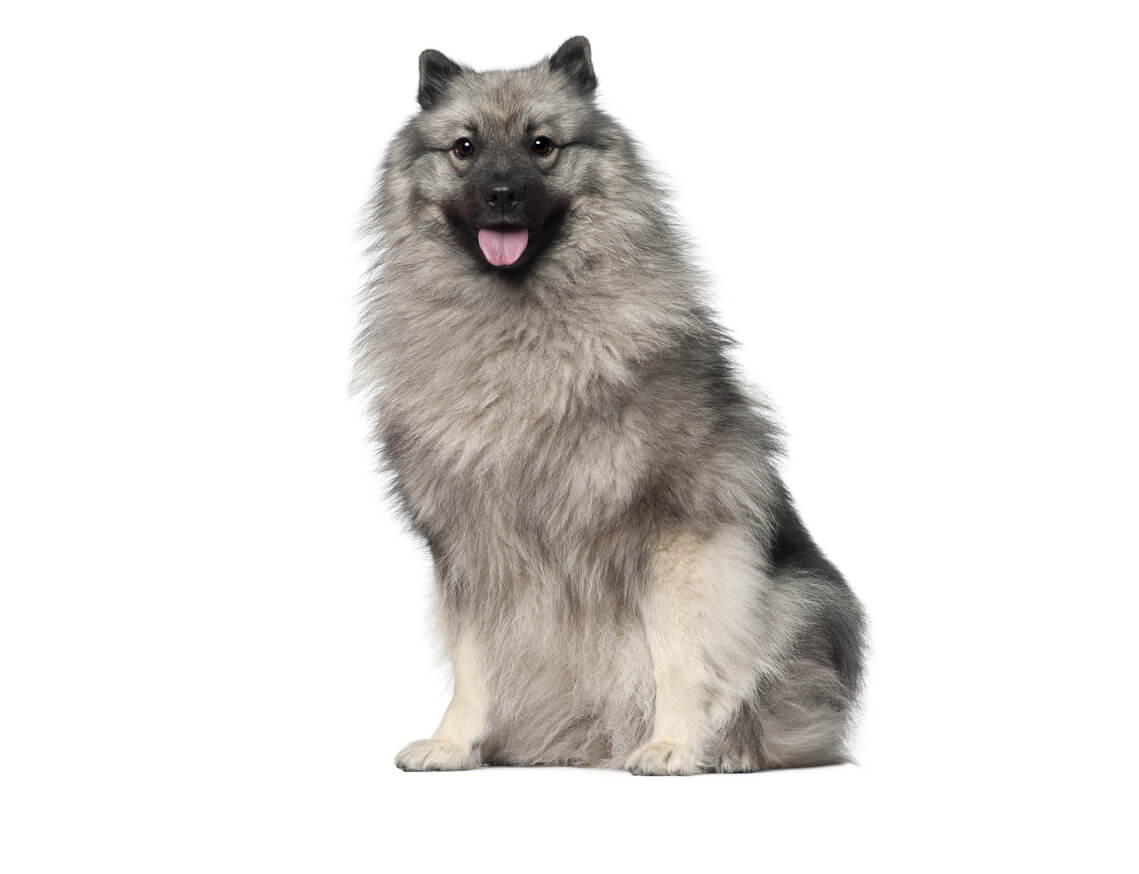
Bred to live in the confined living quarters aboard the Dutch barges, the Keeshond does not require a large house however they do shed like all the spitz types, so you may prefer more space with your Keeshond! A secure garden is a must as this is an agile, clever and intelligent breed that can climb, dig and squeeze through anything but the most robust of fencing. Rural or quiet suburban living is best as the Keeshond feels the need to bark about anything they can hear or see moving, anything they believe to be suspicious and anyone they suspect to be up to no good which can be irritating for owners and downright unpleasant for neighbours.
Training keeshond
Training the Keeshond is a matter of engaging and motivating them to believe they want to do whatever it is you wanted them to do, that it was in fact their idea in the first place! Achieve this with cunning use of positive reinforcement, using toys and food to reward them well for behaviour you like. Careful socialisation with people, other animals and habituation to a variety of situations is important as the Keeshond is inclined to shout about anything they are unfamiliar with or deem at all suspicious! Pay particular attention to recall as in common with most spitz types, disappearing on the hunt for something small and furry is naturally more amusing than returning promptly! Find out more about dog training with our easy, step-by-step guide.
Best family dog breeds
Fun and intelligent, the Keeshond can make an excellent pet for the active home with older children or teenagers. Their propensity towards barking means they are probably not suited to a home with very young children or babies who need to sleep. While many dogs are traditionally thought of as being good with children, all dogs and children need to be taught to get on with each other and be safe together. Even so, dogs and young children should never be left alone together and adults should supervise all interactions between them.
Did you know?
- One of the less obvious roles the Keeshond had on the barges was to act as a foghorn, sitting on the bows of the barge the Keeshond would bark as soon as they spotted another barge approaching through the fog. Since barges move slowly and are between 70 and 120ft long, this gave the bargee plenty of warning.
- Despite being relatively rare outside the Netherlands, the Keeshond has had some celebrity owners including Walt Disney, Irish poet W.
- B. Yeats and Princess Diana.