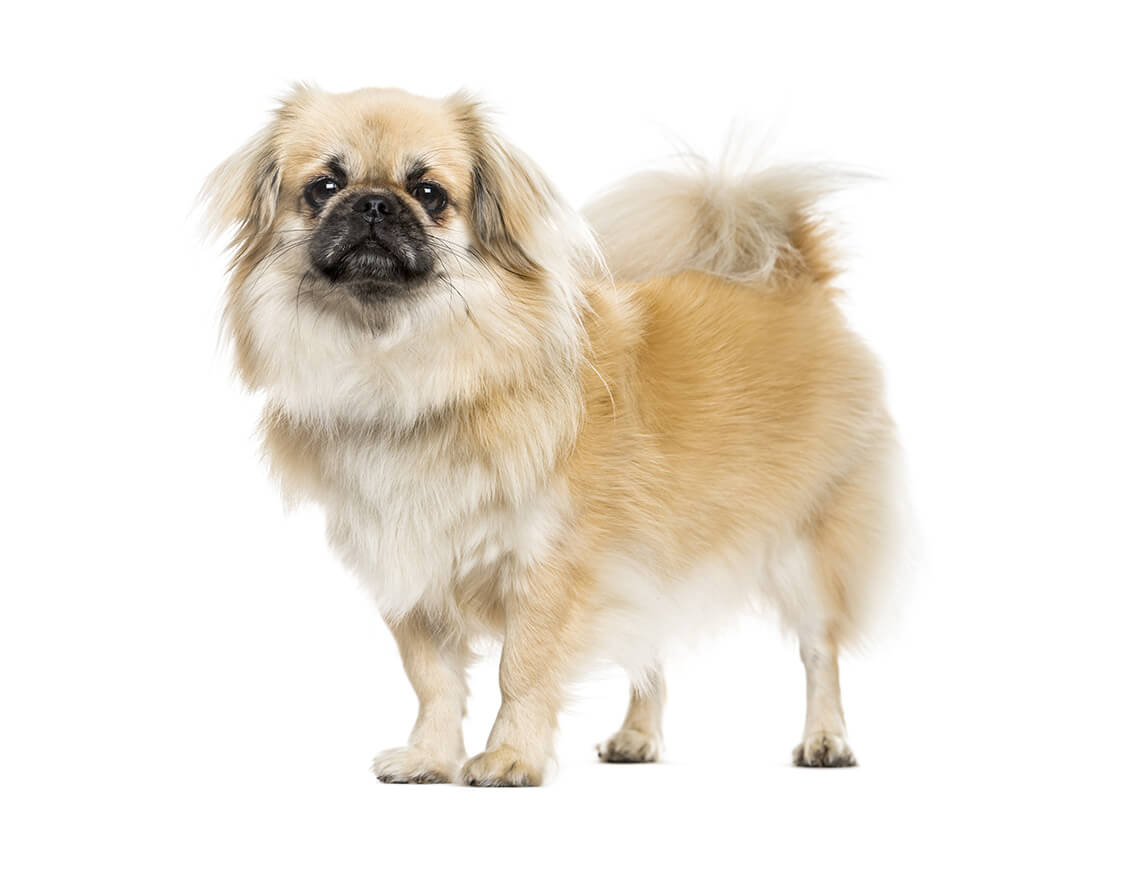
Zoomed product photo

Goldendoodle

The Goldendoodle is a cross between a Golden Retriever (show type or working) and the Standard Poodle (sometimes Miniature will be used to produce a smaller dog). Developed due to the success of the Labradoodle, this breed is growing in popularity all across the world.

The Goldendoodle can be a first cross (with one Retriever and one Poodle parent), can be bred back to one of the original breeds or be two Goldendoodles bred together, so there are varieties in size, shape, coat types and temperaments.

The need-to-know

  • Dog suitable for non-experienced owners
  • Some training required
  • Enjoys active walks
  • Enjoys walking one to two hours a day
  • Large dog
  • Some drool
  • Requires grooming daily
  • Non hypoallergenic breed
  • Don't mind
  • Not a guard dog
  • May require training to live with other pets
  • May require training to live with kids
Personality

Like most crossbreeds, the personality of a Goldendoodle depends on the parents and how they have been bred and reared.

It’s clear from looking at the two breeds that make up the Goldendoodle that this is an extremely active dog who needs a lot of exercise and input (often more than many new owners expect) and being highly social, needs to be a part of the family.

The personality of a Goldendoodle seems to be more consistent when they are first crosses (F1). As a line is successively bred, they can be either bred back to one of the original breeds (and so strengthen either the Retriever or the Poodle personalities) or else be bred to another Goldendoodle, in which case there is less predictability in temperament (and in-breeding becomes more of a potential issue). Some breeders will cross Goldendoodles and Labradoodles which adds to the unpredictability of the offspring.

History and Origins

The Goldendoodle is one of the newest ‘Doodle’ types and was first intentionally bred in the 1990s, following the success of the Cockapoo and Labradoodle. Due to the fact it’s still a relatively new breed, it requires knowledge of the two breeds involved in its creation in order to learn more.The Goldendoodle can have any combination of the two breeds in their appearance, behaviour and temperament.

Nutrition and Feeding

Large breed dogs, as well as having large appetites, benefit from a different balance of nutrients including minerals and vitamins compared to smaller-breed dogs. Goldendoodles like most large breed dogs can be prone to bloating and stomach problems, smaller, more frequent meals can help minimise this risk. Your dog's diet needs to have the right balance of all the main nutrient groups including a constant supply of fresh water. It's important to conduct regular body condition?scores to ensure you keep your dog in ideal shape, and remember to feed them at least twice daily in accordance with the feeding guidelines of their particular food.

Exercise

Both the breeds that make up the Goldendoodle are highly active, enjoy exercise and will be happy with two hours plus every day. They will also enjoy games, training, interactive toys and being involved in all family activities too.

Other Information

Health and common issues

One aim with crossbreeds is to dilute or eliminate any inherited health issues that may exist within one or other of the breeds. This dilution or elimination is only likely if only one parent is the carrier of any particular condition, and where this is a first cross (F1). As this can’t always be guaranteed, all parents should be health tested prior to breeding: Golden Retriever - eye tests and hip and elbow scoring should be done, and there are several DNA tests that may also be required Poodle - eye tests and hip scoring should be done Information on DNA health tests for both breeds can be found on the Kennel Club’s website and via their respective breed clubs.

Space requirements

The Goldendoodle is a large, active dog that needs a good-sized living space. Plus, they will appreciate a large garden and access to the great outdoors for the long walks they will need.

Training goldendoodles

This is a very active dog who is smart and busy and will need training if you want any hopes of a quiet life! They are a joy to train as both the breeds are intelligent and love working with their owner, but they will learn bad habits as quickly as good ones, so reward-based training should start early and be ongoing. The Goldendoodle can be more sensitive than the Labradoodle and any rough handling can worry them greatly, so all training and handling should be positive and reward-based. This is a great breed for dog sports such as agility or even pet gundog work and they will love having an active job to do. It’s important to train a Goldendoodle to enjoy handling and grooming (as they will need a lot of it) and to happily give up any prizes they may rather hold onto, always using positive, reward-based methods. Given that both breeds that go into the Goldendoodle have a working gundog background, they should be well socialised with cats (who they can learn to live with happily), but they should be watched with caution around other small animals and birds.

Best family dog breeds

If the Goldendoodle is sourced from a reliable breeder and well-trained from puppyhood, they will make fabulous family dogs, be a total joy to own and will get on with everyone. In other words, almost the perfect dog! However, an untrained or bored Goldendoodle can easily become unruly and overly boisterous so be sure to provide them with plenty of exercise and mental stimulation.

Did you know?

  • Despite the Goldendoodle’s popularity it’s not currently recognised by the UK Kennel Club as it’s a mixed breed.
  • The Goldendoodle is sometimes known as the ‘Groodle’.
  • Goldendoodle’s make excellent assistance dogs and have been used as guide dogs, service dogs, therapy dogs and sniffer dogs.
  • They’re not very good guard dogs as they’re too friendly, preferring to lick strangers rather than bark at them!
Zoomed product photo

Mexican Hairless Dog (Xoloitzcuintle)

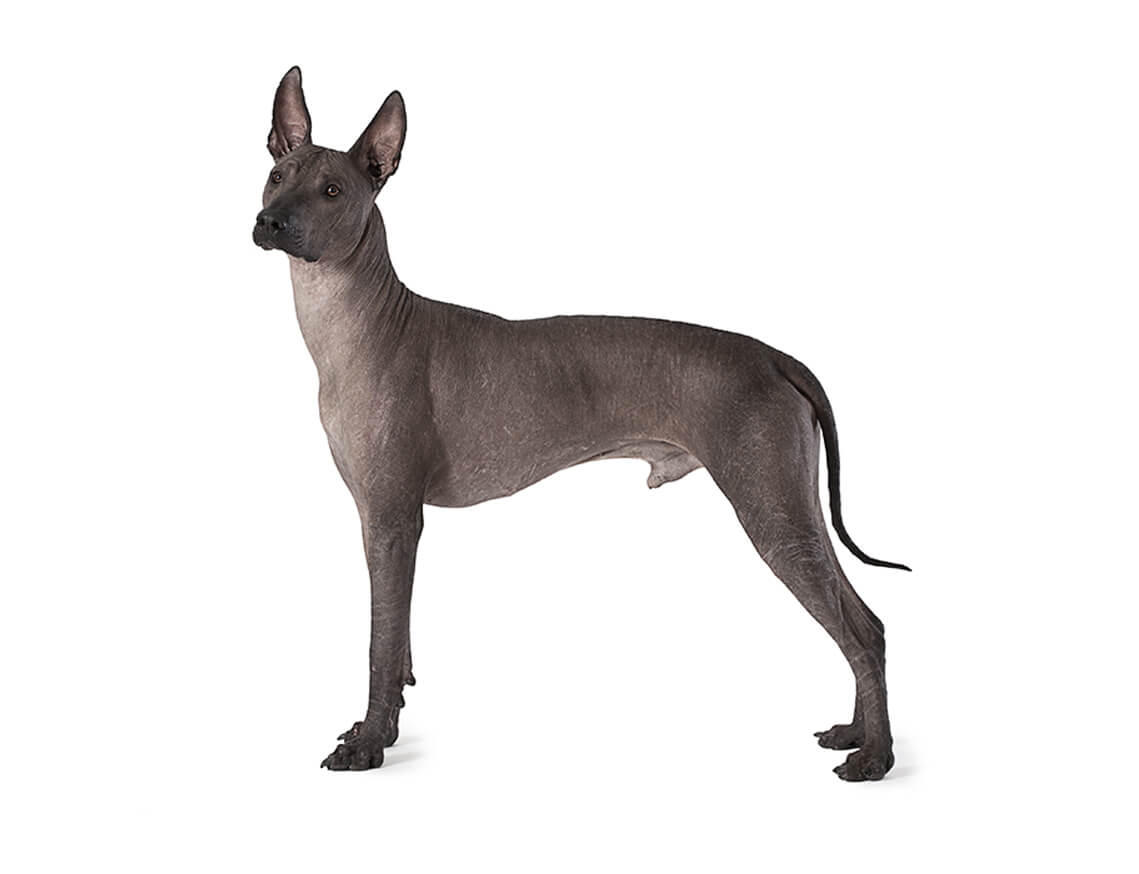
The Mexican Hairless Dog or Xoloitzcuintle, called the Xolo for short, is a hairless dog with soft skin. Slightly longer than they are tall with a slim, elegant build, they come in three size varieties and also a haired version which should have a short, tight, flat and smooth coat with no undercoat. 
Hairless varieties should have a smooth, elastic yet close-fitting skin. Some tufts of hair are permitted on the forehead, face, and back of the neck.

The need-to-know

  • Dog suitable for experienced owners
  • Some training required
  • Enjoys gentle walks
  • Enjoys walking an hour a day
  • Medium dog
  • Minimum drool
  • Requires grooming once a week
  • Hypoallergenic breed
  • Quiet dog
  • Guard dog. Barks and alerts
  • May require training to live with other pets
  • May require training to live with kids
Lifespan:
12-15 years
Colours:
Solid black, grey, red, liver, bronze or blonde, with or without spots of any colour including white markings
Sizes & Heights:
The three sizes are Miniature: 25-35cm; Intermediate: 36-45cm; and Standard; 46-60cm
UK Kennel Club Groups:
Utility
Personality

Shy and reserved with strangers, the Mexican Hairless Dog is in fact an intelligent, loving companion with family. Described as peaceful and contented, they are alert to their environment and will bark to alert their owners to the presence of strangers or unusual activity. As may be expected, they are warm and cuddly and will appreciate a warm jumper or coat in cooler weather, and can be found burrowed under blankets or your duvet when temperatures drop.

History and Origins

Country of Origin: Mexico

Thought to be an ancient breed, the Mexican Hairless or Xolo has been associated with the peoples of Central and South America for around 3000 years. Revered by the Aztecs, the name Xoloitzcuintle (say ‘sholo-eats-QUEENT-ly’) means ‘dog god’ (or ‘dog of the god Xolotl’ who was the god of deformed things, and a hairless dog seemed to fulfil that description). They were thought to have special powers of healing transmitted to them from the gods. They were also used as a gift to the gods and were sacrificed and eaten.

Nutrition and Feeding

The Miniature Mexican Hairless dog is a small dog that has a fast metabolism, meaning they burn energy at a high rate, although their small stomachs mean that they must eat little and often. Small-breed foods are specifically designed with appropriate levels of key nutrients and smaller kibble sizes to suit smaller mouths. This also encourages chewing and improves digestion. The Intermediate and Standard diets need to have the right balance of all the main nutrient groups including a constant supply of fresh water. It's also important to conduct regular?body condition?scores to ensure you keep your dog in ideal shape and remember to feed him at least twice daily and in accordance with the feeding guidelines of his particular food. Discover more about how to offer your dog a balanced diet with our easy-to-follow guide.

Exercise

Miniature Mexican Hairless dogs need about half an hour of daily dog exercise and the Intermediate and Standard need about an hour. Ensure whichever size you have has plenty of mental exercise in the form of training and puzzle solving games and activities. Do ensure they are protected from the elements (both the warm and cold) before taking them outside.

Other Information

Health and common issues

The main health problems encountered in the Mexican Hairless dog are related to their skin, being particularly predisposed to sunburn given the lack of protection from fur. Dental problems also occur quite frequently.

Space requirements

The Mexican Hairless does not need a large home, however they will appreciate a warm and comfortable house, soft bedding and need a very secure garden as they are excellent climbers, agile jumpers and generally clever escape artists! Country or town, as long as they have plenty of exercise both mental and physical, they will be happy.

Training mexican hairless dog (xoloitzcuintle)

Intelligent and quick to learn, the Mexican Hairless needs careful dog socialisation due to their naturally wary, reserved nature. Capable of high levels of dog training if this is done sensitively using positive reinforcement-based methods. All sizes of Mexican Hairless will benefit from basic training and in particular a good recall and training to ignore livestock or small furries, as they will hunt and chase.

Best family dog breeds

A good family dog for those with older children or teenagers, puppies can be rather boisterous, loud and can play bite enthusiastically so may not suit homes with very small children. While many dogs are traditionally thought of as being good with children, all dogs and children need to be taught to get on with each other and be safe together. Even so, dogs and young children should never be left alone together and adults should supervise all interactions between them.

Did you know?

  • They were not specially bred to be hairless and the gene that causes hairlessness is a spontaneous mutation. There will normally be a mix of both haired and hairless puppies in each litter. The gene that produces hairless puppies also affects dentition, with hairless puppies prone to missing teeth.
  • Often thought to be hypoallergenic and so good for those with allergies, this is in fact only true if the allergy is to the hair. If the allergy is related to saliva or dander, then the Xolo is no more hypoallergenic than any other dog!
Zoomed product photo

Yorkshire Terrier

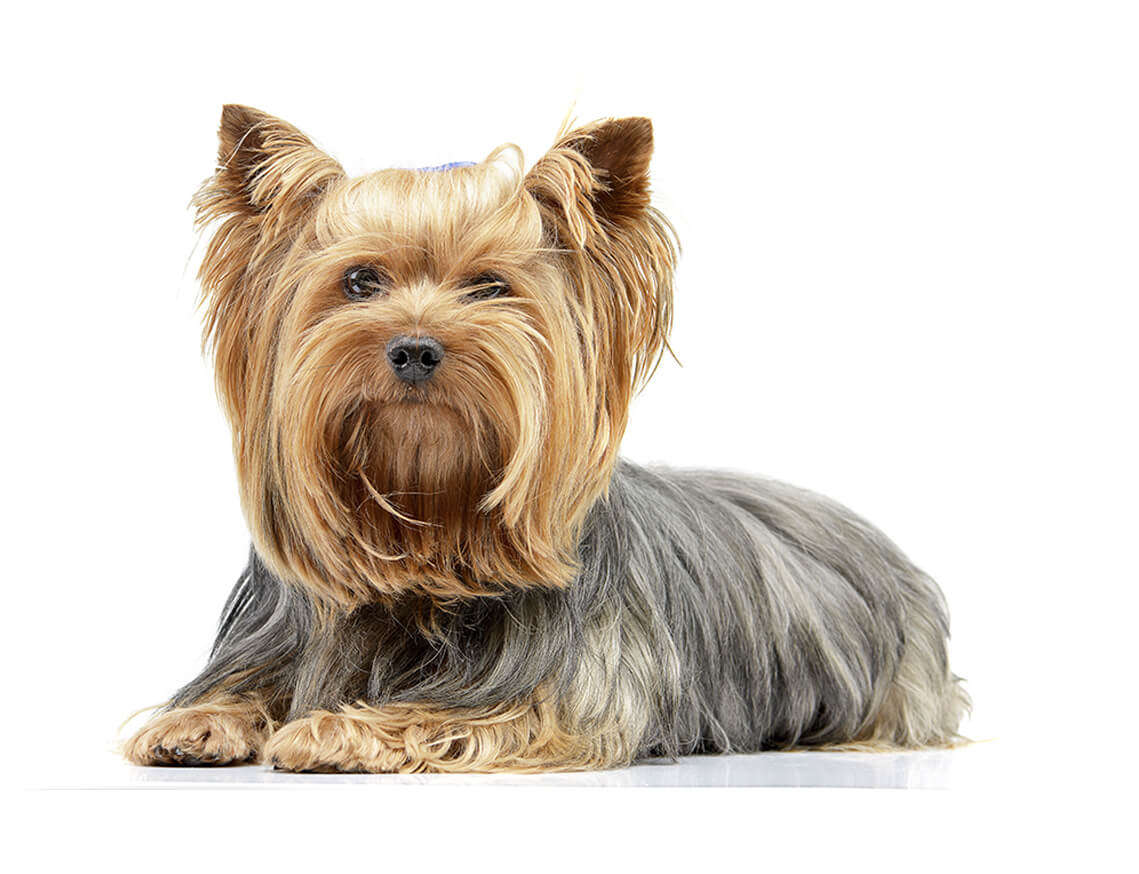
A toy breed, the Yorkshire Terrier dog is best known for his full flowing tresses of a texture quite similar to human hair. The coat colouring is unusual too, being a steel blue and gold (rich tan). He has an air of importance about him, holding his head high.

The need-to-know

  • Dog suitable for non-experienced owners
  • Basic training required
  • Enjoys active walks
  • Enjoys walking an hour a day
  • Little toy dog
  • Minimum drool
  • Requires grooming every other day
  • Hypoallergenic breed
  • Very vocal dog
  • Guard dog. Barks and alerts
  • May require training to live with other pets
  • May require training to live with kids
Lifespan:
13–16 years
Weight:
No more than 3.2kg
Height:
18-20cm
Colours:
Steel blue, gold (rich tan)
Size:
Small
Kennel Club group:
Terrier
Personality

The Yorkshire Terrier is a small dog with a big attitude. This is a dog that will one minute happily snuggle on grandma's knee and enjoy a good cuddle, and the next minute leap through the air and tear after the neighbour's dog promising to show it who is boss. Yorkies are terriers after all, and will protect their territory valiantly.

This is a huge dog in a small body! He is lively and curious and into everything – and owners will have to get used to being tailed everywhere by their inquisitive (and often noisy) shadow. This is a dog who needs lots of exercise and stimulation – he loves long walks but also needs games in the house to keep his busy mind occupied.

History and Origins

Country of Origin:  Germany

Known as the Grey Ghost, the Weimaraner’s origins spring form the court of the Grand Duke Karl August of Weimar sometime around 1810. His aim was to breed a perfect hunting dog and so crossed German Pointers, French Hounds and Bloodhounds to produce a dog that would be as happy hunting bears as they would be birds. He also wanted a head-turning dog that would be a status symbol for the nobility.The breed was closely guarded in Germany, until just before the outbreak of the Second World War, when a breeder managed to acquire a male and two females and take them to the US. In 1943, the AKC recognised the breed but it wasn’t until the 1950s that they made their way to the UK.

Nutrition and Feeding

Toy dogs have a fast metabolism, meaning they burn energy at a high rate, although their small stomachs mean that they must eat little and often. Small-breed foods are specifically designed with appropriate levels of key nutrients and smaller kibble sizes to suit smaller mouths. This also encourages chewing and improves digestion.

Exercise

To keep your Yorkie healthy and fit, daily exercise is a must. Yorkshire Terriers love walking and will trot on for miles if allowed. A short walk will please a Yorkie so long as he gets a good sniff around and some mental stimulation. Do remember that Yorkshire Terriers aren't just lap dogs, though, and do like to run, fetch and play like any dog. A minimum of half an hour of exercise is needed by an adult daily.

Ideal Owner

The Yorkshire Terrier will suit an owner who wants a big personality in a small package, who doesn’t mind a bit of noise and who enjoys grooming. This is another breed who doesn’t like to be left, and so a home-loving owner is needed.

Other Information

Health and common issues

Yorkshire Terrier dogs tend to have a long lifespan. Nevertheless, they are predisposed to eye problems, kneecaps that may temporarily slip out of place, a specific thigh bone disease, bladder stones, a windpipe disorder and congenital liver disease.

Space requirements

The Yorkshire Terrier enjoys being a country dog but is equally happy in a flat as long as he has access to the outdoors for exercise and toileting. Close neighbours may not enjoy the sound of his voice, however!

Training yorkshire terriers

Yorkshire Terriers are surprisingly clever and can be taught basic exercises easily - although can often be selectively obedient if he is distracted by something exciting! They should be taught to walk on a collar and lead and early and ongoing socialisation in a class with other small dog puppies is vital to prevent them being nervous around other dogs. If they are to live with cats, it is best to find a breeder who rears the puppies with cats and that they are introduced early. He may never get on with strange cats, however.

Best family dog breeds

Yorkshire Terriers are not great family dogs as they are too small and delicate for exciting games and some have a traditional terrier short fuse! They can live with older sensible children, however. While many dogs are traditionally thought of as being good with children, all dogs and children need to be taught to get on with and respect each other, and be safe together. Even so, dogs and young children should never be left alone together and adults should supervise all interactions between them.

Did you know?

  • The Yorkshire Terrier was bred to hunt and kill rats in the coal mines – and so be small enough to fit in a miner’s pocket!
  • While the Chihuahua is recognised as the world’s smallest breed, the world’s smallest ever dog was a Yorkshire Terrier who was only 6cm high.
  • One brave Yorkshire Terrier called Smoky was an American Air Force mascot who flew on 12 combat missions and was awarded eight battle stars. She went on to become the first Therapy Dog on record visiting wounded airmen and soldiers in hospital.
Zoomed product photo

West Highland White Terrier

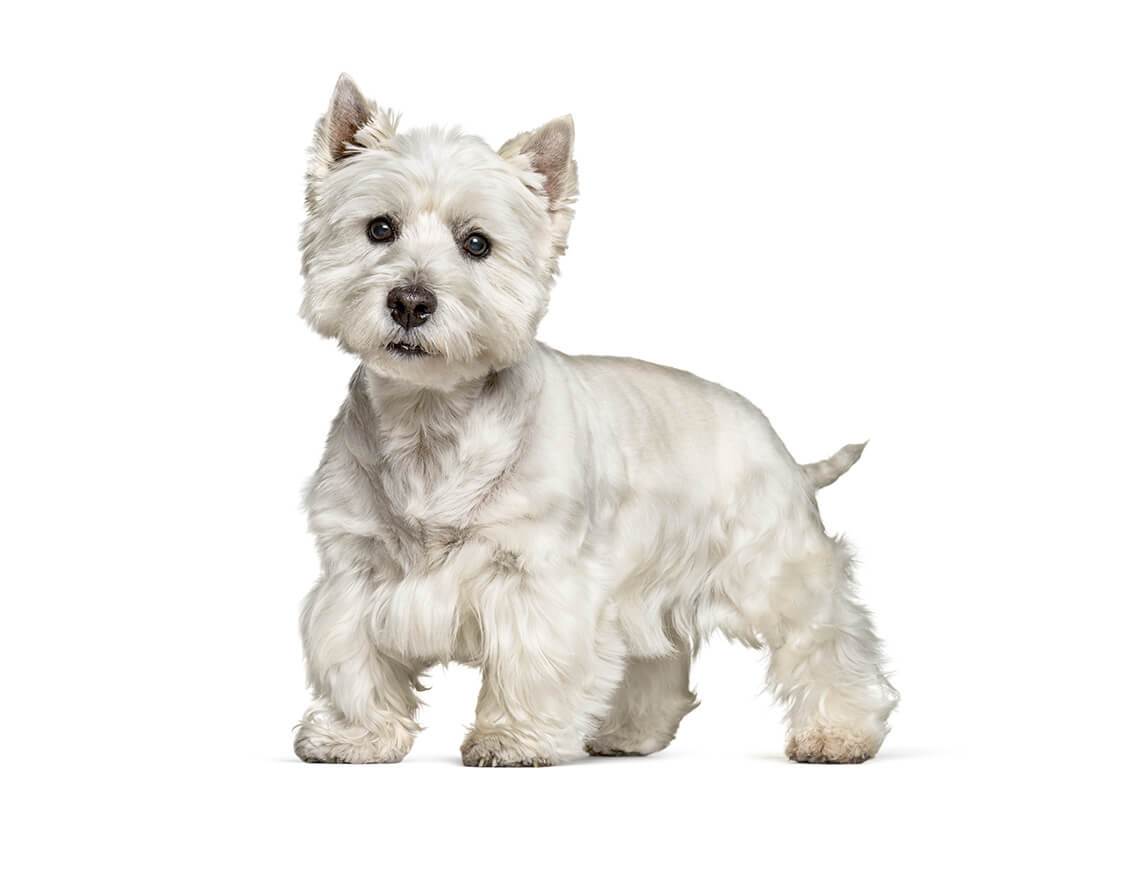
The sharp contrast of sparkling dark eyes and button nose, against crisp white fur and sharply pricked ears gives the West Highland White Terrier or ‘Westie’ an attractive appearance. With a compact body, fox-like head and hard, shaggy double coat, the Westie is unmistakable for any other breed.

The need-to-know

  • Dog suitable for non-experienced owners
  • Some training required
  • Enjoys active walks
  • Enjoys walking an hour a day
  • Small dog
  • Some drool
  • Requires grooming every other day
  • Non hypoallergenic breed
  • Chatty and vocal dog
  • Guard dog. Barks and alerts
  • May require training to live with other pets
  • May require training to live with kids
Lifespan:
12 – 16 years
Weight:
7 – 10kg
Height:
White
Size:
Small
UK Kennel Club Groups:
Terrier
Personality

Courageous, cheeky, jaunty and affectionate, loyal to their families and friends, the Westie is understandably an appealing little dog. Perfectly capable of being trained to a high level with the right encouragement, they still retain that working terrier nature, willing to take on foe many times their size. Not afraid to be confrontational, the Westie is a good watch dog, alerting the whole household loudly to anything they believe constitutes ‘trouble’.

History and Origins

Country of Origin:  Scotland

Like many of the Scottish terriers, the Westie was bred to work, hunting otter, fox and other vermin. Unlike any others however they are always white in colour for a unique and tragic reason. Back in the 1600s, Col. Malcolm if Poltalloch was out hunting when he mistook his beloved dark coloured terrier for a fox, shooting and killing him. After that he vowed only to have white dogs to ensure that could never happen again.First called the Poltalloch Terrier, the breed only appeared in the show-ring under the name of West Highland White Terrier in 1904 and has gone on to be one of the best-loved of all the terrier breeds.

Nutrition and Feeding

Small dogs have a fast metabolism, meaning they burn energy at a high rate, although their small stomachs mean that they must eat little and often. Small-breed foods are specifically designed with appropriate levels of key nutrients and smaller kibble sizes to suit smaller mouths. This also encourages chewing and improves digestion.

Exercise

Westies need walks – an hour of exercise per day, but more if you have the time. This is a playful and energetic little dog so providing a variety of walking routes, games, training and puzzle solving exercise is essential.

Other Information

Health and common issues

The most common health problem encountered are skin allergies. The breed can also be affected by an inherited bone disorder of the jaw. Check the Kennel Club website and the breed club for further health information.

Space requirements

Small and compact, the Westie is not difficult to house. A secure garden is essential as they are capable of jumping many times their own height, squeezing through small spaces and digging enthusiastically under an obstacle. Suited to town or countryside, but training will be needed to teach a Westie not to alert bark to every noise or moving object.

Training west highland white terrier

The Westie will enjoy training as long as you set them up to believe it was all their own idea. They will work hard for food rewards and toys they can chase, tug and rag about. Early work on recall, and socialisation to children, cats and livestock is important. An intelligent and versatile dog, if you enjoy training there is no reason the Westie cannot compete well in a variety of dog sports and competitions.

Best family dog breeds

A great companion for older children who can respect a dog’s need for space and take part in training and exercise. Small breeds are not ideal for very young children who find it very difficult to differentiate between ‘toy’ and ‘real live animal’ and terriers are unlikely to suffer such treatment without reaction. While many dogs are traditionally thought of as being good with children, all dogs and children need to be taught to get on with and respect each other, and be safe together. Even so, dogs and young children should never be left alone together and adults should supervise all interactions between them.

Did you know?

  • With their bright white coat and dark eyes and nose, the Westie been a long-standing favourite of artists and advertisers for many years. From Gallant the Westie who featured in artist Marjorie Turner’s works in the early 1900’s, to the Black &; White Scotch whisky brand, Rheingold beer and as the face of several dog food brands, the Westies attractive face is undeniably appealing.  They also appeal to celebrities and even royals with owners having included HRH The Duchess of Cambridge, Matthew Mc
  • Conaughey, Whoopi Goldberg, Hugh Laurie and many others.
  • Despite their small size they have an incredibly loud bark. Interestingly, they were actually bred this way so that if they ever got stuck underground when hunting, their owner could locate them. West Highland Terriers have very sensitive skin on their ears and they can get sunburnt – so make sure you pop on some dog-safe sunscreen! Westie’s were developed to have a super strong tail that they can be pulled out by if they ever get stuck in a hole.  
Zoomed product photo

Welsh Terrier

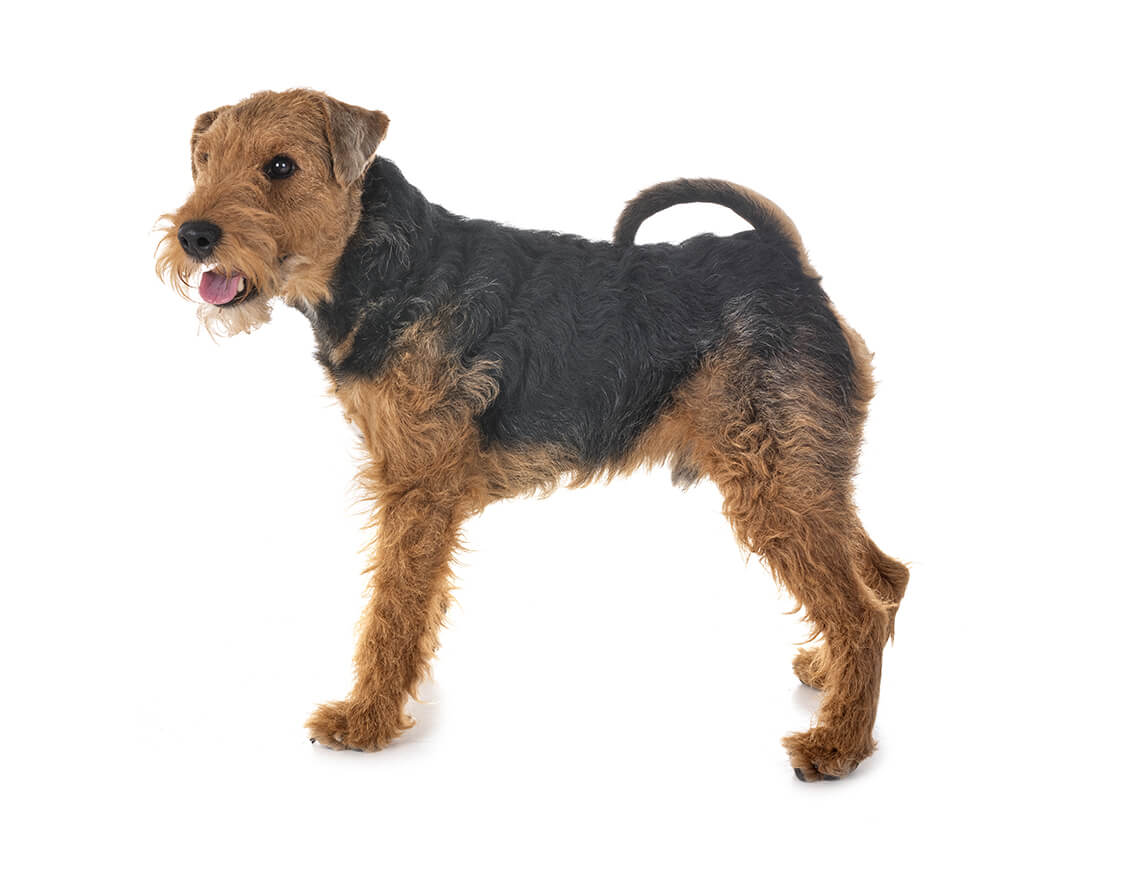
The Welsh Terrier is an alert, workmanlike dog with a compact, sturdy build. Under the hard wiry protective coat, the Welsh Terrier has reasonably long legs, and stands square, up on his toes, ready for action.

The need-to-know

  • Dog suitable for owners with some experience
  • Some training required
  • Enjoys active walks
  • Enjoys walking an hour a day
  • Small dog
  • Minimum drool
  • Requires grooming every other day
  • Non hypoallergenic breed
  • Chatty and vocal dog
  • Guard dog. Barks and alerts
  • May require training to live with other pets
  • May require training to live with kids
Lifespan:
12 – 15 years
Weight:
9 – 9.5kg
Height:
39cm or less in height
Colours:
Black and tan or black, grizzle and tan
Size:
Small
UK Kennel Club Groups:
Terrier
Personality

An intelligent, active and cheerful dog, the Welsh Terrier is affectionate with family but may be reserved with strangers. As with most terriers, an independent nature and sharp mind mean this is not a dog to be left to their own devices or allowed to become bored. Introduced to resident cats when young, the Welsh Terrier will consider them family, but all bets are off with strangers, particularly if diligence is not applied in training a responsive ‘leave’ and a ‘as reliable as possible’ recall. A fun companion for the active outdoors family, the Welsh Terrier is capable of long walks, and taking part in dog related sports or activities.

History and Origins

Country of Origin: Wales

Although broken coated black and tan terrier types have been recorded in Wales as far back as 1450 it is likely the Welsh Terrier we recognise today dates from around 1800. Needing legs long enough to cope with rough terrain, and the ability to follow a horse rather than be carried across the saddle, the Welsh Terrier still needed to be small enough to go to ground and deal with badgers, otters, marten and fox.These exacting requirements produced a dog with a weatherproof, protective coat, sufficient stamina to run all day, and a ‘never say die’ nature when faced with formidable quarry.

Nutrition and Feeding

Small dog breeds, such as the Welsh Terrier, have a fast metabolism, meaning they burn energy at a high rate, although their small stomachs mean that they must eat little and often. Small-breed foods are specifically designed with appropriate levels of key nutrients and smaller kibble sizes to suit smaller mouths. This also encourages chewing and improves digestion. Discover more about how to offer your dog a balanced diet with our easy-to-follow guide.

Exercise

Welsh Terriers being by design, capable of following horses all day and then going to ground to work, are an energetic breed with incredible stamina. Attempting to physically exhaust one is a foolish endeavour, but with sufficient training and mental stimulation the Welshie will not mind a cosy day on the sofa from time to time as long as there are plenty of opportunities to play appropriate games. Normally an hour of dog exercise per day is needed, but more will be appreciated.

Other Information

Health and common issues

The Welsh Terrier can suffer from inherited eye conditions. Testing is available. Check with Breed Clubs and the Kennel Club for the latest health updates.

Space requirements

Small and compact, the Welsh Terrier takes up little space, but he will appreciate a decent sized secure garden to rootle and run in. Access to a variety of walking routes is important, but otherwise the Welsh Terrier will live happily in town or country and any size of home.

Training welsh terrier

Welsh Terriers will enjoy dog training, as long as it is fun and you use positive reinforcement methods. This is a sharp and independent minded breed so you will have to work hard to motivate them to want to work with you, and building a strong recall and a reliable cue to leave or drop/swap is key.

Best family dog breeds

While an excellent dog for an active family, the Welsh Terrier may not suit those with smaller children. Although appearing cute and fluffy, the Welshie is not predisposed to tolerate toddler behaviour, but would be an excellent companion for those with older children and teenagers. While many dogs are traditionally thought of as being good with children, all dogs and children need to be taught to get on with each other and be safe together. Even so, dogs and young children should never be left alone together and adults should supervise all interactions between them.

Did you know?

The Welsh Terrier has been popular with politicians; former Chancellor of the Exchequer Phillip Hammond owned Rex during his time at No.11 Downing St, and Charlie the Welsh Terrier lived somewhat more lavishly in the White House, during John F. Kennedys term as President of the USA.

Zoomed product photo

Welsh Corgi (Pembroke)

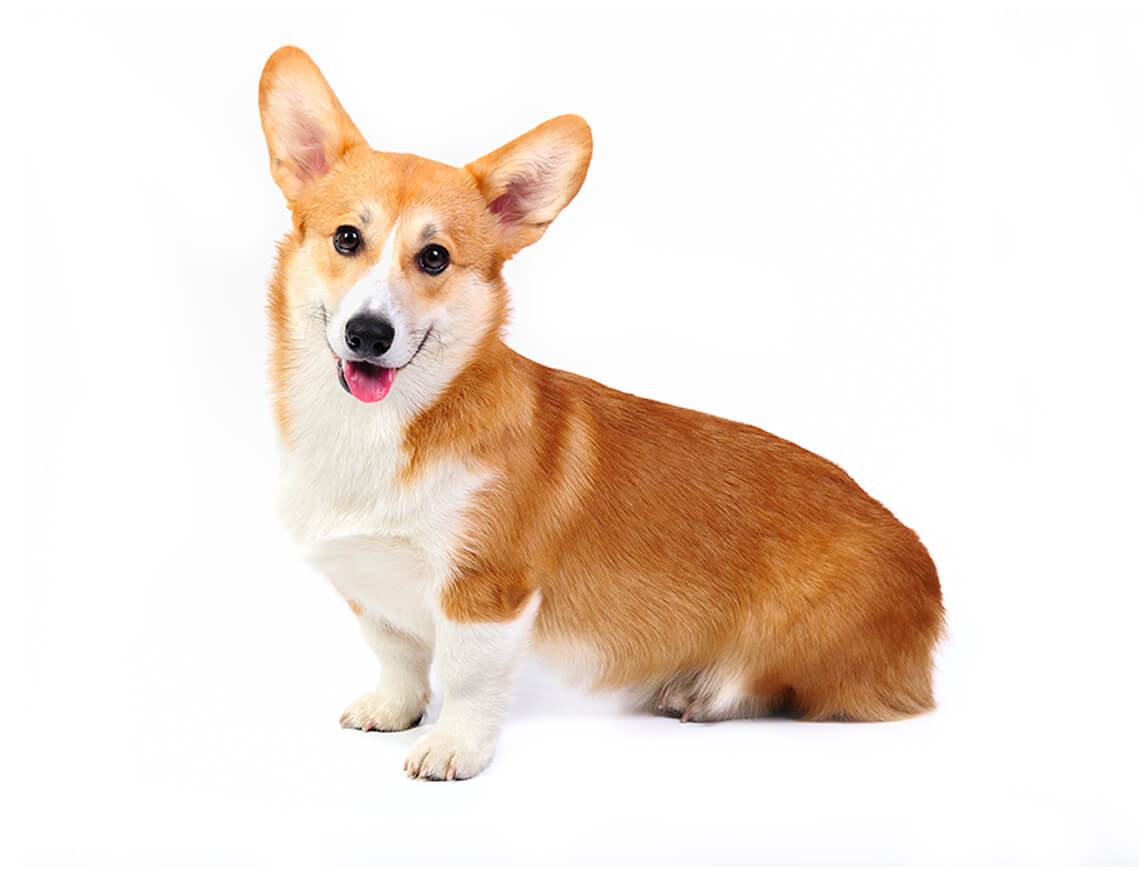
Short, sturdy and low to the ground, the Pembroke Welsh Corgi has an attractive foxy face. Their straight, medium length coat has a dense undercoat and is never soft, wavy or wiry.

The need-to-know

  • Dog suitable for experienced owners
  • Some training required
  • Enjoys gentle walks
  • Enjoys walking an hour a day
  • Small dog
  • Minimum drool
  • Requires grooming every other day
  • Non hypoallergenic breed
  • Quiet dog
  • Guard dog. Barks and alerts
  • May require training to live with other pets
  • May require training to live with kids
Lifespan:
12 – 15 years
Weight:
9 – 12kg
Height:
25 – 30cm
Colours:
The coat comes in red, sable, fawn, black and tan, and may have white markings
Size:
Small
UK Kennel Club Groups:
Pastoral
Personality

Devoted and affectionate to their owners, they can sometimes be fairly disinterested in strangers. Generally obedient and active, whilst small in height this should properly be considered a larger dog on very short legs rather than a little dog.  Bold and outgoing, friendly and loyal, they make excellent watchdogs and suit an active home. Keep in mind their livestock driving ancestry, which has been known to mean groups of people, particularly children, are herded together regardless of their wishes! 

History and Origins

Country of Origin: Wales

The Pembroke Corgi, made famous by Queen Elizabeth II is a long, low, cattle herding dog, thought to have been brought to Wales by the Flemish weavers. Their job originally was to drive cattle from one location to another, a job which requires a strong character and a great deal of stamina. The cattle they would have worked would be small, feisty hill cattle, and the distances involved could take days to cover, make no mistake this is a hard worker! Originally considered one breed, the Pembroke and Cardigan Corgis were split and recognised separately in 1934.

Nutrition and Feeding

Your dog's diet needs to have the right balance of all the main nutrient groups including a constant supply of fresh water. It's important to conduct regular body condition scores to ensure you keep your dog in ideal shape, and remember to feed him at least twice daily in accordance with the feeding guidelines of his particular food.

Exercise

Bred to walk or trot miles and be willing to deal with stroppy cattle, the Pembroke Corgi has plenty of stamina. An hours exercise per day at the very least, ideally more, will suit the Pembroke well. If you have nothing for your Pembroke to herd, consider activities such as ‘Treiball’ or ‘sheep ball’ where the dog herds large inflatable exercise balls. Whilst the Pembroke won’t make a great running partner, they will ideally suit those who enjoy long country walks or rambles.

Other Information

Health and common issues

The Pembroke Welsh Corgi is generally a very hardy breed. As with many breeds though, they can suffer from hereditary eye disorders and hip dysplasia (a condition that can lead to mobility problems). Eye testing and hip scoring of dogs prior to breeding is therefore important. Their body shape also makes them more prone to spinal disc disease. The breed club monitor the health of the breed carefully and should be contacted for the most up-to-date information and details of any DNA or additional testing they recommend. Breed Clubs can be found on the Kennel Club website.

Space requirements

Pembroke Corgis don’t require a huge amount of space, but a secure garden is important, they are more than capable of digging under fencing or squeezing through small gaps. Due to their long body and short legs, they should avoid using stairs as puppies and only use them minimally as adults. Suitable for town or country but remember they will alert vocally, so consider if this will irritate those living in close proximity.

Training welsh corgi (pembroke)

With the right motivation of treats, toys and opportunity to herd things the Pembroke Corgi can be a fun dog to work with. A sense of humour is required and their short-legged, long backed physique will rule out some activities, but they have excellent brains, which need to be kept occupied with a variety of training games and puzzles.

Best family dog breeds

While a good family dog with older children, the Pembroke Corgi is inclined to herd and to nip at the heels of anyone who doesn’t wish to be herded. This can cause issues with very small children who won’t understand or be able to react appropriately – or with those who tend to be over active and run about a lot! Otherwise, the Pembroke Welsh Corgi makes an excellent family pet for those with a suitably active lifestyle. While many dogs are traditionally thought of as being good with children, all dogs and children need to be taught to get on with and respect each other, and be safe together. Even so, dogs and young children should never be left alone together and adults should supervise all interactions between them.

Did you know?

  • Legend has it that the Pembroke Corgi is an enchanted dog, used by the Welsh fairies and elves to pull fairy coaches, work fairy cattle and serve as steed for the fairy warriors. It is said those with keen eyes and understanding hearts can still the faint marks of the fairy saddle over their shoulders.
  • Queen Elizabeth II met her first Corgi when she was a child, King George VI brought home a male puppy named Dookie in 1933. After the introduction of a second Corgi, Jane, they had a litter of puppies, and thus began the Corgi tradition within the royal family.
  • To this day Pembroke Welsh Corgi’s are excellent herding dogs and still compete in AKC Herding competitions.  There are two possible reasons behind their name. The first is that “cor” is Welsh for watch other/gather and “gi” means dog. However, others have interpreted “cor” to mean Dwarf.  A Pembroke Welsh Corgi called Rufus was the unofficial mascot for Amazon. Owned by the editor-in-chief and principal engineer, Rufus attended work with his owner every day. 
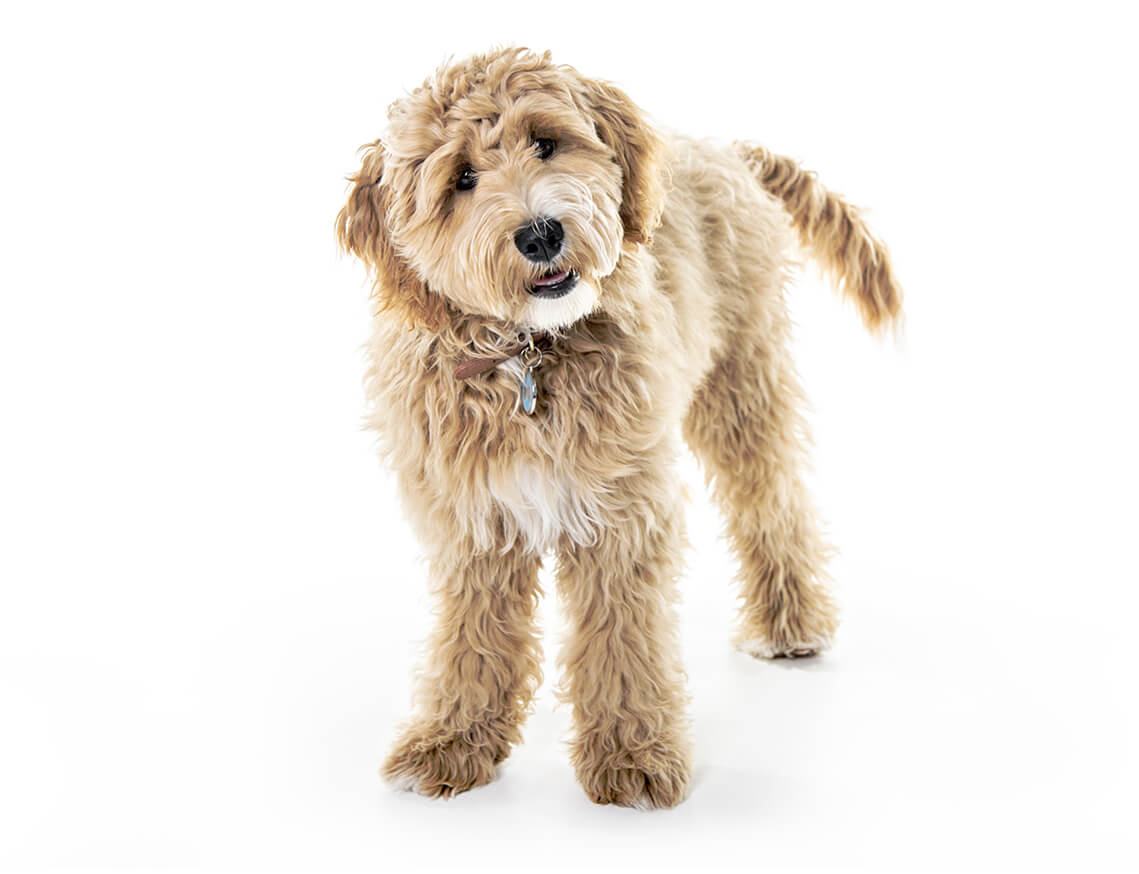
Zoomed product photo

Welsh Corgi (Cardigan) (Medium/long coat)

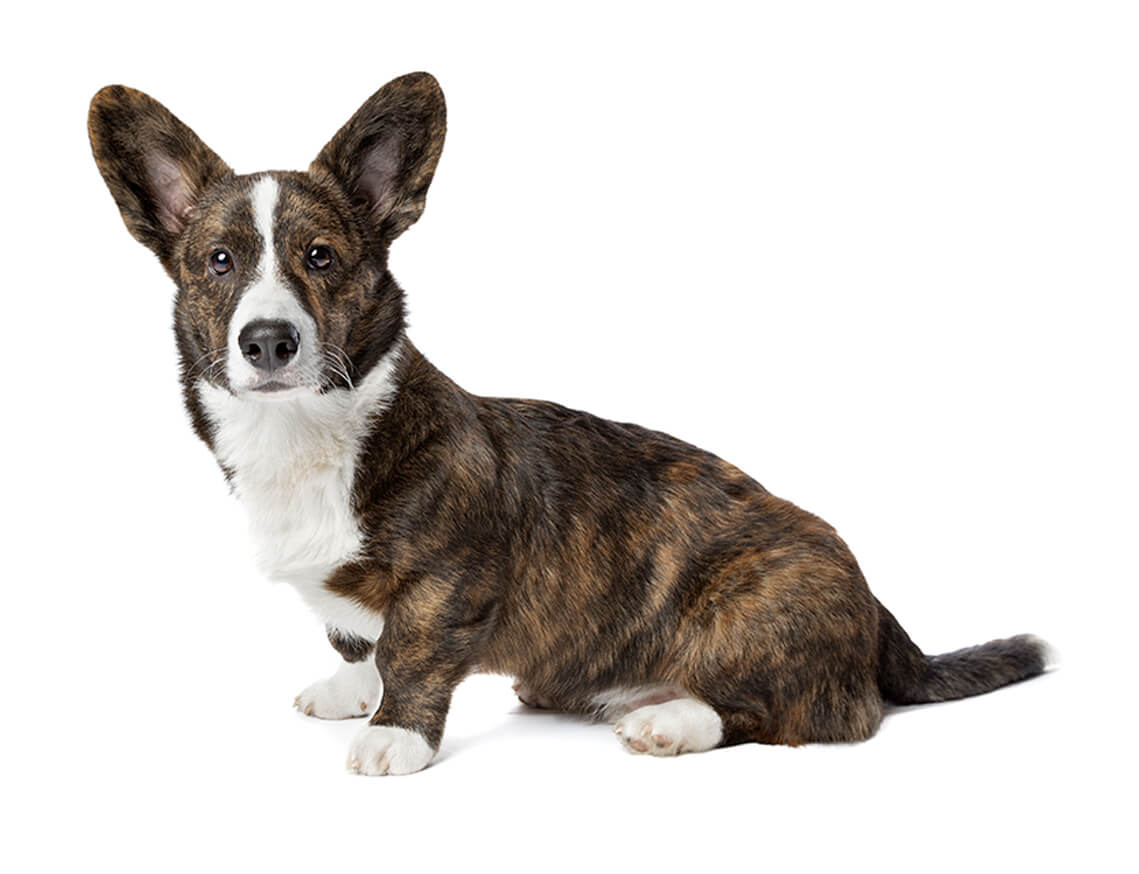
The Cardigan Welsh Corgi is a short, sturdy dog, that is set low to the ground. Their straight, medium or short coat is waterproof. They have a fox-like brush for a tail, and their head has the look of a fox also. They are much longer than they are tall. The coat comes in a number of colours – Adult Cardigans stand at about 30cm and weigh 15-18kg.

The need-to-know

  • Dog suitable for experienced owners
  • Some training required
  • Enjoys gentle walks
  • Enjoys walking an hour a day
  • Small dog
  • Some drool
  • Requires grooming every other day
  • Non hypoallergenic breed
  • Quiet dog
  • Guard dog. Barks and alerts
  • May require training to live with other pets
  • May require training to live with kids
Personality

The Cardigan Corgi is an energetic little dog who needs an outdoor-loving family. This dog still has the herding instincts of its ancestors, and as such likes constant activity in his life. They do have a tendency to nip heels and chase feet.

They are obedient and loyal to their family. Alert to their surroundings, they make good watchdogs in the home.

History and Origins

Records have been discovered that show that the Cardigan Welsh Corgi dog breed has existed in the UK since about 1200BC. They are thought to have been brought to Wales by the Celts and were very popular as cattle drovers. The Cardigan and Pembroke Corgis were recognised as separate breeds in the UK in 1934.

Nutrition and Feeding

Your dog's diet needs to have the right balance of all the main nutrient groups including a constant supply of fresh water. It's important to conduct regular body condition scores to ensure you keep your dog in ideal shape, and remember to feed him at least twice daily in accordance with the feeding guidelines of his particular food.

Exercise

This Welsh Corgi breed requires an adequate amount of exercise – at least an hour daily - even though they only have short legs; however, they are fairly adaptable exercise wise and will fit in with family life.

Other Information

Health and common issues

The Welsh Corgi (Cardigan) is generally a very hardy breed. As with many breeds though they can suffer from hereditary eye disorders and hip dysplasia (a condition that can lead to mobility problems). Eye testing and hip scoring of dogs prior to breeding is therefore important. Their body shape also makes them more prone to spinal disc disease.

Best family dog breeds

While many dogs are traditionally thought of as being good with children , all dogs and children need to be taught to get on with and respect each other, and be safe together. Even so, dogs and young children should never be left alone together and adults should supervise all interactions between them.

Zoomed product photo

Weimaraner (Short/smooth coat)

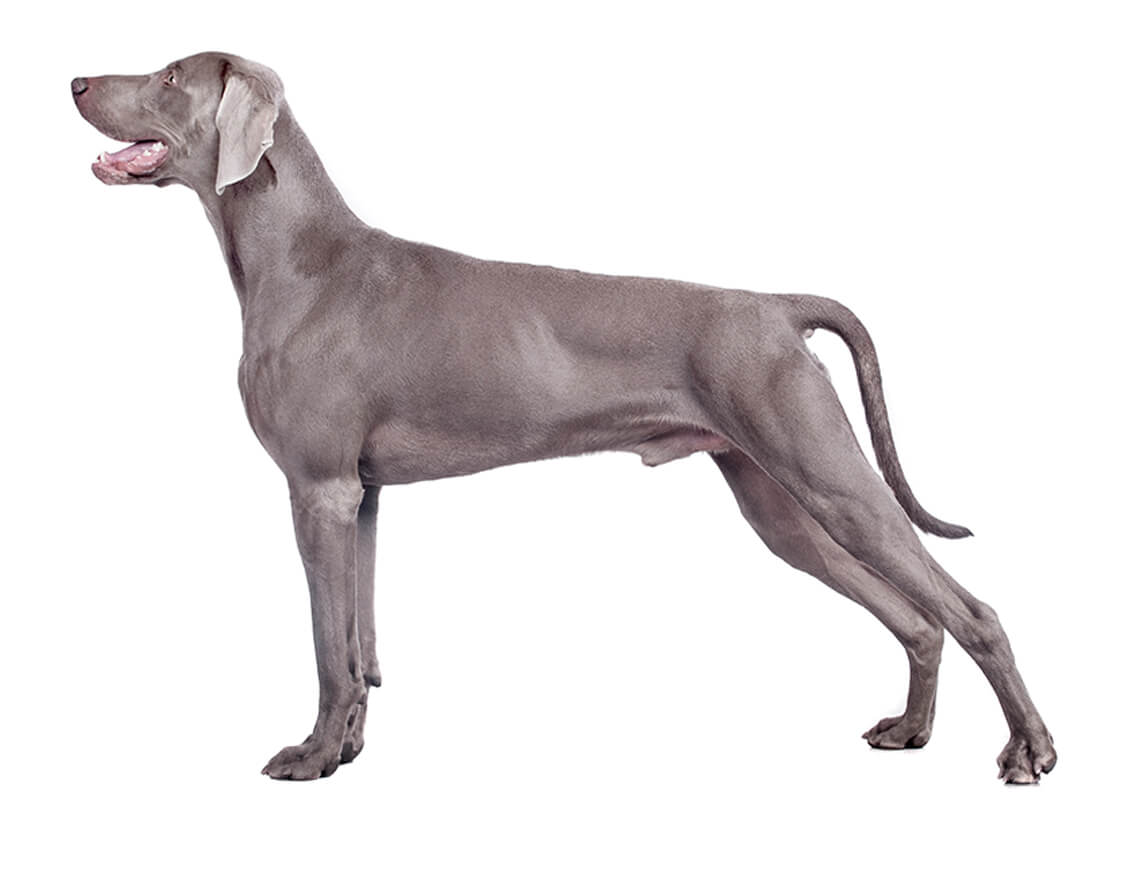
With their silver-grey, sleek, short coat, the Weimaraner dog is one of the most outstanding breeds. The tallest of the gundog group, they are graceful with speed, stamina and endurance. There are two varieties: the short-haired and the long-haired, the latter being less common.

The need-to-know

  • Dog suitable for experienced owners
  • Some training required
  • Enjoys vigorous walks
  • Enjoys walking one to two hours a day
  • Large dog
  • Minimum drool
  • Requires grooming once a week
  • Non hypoallergenic breed
  • Quiet dog
  • Guard dog. Barks, alerts and it's physically protective
  • May require training to live with other pets
  • May require training to live with kids
Lifespan:
11-14 years
Weight:
Adult males 27kg; females 22.5kg
Height:
Adult males stand at 61-69cm, while females are 56-64cm
Colours:
Predominant colouration is silver grey with shades of mouse or roe-grey being seen
Size:
Large
Kennel Club group:
Gundog
Personality

Weimaraners are all-round dogs who love family life. They are friendly and energetic but, with their vigilance, make excellent guard dogs. They are very strong characters so are not the ideal first dog for a novice owner, but if you have experience and can socialise, train and exercise them, they make a very rewarding companion.

History and Origins

Country of Origin: Germany

Known as the Grey Ghost, the Weimaraner’s origins spring from the court of the Grand Duke Karl August of Weimar sometime around 1810. His aim was to breed a perfect hunting dog and so crossed German Pointers, French Hounds and Bloodhounds to produce a dog that would be as happy hunting bears as they would be birds. He also wanted a head-turning dog that would be a status symbol for the nobility.The breed was closely guarded in Germany, until just before the outbreak of the Second World War, when a breeder managed to acquire a male and two females and take them to the US. In 1943, the AKC recognised the breed but it wasn’t until the 1950s that they made their way to the UK.

Nutrition and Feeding

Large breed dogs, as well as having large appetites, benefit from a different balance of nutrients including minerals and vitamins compared to smaller-breed dogs. Weimaraners are prone to bloating and stomach problems; smaller, more frequent meals can help minimise this risk.

Exercise

Weimaraner is an energetic, highly active dog that needs plenty of dog exercise to keep him healthy and happy. Without it, he can become destructive, boisterous, or an escape artist! Many enjoy swimming, and love to retrieve and both these activities keep their active minds occupied. An adult Weimaraner needs two-plus hours of regular daily exercise along with ongoing training.

Ideal Owner

Weimaraners would suit an active rural owner who enjoys a lot of exercise and will spend time training and socialising their dog to bring out the best in them.

Other Information

Health and common issues

As with many breeds, the Weimeraner dog breed can suffer from hip dysplasia (a condition that can lead to mobility problems) and hip scoring of dogs prior to breeding is therefore important. As with many large breeds they are also more prone to some bone conditions, heart disease and a specific stomach condition (gastric dilation volvulus).

Space requirements

This is a large dog who needs a good-sized, well-fenced garden and a country location to ensure he gets all the exercise he needs.

Training weimaraners

The Weimaraner can be a challenge to train as he is often stubborn and strong willed, and he needs an experienced owner to get the best out of him. Once convinced to work, the Weimaraner loves to be challenged by training – and for many, agility is an ideal answer. Early and ongoing socialisation is important with this breed.

Best family dog breeds

The Weimeraner is a friendly dog but often too bouncy and active to live with young children. In a family with older, quitter children, he can make a great family dog. While many dogs are traditionally thought of as being good with children, all dogs and children need to be taught to get on with and respect each other, and be safe together. Even so, dogs and young children should never be left alone together and adults should supervise all interactions between them.

Did you know?

  • The Weimaraner got its name from the Grand Duke Karl August of Weimar, whose court enjoyed hunting and is credited for founding the breed.
  • Often known as the Silver Ghost, the Weimaraner has, in his past, been used for a variety of hunting tasks and became an all-around gundog, although he was originally bred as a pointer. It is said that when hunting, this dog’s instinctive hunting method is to attack the prey’s genitals to bring it down. Interestingly the same instinct is seen in hyenas.
  • The Weimeraner has found fame thanks to American photographer William Wegman, who features the breed extensively in his (sometimes rather bizarre) pictures of his dogs often dressed in human’s clothes.
Zoomed product photo

Tibetan Terrier

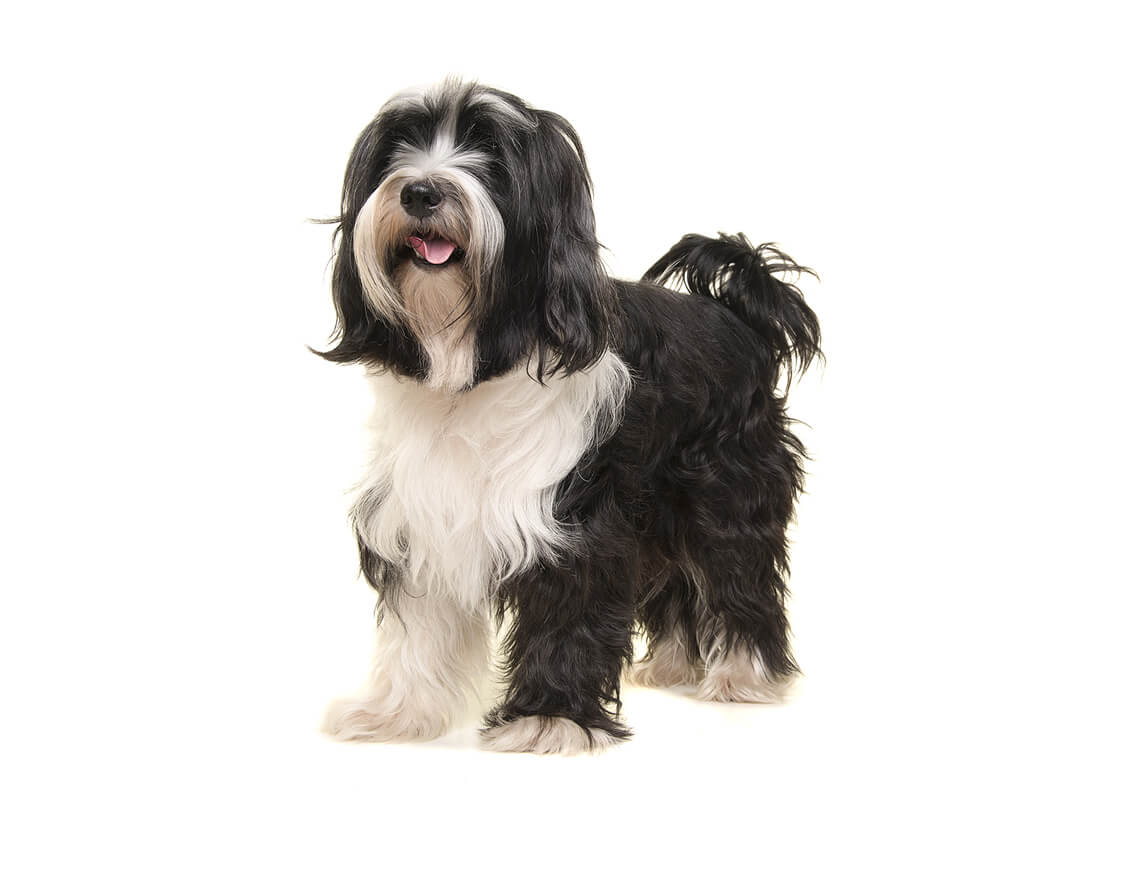
An attractive, small/medium-sized dog, the Tibetan Terrier has a long, straight or wavy coat that comes in any colour except chocolate/liver. Square-shaped and sturdy, adult dogs stand at 36-41cm, and females are slightly smaller. The weight range is 8-14kg.

The need-to-know

  • Dog suitable for non-experienced owners
  • Basic training required
  • Enjoys active walks
  • Enjoys walking one to two hours a day
  • Small dog
  • Minimum drool
  • Requires grooming daily
  • Non hypoallergenic breed
  • Very vocal dog
  • Guard dog. Barks and alerts
  • May require training to live with other pets
  • Great family dog
Personality

A good-natured, happy and outgoing dog, the Tibetan Terrier is alert and game. He is naturally reserved with strangers but loyal and affectionate to his loved ones. A fun-loving companion, Tibetan Terriers are bouncy, larger-than-life characters and can make a super family dog.

History and Origins

He might be called a Tibetan Terrier, but this dog has never been used in the traditional Terrier breed role of going to ground after prey. Instead the Tibetan Terrier dog breed, or TT, was a herding dog, and, when necessary, guard. Kept in monasteries and a companion to the monks, he was known as The Holy Dog of Tibet and reached the attention of the west when, in 1922, a TT puppy was given to Dr Agnes Greig, a British doctor working in India, as thanks for saving a Tibetan woman's life.

Nutrition and Feeding

Small dogs have a fast metabolism, meaning they burn energy at a high rate, although their small stomachs mean that they must eat little and often. Small-breed foods are specifically designed with appropriate levels of key nutrients and smaller kibble sizes to suit smaller mouths. This also encourages chewing and improves digestion.

Exercise

A lively dog, this Tibetan dog breed enjoys his exercise and needs about an hour a day, though he will happily accept more if it's offered. He takes well to training and enjoys spending quality time with his family, and so loves taking part in fun canine hobbies. As with any long-coated dog, do check him over after a walk, to remove any twigs or leaves that might have been swept up along the way!

Other Information

Health and common issues

The Tibetan Terrier is generally a healthy breed. As with many breeds, they can sometimes suffer from hereditary eye disorders, and hip dysplasia (a condition that can lead to mobility problems). Eye testing and hip scoring of dogs prior to breeding is therefore important. Like many small breeds, they can also suffer from kneecaps that may temporarily slip out of place (luxating patellas).

Best family dog breeds

While many dogs are traditionally thought of as being good with children , all dogs and children need to be taught to get on with and respect each other, and be safe together. Even so, dogs and young children should never be left alone together and adults should supervise all interactions between them.

Zoomed product photo

Tibetan Spaniel

The Tibetan Spaniel is an attractive little dog, slightly longer than they are tall and with a silky, medium length coat that forms feathering on the ears, legs and tail. Males may have a thicker coat and mane around the neck and shoulders.

The need-to-know

  • Dog suitable for non-experienced owners
  • Basic training required
  • Enjoys gentle walks
  • Enjoys walking half an hour a day
  • Small dog
  • Some drool
  • Requires grooming every other day
  • Non hypoallergenic breed
  • Chatty and vocal dog
  • Guard dog. Barks and alerts
  • Great with other pets
  • May require training to live with kids
Lifespan:
12 – 15 years
Weight:
7 – 9kg
Height:
around 25cm
Colours:
The coat comes in all colours and combinations
Size:
Small
UK Kennel Club Groups:
Utility
Personality

Alert and active, the Tibetan Spaniel may be reserved with strangers, yet completely loyal to family. As a companion breed they do not like to be separated from their owner or family, and this is something they must be trained to cope with and even then something they may always struggle with. They have a natural tendency to alert owners to whatever is occurring, and this breed trait should not be ignored as they can be extremely vocal.

History and Origins

Country of Origin: Tibet

Bred in Tibet by the monks to act as watchdogs within the monasteries, the Tibetan Spaniel is a spaniel in name only, they have no genetic link to the gundog spaniels, but most likely took the name as they slightly resemble the toy spaniel types.  In their original role as watchdogs, the Tibetan Spaniel would climb walls to seek out high vantage points from which to watch, and bark an alarm should someone approach. This behaviour can still be seen in modern Tibetans, whose owners will frequently find them on worktops, table tops and window sills. No, they cannot levitate, they are just extremely gifted climbers! 

Nutrition and Feeding

Small dogs have a fast metabolism, meaning they burn energy at a high rate, although their small stomachs mean that they must eat little and often. Small-breed foods are specifically designed with appropriate levels of key nutrients and smaller kibble sizes to suit smaller mouths. This also encourages chewing and improves digestion.

Exercise

An hour’s exercise per day, as well as some training and games in the form of puzzle solving, clicker training and feeding from food dispensing toys should keep the Tibetan Spaniel busy and satisfied. A secure garden is a must as the Tibbie is an excellent digger!

Other Information

Health and common issues

The most common health problem affecting Tibetan Spaniels is an inherited eye disease and so eye testing prior to breeding is important. The breed club monitor the health of the breed carefully and should be contacted for the most up-to-date information and details of any DNA or additional testing they recommend. Breed Clubs can be found on the Kennel Club website.

Space requirements

The Tibetan Spaniel is not a demanding dog to house, a secure garden is vital and it is worth considering how loud or busy your local area is, as this breed is likely to be overstimulated and stressed by constant noise. As long as this is taken into account, the Tibetan Spaniel will happily live in country or town housing.

Training tibetan spaniel

Easily trained this breed is quick to learn and loves to spend time with their owner, positive reinforcement training will get the best out of this little dog. Although small the Tibetan Spaniel should be capable of a variety of dog activities including tracking, man-trailing and mini agility and it is well worth having a go at some of these activities to keep their minds occupied.

Best family dog breeds

Gentle and kind, the Tibetan Spaniel can make an excellent family pet. Caution is advised with very small children as it is very easy for them to mistake small fluffy breeds for toys. Not ideal for the very busy family who have long periods of absence from the home. While many dogs are traditionally thought of as being good with children, all dogs and children need to be taught to get on with and respect each other, and be safe together. Even so, dogs and young children should never be left alone together and adults should supervise all interactions between them.

Did you know?

  • Tibetan Spaniels, or at least dogs that look very like them, appear in art that dates to 1100BC – this makes the breed around 3000 years old. It is possible they are the ancestors of the Pekingese and the Lhasa Apso.
  • They were once referred to as ‘little lions’ which was a great honour as lions are sacred in Buddhism. In Tibet they’re called ‘Simkhyi’, meaning ‘housedog’, ‘room dog’ or ‘bedroom dog’. Tibetan Spaniels were only ever gifted and never sold, most often to leaders in China or other Buddhist countries. It’s said that this breed helps Lamas with spiritual practices and will often sit next to them or on their lap during meditation.