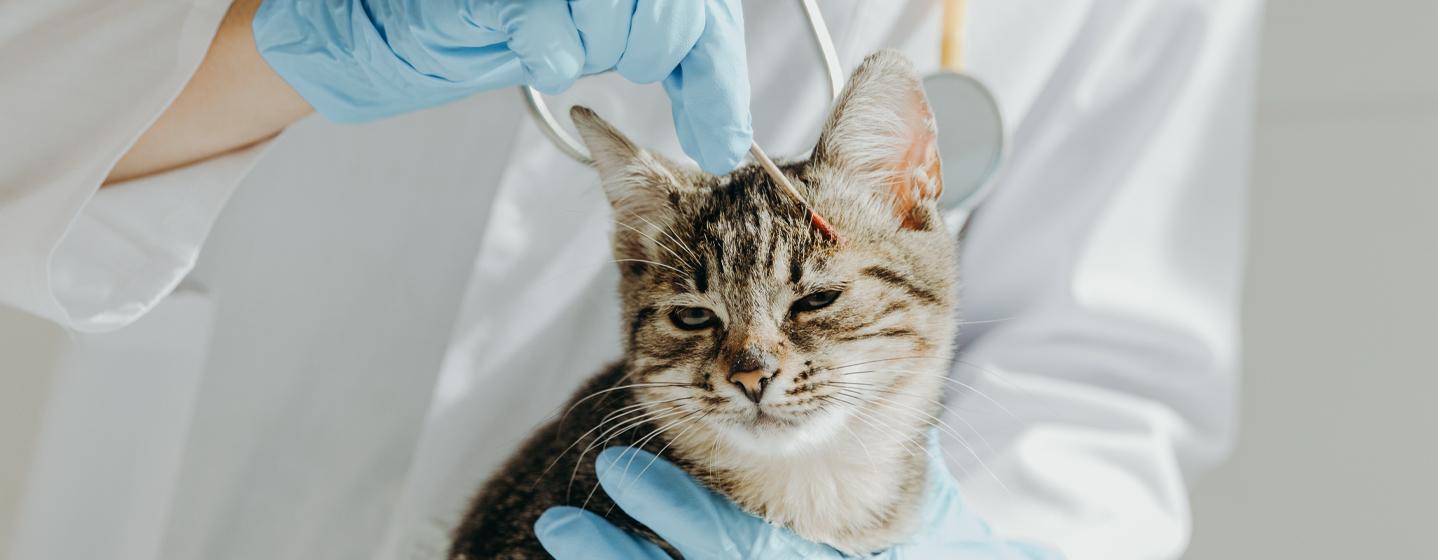
Despite the name, ringworm in cats has nothing to do with worms! If you suspect your cat has this fungal skin condition, it’s important that it gets treated as soon as possible to prevent spreading to other animals or even you.
Ringworm in cats is a highly contagious fungal infection of the skin. It is more common in kittens and long-haired cats, but can affect any breed and age. It is also a zoonotic disease meaning it can spread to humans, particularly people who are immunocompromised.
Despite the name, ringworm is not actually caused by a worm at all, rather a group of fungi called dermatophytes and can be referred to by its medical name dermatophytosis.
Due to the highly contagious nature of the condition, it’s essential that ringworm treatment for cats is sought as soon as possible. If you suspect that your cat is suffering from ringworm, keep reading to find out what you should do.
What is ringworm in cats?
This common skin condition is a fungal infection which feeds on the keratin in a cat’s fur, skin and nails. It’s called ‘ringworm’ because the fungus creates circular ring-like lesions on your cats’ skin, usually also associated with hair loss. These are often found on the head, ears, along the ridge of the back and on the front legs, but they can be present anywhere on the body.
How do cats get ringworm?
Ringworm in cats is highly contagious and is most commonly caught through contact with infected cats. It can spread rapidly in multi-pet households as it gets distributed via fungal spores on skin and hair that’s been shed. Ringworm is very common in kittens under the age of one as their immune systems are still developing. It also affects long-haired cats more, because the fungus gets trapped in the long coat and is harder to remove.
Symptoms of ringworm in cats
Sometimes ringworm in cats can be hard to detect as symptoms may be very mild. If your cat displays symptoms, it’s likely to include the following: