Pekingese

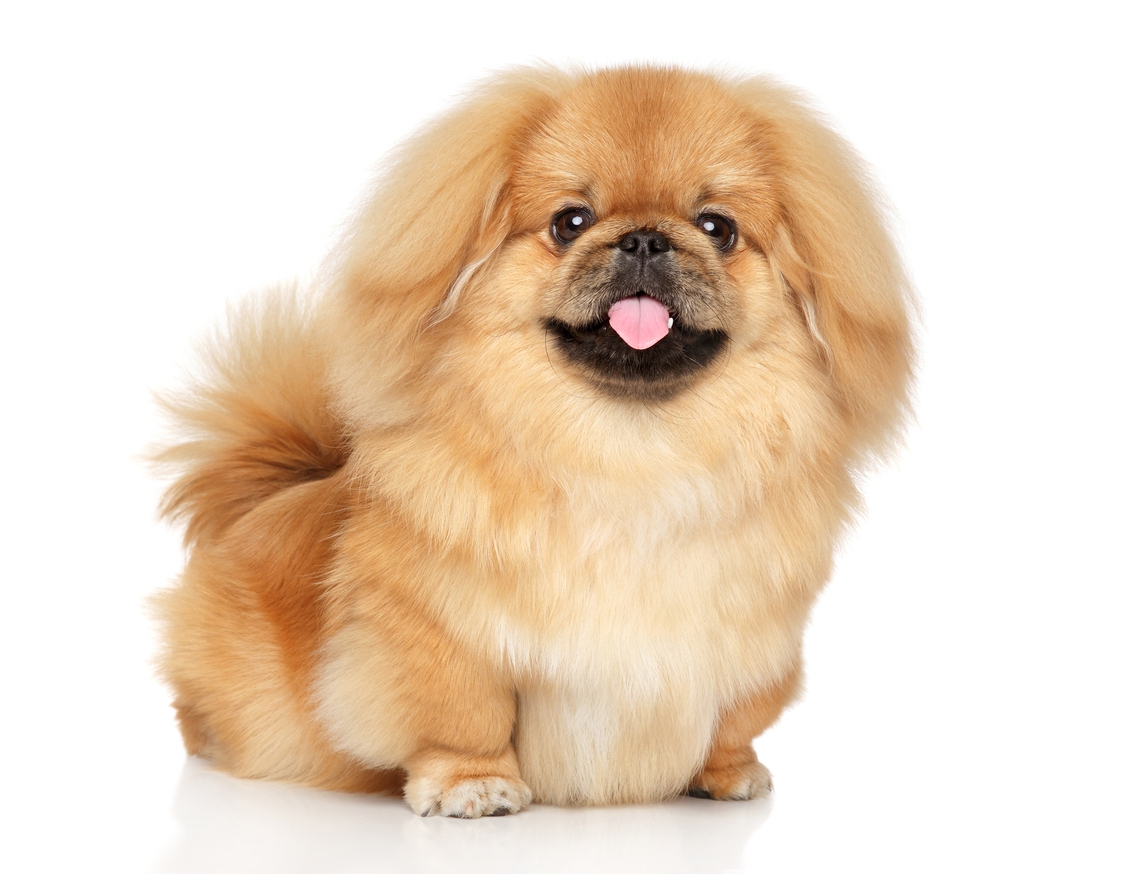
The Pekingese is a robust, short legged little dog with a leonine expression and a characterful personality. A feature of the breed is the long, profuse coat covering the body, legs and tail and creating a mane around the head and neck. The coat is short on the face and muzzle, but long on the ears. Eyes are large and the muzzle is short, with a wrinkle above it, but the nostrils should be wide and clear and the wrinkle should not obscure the eyes.


The need-to-know


  • Dog suitable for non-experienced owners
  • Basic training required
  • Enjoys gentle walks
  • Enjoys walking half an hour a day
  • Little toy dog
  • Some drool
  • Requires grooming once a week
  • Non hypoallergenic breed
  • Quiet dog
  • Not a guard dog
  • Great with other pets
  • May require training to live with kids
Lifespan:
12 – 15 years
Weight:
Around 5kg
Height:
Between 15-22cm
Colours:
The Peke's coat can be any colour or have any markings, including black and tan, fawn or red brindle, and part-colour, which is white with another colour.
Size:
Small
UK Kennel Club Groups:
Toy
Personality

Dignified and stately, the Peke has a comical side with their family, but can be reserved with strangers. Under the coat there is a robust little dog, but even if clipped short they are not inclined to strenuous activity. Preferring to be with their people at all times, this is very much a companion breed, and they will not thrive if left alone for very long. Clever and brave in their own way, Pekes are stoic little characters for the most part, but can be surprisingly strong willed and determined, despite their small stature.


History and Origins

Country of Origin: China


The Pekingese or Peke has been around a long time, since the Shu Dynasty, around 2000 years ago. At this time China had recently become a Buddhist country, however the major symbol of Buddhism, the lion (which Buddha tamed and turned into a faithful servant and powerful protector) does not exist in China. So, the Buddhist monks created their own miniature lion by selectively breeding the Pekingese!


Nutrition and Feeding

Your dog's diet needs to have the right balance of all the main nutrient groups including a constant supply of fresh water. It's important to conduct regular body condition scores to ensure you keep your dog in ideal shape and remember to feed them at least twice daily and in accordance with the feeding guidelines of their particular food. You can find out more about balanced diets for dogs with our step-by-step guide.

Exercise

The Peke is a brachycephalic breed, which means they have very short noses. Coupled with their heavy coats and short legs, they are not built for fast walks or long walks. Of course, keeping your Pekingese as lean and fit as possible will help them, so half hour walks at a steady pace and off lead running in secure places is ideal as a dog exercise. Take care in hot weather or even warm weather, to exercise before the temperatures rise or late at night once they have cooled. Be aware that being low to the ground, temperatures can remain high at pavement level, even if things feel cooler for you, higher up.

Ideal Owner

Ideal Peke owners will have the ability to groom this heavy coated dog frequently, and the budget for expensive vet bills, as this breed does have a high risk of health issues due to their short necks and short faces/noses and extreme coat. The Peke is a steady companion with bags of character, who is friendly, personable and won’t demand hours of exercise.

Other Information

Space requirements


Suited to any size home as long as owners are almost always present – the Peke left alone is a sad and deeply unhappy dog. Not great with stairs, so single-storey living is ideal, and a decent sized garden will be appreciated, but ensure it is well fenced! Suited to city or countryside as long as there are safe places to walk and train, the Pekingese really doesn’t mind where you live, as long as you are there!


Training pekingese dogs


The Peke responds well to kind dog training methods using food or toys as rewards. They are not overly inclined to enjoy training for its own sake, but you should work hard to teach your Pekingese to walk nicely on the lead without pulling, a good solid recall and of course, socialise well with other animals and people whilst young. Pekes are capable of learning, they are far from stupid, but you will need to work hard to motivate a Peke to do as you ask.


Best family dog


Ideal for those who are home a lot, and want a companion dog who is not demanding. However, they do need an owner who understands the implications of a brachycephalic breed, and someone who enjoys grooming every day. Not really suited to smaller children due to the time taken up by grooming, and the difficulty very young children have in discerning real dog from toy. Better with older children, but would prefer a quieter and more sedentary home than most families can provide. While many dogs are traditionally thought of as being good with children, all dogs and children need to be taught to get on with and respect each other, and be safe together. Even so, dogs and young children should never be left alone together and adults should supervise all interactions between them.


Did you know?


  • The Pekingese really found fame with the character Tricky-Woo in James Herriot’s veterinary books and the subsequent TV series ‘All Creatures Great and Small’. In the books, Tricky-Woo suffers from ‘cracker dog’ and ‘flop-bott’ (likely excessive energy and ‘zoomies’ and anal glad issues respectively). In the recent remake of the series, Tricki-Woo is played by a Pekingese called Derek who apparently would upstage the actors by adding his own ad-lib ‘grrs’ and ‘woofs’ when addressed during a scene!
  • In ancient China, the smallest and fiercest Pekingese were kept up the wide sleeves of Emperors and couriers who would release them to fend off any potential attackers


Chow Chow (Smooth)

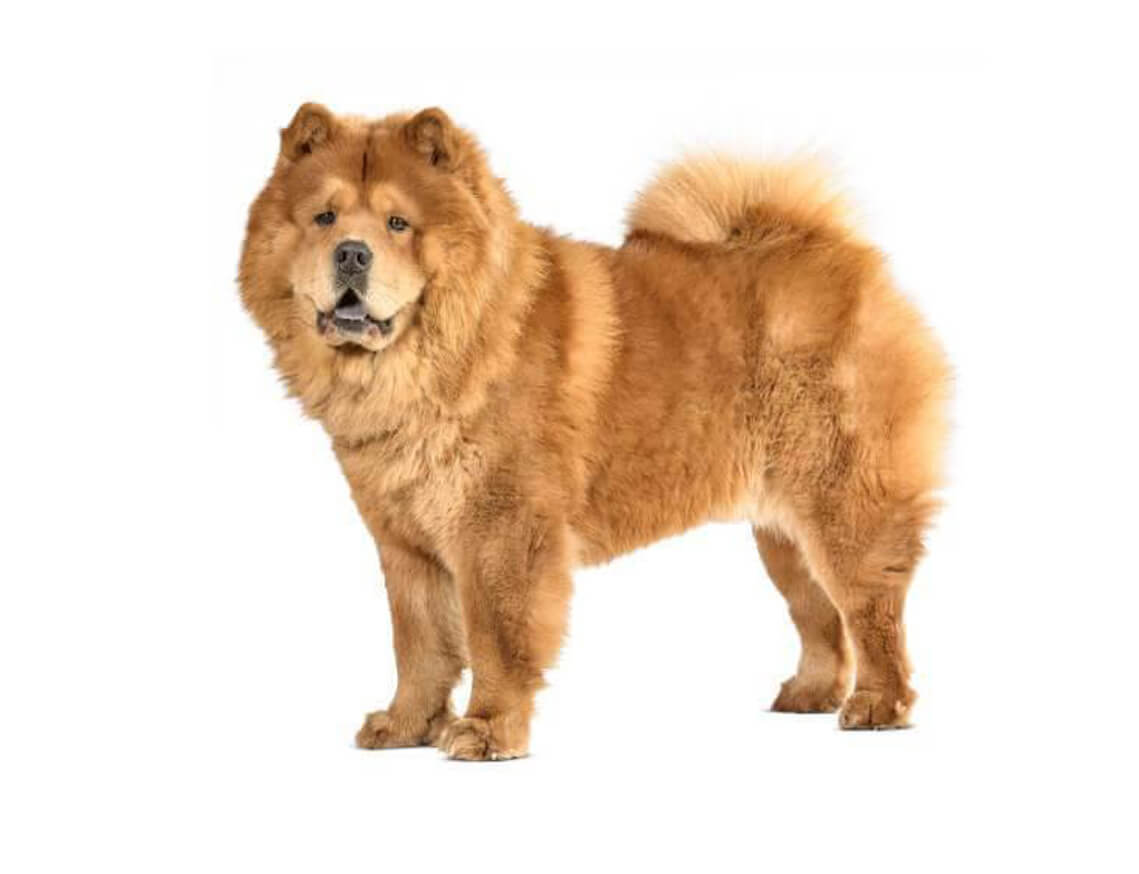
The Chow Chow is a small, compact dog with an apparently square stature. The tail is curved over the back. The inside of the mouth and the tongue have a blue / black colour. There are two types of coat - rough and silky - and a wide variety of colours (black, red, blue, fawn, cream or white). Adult males measure 48-56 cm and weigh about 26-32 kg. Adult females measure 46-51cm and weigh 20-25kg.


The need-to-know


  • Dog suitable for non-experienced owners
  • Basic training required
  • Enjoys active walks
  • Enjoys walking an hour a day
  • Giant dog
  • Minimum drool
  • Requires grooming every other day
  • Hypoallergenic breed
  • Quiet dog
  • Guard dog. Barks, alerts and it's physically protective
  • Great with other pets
  • Great family dog
Personality

The Chow-Chow is an independent dog, suspicious and can be obstinate. They are peaceful and gentle dogs; however they can change their behaviour in dangerous situations. They look like a furry, fluffy bear. Breeders have improved their temperament in recent years, and it is assumed that the Chow-Chows' bad mood is due to a lack of training and appropriate socialization at an early age. Avoid inappropriate behavior by introducing them to children, cats and other domestic pets early.


History and Origins

The origin of the Chow-Chow canine breed is a real mystery, but they probably come from Mongolia and Manchuria, where their meat was considered a delicacy and their fur was used for clothing. They were later introduced to China. Over the centuries, this race has been used as a guardian of temples with hordes of malevolent spirits. Chow-Chow was also used as a hunting dog by the aristocracy, as a guard dog against intruders, as sled and cart pullers and as watchdogs. Spitz breeds are believed to have descended from Chow-Chow.

Nutrition and Feeding

Your dog's diet requires a good balance between the main nutritional groups, including a constant supply of clean water. Check his physical condition regularly to ensure that your dog is healthy and remember to feed him at least twice a day and in accordance with the guidelines for his specific food.

Exercise

Chow-Chow does not require much exercise, about an hour a day outside the hottest hours of the day. He highly appreciates his stay abroad, so the owners must provide a space in the yard to satisfy their needs. If he lives outside, keep your dog in the summer in the shade. Exercise should be accompanied by a dog, as too much exercise can cause bone and joint problems.

Other Information

Health and common issues


The most common health problems in Chow Chow are elbow dysplasia and eyelid problems. As with many breeds, there are some reports of hip dysplasia (a condition that leads to mobility problems). Thus, it is important to screen for hip dysplasia in dogs before reproduction.


Best family dog breeds


Although many breeds of dog are traditionally considered good with children, everyone and dogs and children must be taught to relate and respect each other so that they can be together safely. In any case, dogs and small children should not be left alone without adult supervision.