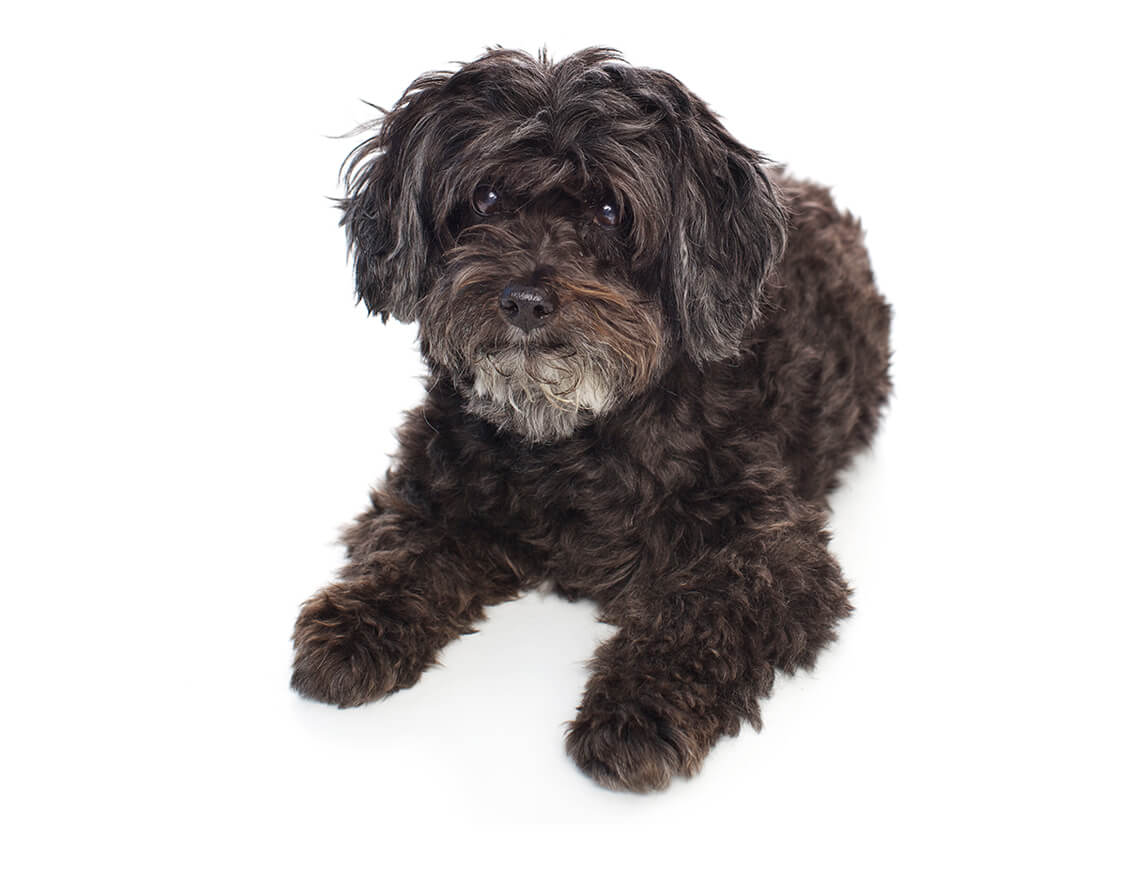
Schnoodle
The Schnoodles are dogs that come in many guises but are always a joy to have around. The breeds that make up the Schnoodle are the Schnauzer (Miniature, Standard or Giant) and the Poodle (Toy, Miniature or Standard).
Given that any of the three sizes of Schnauzer can be used and any of the three sizes of Poodle, the result is a happy and quick-witted crossbreed in pretty much any size and with a variety of temperaments and behaviours.
The Schnoodle can be a first cross (with one Schnauzer and one Poodle parent), they can be bred back to one of any of the sizes of the original breeds, or be two Schnoodle bred together.
The need-to-know
- Dog suitable for non-experienced owners
- Some training required
- Enjoys active walks
- Enjoys walking one to two hours a day
- Medium dog
- Minimum drool
- Requires grooming every other day
- Non hypoallergenic breed
- Chatty and vocal dog
- Guard dog. Barks and alerts
- May require training to live with other pets
- May require training to live with kids
Personality

Like most crossbreeds, the personality of a Schnoodle depends on the parents and how they have been bred and reared. In this cross however the size of Schnauzer used has a marked difference in temperament as the Giant Schnauzer is a strong-minded, powerful, active working dog whereas the Miniature is far softer (although still with terrier-type tendencies!) and more of a companion dog.
History and Origins
The Schnoodle is a fairly new and still rare crossbreed. Created in the US during the 1980s, the goal was to design a friendly, low-shedding dog breed, that would fit in with family life.The two breeds that go into the formation of the Schnoodle are the Schnauzer and the Poodle.
Nutrition and Feeding
The Schnoodle diet needs to have the right balance of all the main nutrient groups including a constant supply of fresh water. It's important to conduct regular body condition?scores to ensure you keep your dog in ideal shape, and remember to feed him at least twice daily in accordance with the dog feeding guidelines of his particular food.
Exercise
Both the breeds that make up the Schnoodle are active and enjoy exercise and will be happy with up to two hours every day (less for smaller Schnoodles). They will enjoy games, training, interactive toys and being involved in all family activities.
Other Information
Health and common issues
One aim with crossbreeds is to dilute or eliminate any inherited health issues that may exist within one or other of the breeds. This dilution or elimination is only likely if only one parent is the carrier of any particular condition, and where this is a first cross (F1). As this can’t always be guaranteed, all parents should be health tested prior to breeding: Schnauzers - eye tests and hip scoring should be done, DNA test for Dilated Cardiomyopathy (Standard), DNA test for Mycobacterium Avium Complex (Miniature) Poodle - eye tests and hip scoring should be done Information on health tests for both breeds can be found on the Kennel Club’s website and via their respective breed clubs.
Potential issues
This cross can be noisy - especially if bored or left for long periods of time. Giant Schnauzer crosses need early and ongoing dog socialisation. They may be suspicious of strangers (human and canine) and can become territorial. If bored, chewing and destructive behaviour can become an issue.
Space requirements
This depends on the size of dogs used in this cross. The Smaller Schnoodles can live in a flat or a small house and as long as they have access to outdoors for toileting and exercise (and as long as neighbours don’t mind noise!) they’ll be happy. Whereas the larger ones need a much bigger living space, a well-fenced garden and access to long walks.
Training the schnoodle
This is a very active dog who is smart, busy and who will need dog training early on. They are a joy to train as both the breeds are intelligent and love working with their owner, but they will learn bad habits as quickly as good ones so reward-based training should start early and be ongoing. Smaller Schnoodles will enjoy agility and even heelwork to music, while larger ones can excel in obedience classes and do need training to ensure they are happy around other dogs and people, walk calmly on a lead and have a good recall. Early and ongoing socialisation is important. Toy Poodles can be quite sensitive and any rough handling or raised voices can worry them greatl. Therefore, all training and handling should, as always, be positive and reward-based. It is important to train a Schnoodle to enjoy handling and grooming (as they will need a lot of it).
Family friendly dog breeds
The Schnoodle can make a fabulous family dog who will enjoy all family activities, but make sure you choose your breeder and your puppy wisely.
Did you know?
Labradoodles make great therapy dogs. Their warm personality is often a match for people with autism or physical disabilities.