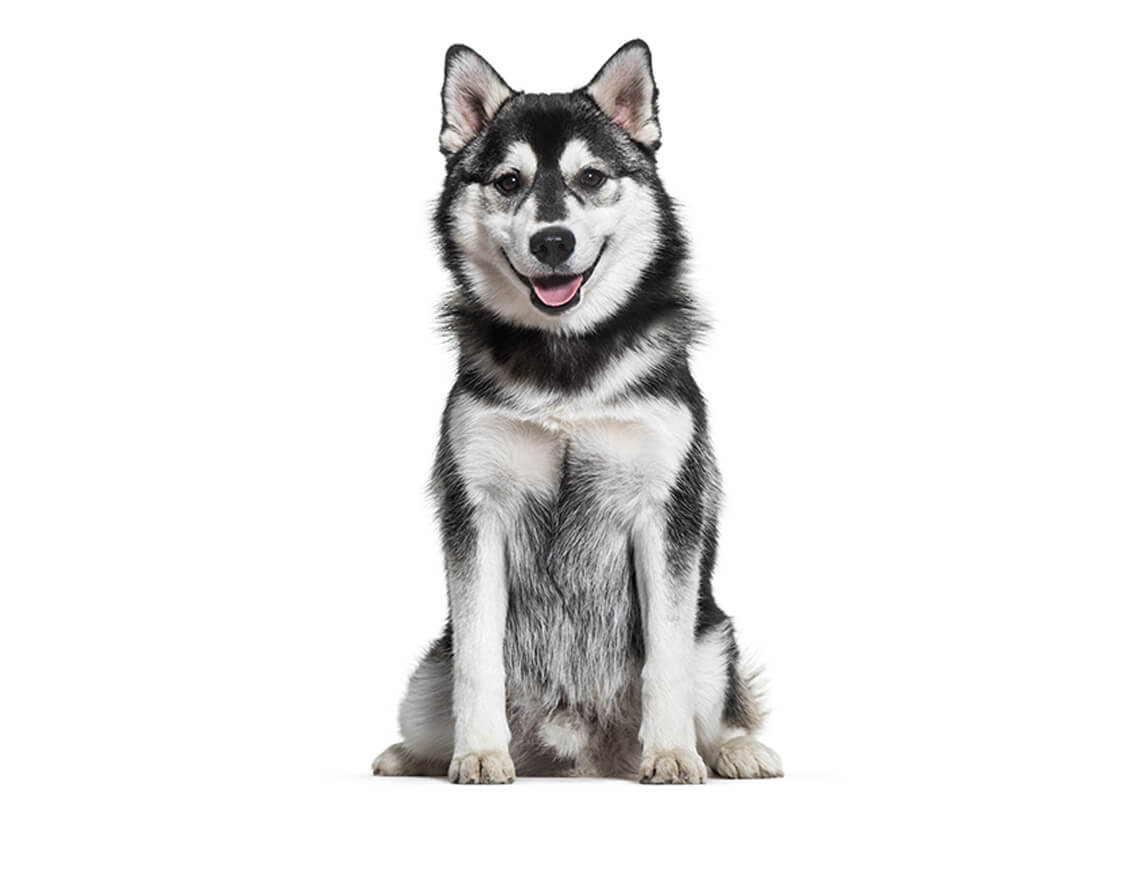
Pomsky
Pomsky is one of the designer crossbreed dogs gaining popularity with dog lovers, particularly because of their cute looks. The breeds that make up the Pomsky are the Pomeranian, the smallest of the spitz breeds, and the Siberian Husky. The result is a cute ball of fur that looks like a mini wolf, but less demanding than its parent, the Siberian Husky.
The Pomsky can be a first cross (with one Pomeranian and one Husky parent), they can be bred back to one of the original breeds or be two Pomskies bred together (although in-breeding can be an issue in this case). This means there are varieties in the shape, colours, coat types and behaviour of a Pomsky companion.
The need-to-know
- Dog suitable for experienced owners
- Some training required
- Enjoys active walks
- Enjoys walking one to two hours a day
- Medium dog
- Minimum drool
- Requires grooming daily
- Non hypoallergenic breed
- Chatty and vocal dog
- Not a guard dog
- May require training to live with other pets
- May require training to live with kids
Personality

Like most crossbreeds, the personality of a Pomsky depends on the parents and how they have been bred and reared.
The Pomeranian is a surprisingly active little dog who can excel at training. They are sociable, friendly, and outgoing. Sometimes they don’t realise they are tiny dogs at all!
The Siberian Husky is a working dog at heart. They are however friendly, gentle, and alert. They are not dogs who will ever shine in the obedience ring, as they are independent, scorn training and are selectively bred for one purpose. They are active and agile, and as such can be difficult to keep as a companion dogs. They are quiet most of the time as they don’t bark, but they do howl which is a joy for most huskies (but not for their neighbours).
History and Origins
Like many of the designer crossbreeds, the Pomsky originated in the United States. Since it is a relatively new dog breed, the looks and traits are not yet established. This is why it’s important to look at the individual breeds making up the Pomsky.The two breeds that go into the formation of the Pomsky are the Pomeranian and the Siberian Husky.
Nutrition and Feeding
Your dog's diet needs to have the right balance of all the main nutrient groups including a constant supply of fresh water. It's important to conduct regular body condition scores to ensure you keep your dog in ideal shape, and remember to feed him at least twice daily in accordance with the dog feeding guidelines of his particular food.
Exercise
A Pomeranian is happy with half an hour to an hour a day, while a Siberian Husky will run all day! No wonder the exercise needs of the resulting Pomsky can be difficult to predict. The secret is to be prepared for either.
Other Information
Health and common issues
The aim of crossbreeds is to dilute or eliminate any inherited health issues that may exist within one or other of the breeds. This dilution or elimination is only likely if only one parent is the carrier of any particular condition, and where this is a first cross (F1). As this can’t always be guaranteed, all parents should be health tested prior to breeding: Pomeranian - a fairly healthy breed although like many small breeds can be prone to luxating patellas Siberian Husky - eye tests and hip scoring should be done
Space requirements
As the size of this cross is a little unpredictable, so is their need for space. They can live in smaller properties but must have access to the outdoors for toileting and exercise.
Training the pomsky
The Pomsky is likely to be a highly intelligent breed but not necessarily an easy one to train. While the Pomeranian is a very trainable little dog, the Husky is a specialist, bred to run not to be obedient. Dog training will take patience, skill and a reward-based approach. They should however be trained to walk on a lead and harness, and a good recall should also be taught (although not necessarily relied on).
Family friendly dog breeds
The Pomsky can make a good family companion, but they can also be independent and aloof. To make sure your Pomsky will get on with all the family, find a good breeder who socialises their puppies well and continue this from the minute they come home.