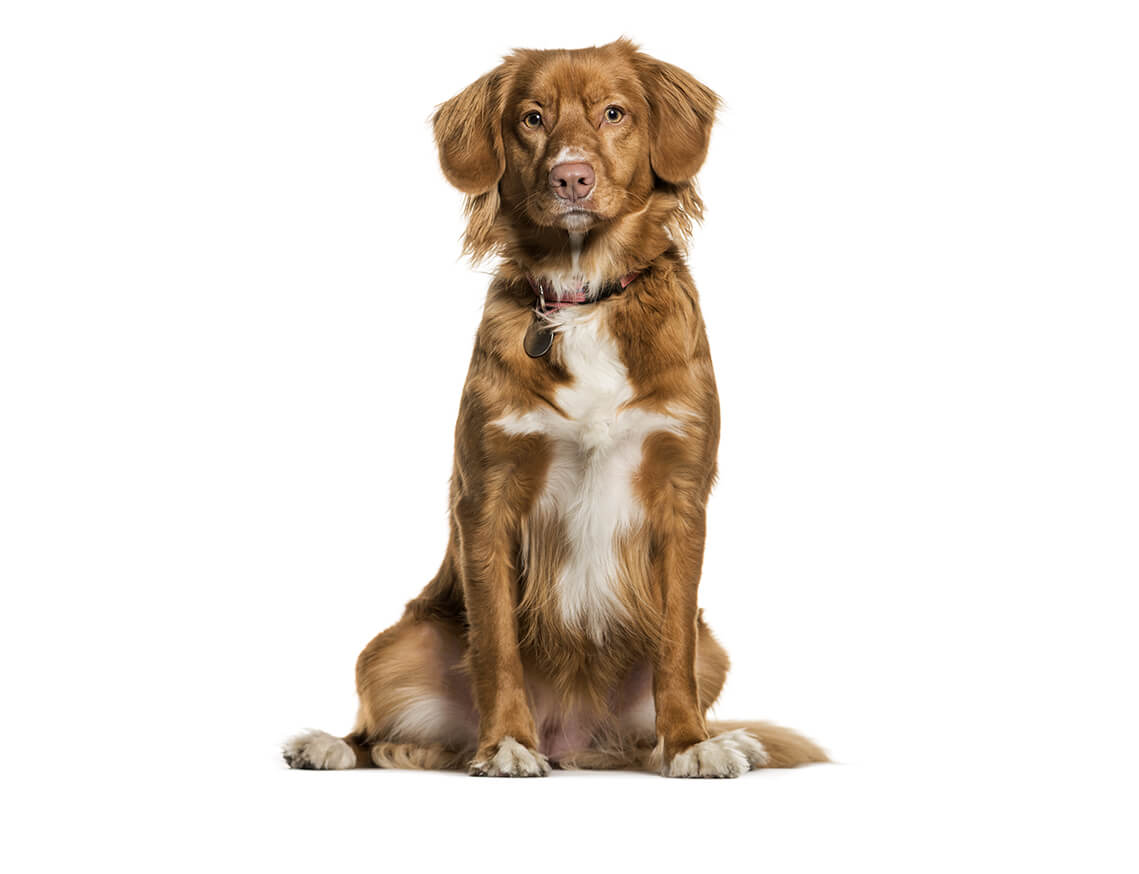
Nova Scotia Duck Tolling Retriever
The ‘Toller’ is a medium-sized retriever with a thick, water repellent coat, soft undercoat, and webbed feet. Ranging from light orange to deep red and moderately feathered around the ears, chest, and back of legs. The Nova Scotia Duck Tolling Retriever features a magnificent waving tail, usually with a white tip, and may have white markings on the feet and face. This is a bright, alert and active little retriever, full of fun but capable of working hard all day.
The need-to-know
- Dog suitable for owners with some experience
- Basic training required
- Enjoys vigorous walks
- Enjoys walking more than two hours a day
- Medium dog
- Some drool
- Requires grooming every other day
- Non hypoallergenic breed
- Quiet dog
- Not a guard dog
- May require training to live with other pets
- Great family dog
Personality

The Nova Scotia Duck Tolling Retriever loves the great outdoors and is ideally suited to the active, country-dwelling family. They respond well to training and can excel in the dog sports of flyball, agility, obedience along with many others. The Toller is a playful, energetic companion who is a joy to be around.
History and Origins
Country of Origin: Canada
A relatively new breed, the Nova Scotia Duck Tolling Retriever (NSDTR or Toller) was developed in Canada in the early part of the 20th Century, to fulfil the rather unique dual role of both decoy dog and retriever. It is likely that many breeds went into the creation of the Toller, including spaniels, setters, collies and retrievers, but it was not until 1945 that the breed was recognised by the Canadian Kennel Club, and they didn’t gain international recognition till the 1980s.
Nutrition and Feeding
A Duck Tolling Retriever’s diet needs to have the right balance of all the main nutrient groups including a constant supply of fresh water. It's important to conduct regular body condition scores to ensure you keep your dog in ideal shape, and remember to feed him at least twice daily in accordance with the feeding guidelines of his particular food. Discover more about how to offer your dog a balanced diet with our easy-to-follow guide.
Exercise
Several hours of dog exercise a day will suit the Toller, but ensure that this is varied and involves mental stimulation as this is a clever, curious breed. Any activity that involves swimming, or carrying objects in the mouth will fulfil the Tollers breed traits, and this willing biddable dog will do well at many dog sports and activities.
Other Information
Health and common issues
As with many breeds, Duck Tolling Retrievers can suffer from hereditary eye disorders, and hip and elbow dysplasia (joint conditions that can be painful and lead to mobility problems). Eye testing and hip scoring of dogs prior to breeding is therefore important.
Space requirements
Compact and economical on space, the Toller is an easy dog to house as long as you don’t mind orange fur shed everywhere and the odd bit of mud and damp. A decent sized secure garden is important, and access to a wide variety of engaging walking routes, but otherwise the Toller can reasonably be housed anywhere.
Training retriever (nova scotia duck tolling)
Quick to learn and willing to oblige, the Toller is a fun dog to train with and will enjoy a wide variety of ‘doggy jobs’. This is a dog who will enjoy training and will be easily bored without plenty of mental stimulation, but is not a ‘training junkie’ type. Ensure teaching a ‘settle’ is part of the repertoire and as with all retrievers, focus on training to happily swap items in return for reward.
Best family dog breeds
For the active family the Toller is a fun and engaging companion, but they will need time dedicated to training and activities and are better suited to those who spend a lot of time outdoors or specifically interested in dog sports. Fine with older children, possibly requiring a bit too much walking and training to suit those with very young families. While many dogs are traditionally thought of as being good with children, all dogs and children need to be taught to get on with each other and be safe together. Even so, dogs and young children should never be left alone together and adults should supervise all interactions between them.
Did you know?
The term ‘toll’ means ‘to entice’ and this is where the Nova Scotia Duck Tolling Retriever gets their name – their job is to lure in ducks with their waving white tipped tail, so that hunters can get their shot. Then fulfilling the second part of their name, the Toller finds and retrieves the shot birds to the hunter.