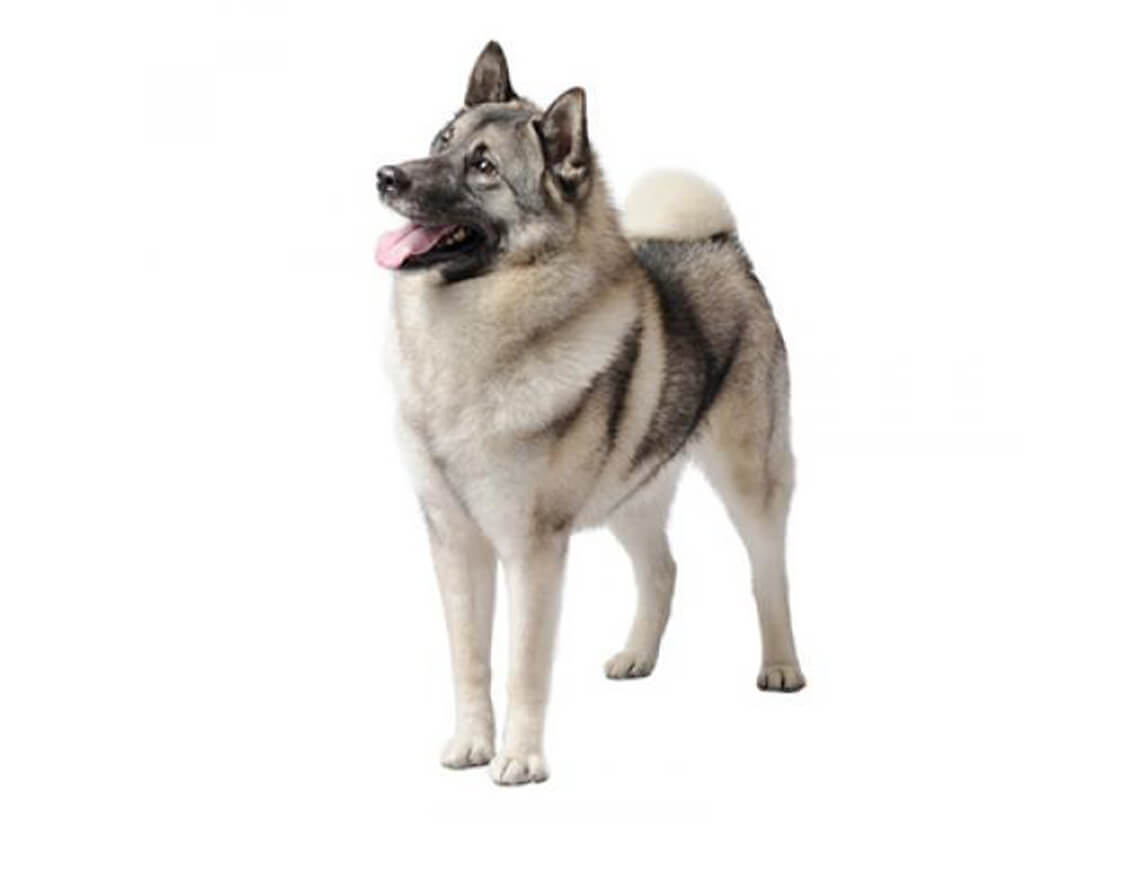
Norwegian Elkhound
A medium to large spitz dog (with a thick coat, prick ears and tail curled over the back), the Norwegian Elkhound dog is a powerful hound with a squarish shape and compact body. Adult male dogs stand at 52cm and weigh around 23kg and females are 49cm tall and weigh 20kg. The thick, profuse coat comes in shades of grey with the hair of the topcoat tipped black.
The need-to-know
- Dog suitable for owners with some experience
- Some training required
- Enjoys active walks
- Enjoys walking an hour a day
- Medium dog
- Heavy drool
- Requires grooming daily
- Non hypoallergenic breed
- Very vocal dog
- Guard dog. Barks and alerts
- May require training to live with other pets
- May require training to live with kids
Personality

A friendly, confident dog, the Norwegian Elkhound is energetic and hardy. A natural watchdog, he is vocal and will need early training to bark on command. A good family dog, he is independent but does enjoy the company of his loved ones. The houseproud should note that the coat does shed profusely.
History and Origins
An ancient breed, with archaeologists unearthing the skeletons of a similar dog dating back to 4,000-5,000BC, the Norwegian Elkhound dog breed is a spitz breed used for hunting elk. He would track down the elk and bark and keep it in one place until the hunter came to shoot it. He was first exhibited at a dog show in Norway in 1877 and is still used for hunting in Scandinavia.
Nutrition and Feeding
Your dog's diet needs to have the right balance of all the main nutrient groups including a constant supply of fresh water. It's important to conduct regular body condition scores to ensure you keep your dog in ideal shape, and remember to feed him at least twice daily in accordance with the feeding guidelines of his particular food.
Exercise
About an hour's daily exercise is needed as a minimum, though the Norwegian Elkhound dog is capable of more - this is a dog bred to track elk for miles in harsh conditions, after all! Do ensure he is kept cool in warm weather.
Other Information
Health and common issues
As with many breeds, the Norwegian Elkhound can suffer from various hereditary eye disorders, and hip and elbow dysplasia (joint conditions that can be painful and lead to mobility problems). Eye testing and hip scoring of dogs prior to breeding is therefore important.
Best family dog breeds
While many dogs are traditionally thought of as being good with children , all dogs and children need to be taught to get on with and respect each other, and be safe together. Even so, dogs and young children should never be left alone together and adults should supervise all interactions between them.