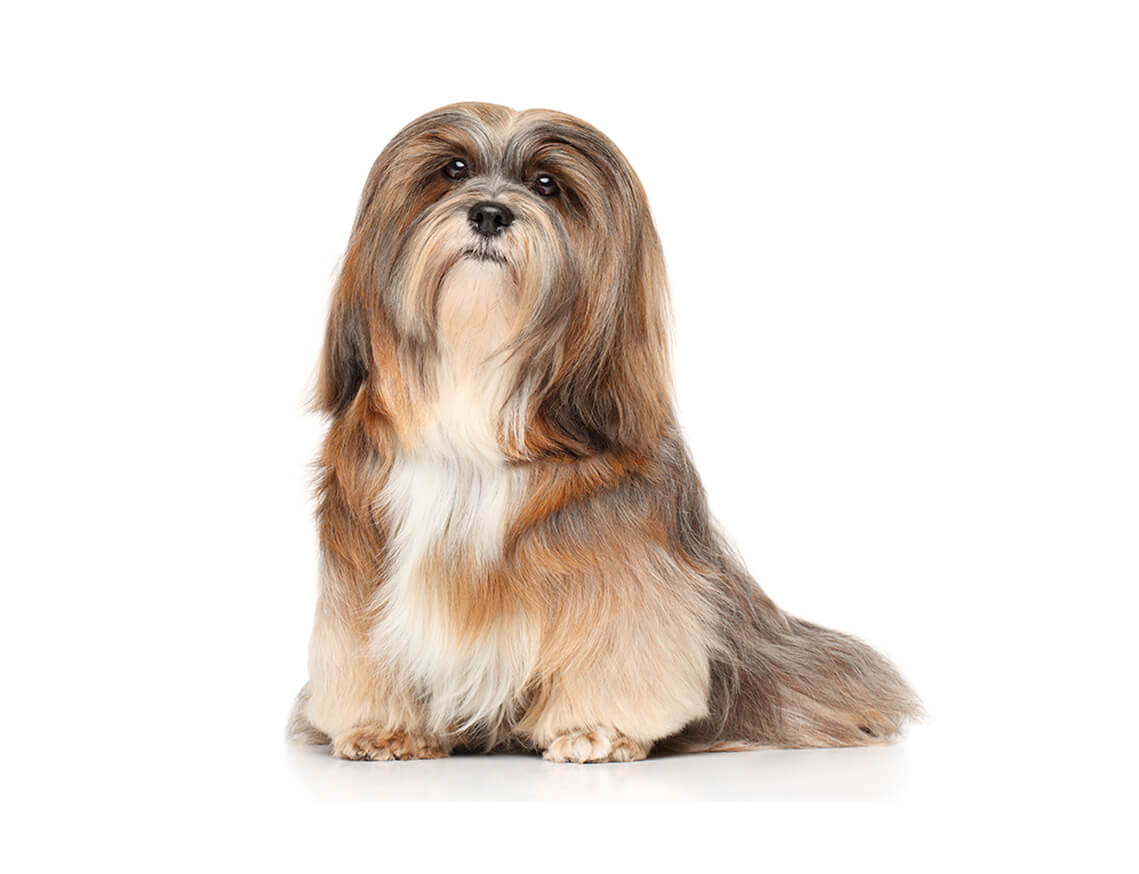
Lhasa Apso
The Lhasa Apso is a long-coated, sturdy little dog. They are slightly longer than they are tall. They come in a variety of colours: golden, sandy, honey, dark grizzle, slate, smoke, parti-colour, black, white or brown. Adult males measure 25cm and adult females slightly less. They weigh 6-7kg when fully grown.
The need-to-know
- Dog suitable for non-experienced owners
- Basic training required
- Enjoys gentle walks
- Enjoys walking half an hour a day
- Small dog
- Minimum drool
- Requires grooming daily
- Hypoallergenic breed
- Chatty and vocal dog
- Guard dog. Barks and alerts
- Great with other pets
- Great family dog
Personality

The Lhasa Apso dog is loyal and trustful. They get along well with children and other dogs. As a breed, they can be independent and are wary of strangers, but with patience and consistency, they can become relatively obedient. They are quite sensitive and so do not respond well to raised voices.
History and Origins
The Lhasa Apso dog breed was bred in Tibet, by the holy men and the nobles, for at least two thousand years. They were used as watchdogs in the temples and monasteries. The people of Tibet greatly respected these little dogs, as they believed they were the reincarnations of the holy lamas. They were never sold or bought but given as gifts, and it was considered a great honour to receive one.
Nutrition and Feeding
Small dogs have a fast metabolism, meaning they burn energy at a high rate, although their small stomachs mean that they must eat little and often. Small-breed foods are specifically designed with appropriate levels of key nutrients and smaller kibble sizes to suit smaller mouths. This also encourages chewing and improves digestion.
Exercise
The adult Lhasa Apso dog needs a minimum of half an hour's daily exercise. They have plenty of energy, but are as happy to stay at home and play as they are to walk for miles and miles. They are perfectly content with several short walks every day.
Other Information
Health and common issues
As with many breeds, there are hereditary eye disorders that may occur and so eye testing is recommended. They are also prone to certain skin conditions.
Best family dog breeds
While many dogs are traditionally thought of as being good with children , all dogs and children need to be taught to get on with and respect each other, and be safe together. Even so, dogs and young children should never be left alone together and adults should supervise all interactions between them.