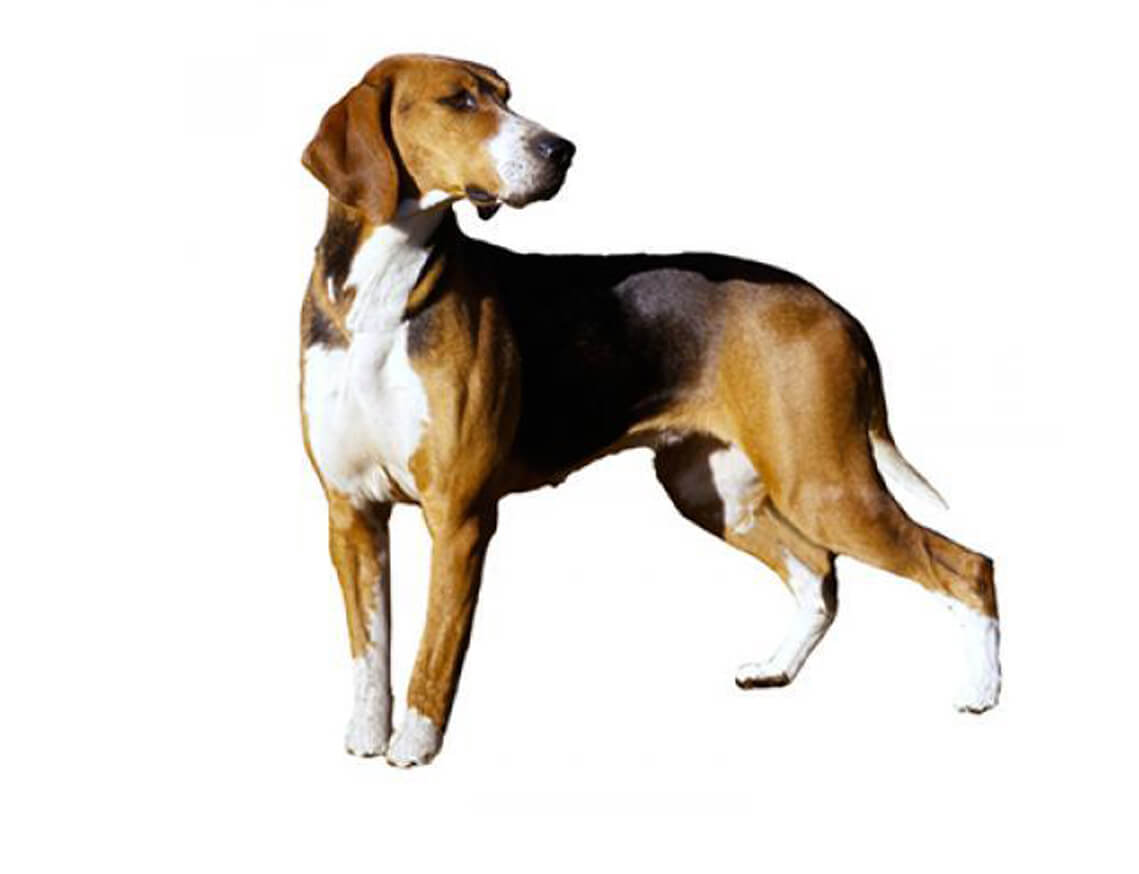
Hamiltonstovare
Smart, and strong with a glossy, richly marked coat, the Hamiltonstovare is a medium/large sized hound. Slightly longer than they are tall, the Hamiltonstovare has a close-lying, short, tricolour coat (black, tan and white), neat hard feet and a proud head and upstanding carriage.
The need-to-know
- Dog suitable for owners with some experience
- Some training required
- Enjoys active walks
- Enjoys walking one to two hours a day
- Medium dog
- Minimum drool
- Requires grooming once a week
- Non hypoallergenic breed
- Chatty and vocal dog
- Not a guard dog
- May require training to live with other pets
- Great family dog
Personality

Alert, determined and independent, although perhaps a little more inclined to listen to a human than some of their ancestors, the Hamiltonstovare is not a dog for the inexperienced or faint-hearted! If left bored, unsupervised or lonely, they will become vocal and destructive. The Hamiltonstovare will enjoy a home where someone is home all the time, and with people who enjoy fell-running, Cani-X or scent-based sports/games. They are good with children on the whole but this is a fairly large hound and when young, can be quite boisterous and bouncy!
History and Origins
Country of Origin: Sweden
One of Sweden’s most popular hound breeds, the Hamiltonstovare was developed in the late 19th century by one of the founders of the Swedish Kennel Club, Count Adolf Hamilton. Count Hamilton used a mixture of popular hounds to create his perfect breed - particularly the Foxhound, Harrier, Holsteiner and Heidebracke. Unlike most of their ancestors however, the Hamiltonstovare is not bred to work in a large pack. Instead, they were developed to be used singly or in pairs, to flush fox and hare to waiting guns. First recognised in 1921, the Hamiltonstovare has remained a relatively rare breed, with a core of breed supporters who endeavour to keep the breed going.
Nutrition and Feeding
Your dog's diet needs to have the right balance of all the main nutrient groups including a constant supply of fresh water to keep your pet hydrated. It's important to conduct regular body condition scores to ensure you keep your dog in ideal shape, and remember to feed him at least twice daily in accordance with the feeding guidelines of his particular food.
Exercise
This is a dog who needs a minimum of two hours of exercise per day, including training, games, and scent work to keep its mind active and fulfilled. When mature, activities such as Cani-X, fell-running and jogging are likely to help keep the Hamiltonstovare occupied as this is not a dog who will be happy and content with a couple of walks around the block!
Other Information
Health and common concerns
The Hamiltonstovare is generally a healthy, robust breed with no widely recognised breed specific health problems. Check with the Kennel Club and breed club for up-to-date health information.
Space requirements
Large, frequently muddy, and boisterous when young, the Hamiltonstovare requires a fairly large home and a big, very securely fenced garden. Not a dog for the urban dweller, this hound needs access to lots of countryside walks and secure places to run. Inclined to be vocal when worried, bored or left alone, they are better living in less densely populated areas.
Training hamiltonstovare dogs
Independent minded, and unlikely to be amused by repetitive dog training, the Hamiltonstovare requires a patient and clever trainer who will work with their excellent scenting ability and incredible stamina. Training a solid recall is a must, but careful management with a long-line is likely to be necessary, particularly in new or insecure locations. By using positive reinforcement and sensitive, consistent methods the Hamiltonstovare can become a well-behaved member of the family – although without it, they are inclined to be something of a boisterous hooligan!
Best family dog breeds
While many dogs are traditionally thought of as being good with children , all dogs and children need to be taught to get on with and respect each other, and be safe together. Even so, dogs and young children should never be left alone together and adults should supervise all interactions between them.
Did you know?
- Although the Hamiltonstovare is considered a Swedish breed, much of their ancestry comes from German and English hounds.
- In the past, in both Germany and England, owning hunting hounds was illegal for anyone not a member of royalty or nobility. This was because all the game and of course the land itself, belonged to the noble and royal families and so ownership of such a hunting dog, including the type that became the Hamiltonstovare, was illegal, and could result in heavy penalties as just owning one implied the owner was poaching!