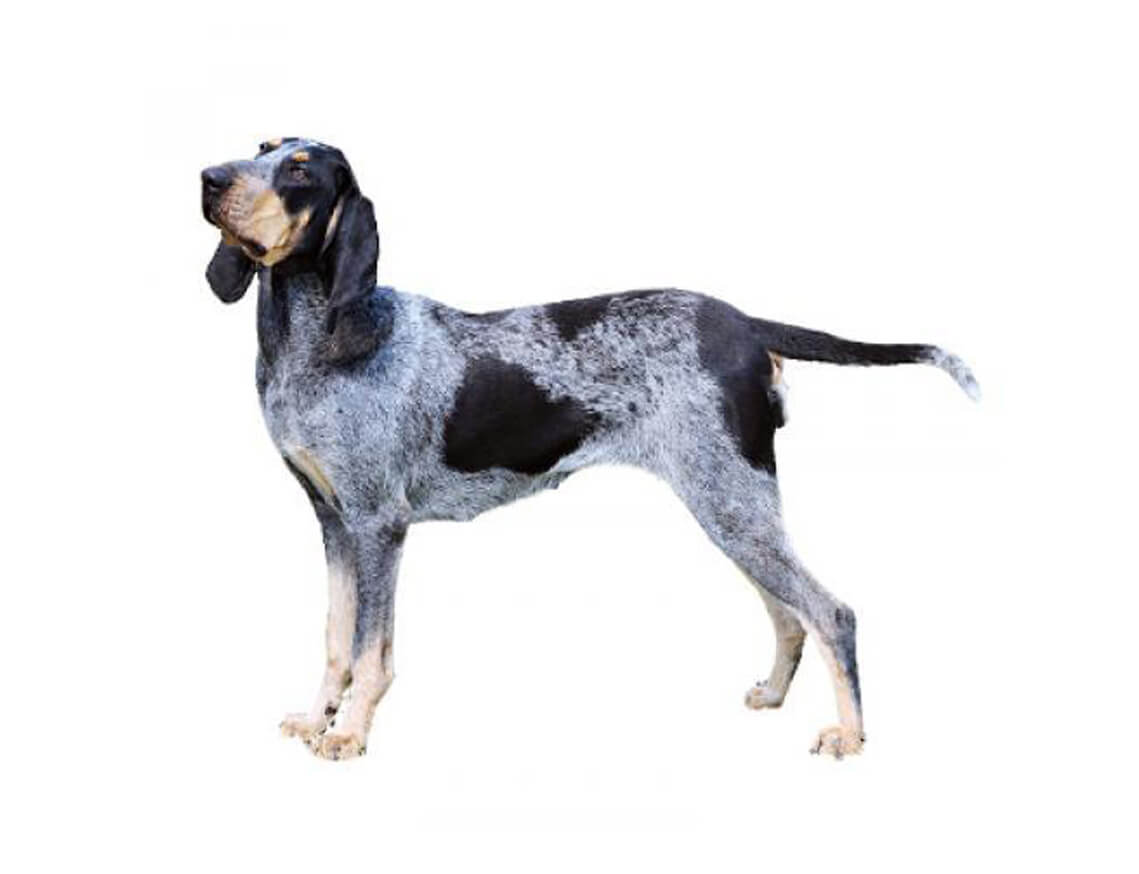
Grand Bleu de Gascogne
Large and impressive, the Grand Bleu de Gascogne has a long, noble head with pendulous ears, a muscular neck and powerful body. Somewhat like a bloodhound but lacking the excessive skin, this is an athletic scent hound built to go all day. Named for their size and distinctive blue colour, created by mottled black hair on a white background.
The need-to-know
- Dog suitable for experienced owners
- Extra training required
- Enjoys active walks
- Enjoys walking one to two hours a day
- Large dog
- Some drool
- Requires grooming once a week
- Non hypoallergenic breed
- Very vocal dog
- Not a guard dog
- May require training to live with other pets
- May require training to live with kids
Personality

Although large and athletic, the Grand Bleu is often described as lethargic. Their skill is in their persistence and ability in picking up a cold scent, rather than in speed. Described as aristocratic and noble, this is really a ‘hound person’s hound’, happier in a group of hounds and preferring to spend a lot of time outdoors, they are not likely to suit the average pet home. Determination and perseverance are strong traits and you will have to work very hard to get a Grand Bleu to work for you.
Nutrition and Feeding
This is a rural, countryside dog who will fare best with others of their own kind or at least, other gregarious scent hounds. So, while one Grand Bleu may not require a vast home, several will! Ensure a large and extremely well fenced garden is provided and that you have access to a variety of safe, interesting walking routes.
Exercise
Two hours or more of walking, some free running in a secure space and above all else the opportunity to follow scent and find whatever lies at the end of the trail. The Grand Bleu will excel in any of the scent-based sports and competitions and should really only be considered by owners who wish to dedicate a lot of time to such activities.
Other Information
History and origins
- Country of Origin:France Descended from the St Hubert Hound, a now extinct Bloodhound type, the Grand Bleu dates back to Medieval times. Used to hunt boar, wolf and bear in their native France, and later helped to recreate the Basset Bleu de Gascogne, a long, low version of the breed, this is still a working hound in France today.
- Early French settlers took the Grand Bleu with them to the Americas, and it is thought to be the breed behind many of the American bloodhound types, particularly the American Coonhound.
Health and common concerns
The Grand Bleu de Gascogne is generally a healthy, robust breed with no widely recognised breed specific health problems.
Space requirements
This is a rural, countryside dog who will fare best with others of their own kind or at least, other gregarious scent hounds. So, while one Grand Bleu may not require a vast home, several will! Ensure a large and extremely well fenced garden is provided and that you have access to a variety of safe, interesting walking routes.
Training grand bleu de gascogne’s
Independent and built to work in a pack, the Grand Bleu will be responsive to training that involves food and the opportunity to follow a scent. This is not a dog who will enjoy training for its own sake, nor will they entertain obedience training or performing amusing tricks. Learning will be mainly achieved by instilling good habits from the outset and of course management to prevent the learning of bad habits. Early and thorough socialisation with pets and livestock is essential.
Best family dog breeds
While generally good natured and amiable, this hound requires a lot of exercise and a lot of management. As they are a large hound, they will mature slowly and may be too boisterous or bouncy for homes with very small children. Suited to owners who enjoy scent-based sports and spending many hours outdoors walking in all weathers, they are not really suited to the majority of family homes. While many dogs are traditionally thought of as being good with children, all dogs and children need to be taught to get on with and respect each other, and be safe together. Even so, dogs and young children should never be left alone together and adults should supervise all interactions between them.
Did you know?
- George Washington owned a pack of seven Grand Bleu de Gascogne, one of which gave birth to a litter of 15.
- It is claimed that there are now more Grand Bleu in America than there are in France.