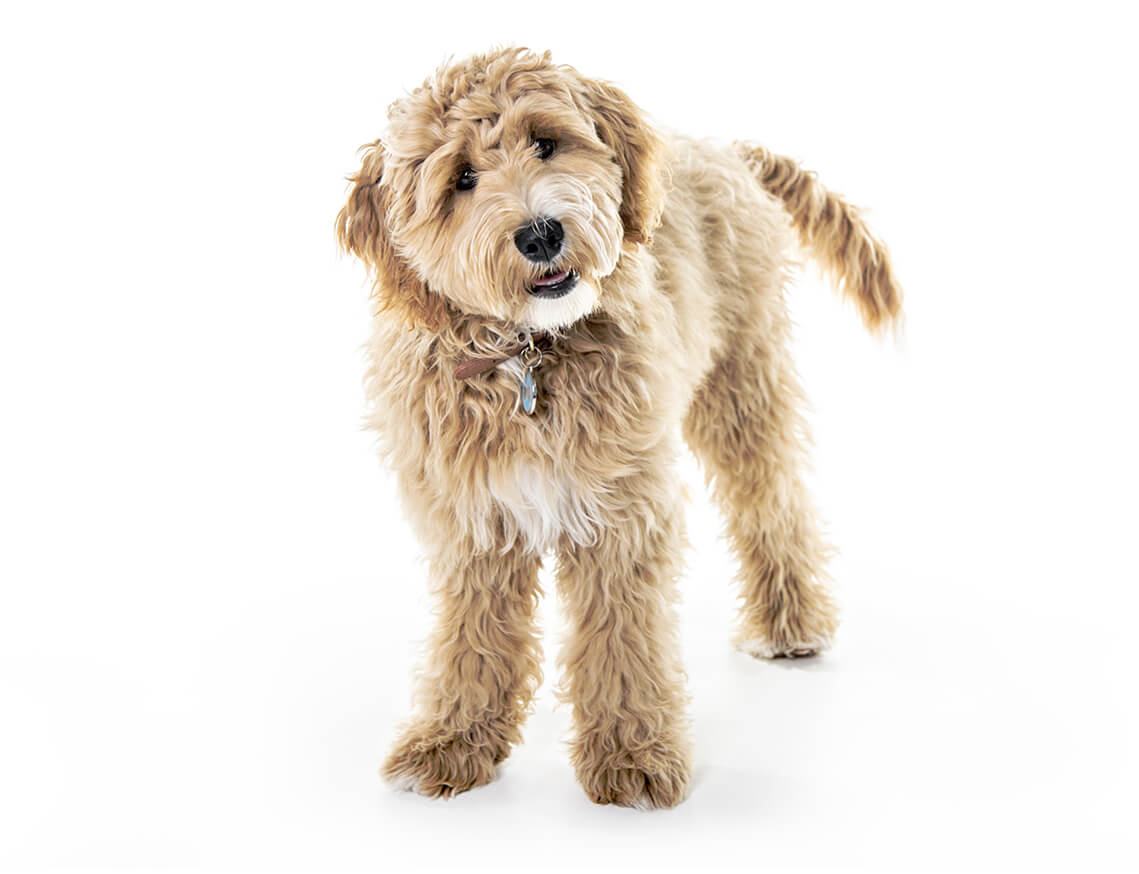
Goldendoodle
The Goldendoodle is a cross between a Golden Retriever (show type or working) and the Standard Poodle (sometimes Miniature will be used to produce a smaller dog). Developed due to the success of the Labradoodle, this breed is growing in popularity all across the world.
The Goldendoodle can be a first cross (with one Retriever and one Poodle parent), can be bred back to one of the original breeds or be two Goldendoodles bred together, so there are varieties in size, shape, coat types and temperaments.
The need-to-know
- Dog suitable for non-experienced owners
- Some training required
- Enjoys active walks
- Enjoys walking one to two hours a day
- Large dog
- Some drool
- Requires grooming daily
- Non hypoallergenic breed
- Don't mind
- Not a guard dog
- May require training to live with other pets
- May require training to live with kids
Personality

Like most crossbreeds, the personality of a Goldendoodle depends on the parents and how they have been bred and reared.
It’s clear from looking at the two breeds that make up the Goldendoodle that this is an extremely active dog who needs a lot of exercise and input (often more than many new owners expect) and being highly social, needs to be a part of the family.
The personality of a Goldendoodle seems to be more consistent when they are first crosses (F1). As a line is successively bred, they can be either bred back to one of the original breeds (and so strengthen either the Retriever or the Poodle personalities) or else be bred to another Goldendoodle, in which case there is less predictability in temperament (and in-breeding becomes more of a potential issue). Some breeders will cross Goldendoodles and Labradoodles which adds to the unpredictability of the offspring.
History and Origins
The Goldendoodle is one of the newest ‘Doodle’ types and was first intentionally bred in the 1990s, following the success of the Cockapoo and Labradoodle. Due to the fact it’s still a relatively new breed, it requires knowledge of the two breeds involved in its creation in order to learn more.The Goldendoodle can have any combination of the two breeds in their appearance, behaviour and temperament.
Nutrition and Feeding
Large breed dogs, as well as having large appetites, benefit from a different balance of nutrients including minerals and vitamins compared to smaller-breed dogs. Goldendoodles like most large breed dogs can be prone to bloating and stomach problems, smaller, more frequent meals can help minimise this risk. Your dog's diet needs to have the right balance of all the main nutrient groups including a constant supply of fresh water. It's important to conduct regular body condition?scores to ensure you keep your dog in ideal shape, and remember to feed them at least twice daily in accordance with the feeding guidelines of their particular food.
Exercise
Both the breeds that make up the Goldendoodle are highly active, enjoy exercise and will be happy with two hours plus every day. They will also enjoy games, training, interactive toys and being involved in all family activities too.
Other Information
Health and common issues
One aim with crossbreeds is to dilute or eliminate any inherited health issues that may exist within one or other of the breeds. This dilution or elimination is only likely if only one parent is the carrier of any particular condition, and where this is a first cross (F1). As this can’t always be guaranteed, all parents should be health tested prior to breeding: Golden Retriever - eye tests and hip and elbow scoring should be done, and there are several DNA tests that may also be required Poodle - eye tests and hip scoring should be done Information on DNA health tests for both breeds can be found on the Kennel Club’s website and via their respective breed clubs.
Space requirements
The Goldendoodle is a large, active dog that needs a good-sized living space. Plus, they will appreciate a large garden and access to the great outdoors for the long walks they will need.
Training goldendoodles
This is a very active dog who is smart and busy and will need training if you want any hopes of a quiet life! They are a joy to train as both the breeds are intelligent and love working with their owner, but they will learn bad habits as quickly as good ones, so reward-based training should start early and be ongoing. The Goldendoodle can be more sensitive than the Labradoodle and any rough handling can worry them greatly, so all training and handling should be positive and reward-based. This is a great breed for dog sports such as agility or even pet gundog work and they will love having an active job to do. It’s important to train a Goldendoodle to enjoy handling and grooming (as they will need a lot of it) and to happily give up any prizes they may rather hold onto, always using positive, reward-based methods. Given that both breeds that go into the Goldendoodle have a working gundog background, they should be well socialised with cats (who they can learn to live with happily), but they should be watched with caution around other small animals and birds.
Best family dog breeds
If the Goldendoodle is sourced from a reliable breeder and well-trained from puppyhood, they will make fabulous family dogs, be a total joy to own and will get on with everyone. In other words, almost the perfect dog! However, an untrained or bored Goldendoodle can easily become unruly and overly boisterous so be sure to provide them with plenty of exercise and mental stimulation.
Did you know?
- Despite the Goldendoodle’s popularity it’s not currently recognised by the UK Kennel Club as it’s a mixed breed.
- The Goldendoodle is sometimes known as the ‘Groodle’.
- Goldendoodle’s make excellent assistance dogs and have been used as guide dogs, service dogs, therapy dogs and sniffer dogs.
- They’re not very good guard dogs as they’re too friendly, preferring to lick strangers rather than bark at them!