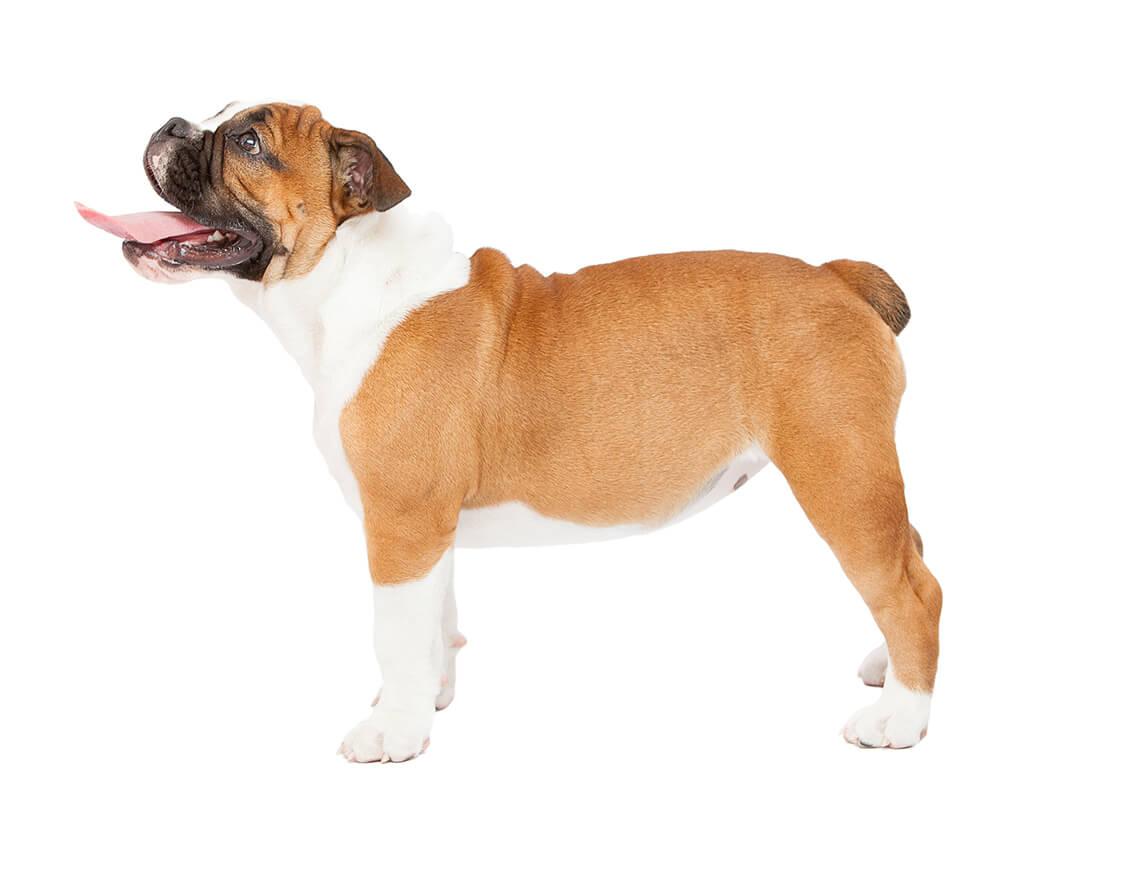
Bulldog
The Bulldog breed has a short, sturdy body and fairly loose skin, especially at the head, neck and shoulders. Another distinctive feature is the large skull. The Bulldog can be brindle, shades of red, fawn or white with any of the aforementioned colours. The adult Bulldog stands at 31-36cm and weighs 23-25kg.
The need-to-know
- Dog suitable for experienced owners
- Some training required
- Enjoys gentle walks
- Enjoys walking half an hour a day
- Medium dog
- Minimum drool
- Requires grooming every other day
- Non hypoallergenic breed
- Quiet dog
- Guard dog. Barks, alerts and it's physically protective
- May require training to live with other pets
- May require training to live with kids
Personality

This is a family dog that loves children and will even learn to get along with other pets if introduced to them at an early age. The Bulldog is a bit too friendly to be a good guard dog but would defend a family member in need. He can be peaceful, pensive, goofy, stubborn, and have a well-developed sense of humour.
History and Origins
Bulldogs come from the ancient breed of Bullenbeissers, a mastiff-like dog used for guarding and attacking wild animals in Assyria, Greece, Egypt and Rome. The Bullenbeisser came in various sizes.
Nutrition and Feeding
Your dog's diet needs to have the right balance of all the main nutrient groups including a constant supply of fresh water. It's also important to conduct regular body condition scores to ensure you keep your dog in ideal shape, and remember to feed him at least twice daily in accordance with the feeding guidelines of his particular food.
Exercise
Bulldogs should never be exercised in the heat of the day. Two relatively short walks at a steady but not terribly brisk pace should be adequate.
Other Information
Health and common issues
The most common health problems encountered in the Bulldog relate to their very flat face, which results in obstruction of their airways and a difficulty in breathing. Over-exercising and over-heating is therefore to be avoided. They are also prone to skin infections, eye problems and hip and elbow dysplasia (joint conditions that can be painful and lead to mobility problems).
Best family dog breeds
While many dogs are traditionally thought of as being good with children , all dogs and children need to be taught to get on with and respect each other, and be safe together. Even so, dogs and young children should never be left alone together and adults should supervise all interactions between them.