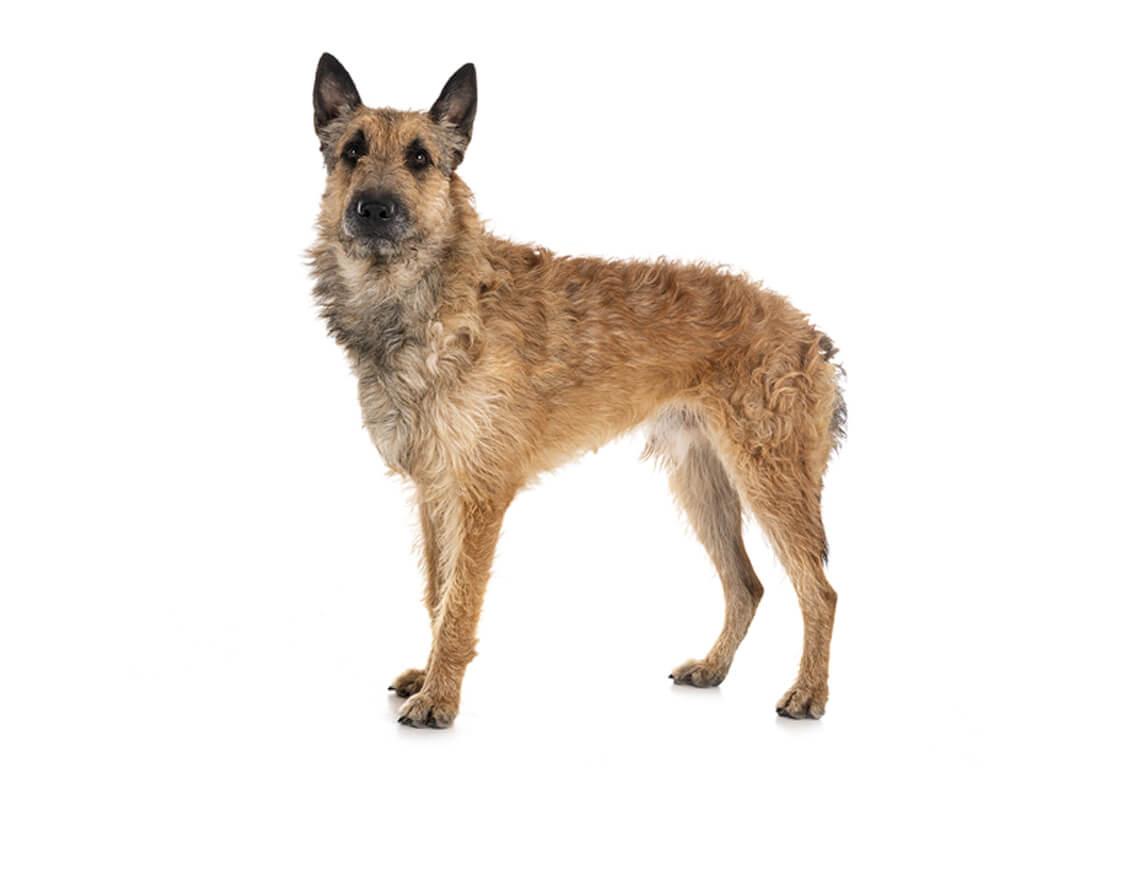
Belgian Shepherd Dog Laekenois
Medium sized and square in outline, the Belgian Laekenois has a harsh and wiry rough coat that is reddish fawn in colour with black shading on the muzzle and tail. Giving the overall impression of an athletic and elegant dog, the Laekenois variety of Belgian Shepherd are a loyal companion that loves to protect their family.
The need-to-know
- Dog suitable for experienced owners
- Extra training required
- Enjoys vigorous walks
- Enjoys walking more than two hours a day
- Large dog
- Minimum drool
- Requires grooming every other day
- Non hypoallergenic breed
- Chatty and vocal dog
- Guard dog. Barks and alerts
- May require training to live with other pets
- May require training to live with kids
Personality

Intelligent and attentive, although wary of strangers or suspicious behaviour, the Laekenois is everything a herding and guarding dog should be. Willing to take direction from a handler but also able to make decisions for themselves, the Laekenois requires a dedicated owner with whom to form a solid partnership. Affectionate and loyal to close family, the Laekenois takes time to warm to strangers and is not particularly tolerant or forgiving of heavy or rough handling. They frequently seem to be the ‘softest’or the least intense of the four Belgian Shepherd breeds - but then everything is relative!
History and Origins
Country of Origin: Belgium
There are four varieties of Belgian Shepherd and these were originally just variations in coat type, being bred for their ability to herd and guard, they were considered one breed. Now the four types, the Laekenois, Groenendael, Tervuren and Malinois are classified separately as breeds in their own right, although this took some time, with the Belgian Kennel Club only recognising three types initially (the Groenendael, Tervuren and the Malinois) in 1897. The Laekenois wasn’t recognised until much later. The Laekenois owes its existence and recognition as a separate type of Belgian Shepherd in the main to breed supporters in the Netherlands and France rather than in Belgium, although being the favourite breed of Queen Henrietta of Belgium did help!
Nutrition and Feeding
The Laekenois needs to have a balanced dog diet including all the main nutrient groups and a constant supply of fresh water. It's also important to conduct regular?body condition?scores to ensure you keep your dog in ideal shape and remember to feed them at least twice daily and in accordance with the feeding guidelines of their particular food.
Exercise
Two hours or more of dog exercise, including walking, some free running in a secure location and plenty of extra time of training, games and puzzle solving each day will keep the Laekenois busy and happy. Failure to meet their needs will result in a loud, destructive and unhappy dog. This is a dog who loves training and working with their owner and has almost a limitless capacity and need to learn - with a positive skilled trainer who can keep up with them!
Other Information
Health and common concerns
As with many breeds, all varieties of the Belgian can suffer from hereditary eye disorders, and hip dysplasia (a condition that can lead to mobility problems). Eye testing and hip scoring of dogs prior to breeding is therefore important. Check the Kennel Club website for up-to-date health information.
Space requirements
Although easy to house indoors, the Laekenois will want to spend a good portion of the day training so sufficient indoor and secure outdoor space will be required. The hustle and bustle of a city or a large town will be over-stimulating and stressful for this dog so the ideal is a medium to large rural home, with a large secure garden and plenty of access to interesting walks.
Training laekenois dogs
Quick to learn and very intuitive, whilst the Laekenois is in many respects a dog easy to train due to their eagerness to learn and work with you, they will also very easily teach themselves behaviours you may not like. The herding and guarding instincts are strong in this breed, owners will need to actively enjoy training as a hobby in its own right as well as take part in a variety of suitable canine sports or at least, activities the dog can join in with, such as running, Cani-x, working trials or agility. Socialise well with other animals, particularly livestock, household pets and children.
Best family dog breeds
While many dogs are traditionally thought of as being good with children , all dogs and children need to be taught to get on with and respect each other, and be safe together. Even so, dogs and young children should never be left alone together and adults should supervise all interactions between them.
Did you know
The Laekenois is named after the Belgian Chateau de Laeken, which was often visited by Queen Henrietta of Belgium who was a devotee of the breed. The Laekenois is the rarest of the four Belgian Shepherd breeds.