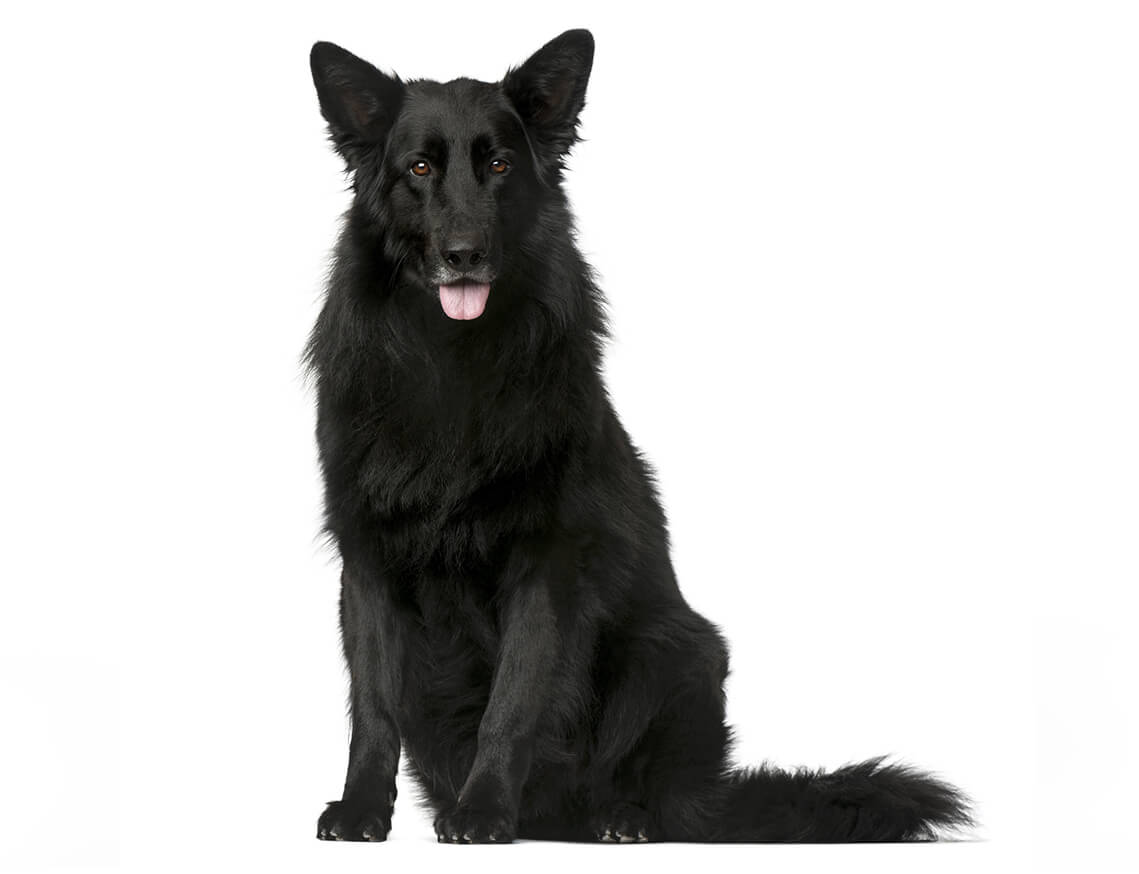
Belgian Shepherd Dog Groenendael
Medium sized and square in outline, the Belgian Groenendael long, smooth coat that is black in colour, occasionally with small white markings on the chest and toes. The Groenendael is often mistaken for a solid black long coat German Shepherd, but they are lighter in build and far more elegant and refined.
The need-to-know
- Dog suitable for experienced owners
- Extra training required
- Enjoys vigorous walks
- Enjoys walking more than two hours a day
- Large dog
- Minimum drool
- Requires grooming every other day
- Non hypoallergenic breed
- Chatty and vocal dog
- Guard dog. Barks and alerts
- May require training to live with other pets
- May require training to live with kids
Personality

Clever and attentive, although somewhat wary of strangers, the Groenendael is to this day, all a herding and guarding breed should be. Very trainable, with a huge capacity for learning but willing to make their own decisions should instruction not be forthcoming, they are in need of a dedicated owner with plenty of time to work with them and train them to a high standard. Friendly, and devoted affectionate to close family and friends, they do take time to warm to strangers and will not tolerate rough handling or over-familiarity from those they do not know.
History and Origins
Country of Origin: Belgium
There are four varieties of Belgian Shepherd and these were originally just variations in coat type, as they were primarily bred for their ability to herd and guard so they were considered one breed. Now the four types, the Laekenois, Groenendael, Tervuren and Malinois are classified separately as breeds in their own right - although this took some time, with the Belgian Kennel Club only recognising three types initially (the Groenendael, Tervuren and Malinois) in 1897.
Nutrition and Feeding
Your dog's diet needs to have the right balance of all the main nutrient groups including a constant supply of fresh water. It's important to conduct regular body condition scores to ensure you keep your dog in ideal shape and remember to feed him at least twice daily and in accordance with the feeding guidelines of his particular food.
Exercise
This is an active working dog who needs two hours, ideally more, per day of physical exercise – and this should be a mixture of walking and free running. On top of that, they also need time dedicated to training, playing, puzzle solving and working. This is a dog for those who are dedicated to training and working dogs, either as a job or a hobby. Very much a dog you tailor your lifestyle around!
Other Information
Health and common concerns
As with many breeds, all varieties of the Belgian can suffer from hereditary eye disorders, and hip dysplasia (a condition that can lead to mobility problems). Eye testing and hip scoring of dogs prior to breeding is therefore important. Contact the Kennel Club and the breed club for up-to-date health information and testing available.
Space requirements
Although easy to house indoors, the Groenendael will want to spend a good portion of the day training so sufficient indoor and secure outdoor space will be required. The hustle and bustle of a city or large town will be over-stimulating and ideally this is a dog for the medium to large rural home, with a large secure garden and plenty of access to interesting walks.
Training belgian shepherd dog groenendael
Very clever, quick and intense – the Groenendael will absorb training like a sharp-eyed black sponge. Failure to provide training will result in a bored dog who learns habits you will almost certainly not like. Work hard on socialisation, habituation, building a strong recall and steadiness around livestock, pets and children. They will enjoy and excel in a variety of competitive dog sports such as agility, obedience, working trials, Cani-x and much, much more.
Best family dog breeds
This is a dog for the dedicated training enthusiast, and if well trained and kept busy, is likely to be good with their own children but not with visitors and so is better suited to the adult only home or those with older children and teenagers who will enjoy training the dog and walking for several hours a day. Not ideal as a pet for the average owner, this is a fairly intense dog who wants to be working most of the time. While many dogs are traditionally thought of as being good with children, all dogs and children need to be taught to get on with and respect each other, and be safe together. Even so, dogs and young children should never be left alone together and adults should supervise all interactions between them.
Did you know?
- The Groenendael is named after the Belgian Chateau de Groenendael.
- They are always black; no other colour appears and only very scarce small white markings on the chest and toes are permitted.
- Groenendael’s have been used as police and armed forces as working dogs since the late 19th Century.