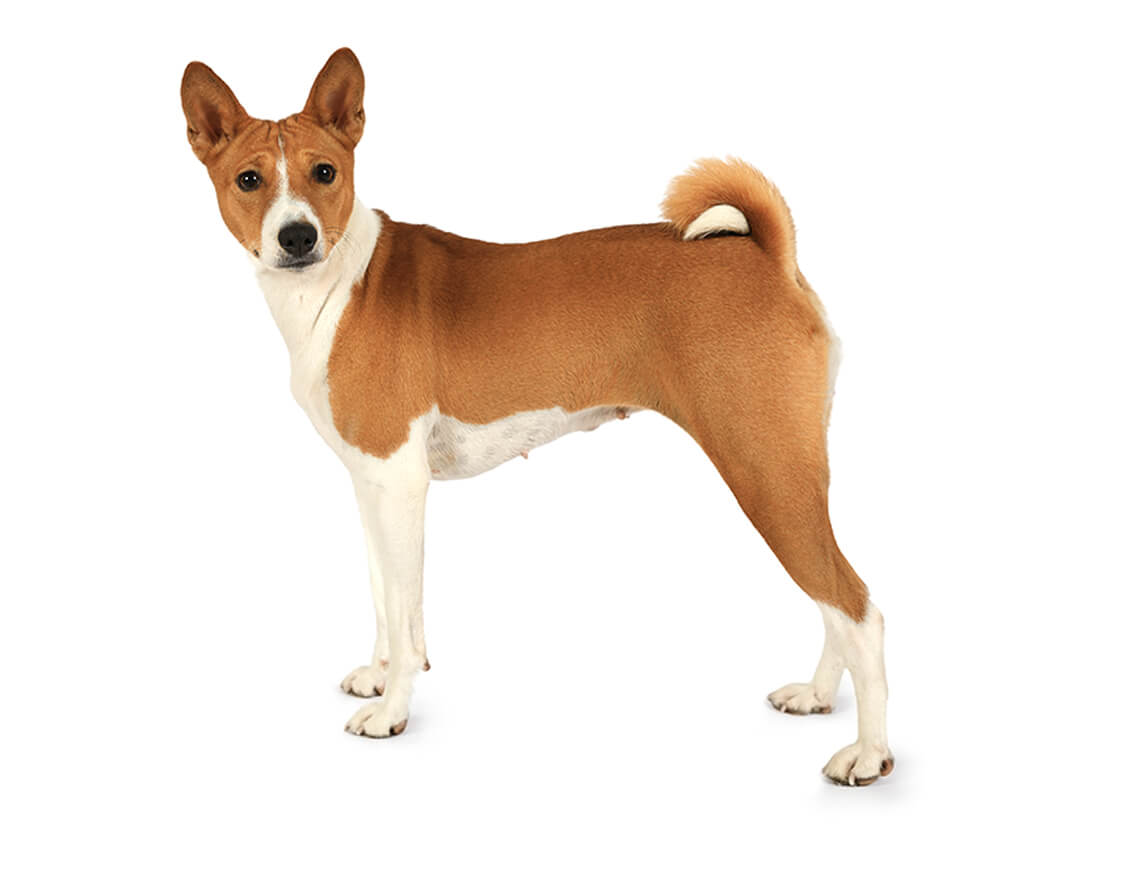
Basenji
This small to medium-sized dog has a distinctive tightly curled tail and wrinkled forehead. The smooth, short, glossy coat of the Basenji comes in different colour combinations. If you can keep up with their high energy levels, Basenji dogs are smart, fun and make lovely companions.
The need-to-know
- Dog suitable for owners with some experience
- Some training required
- Enjoys active walks
- Enjoys walking an hour a day
- Medium dog
- Minimum drool
- Requires grooming once a week
- Non hypoallergenic breed
- Quiet dog
- Not a guard dog
- May require training to live with other pets
- May require training to live with kids
Personality

The Basenji is without doubt unique and has several characteristics that totally distinguish it from other breeds. First of all, the Basenji doesn’t bark. It will however yodel, chortle or even crow when excited. Like wild canids such as the wolf, the Basenji only has one season a year and in its fastidiousness is almost cat-like, cleaning themselves in a similar way. Like cats, they are excellent climbers and some will even climb trees. They are also extremely watchful and can sit for hours looking out of windows.
History and Origins
Country of Origin: Africa
The Basenji is said to be as old as the Pyramids and indeed it appears in art from ancient Egypt from 4500 years ago. The same type of dog appears throughout hundreds of years - mostly in funeral art which indicates they were favourite dogs of the Pharaohs.While the civilisation of ancient Egypt vanished, the Basenji survived, and soon became prized possessions of local tribesmen and hunters. The Basenji has been an all-purpose hunting dog across Africa for thousands of years and unlike most hounds, it is both a sighthound and a scenthound - and can be trained to point and retrieve.The breed is virtually unchanged since the days of the Pharaohs making it one of the oldest ‘true to type’ breeds.
Nutrition and Feeding
Small dogs have a fast metabolism, meaning they burn energy at a high rate. Their small stomachs also mean that they must eat little and often. Small-breed foods are specifically designed with appropriate levels of key nutrients and smaller kibble sizes to suit smaller mouths. This also encourages chewing and improves digestion.
Exercise
Bred to hunt in rough terrain and with high energy levels, the Basenji needs at least an hour's exercise daily, and has the stamina for more if you can offer it. Most of this exercise will need to be on lead as they have a very strong drive to chase and explore - and have a totally dismissive attitude to recall! Owners need to be as active as their dogs. Basenjis have exceptional problem-solving skills and so interactive feeding toys, enrichment games, and scent-work can all help keep their busy minds and bodies occupied.
Other Information
Health and common issues
The most widely recognised inherited conditions in the Basenji are a type of dog kidney disease (Fanconi Syndrome) and a form of anaemia. Genetic tests are available for both of these. Like many breeds, hereditary eye disorders can also occur. Eye testing and genetic testing of dogs prior to breeding is therefore important.
Space requirements
Basenji are small dogs who do not need much houseroom and as long as they have a warm home with a window to look out of, they will be happy. But they do need access to plenty of exercise space. Gardens need to be exceptionally well fenced but even then, they are expert escapologists who can climb fences and trees. Basenji needs supervision when outside.
Training basenji dogs
Basenjis are clever, intelligent dogs. Dog training is mostly something that is looked on as being beneath them! With skill, patience and an ability to motivate a Basenji, they can be trained to do virtually anything. They can even make great agility dogs. But their obedience and, certainly their recall, can never be relied upon. Keep in mind that, they can be extreme chewers and so need appropriate chewing opportunities.
Best family dog breeds
The Basenji is a specialist dog that has such specific needs that they do better in households without children or where children are older and sensible. While many dogs are traditionally thought of as being good with children, all dogs and children need to be taught to get on with each other and be safe together. Even so, dogs and young children should never be left alone together and adults should supervise all interactions between them.
Did you know?
The Basenji is probably the world’s oldest dog breed and they got their name from the people of the Ituri rainforests who called them Basenchi - meaning “little bush thing”.