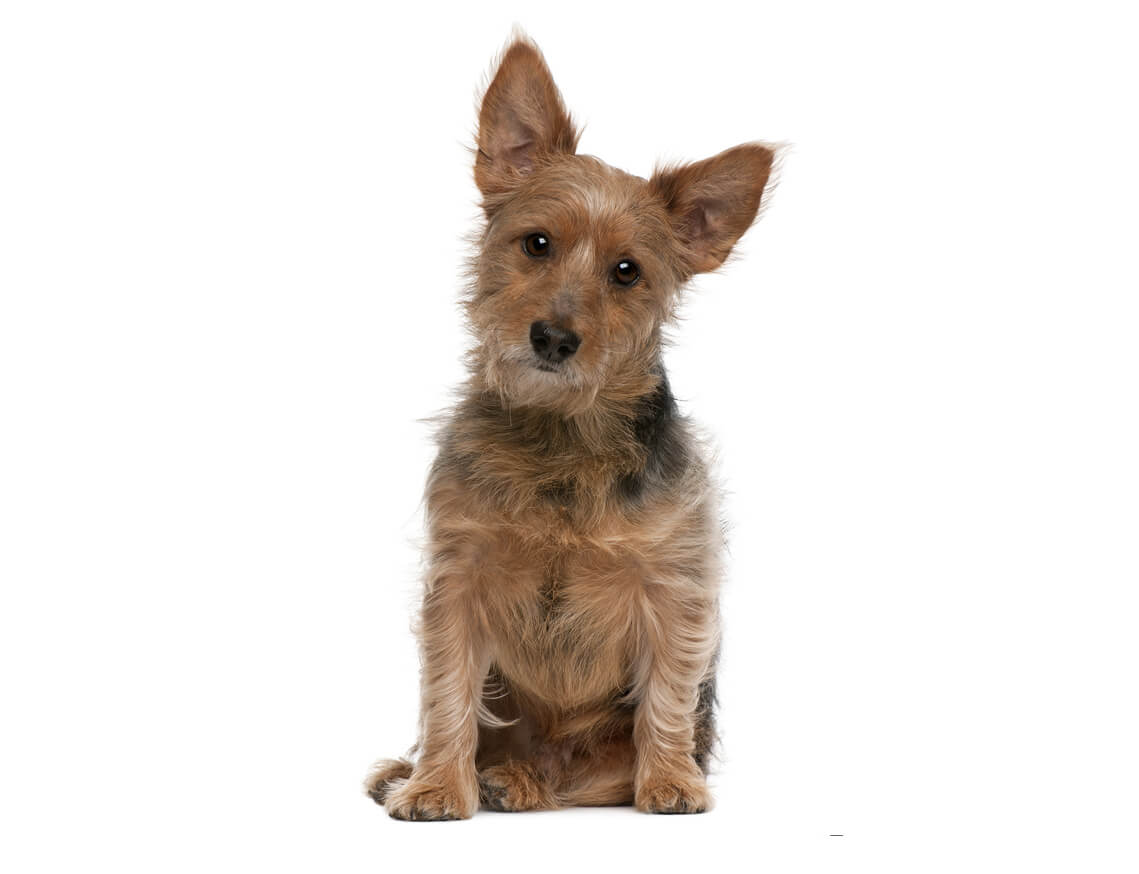
Australian Terrier
Australian Terrier dogs differ from some other terriers in that they have a long neck and back, in proportion to their height. Their coats are harsh and straight on top and shorter and softer underneath, and can be red, or various shades of blue with tan. The Aussie stands at approximately 25.5cm at the withers when adult and weighs approximately 6.5kg.
The need-to-know
- Dog suitable for owners with some experience
- Some training required
- Enjoys active walks
- Enjoys walking an hour a day
- Small dog
- Minimum drool
- Requires grooming every other day
- Non hypoallergenic breed
- Very vocal dog
- Guard dog. Barks and alerts
- May require training to live with other pets
- May require training to live with kids
Personality

Friendly and outgoing, the Aussie is keen to please and revels in human contact and praise, and so is generally easy to train – unlike some terriers! He is not aggressive, but will stand his ground if challenged by another dog. This is not a yappy breed, but he will bark if he considers circumstances warrant it.
History and Origins
The Australian Terrier dog breed was created in the early 19th century to work in rugged conditions, hunting snakes and rodents on ranches and down gold mines, and being an all-purpose farm dog. The breed was created from terriers imported from northern England and Scotland – including the forebears of the Dandie Dinmont Terrier, Skye and Yorkshire, and the old Black and Tan Terrier and Scotch Terrier. The result was the Australian Terrier dog, which had its first breed club established in Australia in 1887. Official recognition was granted by the Kennel Club of Great Britain in 1936, and in 1958 the American Kennel Club accepted them.
Nutrition and Feeding
Small dogs have a fast metabolism, meaning they burn energy at a high rate, although their small stomachs mean that they must eat little and often. Small-breed foods are specifically designed with appropriate levels of key nutrients and smaller kibble sizes to suit smaller mouths. This also encourages chewing and improves digestion.
Exercise
About an hour's exercise is needed a day, though he will happily accept more – after all, this dog was a working terrier as well as a companion! They enjoy agility, obedience, walks, games and other canine sports.
Other Information
Health and common issues
The Australian Terrier dog breed is generally a healthy breed with few specific breed related problems.
Best family dog breeds
While many dogs are traditionally thought of as being good with children , all dogs and children need to be taught to get on with and respect each other, and be safe together. Even so, dogs and young children should never be left alone together and adults should supervise all interactions between them.