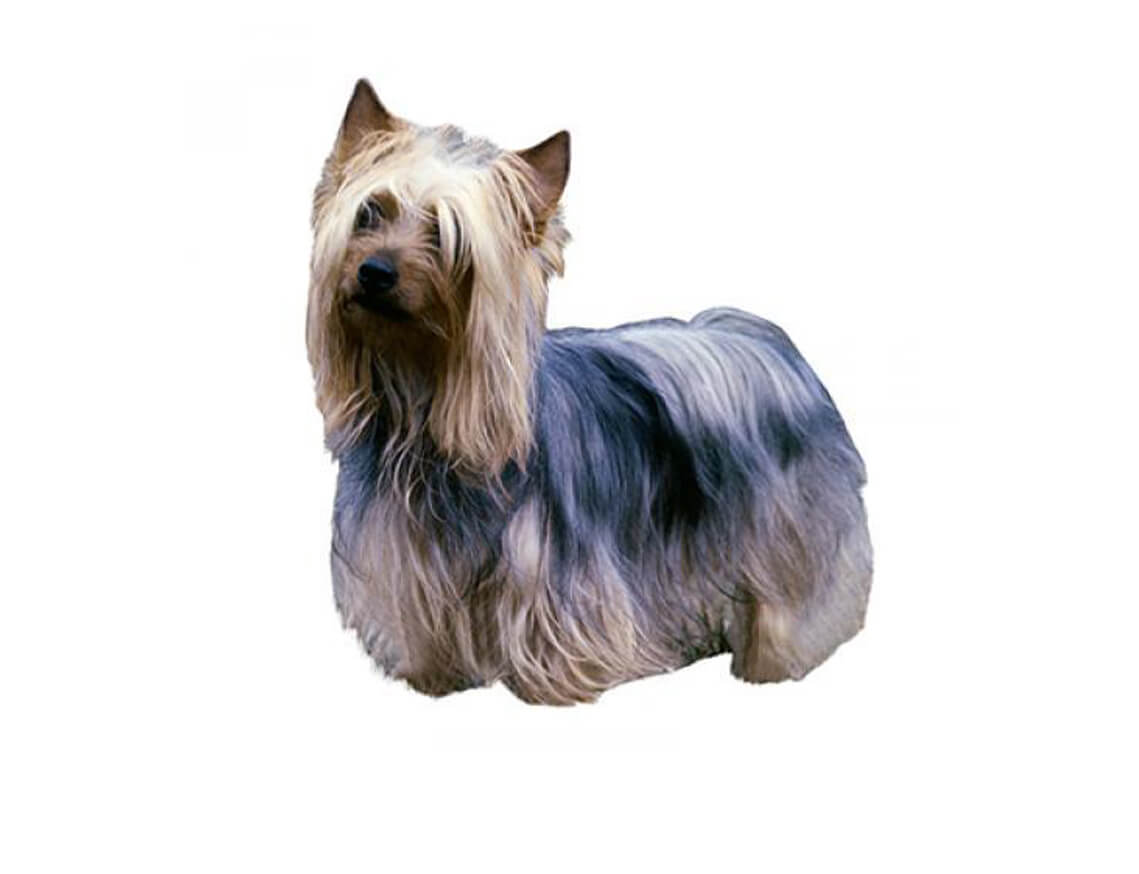
Australian Silky Terrier
Alert, glamorous yet robustly built, the Australian Silky Terrier has sharply pricked ears and a long straight coat parted down the back.
The need-to-know
- Dog suitable for owners with some experience
- Some training required
- Enjoys gentle walks
- Enjoys walking an hour a day
- Little toy dog
- Minimum drool
- Requires grooming every other day
- Hypoallergenic breed
- Very vocal dog
- Guard dog. Barks and alerts
- May require training to live with other pets
- May require training to live with kids
Personality

Keen, alert and active, the Australian Silky Terrier or ‘Silky’ for short is, beneath the coat, all terrier. With all the spice and fire of the larger terriers, they are still well equipped for their original purpose in watchdog and vermin control roles, as well as making lively companion animals. Enjoying training, games and any activity where they can join in with their owner, this is a fun and remarkably robust little dog. Comparisons will be drawn with their relative the Yorkshire Terrier, but although they are similar in appearance and height, the Silky is the more solidly built, with a longer muzzle and less rounded head.
History and Origins
Country of Origin: Australia
Previously known as the Sydney Silky, the Australian Silky Terrier is related to both the Yorkshire Terrier and the Australian Terrier. It is thought that in the late 19th century when breeders were seeking to refine the robust, rough-coated Australian Terrier, they used the Yorkie to bring in the blue and tan colouring of the coat and probably to bring down the size.Some litters will have produced silky coated puppies which were undoubtedly attractive to breeders despite not being the desired outcome. These became the foundation of the Australian Silky Terrier that we have today. They were officially recognised as a breed in Australia in the mid-1950s and by the FCI in 1962.
Nutrition and Feeding
Your dog's diet needs to have the right balance of all the main nutrient groups including a constant supply of fresh water. It's important to conduct regular body condition scores to ensure you keep your dog in ideal shape, and remember to feed them at least twice daily in accordance with the feeding guidelines of their particular food.
Exercise
An hour a day of exercise, ideally split into two 30-minute walks will keep a Silky Terrier amused, particularly if you add in extra training and games on top. This is an active little dog however and a fit adult will take much more exercise than this if you are willing to give it. Whilst they can be considered a companion or lapdog, they will only fulfil this role easily if given plenty of exercise and mental stimulation.
Other Information
Health and common concerns
Like many small breeds, the Australian Silky dog breed can suffer from kneecaps that may temporarily slip out of place (luxating patellas), a hip disorder and a windpipe problem.
Space requirements
Compact and neat, the Australian Silky Terrier will fit into any size home, but is better managed in a home with a decent sized and securely fenced garden. Suitable for town, country or city living, but be aware that in busier, more densely populated areas the Silkies propensity towards barking furiously at anything untoward can be problematic!
Training australian silky terriers
Clever and quick, brave and bold, the Australian Silky Terrier will be a fun companion to train and take part in a variety of sports including mini agility, mantrailing, trick training and more. Be sure to socialise these little dogs well with other pets, children and livestock and work hard on teaching a reliable recall. Silkies are inclined to be vocal so early socialisation and working on a ‘hush’ cue is sensible. Responding well to positive reinforcement, the Silky Terrier is willing and able to work hard at any task you offer, if you have the right relationship!
Best family dog breeds
As with all toy dogs, it is best not to have them while you have very young children as it is all too easy for a small child to mistake a toy dog for a toy and terriers are generally less tolerant of childish mistakes. With older children, dog-savvy children and teenagers, the Silky Terrier may prove a fun and entertaining companion, particularly if they can help with training and exercise. While many dogs are traditionally thought of as being good with children, all dogs and children need to be taught to get on with and respect each other, and be safe together. Even so, dogs and young children should never be left alone together and adults should supervise all interactions between them.
Did you know?
- The Australian Silky Terrier was originally named the Sydney Terrier, however due to breeders developing the breed in several locations across Australia and Tasmania at the same time, it was felt the name ‘Australian Silky Terrier’ fitted better.
- Until the late 1920’s, whilst the breed was still in development, some litters of Australian Terrier x Yorkshire Terrier could produce Australian Terrier, Yorkshire Terrier or Australian Silky Terrier puppies, with breeders determining which was which by coat type and head shape. It wasn’t until 1932 that crossbreeding was discouraged and the breeds properly separated.