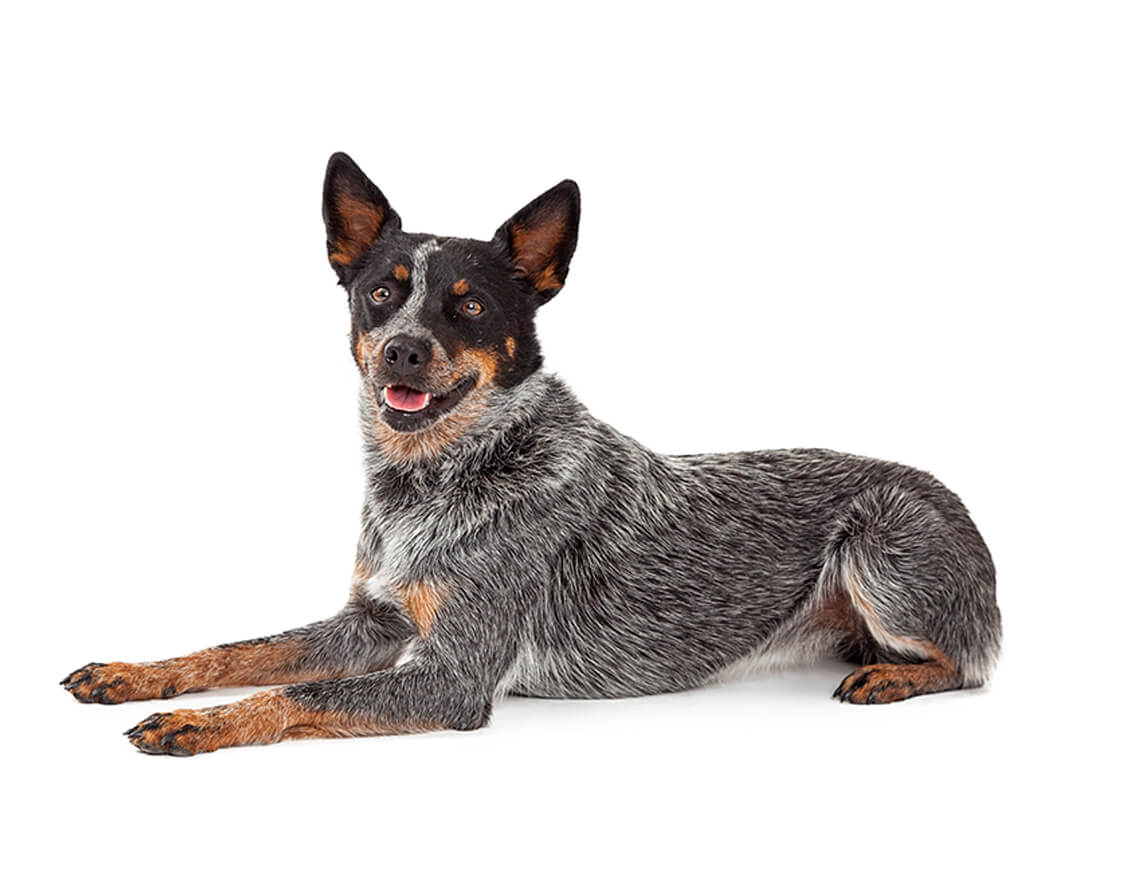
Australian Cattle Dog
The ‘Aussie’ Cattle Dog is a compact, muscular and robust medium-sized dog with an intelligent expression and alert, pricked ears. Their coat is close and dense, offering excellent protection against weather and scrubby undergrowth.
The need-to-know
- Dog suitable for experienced owners
- Extra training required
- Enjoys active walks
- Enjoys walking one to two hours a day
- Medium dog
- Some drool
- Requires grooming once a week
- Non hypoallergenic breed
- Chatty and vocal dog
- Guard dog. Barks, alerts and it's physically protective
- May require training to live with other pets
- May require training to live with kids
Personality

Smart and quick to react, the Aussie is a very fast learner, but their tendency to use their teeth to move other animals (including humans) can be an issue. Early socialisation and training to encourage a softer mouth is necessary. Naturally wary of strangers and very willing to guard and alert via barking, this is a breed that needs plenty of training and experienced owners, but will reward that by being a loyal, hard-working companion.
History and Origins
Country of Origin: Australia
Australian stockmen in the late 1800’s found that the Collies imported to Australia were not tough enough for the harsh conditions and bold livestock. Over 60 years of crossbreeding, including Dingo, collie, sheepdog, Kelpie, Dalmatian and Bull Terrier went into producing the Australian Cattle dog. These efforts produced a clever yet biddable dog who could use their own initiative when needed, working tough livestock in very difficult conditions. Australian Cattle dogs also go by the name ‘Heeler’ which refers to their working practice of nipping at the heels of the cattle they are driving.
Nutrition and Feeding
Your dog's diet needs to have the right balance of all the main nutrient groups including a constant supply of fresh water. It's important to conduct regular body condition scores to ensure you keep your dog in ideal shape and remember to feed him at least twice daily and in accordance with the feeding guidelines of his particular food.
Exercise
The Australian Cattle dog needs at least two hours exercise per day, including mental stimulation and training. They have great stamina and endurance and will happily accept much more. This is a very agile dog, and an independent thinker, it is better not to leave them unsupervised or bored for long!
Other Information
Health and common issues
The Australian Cattle Dog is generally an extremely hardy breed with few health problems. As with many breeds, occasionally hereditary eye disorders, and hip dysplasia (a condition that can lead to mobility problems) can arise. Eye testing and hip scoring of dogs prior to breeding is therefore advised. The breed club monitor the health of the breed carefully and should be contacted for the most up-to-date information and details of any DNA or additional testing they recommend. Breed Clubs can be found on the Kennel Club website.
Space requirements
The Australian Cattle Dog is not difficult to house, providing outdoor space is securely fenced. They have been bred to work out how to get around or over obstacles in the course of their work, and so are excellent escape artists and very skilled counter-top opportunists! Given their natural desire to react to movement and control moving objects, this is a breed better kept away from busy roads and bustling pavements. Quiet rural or farm homes will suit this breed much better than town or city.
Training australian cattle dog
The Aussie is a dog who will enjoy a variety of dog sports (especially agility) and activities and thrives on training and working closely with their person. Finding an activity this breed excels at is not difficult, teaching them to relax and switch off may be harder. Early work on teaching a soft mouth, and not to chase or nip is essential.
Best family dog breeds
The Australian Cattle Dog is a herder, they prefer that groups of animals, including people, stay together and move along at a pace they dictate. With adults and older children who can be involved in training this can be overcome, but younger families and those with toddlers will find this difficult. This breed requires a lot of time to exercise and train which may conflict with family time commitments. While many dogs are traditionally thought of as being good with children, all dogs and children need to be taught to get on with and respect each other, and be safe together. Even so, dogs and young children should never be left alone together and adults should supervise all interactions between them.
Did you know?
The Australian Cattle dog is one of very few breeds to have intentionally been bred using the wild Australian Dingo. In attempting to produce a dog tough enough to work Australian cattle, initial crossbreeds proved to be too tough, biting stock too hard, and the breeds creators had to try again using smoother Collie blood until they found the right mixture. They have water-resistant double coats which allows water to bead and fall right off them, keeping them dry and happy when in the field. Their ties to the Dingo mean that they have impressive stamina and many owners report that they have seemingly endless energy! One of the oldest dogs in the world was an Australian Cattle Dog called Bluey, he lived to an astonishing 29 years of age and was happily chasing sheep for almost 20 years. In 2009, an Australian Cattle Dog called Sophie was thrown off a boat she was on with her family off the coast of Queensland, Australia. Astonishingly, the strong-willed pup then swam five miles back to shore and ended up on St. Bees Island. She survived by hunting feral goats until she was eventually found by a ranger who reunited her with her family.