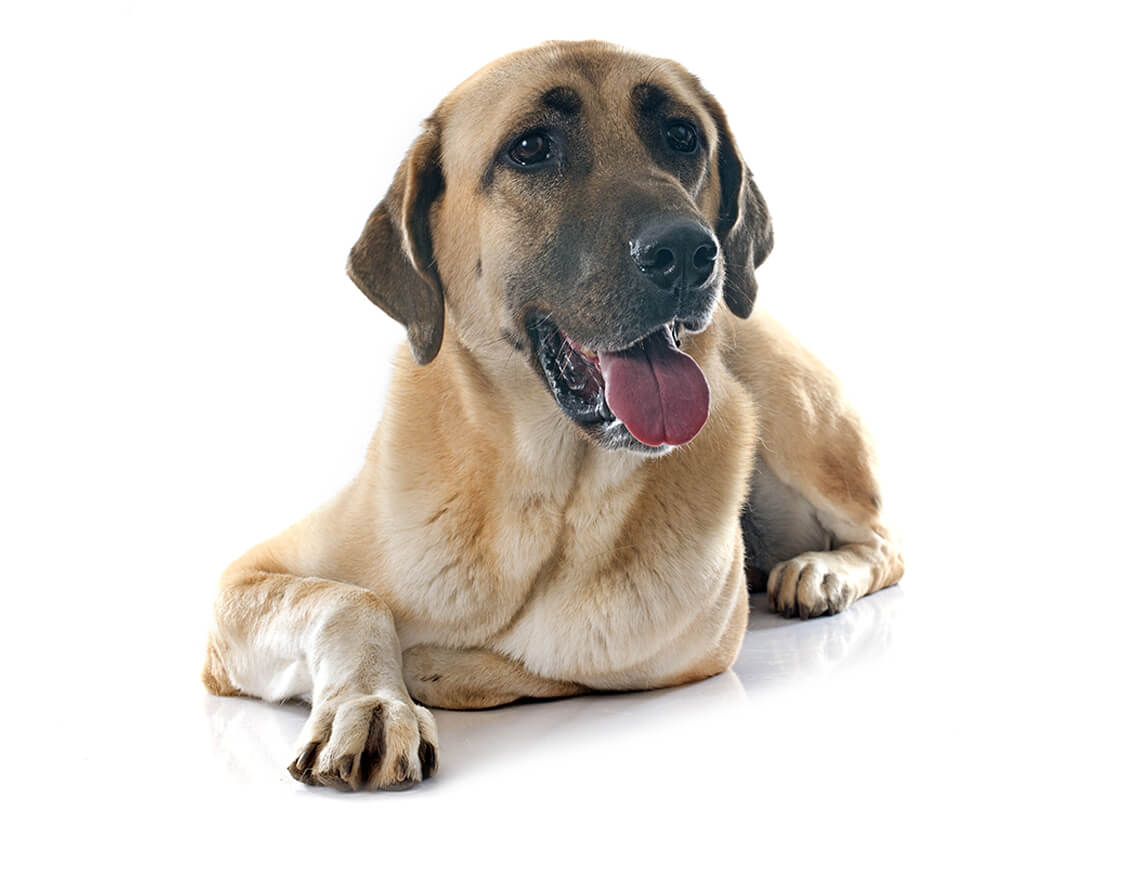
Anatolian Shepherd Dog
The Anatolian Shepherd is a powerfully built mastiff type with a short, dense coat and a broad heavy head. The coat is designed to protect against extreme weather conditions, and comes in any colour, with or without a distinctive black mask.
The need-to-know
- Dog suitable for experienced owners
- Extra training required
- Enjoys active walks
- Enjoys walking one to two hours a day
- Giant dog
- Heavy drool
- Requires grooming every other day
- Non hypoallergenic breed
- Quiet dog
- Guard dog. Barks, alerts and it's physically protective
- May require training to live with other pets
- May require training to live with kids
Personality

With family members and other people well known to them, the Anatolian Shepherd is loyal and friendly. However this breed retains their working nature, suspicious of strangers and very fast to react to any perceived threat. As a flock guardian breed, the Anatolian is an independent thinker, relied upon to make decisions by themselves rather than at the cue of a shepherd. In the pet home, this can mean they are not easy to live with and require a great degree of careful management.
History and Origins
Country of Origin: Turkey
The Anatolian Shepherd is an ancient breed descended from mastiff types and flock guardian breeds of the Middle East. Giant in size and athletic, this powerful dog was bred to protect flocks of sheep and goats from predatory bears and wolves and of course, human thieves.They are the original livestock guardian dogs of Turkey and are still seen working with the nomads who move to find food and other resources, a process called ‘transhumance’ which is responsible for the spread of both human and canine genetics across some parts of the world.
Nutrition and Feeding
Giant-breed dogs, as well as having giant appetites, benefit from a different balance of minerals and vitamins, supporting different joint and cartilage needs. The Anatolian Shepherd dog breed is prone to bloating and stomach problems; try feeding smaller, more frequent meals to help minimise the risk.
Exercise
Up to two hours a day, split into two walks, will keep the Anatolian happy, but more time should be dedicated to interactive training and puzzle-solving games that involve working with their owner. Some off lead running will be beneficial but given this breeds’ size, fitness should be built up slowly until they reach maturity. Given their suspicion of strangers - human and canine - use a safe secure, isolated ideally private, place for off lead exercise!
Other Information
Health and common concerns
The Anatolian Shepherd is generally a very hardy breed, but as with many breeds they can occasionally suffer from hip dysplasia (a condition that can lead to mobility problems). Hip scoring of dogs prior to breeding is therefore important.
Space requirements
This is a giant breed and will require sizeable housing and a large, extremely secure fenced garden. If the garden borders other properties or public rights of way, double fencing is advisable along with delivery boxes situated on the outsides of the property. Better suited to remote rural living with access to secure areas for exercise and training.
Training anatolian shepherd dogs
Not a breed that will enjoy training for its own sake, the Anatolian must be socialised very thoroughly when young, to livestock, children, other humans and other household pets but even then will retain their guarding instincts and stranger suspicion. A solid recall should be taught and refreshed regularly, as should walking on a harness and lead, and all training must be done using positive reinforcement – this is not a dog to attempt to bully or intimidate, such methods will backfire dangerously!
Best family dog breeds
Due to their size, protective instincts and the time needed for training and exercise, this is a dog suited to adult only homes. Because this breeds nature is to distrust strangers, homes with many visitors or visiting children are likely to find the Anatolian Shepherd highly unsuitable. While many dogs are traditionally thought of as being good with children, all dogs and children need to be taught to get on with and respect each other, and be safe together. Even so, dogs and young children should never be left alone together and adults should supervise all interactions between them.
Did you know?
The Anatolian Shepherd dog has never been known by that name in its native Turkey. There they are called the Kangal, Karabash (black face) and Akbash (white face), depending on colour and which area of Turkey they are from. Each area of Turkey has its own favourite and the arguments regarding which is best can get heated!