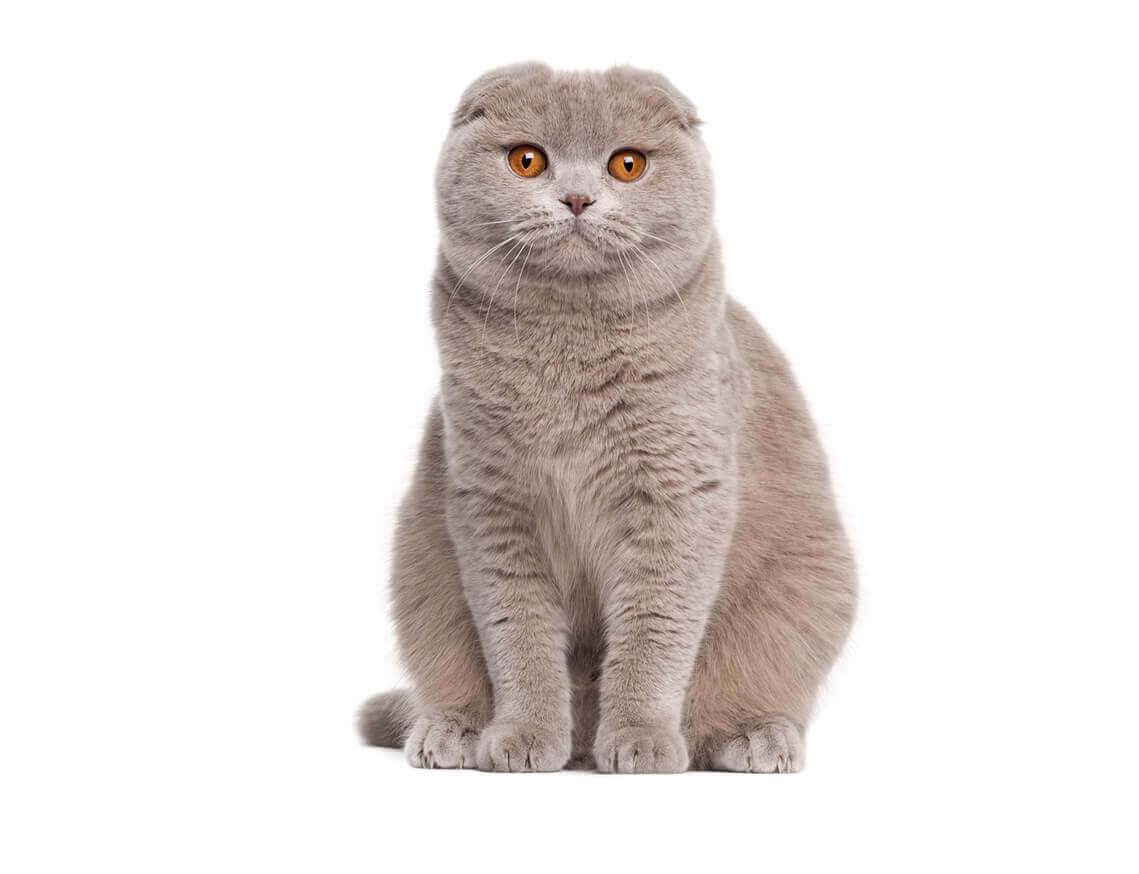
Scottish Fold
The most noticeable feature of a Scottish Fold cat is its ears, which are small and tightly folded forward to cover the ear opening. The tips of the ears are rounded. The Scottish Fold is of medium size with a solid compact body. The head is rounded, with well-defined whisker pads, and is set on a short neck. The eyes are large and wide open with a sweet expression. The coat of the Scottish Fold is short and dense. It comes in a variety of colours and patterns.
The need-to-know
- Playful and curious cat
- Friendly but independent cat
- Somehow talkative cat
- Average build cat breed
- Requires grooming once a week
- Non hypoallergenic breed
- Indoor cat
- May require familiarisation before living with children
Personality

The Scottish Fold cat breed has a sweet, gentle temperament despite its strange appearance. Scottish Folds are not an active breed, and this may be because of the pain involved in movement.
History and Origins
Country of Origin: Scotland
Named after its forward folding ears, the Scottish Fold cat breed was first seen as a natural mutation in Scotland in the 1960s. British cat show judges and numerous veterinary surgeons decided that the cat's folded ears were an undesirable deformity and would make it impossible for the cat to clean its ears. Deformities of the spine, hind legs and tail also appeared when folded-ear cats were bred to one another. The breed is popular in the USA and elsewhere.
Nutrition and Feeding
Every cat is unique and each has their own particular likes, dislikes, and needs when it comes to food. However, cats are carnivores and every cat must obtain 41 different and specific nutrients from their food. The proportion of these nutrients will vary depending on age, lifestyle, and overall health. So it's not surprising that a growing, energetic kitten needs a different balance of nutrients in her diet than a less active senior cat. Other considerations to bear in mind are feeding the right quantity of food to maintain 'ideal body condition' in accordance with feeding guidelines and catering to individual preference regarding wet or dry food recipes.
Other Information
Health and common issues
Scottish Fold cats can suffer from painful degenerative joint disease throughout their lives. This arises as the Scottish Fold cat mutation detrimentally affects cartilage, most obviously seen making the ear cartilage fold. As the disease progresses, the joints stiffen, bones fuse and movement becomes more difficult and painful. Cats progress from slight lameness to reluctance to move.
Best cat breeds for children
While this breed is not widely recognised as one of the best breeds for children, all cats are different and with the proper familiarisation may still be able to live with children.