Norwegian Forest
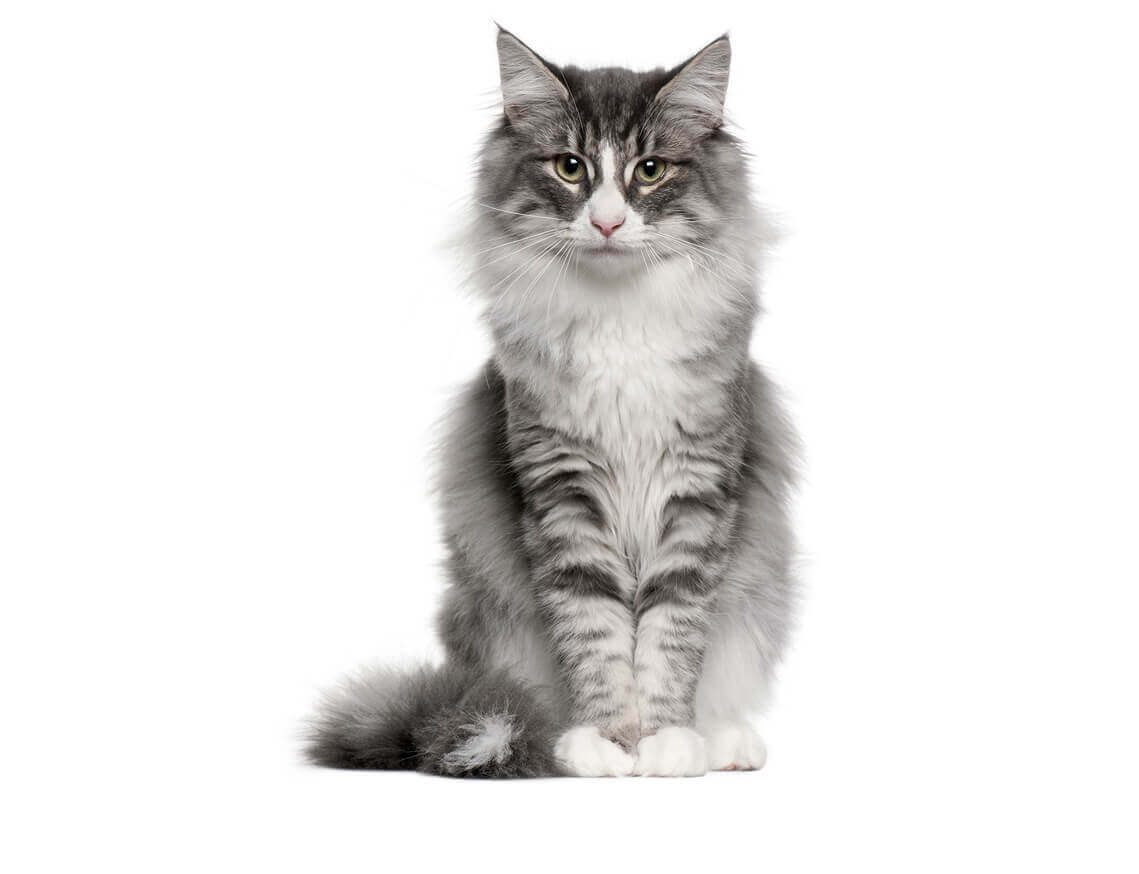
The Norwegian Forest cat is larger than the average cat. It is an elegant breed with a semi-longhair coat (it is a little shorter in the summer). The body is long, muscular and strongly built with solid bone structure. It has long legs and a bushy tail. The head is long and triangular with a straight profile and high set ears with a tufted tip. A smooth glossy coat covers the woolly undercoat, which is water-repellent. A cat in full coat has a ruff, shirtfront and knickerbockers and even tufts of hair between the toes. The Norwegian Forest cat may be any colour except chocolate, lilac or Siamese cat pattern and may have any amount of white markings on the paws, chest, belly or face. The eyes may be any colour.
The need-to-know
- Highly active and inquisitive cat
- Sociable and dependent cat
- Quiet cat
- Larger stockier cat breed
- Requires grooming every day
- Non hypoallergenic breed
- Outdoor cat
- Great family cat
Personality

Norwegian Forest cats love people and thrive on human company. At times, they can be very demanding of affection. At other times, they appear quite independent. They are used to outdoor life and are well adapted to roam and hunt outside and are said to be excellent climbers. They can be very rewarding companions as they are extremely friendly and playful. The breed is slow in developing and may not be mature until four years of age.
History and Origins
Country of Origin: Scandinavia
The Norwegian Forest cat is a breed believed to originate from the shorthair cats brought by the Vikings from Great Britain and longhair cats brought by the Crusaders to Scandinavia, which then mated with local farm and feral cats. The breed's origin in the cold north of Scandinavia means that it is well adapted to the cold winters and is rugged and hardy. The best adaption to the climate is the double coat that keeps out the wind and snow and dries quickly. The breed was first recognised in Norway in 1930 and first appeared at cat shows in 1938. Norwegian Forest cats were only exported from Norway in the 1970s.
Nutrition and Feeding
Every cat is unique and each has their own particular likes, dislikes, and needs when it comes to food. However, cats are carnivores and every cat must obtain 41 different and specific nutrients from their food. The proportion of these nutrients will vary depending on age, lifestyle, and overall health. So it's not surprising that a growing, energetic kitten needs a different balance of nutrients in her diet than a less active senior cat. Other considerations to bear in mind are feeding the right quantity of food to maintain 'ideal body condition' in accordance with feeding guidelines and catering to individual preference regarding wet or dry food recipes.
Other Information
Health and common issues
The Norwegian Forest cat seems to be a robust breed with no major inherited problems documented.
Best cat breeds for children
While this breed is not widely recognised as one of the best breeds for children, all cats are different and with the proper familiarisation may still be able to live with children.