Cornish Rex
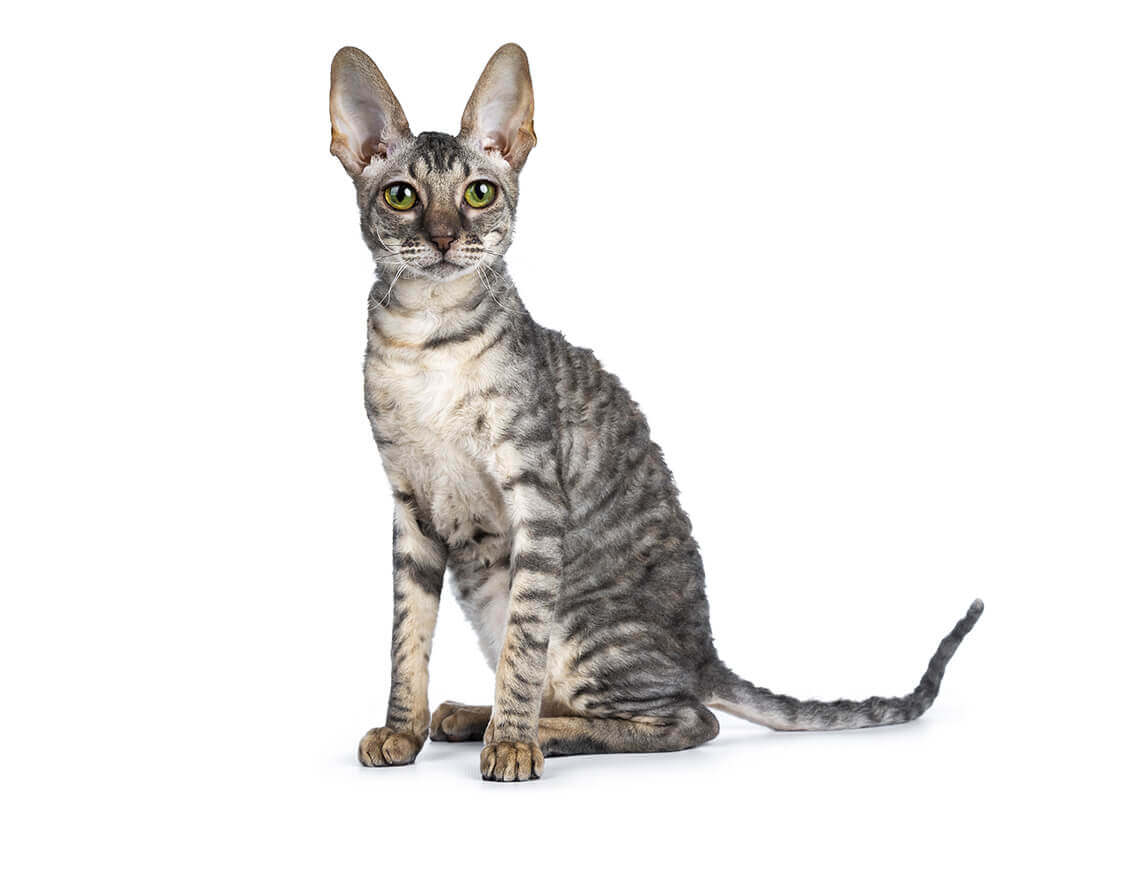
Cornish Rex cats are muscular and have a slender, rangy shape. They feel heavier than they look. The cat has a long wedge-shaped head, flat skull, and large ears set high. The most distinctive feature is its curly coat which is fine and soft to the touch. The curly coat has no guard hair and should wave and have a rippled look. The whiskers are curly like the coat. The Cornish Rex cat breed has a distinctive scent which some owners describe as slightly 'cheesy'. It can have any coat colour or pattern.
The need-to-know
- Playful and curious cat
- Friendly but independent cat
- Somehow talkative cat
- Lean and elegant cat breed
- Requires grooming once a week
- Hypoallergenic breed
- Needs some out-door space
- May require familiarisation before living with children
Personality

Cornish Rex cats have a mischievous side to their character and a personality that can almost be described as forever young! Rexes are very intelligent, enjoy playing and love to learn new tricks. They will happily play fetching games for hours on end. While they are lively cats, they do have quieter times when they are happy to curl up in a lap. Cornish Rex cats can become cold quickly and will always seek out the warmest place to sleep.
History and Origins
Country of Origin: England (county of Cornwall)The Cornish Rex cat breed owes its existence to a natural mutation that was discovered in a kitten born to a farm cat in Cornwall in 1950. It had a curly coat and was mated back to its mother and two of the resulting litter were born with the curly coats that are now associated with the breed. The Devon Rex cat and Cornish Rex cat breed curly hair mutations are different. Crossing Devon Rex cats and Cornish Rex cats produce litters of straight-coated kittens!
Nutrition and Feeding
Every cat is unique and each has their own particular likes, dislikes, and needs when it comes to food. However, cats are carnivores and every cat must obtain 41 different and specific nutrients from their food. The proportion of these nutrients will vary depending on age, lifestyle, and overall health. So it's not surprising that a growing, energetic kitten needs a different balance of nutrients in her diet than a less active senior cat. Other considerations to bear in mind are feeding the right quantity of food to maintain 'ideal body condition' in accordance with feeding guidelines and catering to individual preference regarding wet or dry food recipes.
Other Information
Health and common issues
One condition linked to the breed is hypotrichosis – hair loss leading to baldness. The unusual coat predisposes the cat to certain skin conditions including excessive yeast infection.
Best cat breeds for children
While this breed is not widely recognised as one of the best breeds for children, all cats are different and with the proper familiarisation may still be able to live with children.