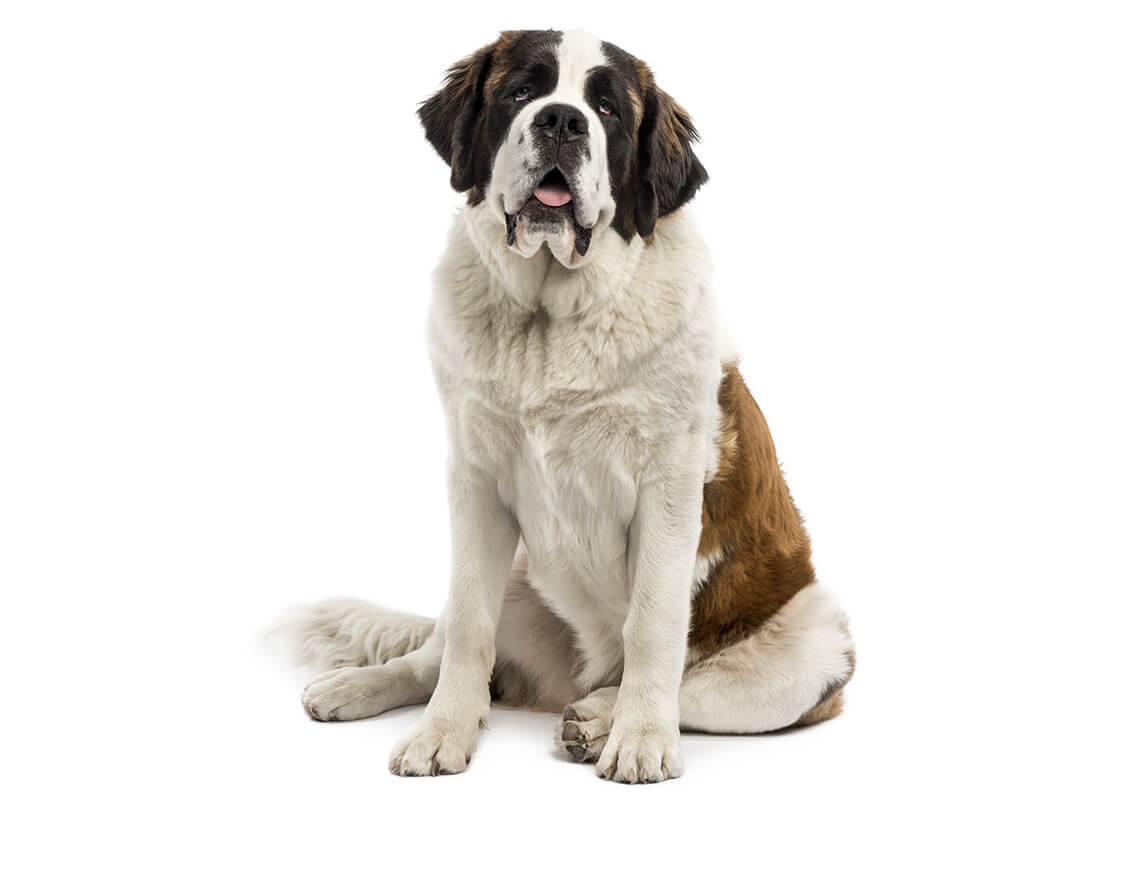
Health and common issues
The most serious health problems commonly seen in the St. Bernard are various bone disorders, including bone cancer, epilepsy and heart disease. As with many breeds, they can also suffer from hereditary eye disorders and hip and elbow dysplasia (joint conditions that can lead to mobility problems). Eye testing and hip scoring of dogs prior to breeding is therefore important.
Space requirements
This is a dog who needs a large house and garden.
Training st. bernard’s
The St. Bernard is not one of the world's obedience champions but they can be taught basic good manners. They should be taught to walk on a harness and lead from being quite young as when fully grown, they can be a real problem just by merit of their size and weight. Also teach a reliable recall as some people and other dogs might be intimidated by the approach of such a large dog.
Best family dog breeds
St. Bernard’s make excellent family dogs for older children but are just too big for younger ones. They are devoted to their families and make great companions - as long as no one minds being drooled on. While many dogs are traditionally thought of as being good with children, all dogs and children need to be taught to get on with and respect each other, and be safe together. Even so, dogs and young children should never be left alone together and adults should supervise all interactions between them.
Did you know?
- Monks attempted to cross the St. Bernard with the Newfoundland to create a thicker, warmer coat. However, this backfired as they found the longer fur captured matted snow and ice and weighed them down. You can still see the effects of this breeding in the longer haired variety of the St. Bernard.
- It can take up to three years for them to finish growing.
- In the film, Beethoven’s 2nd, over 100 puppies were used due to the fact that they grew so fast the production couldn’t keep up with them!
- Although history paints them with a barrel around their neck (supposedly filled with brandy), this is a myth and they never carried one at all.
- The most successful Saint Bernard rescue dog was called Barry and, in his lifetime, he rescued over 40 people from the Alps. His preserved body is now on display in the Natural History Museum of Bern.