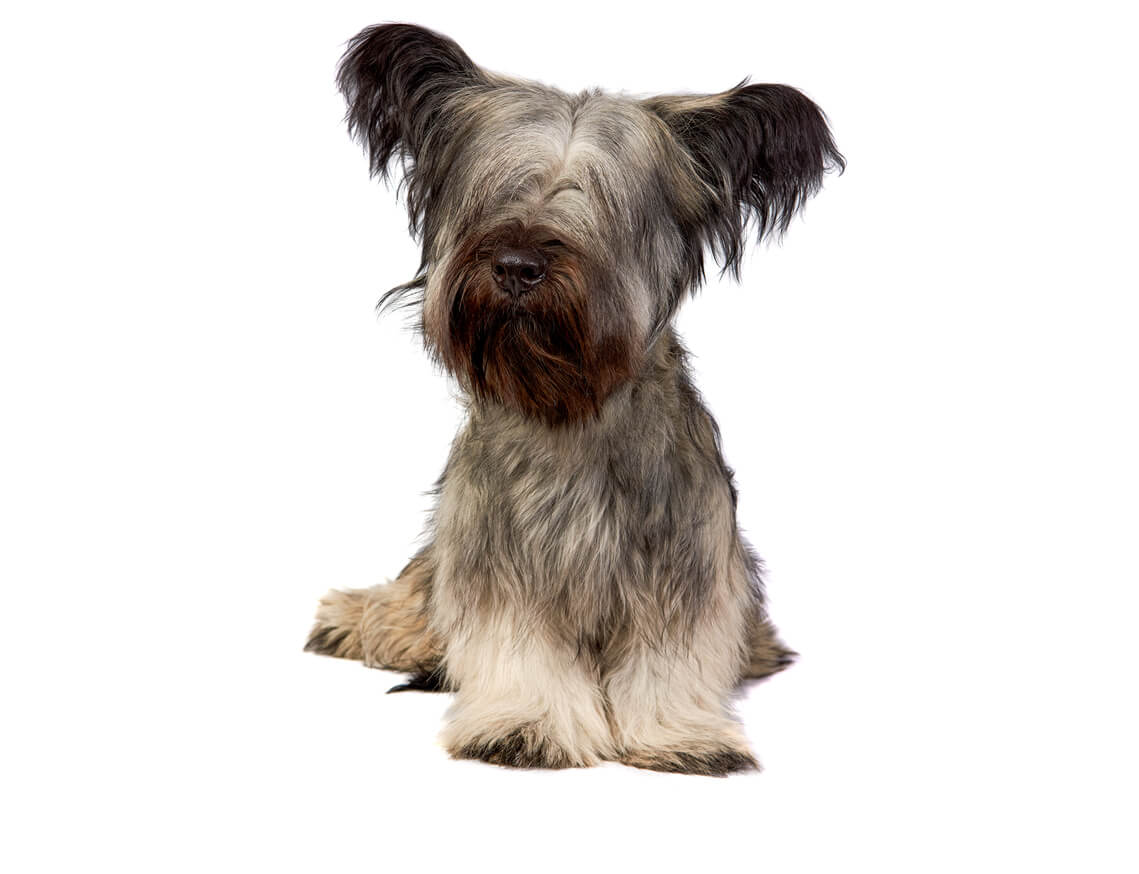
Health and common issues
The most common health problems encountered in the Skye Terrier is a forelimb bone problem that occurs in growing puppies. Like other breeds with short legs and long spines they are also predisposed to spinal disease. The breed club monitor the health of the breed carefully and should be contacted for the most up-to-date information and details of any DNA or additional testing they recommend. Breed Clubs can be found on the Kennel Club website.
Space requirements
Although on paper this appears a small dog, due to their length, weight and amount of coat, they would be better with more space and limited stairs. Room for grooming and dealing with a wet dog after walks or baths is important, and a secure garden with a fence that cannot be squeezed through or dug under essential. The Skye Terrier can live anywhere within reason, however they are a vocal breed inclined to guarding and alerting to sounds, so inner-city living may prove too stressful for both the dog and your neighbours.
Training skye terrier
The Skye Terrier is more than capable of achieving a good basic level of training, if you understand how to motivate and engage them, however this isn’t a dog who demands hours of mental stimulation. Positive reinforcement training using food and toys will get the best out of this dog. Focus on a good recall and socialisation around children, other pets and livestock. This is a heavily coated breed and so early work on teaching a Skye Terrier to stand for grooming, bathing and drying is essential.
Best family dog breeds
With training and sensible older children, the Skye Terrier makes a good family pet, as long as everyone understands a terrier’s nature. Not ideal with smaller children due to the Skye Terriers long back and short legs which put them at higher risk of injury should a child trip or accidentally fall on the dog. While many dogs are traditionally thought of as being good with children, all dogs and children need to be taught to get on with and respect each other, and be safe together. Even so, dogs and young children should never be left alone together and adults should supervise all interactions between them.
Did you know?
- Most people have heard of Greyfriars Bobby, a Skye Terrier famous for his dedication to his owner, so much so that he sat at his owners grave-side in Greyfriars Churchyard for 14 years until he died of old age. Most people don’t know that the character ‘Dougal’ from the 1960’s children’s television show ‘The Magic Roundabout’ was (probably) a drop-eared Skye Terrier.
- Sir Edwin Landseer (a painter and sculptor best known for the lion sculptures in Trafalgar Square) created a great many paintings of Skye Terriers and his work helped to popularise the breed during the Victorian era.
- Skye Terriers were incredibly popular with the aristocracy in Victorian England and apparently duchesses would be ashamed to be seen walking without one in the park.
- It’s thought that Mary, Queen of Scots had a Skye Terrier (though some believe it was a Maltese) and when she was beheaded, her loyal dog hid beneath her petticoat.