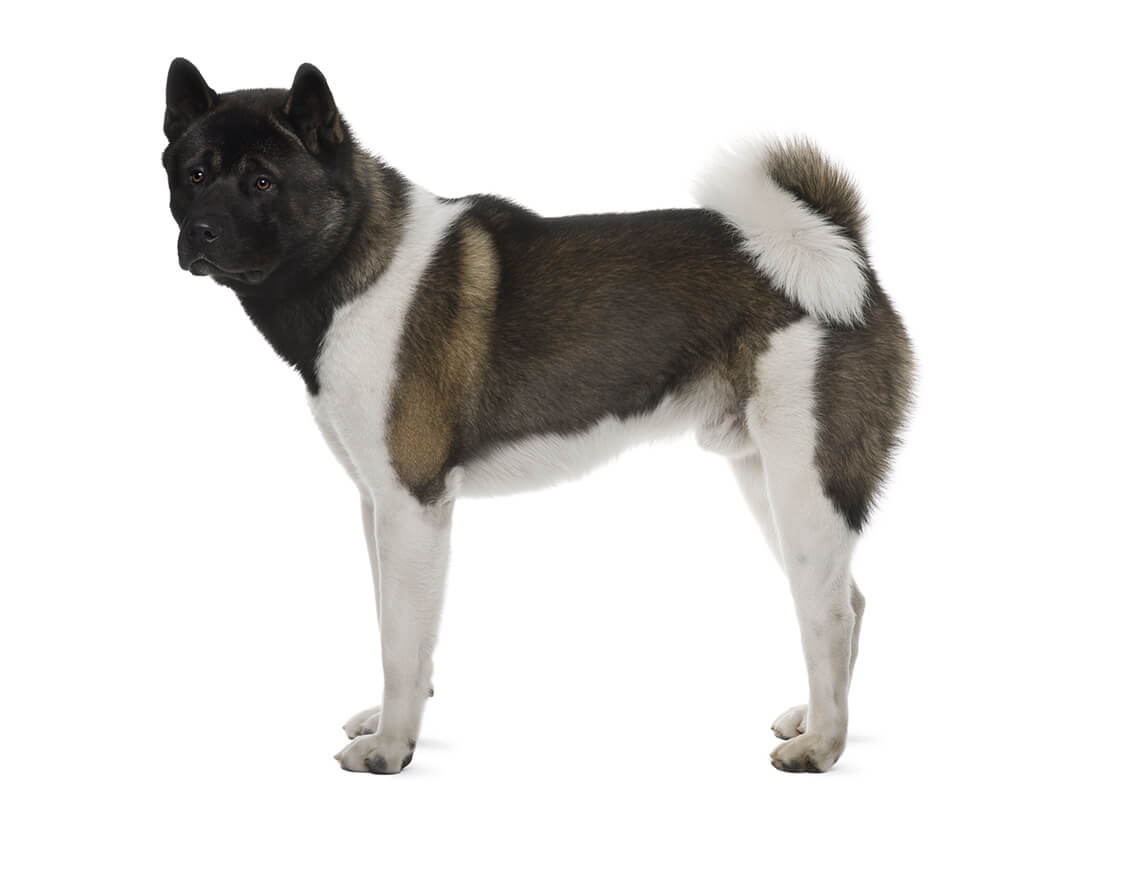
Health and common issues
As with many breeds, the Japanese Akita can suffer from hereditary eye disorders and hip dysplasia (a condition that can lead to mobility problems). Eye testing and hip scoring of dogs prior to breeding is therefore important.
Space requirements
This is a large dog who needs space and who enjoys having a large secure garden to wander around in and patrol. With their aloofness towards strangers, the Akita does best without close neighbours and constant disruptions and so a more rural home is perfect.
Training japanese akita dogs
As with most big, powerful working dogs, Akitas need a lot of dog training and ongoing socialisation to ensure they are under control and safe around other dogs and people. They have a strong hunting instinct so while a good recall is extremely important to train, it shouldn’t always be relied upon and management is equally as important. While some Akitas enjoy training, many are far less interested in traditional obedience although they are strongly bonded to their owners and rarely wander far from them.
Best family dog breeds
The Japanese Akita doesn’t make a great family dog - as while devoted to their own family, they do not enjoy visitors and the disruptions that come with family life. They can however make good companions in a quiet house with older sensible children. All dogs and children need to be taught to get on with each other and be safe together. Even so, dogs and children should never be left alone together and adults should supervise all interactions between them.
Did you know?
The most famous Japanese Akita was Hachi, the loyal companion of a Tokyo professor Eizaburo Ueno. Each day Hachi would accompany his master to the train station and would also be waiting for him when he got back from work. On 25th May 1925, Professor Ueno died in his office but for the next nine years and until his own death, Hachi made the lonely journey back and forward to the station waiting for his master who never came. There is a statue at the station in his memory.