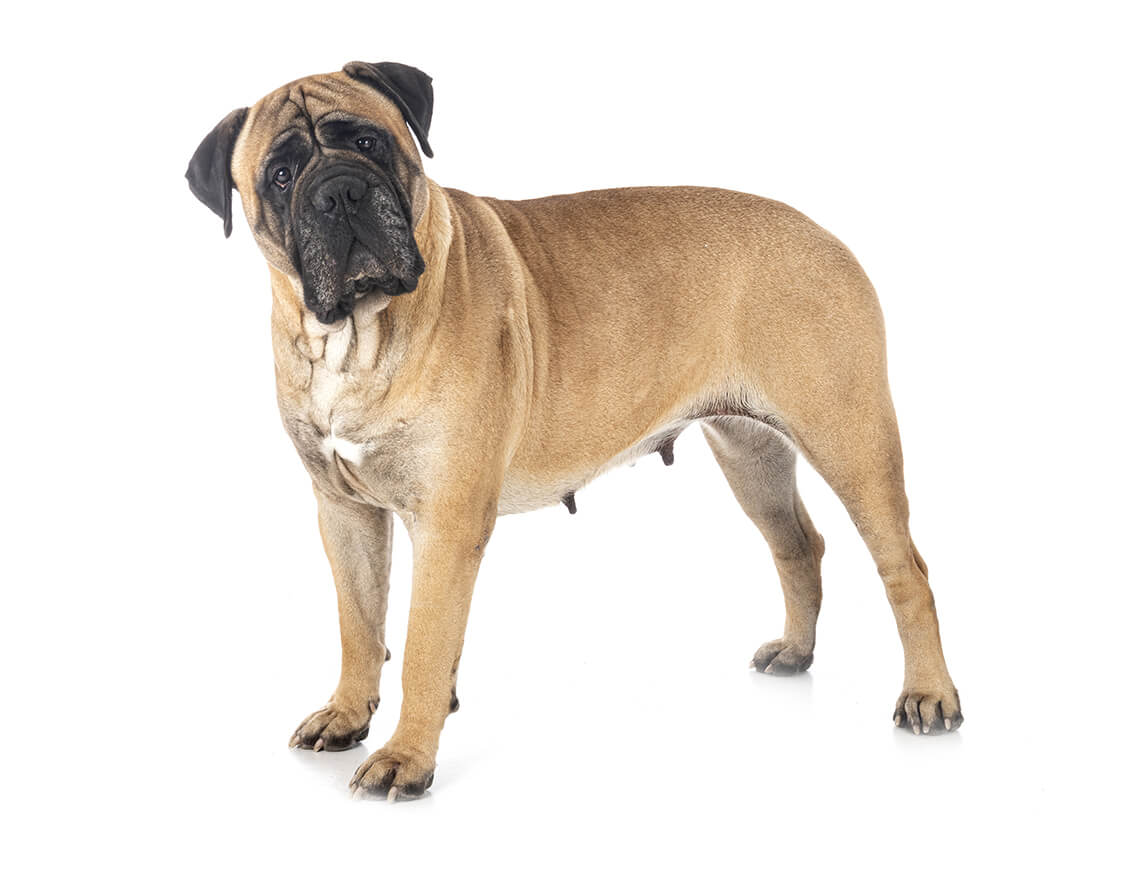
Health and common concerns
As with many breeds, Mastiff dog breeds can suffer from various hereditary eye disorders, and hip and elbow dysplasia (joint conditions that can be painful and lead to mobility problems). Eye testing and hip scoring of dogs prior to breeding is therefore important. They are also prone to a particular bladder condition and ligament problems in the knee (cruciate disease).
Space requirements
This is a giant dog who is by nature protective of his people and his perceived territory. As such he needs a large house and a large, well-fenced garden along with access to quiet open areas for exercise.
Training mastiff dogs
While the Mastiff has little interest in dog training, they should be socialised when young and like any giant powerful dog, should be taught to walk on a lead and harness. A good recall should be taught but because of his sheer size, most exercise is likely to be on lead to ensure the safety of other dogs and people.
Best family dog breeds
The Mastiff is devoted to their own families but they are so big and powerful that they are not ideal with small children - and they can mistake the intentions of children’s playful friends. While many dogs are traditionally thought of as being good with children, all dogs and children need to be taught to get on with each other and be safe together. Even so, dogs and young children should never be left alone together and adults should supervise all interactions between them.
Did you know?
The Mastiff is one of the most ancient and valued breeds (for hunting, guarding and as war dogs) - and many countries in the world have their own versions.