Machine Name
dog
Zoomed product photo

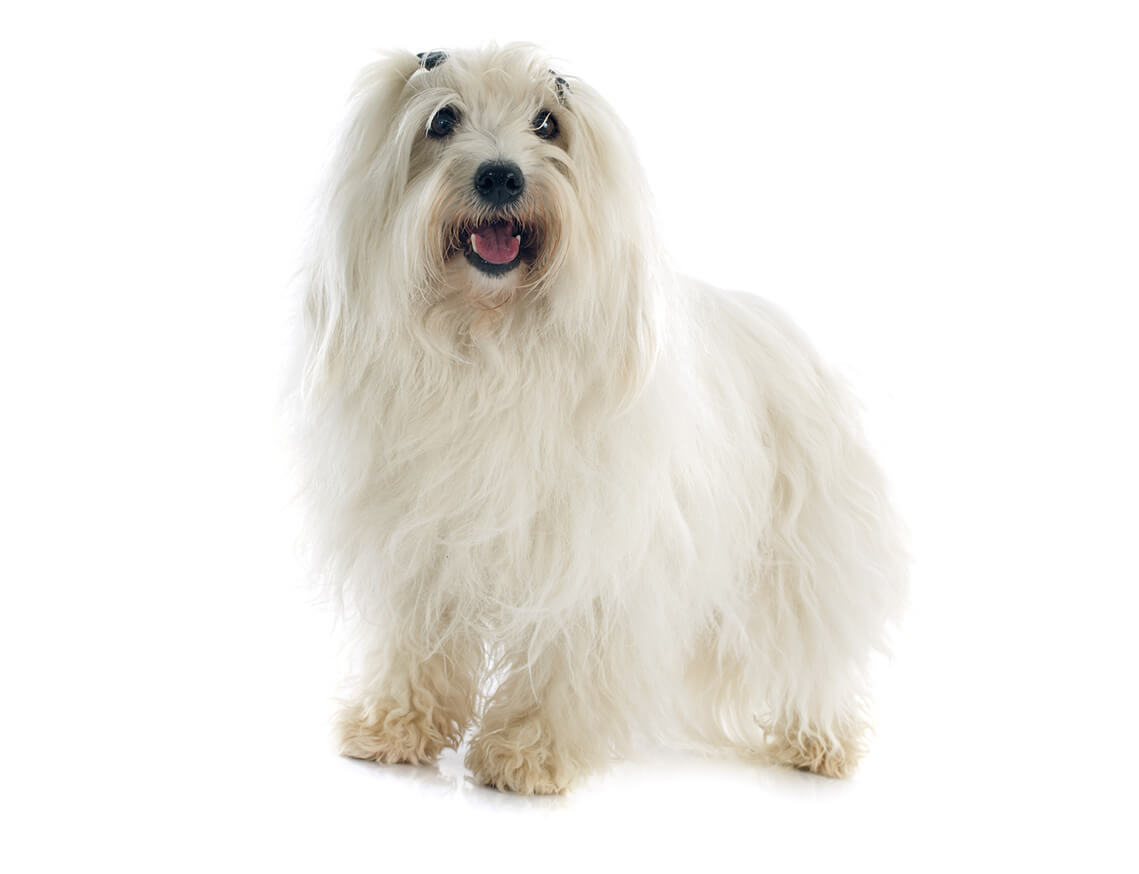
Coton De Tulear

The Coton De Tulear is an attractive, intelligent little dog with a long white cottony coat. They are slightly longer than they are tall with dark pigmentation, giving them sparkling button nose and eyes and a very appealing expression.


The need-to-know
 

  • Dog suitable for non-experienced owners
  • Basic training required
  • Enjoys gentle walks
  • Enjoys walking half an hour a day
  • Little toy dog
  • Minimum drool
  • Requires grooming daily
  • Hypoallergenic breed
  • Very vocal dog
  • Guard dog. Barks and alerts
  • Great with other pets
  • Great family dog
Lifespan:
14 – 16 years
Weight:
4 – 6kg
Height:
22 – 30cm
Colours:
White, shadings of light grey or fawn/apricot may be present on the ears
Size:
Small
UK Kennel Club Groups:
Toy
Personality

While their origins may lie in pest control onboard trading ships, the Coton has enjoyed centuries as a companion dog, thriving on human company. They are still very capable watchdogs, joyfully alerting their human family to anything happening around them and are intelligent and will enjoy fun training as well as snuggling on laps.


History and Origins

Country of Origin: Madagascar


The ancestors of the Coton De Tulear arrived in the port of Tulear in the 17th Century, more than likely as the ship dogs and companions of sailors and traders. Though there are some romantic and almost certainly fictional tales involving pirates and shipwrecks, these little dogs were mixed with the local dogs, and the most attractive of them prized by nobility.Rediscovered by European travellers in the middle of the 20th Century, the Coton eventually made their way to the US and the UK, gaining full recognition with the UK Kennel Club in 2004.


Nutrition and Feeding

Toy dogs have a fast metabolism, meaning they burn energy at a high rate, although their small stomachs mean that they must eat little and often. Small-breed foods are specifically designed with appropriate levels of key nutrients and smaller kibble sizes to suit smaller mouths. This also encourages chewing and improves digestion.

Exercise

Half an hour to an hour’s exercise will keep a Coton happy, ensuring that there are some games and training to exercise the brain as well as walks and running. As this is a long coated breed, time also needs to be dedicated to bathing, brushing and drying, particularly after muddy or wet walks.

Other Information

Health and common issues


The Coton De Tulear generally seems to be a healthy breed with few widely recognised breed specific health problems.


Space requirements


The Coton De Tulear is a small dog and does not require lavish housing. A secure garden, access to a variety of interesting walks and the space to bath and groom are necessary. This is a very adaptable little dog and as long as their exercise and training needs are met, can live happily in country, town or city.


Training coton de tulear


This is a bright clever little dog who will enjoy training and should be well socialised and habituated to normal neighbourhood sights and sounds, or they are inclined to be noisy. While ideal as a companion, for the owner who wanted to do more, the Coton is more than capable of taking part in mini agility, heelwork to music or trick training competitions.


Best family dog breeds


The Coton is a friendly, appealing little dog, and can make an excellent family dog with children old enough to understand that they are not a toy or plaything. Their care and exercise requirements are not time consuming to meet and they should fit well into most homes, though very busy, chaotic homes may find this feeds the Coton’s alert, vocal nature a little too much. While many dogs are traditionally thought of as being good with children, all dogs and children need to be taught to get on with and respect each other, and be safe together. Even so, dogs and young children should never be left alone together and adults should supervise all interactions between them.


Did you know?


  • The Coton was so popular and prized by the noble families of Tulear that they passed a law prohibiting the common people from owning them!
  • A popular celebrity dog for some time, Coton De Tulear’s have been owned by the likes of Catherine Zeta-Jones, Debra Messing, Barbara Streisand and Jane Fonda. They are quite a rare breed and have nearly become extinct at several points in history. Coton De Tulear’s are known as the Royal Dog of Madagascar. They’re thought to be ancestors of the Bichon Tenerife dog and are considered to be a Bichon type. 


Zoomed product photo

Collie (Smooth)

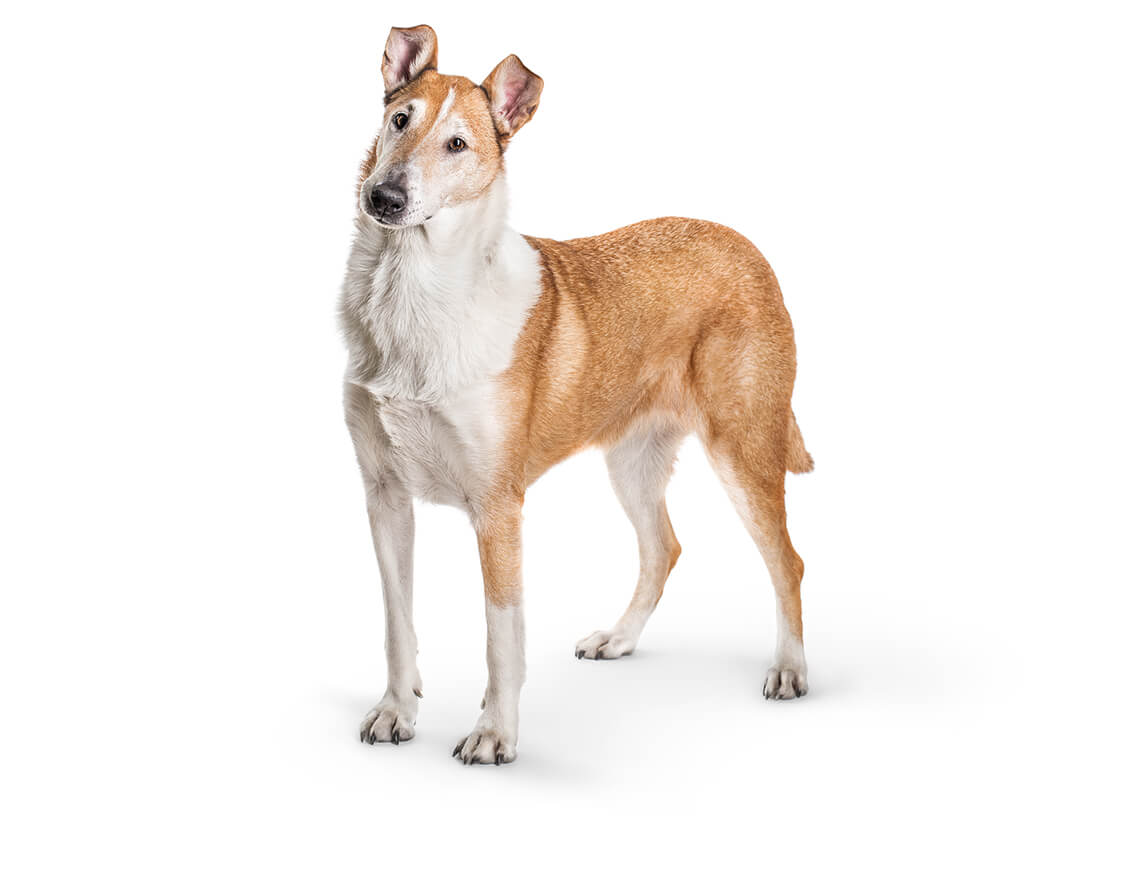
A medium/large breed, well proportioned and dignified-looking, the Smooth Collie should look as if he's capable of a day's work. Adult males stand at 56-61cm and weigh 20.5-29.5kg, and females are 51-56cm and 18-25kg. The short, flat coat is harsh to the touch, and comes in sable and white, tricolour (black with tan and white markings) and blue merle (silver-blue with black).

The need-to-know
 

  • Dog suitable for experienced owners
  • Some training required
  • Enjoys vigorous walks
  • Enjoys walking more than two hours a day
  • Large dog
  • Some drool
  • Requires grooming once a week
  • Non hypoallergenic breed
  • Chatty and vocal dog
  • Guard dog. Barks and alerts
  • May require training to live with other pets
  • May require training to live with kids
Personality

A friendly, good-tempered family dog, the Smooth Collie dog is alert and makes a good house watchdog. He can be prone to excessive barking if not trained or if bored, and does not enjoy being separated from his loved ones for too long. An active dog that needs mental stimulation, the Smooth Collie enjoys training and can reach high standards in many canine disciplines. He can be sensitive and needs gentle, calm handling.


History and Origins

The Rough and Smooth Collie might look very different, but beneath their coats they are the same dog. The Rough breed needed a thicker, longer coat to withstand the unforgiving conditions of the Scottish Highlands, whereas the shorter-haired Smooth Collie dog breed worked sheep in the lowlands, where the weather is milder. The Smooth Collie has been a recognisable breed for over two centuries, but sheepdogs of similar type have existed in Scotland long before then.

Nutrition and Feeding

Large breed dogs, as well as having large appetites, benefit from a different balance of nutrients, including minerals and vitamins, compared to smaller-breed dogs.

Exercise

The Smooth Collie dog breed needs at least an hour's daily exercise. Walking the same route day in, day out, will leave him mentally unchallenged, so vary routes and try some sports, like agility, obedience, rally-O, freestyle or flyball.

Other Information

Health and common issues


As with many breeds, the Smooth Collie dog breed can suffer from various hereditary eye disorders, and hip dysplasia (a condition that can lead to mobility problems). Eye testing and hip scoring of dogs prior to breeding is therefore important.


Best family dog breeds


While many dogs are traditionally thought of as being good with children , all dogs and children need to be taught to get on with and respect each other, and be safe together. Even so, dogs and young children should never be left alone together and adults should supervise all interactions between them.


Zoomed product photo

Collie (Rough)

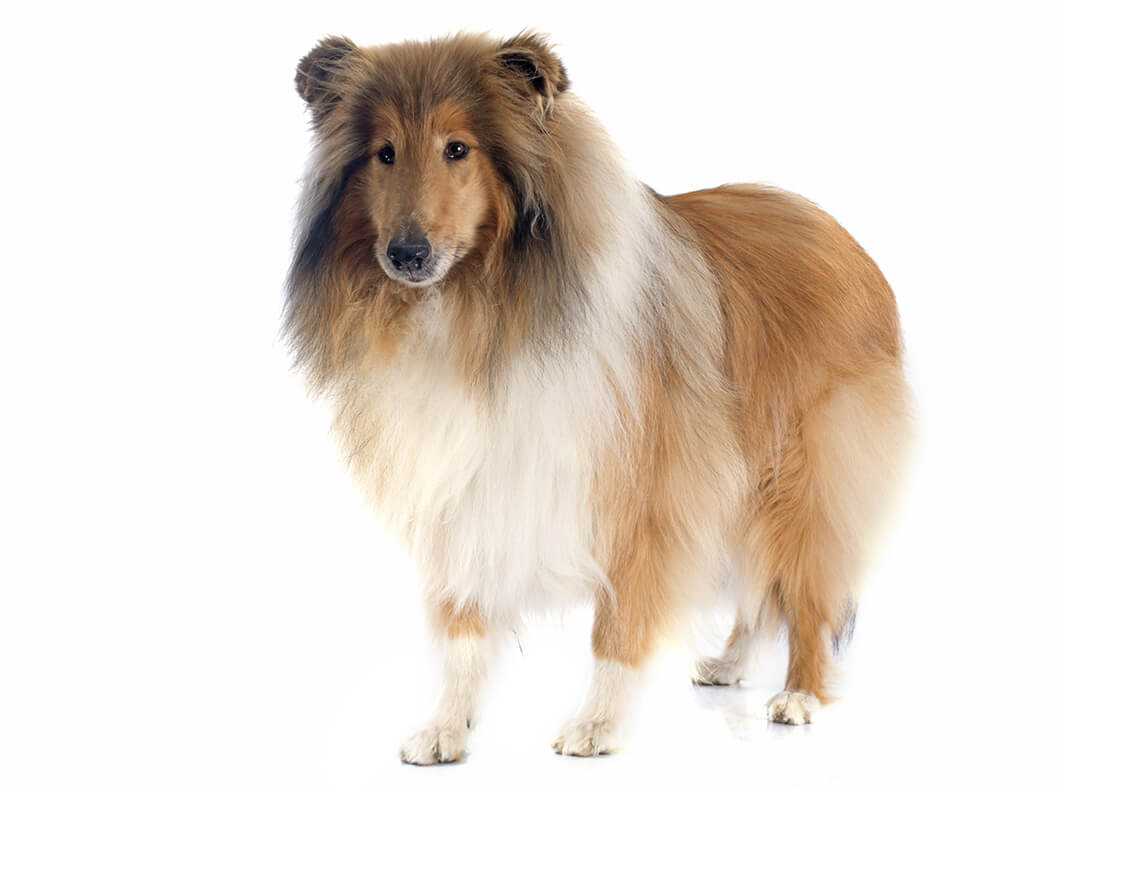
The Rough Collie is undeniably, a glamorous, eye-catching dog, with their abundant sweeping coat, chiselled head and alert expression of dignity. A medium to large dog, Rough Collie coats should be dense, harsh to touch and with an abundant mane and frill. Ears are expressive and attractively tipped forward when alert.


The need-to-know


  • Dog suitable for experienced owners
  • Some training required
  • Enjoys active walks
  • Enjoys walking one to two hours a day
  • Large dog
  • Some drool
  • Requires grooming daily
  • Non hypoallergenic breed
  • Chatty and vocal dog
  • Guard dog. Barks and alerts
  • May require training to live with other pets
  • May require training to live with kids
Lifespan:
14 – 16 years
Weight:
Males should weigh around 27-34kg and females a little less at 23-30kg
Height:
Males stand 56-61cm tall and 51-56cm for females
Colours:
Sable, sable and white, tricolour and blue merle
Size:
Large
UK Kennel Club Groups:
Pastoral
Personality

Friendly and affectionate with family and those known or introduced as friends, the Rough Collie bonds closely and is a loyal companion. Inclined to bark to alert to the presence of strangers, the Rough Collie can make a good watch dog, but will back down quickly when asked to do so, as they are not inclined towards aggression.Rough Collies are quick learners and will thrive when both their bodies and minds are kept exercised and entertained.

History and Origins

Country of Origin: Scotland


The early ancestors of the Rough Collie are thought to have arrived with the Romans, around 2000 years ago. Originally shorter in both leg and nose, the Rough Collie is thought to have had some influence from the Borzoi, known for its elongated, chiselled head, though exactly when this occurred is unclear.Queen Victoria was instrumental in popularizing the Collie, however it was the Smooth variant she kept herself. Later, Queen Alexandra kept Rough Collies, and it is likely she who is responsible for the popularity of the breed in the show ring and the development of the more glamorous appearance of the breed today.

Nutrition and Feeding

Large breed dogs, as well as having large appetites, benefit from a different balance of nutrients including minerals and vitamins compared to smaller-breed dogs. Rough Collies may be prone to bloating and stomach problems; smaller, more frequent meals can help minimise this risk. Discover more about how to offer your dog a balanced diet with our easy-to-follow guide.

Exercise

The Rough Collie is not a particularly demanding dog when it comes to dog exercise, around an hour’s walking per day, some play and free running and general involvement in family activities is provided. More will be happily accepted if you can offer it, this is a dog who wants to be with their family, whatever they are doing.

Other Information

Health and common issues


As with many dog breeds the Rough Collie can suffer from various hereditary eye disorders, and hip dysplasia (a condition that can lead to mobility problems). Eye testing and hip scoring of dogs prior to breeding is therefore important.


Space requirements


This is a reasonably large dog, with a heavy coat, so not ideally suitable for the tiny home. A reasonably sized house and secure garden, with access to a variety of rural walks will suffice. Better suited to quiet suburbs or countryside living as the Rough Collie will be alert to all manner of noises and may find cities and busy towns too noisy and frantic.


Training Collie (rough)


Unlike some of the other Collie or pastoral dog types, the Rough Collie is not a ‘training junkie’ and although they will enjoy working with their owner, is not overly demanding as long as the basics are taught and maintained, and positive reinforcement methods are used. As with exercise, the Rough Collie is happy to do whatever you are doing. Their enjoyment lies in working with their person, whatever the activity may be.


Best family dog breeds


The Rough Collie can make a good family dog – although is better with older more sensible children as they can be sensitive to noise and family chaos! While many dogs are traditionally thought of as being good with children, all dogs and children need to be taught to get on with each other and be safe together. Even so, dogs and young children should never be left alone together and adults should supervise all interactions between them.


Did you know?
 

  • Almost everyone will recognise the Rough Collie as ‘Lassie’ the famous film character, as played by Pal, owned and trained by Rudd Weatherwax (and in fact all the Lassies in the film franchise were male dogs, descended from Pal), however Pal was not the first film-star Rough Collie.
  • The first Rough Collie to star on film, in fact the first of any breed of dog, was Blair, an English bred Rough Collie belonging to the British Film-maker Cecil Hepworth.
  • Blair first featured in a film (albeit briefly) in 1903 (Alice in Wonderland), and then in 1905 had the lead role in ‘Rescued by Rover’.
  • He featured in 15 films between 1903 and 1912, and was the first British movie star of any species!
     
Zoomed product photo

Chow Chow (Rough)

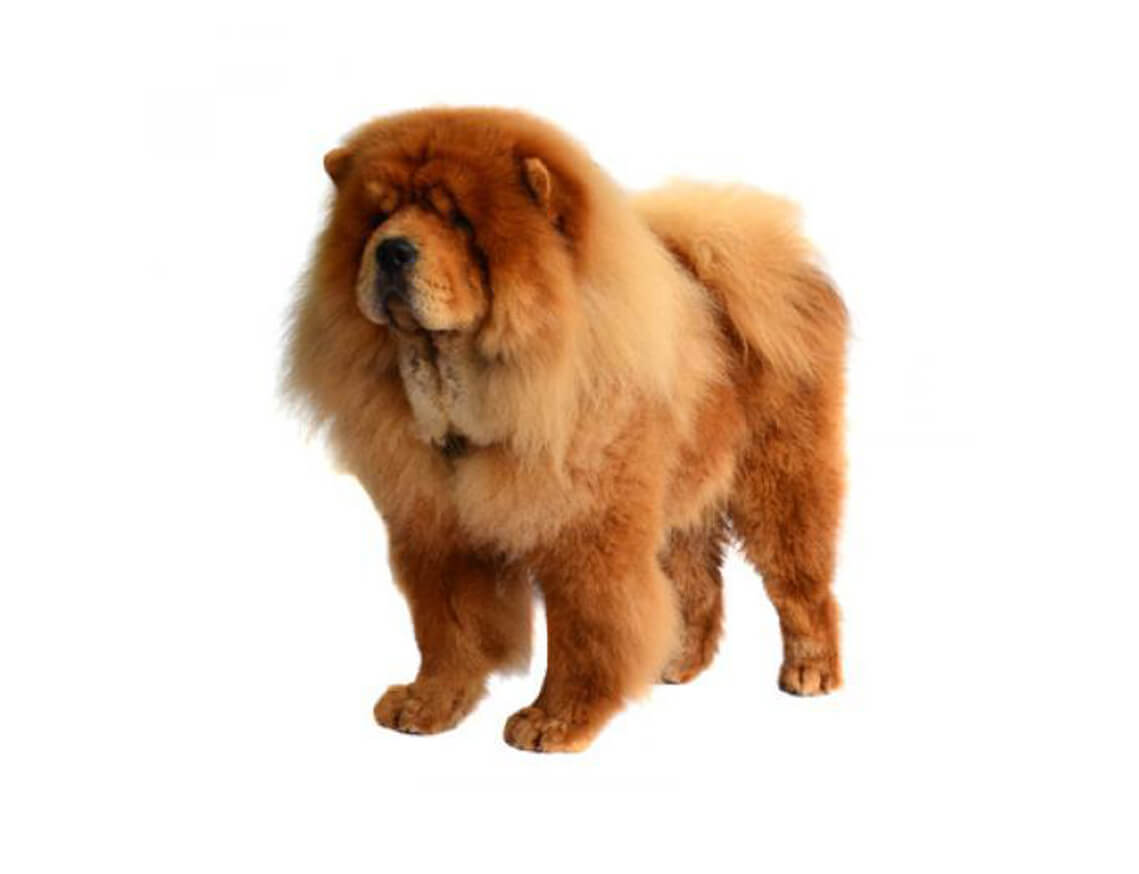
The Chow Chow is a large, compact, bear-like dog with a thick, abundant top coat, a woolly undercoat and a tail curled over its back. This breed is gaining in popularity and with their striking looks they’re sure to leave a lasting impression on everyone who lays eyes on them.


The need-to-know


  • Dog suitable for experienced owners
  • Extra training required
  • Enjoys active walks
  • Enjoys walking an hour a day
  • Large dog
  • Some drool
  • Requires grooming daily
  • Non hypoallergenic breed
  • Quiet dog
  • Guard dog. Barks, alerts and it's physically protective
  • May require training to live with other pets
  • May require training to live with kids


Lifespan:
12 – 15 years
Weight:
18 – 31.5kg
Height:
46 – 56cm
Colours:
Red; black; cream; blue or cinnamon
Size:
Large
UK Kennel Club Groups:
Utility
Personality

While bonded to their owner, the Chow Chow is generally aloof and reserved, is both stubborn and independent, is not playful, and in general neither gives or likes affection (and may actively object to it!). This can be problematic in a dog who looks like a giant teddy bear.Their thick coat also means that in hot weather they can get over-heated which can increase any irritability. Breeders have worked hard over the years to improve temperaments so it’s important to get your puppy from a responsible source.


The Chow Chow will suit an owner who will enjoy their aloofness and independence and who doesn’t want a dog that shows a great deal of affection and instead gives their love at a distance!

History and Origins

The origin of the Chow Chow dog breed is a bit of a mystery, but they probably came from Mongolia and Manchuria, where they were bred for food and their fur was used for clothing. They were later introduced to China. Centuries ago, they were also used to guard the temples against evil spirits.The Chow was used as a multi-purpose dog and found work in several professions including hunting, guarding, sled and cart pulling and as watchdogs.

Nutrition and Feeding

Your Chow Chow's diet needs to have the right balance of all the main nutrient groups including a constant supply of fresh water. It's important to conduct regular body condition scores to ensure you keep your dog in ideal shape, and remember to feed them at least twice daily in accordance with the feeding guidelines of their particular food.

Exercise

The Chow Chow does not require a lot of exercise – about an hour daily – but they do like the outdoors and are quite happy doing their own thing in the back garden. They must have somewhere shaded and cool that they can retreat to in warm and hot weather. Too much exercise too young can lead to bone and joint problems in later life, so exercise must be monitored closely.

Other Information

Health and common issues


The most common health problems in the Chow are elbow dysplasia and eyelid problems. Like many breeds they can also suffer hip dysplasia (a condition that can lead to mobility problems). Hip scoring of dogs prior to breeding is therefore important. Some are also prone to cruciate problems.


Space requirements


The Chow Chow is a large dog with territorial tendencies, so they do best in a large house with a big well-fenced garden. They need to have shade so they can enjoy the outdoors without getting over-heated.


Training Chow chows


Chow chows are resistant to obedience training but do need to be taught to walk well on a lead and should have plenty of early and ongoing socialisation. They are unlikely to be particularly social to dogs or people they don’t know but they do need to learn to tolerate them. Any training should be done with positive reinforcement as this breed does not tolerate being told off.


Best family dog breeds


The Chow Chow doesn’t make a great family dog as they are not particularly tolerant or playful, although they can learn to live with sensible older children. While many dogs are traditionally thought of as being good with children, all dogs and children need to be taught to get on with and respect each other, and be safe together. Even so, dogs and young children should never be left alone together and adults should supervise all interactions between them.


Did you know?
 

  • The Chow Chow has a blue/black tongue (as does the Shar Pei, polar bears and giraffes!)
  • They have 44 teeth, unlike all other dogs which have 42.
  • The Chow Chow has been a very important part of Chinese cultural history. One 8th century Emperor is reported to have kept a kennel of 5,000 Chow Chows looked after by 10,000 huntsmen.
  • Psychoanalyst, Sigmund Freud always had a Chow Chow in the room when he was seeing patients – partly because it seemed to make them far more inclined to talk about their problems, but also because Jofi, his favourite dog would always indicate when the patient’s hour was up and so Freud never had to look at his watch.
  • As the Chow Chow has deep-set eyes, they have a poor peripheral vision so always make sure you approach them from the front.
     
Zoomed product photo

Chinese Crested

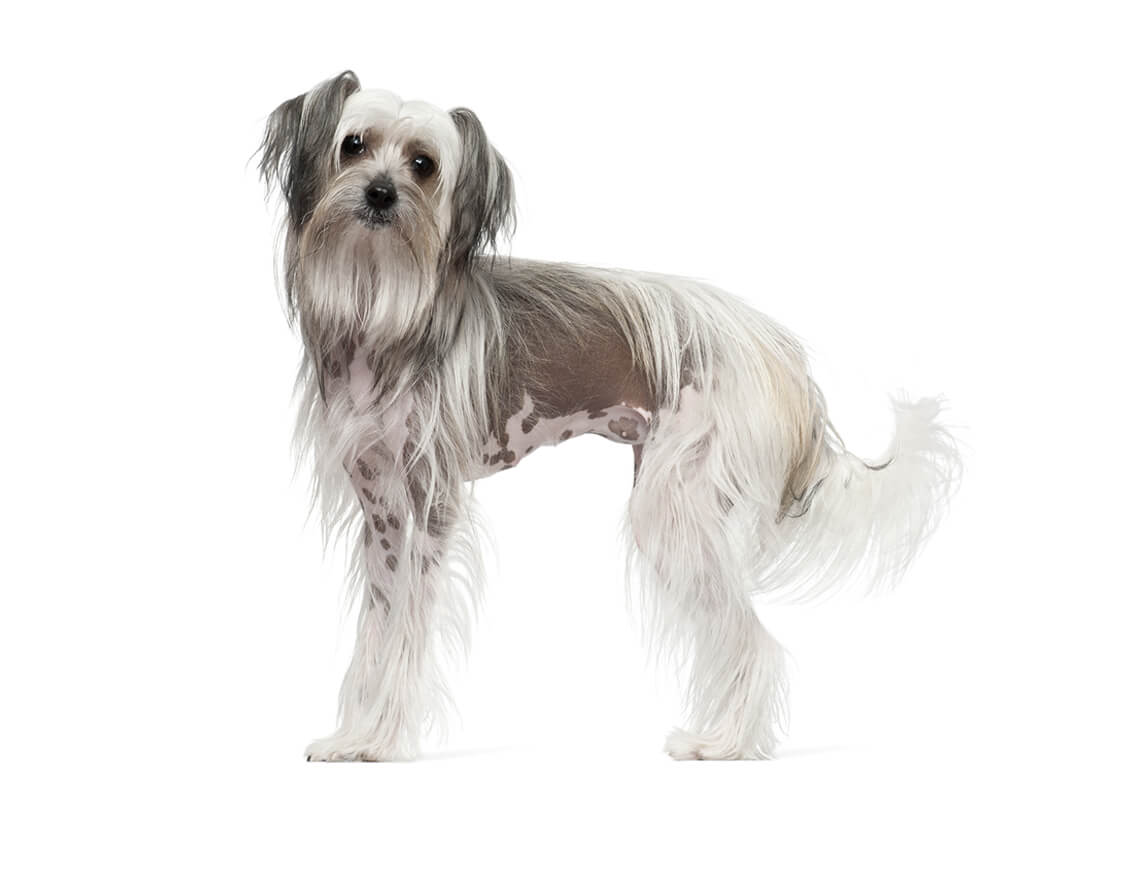
The Chinese Crested is a toy breed that comes in two body types and two coat types. 
The ‘Deer type’ should be racy and fine-boned and the ‘Cobby type’ should be heavier in body and bone. Either build however are an athletic, active dog, tall in the leg, lean and fit. 

The coat is either Hairless - a naked body, fluffy socks, fine crest of hair on the head and a plumed tail, or Powder Puff – a fine soft veil of long hair and soft undercoat over the whole body.


The need-to-know
 

  • Dog suitable for owners with some experience
  • Some training required
  • Enjoys gentle walks
  • Enjoys walking an hour a day
  • Small dog
  • Minimum drool
  • Requires grooming every other day
  • Hypoallergenic breed
  • Chatty and vocal dog
  • Guard dog. Barks and alerts
  • Great with other pets
  • May require training to live with kids


مدة الحياة:
13 – 15 سنة
الوزن:
2.3 – 5.4 كغم
الطول:
23 – 33 سم
الألوان:
Any colour or combination of colours is accepted
الحجم:
Small
UK Kennel Club Groups:
Toy
Personality

Described as ‘happy-go-lucky’ and playful, the Chinese Crested thrives on human company, and fulfils the companion dog role excellently – never happier than when on a loved one’s lap.


Bright and intelligent, the Chinese Crested can be trained to a high standard or simply kept entertained and mentally stimulated learning tricks and basic obedience.


History and Origins

Country of Origin: China


The origins of the Chinese Crested dog are unclear and much debated. It is thought that their ancestors came from Africa, and moved east to Asia, travelling with sailors as useful ships dogs, and eventually spreading to the Americas.It is quite likely that these unusual and attractive little dogs appealed to wealthy, influential royals, and nobility wherever they went, and would have been gifted and traded as many dog breeds have been.One of the earliest portrayals of the Chinese Crested dog is in Robert Plot’s ‘Natural History of Staffordshire – 1686, with a description and illustration that is almost identical to the modern Chinese Crested.


Nutrition and Feeding

Toy dogs have a fast metabolism, meaning they burn energy at a high rate, although their small stomachs mean that they must eat little and often. Small-breed foods are specifically designed with appropriate levels of key nutrients and smaller kibble sizes to suit smaller mouths. This also encourages chewing and improves digestion.

Exercise

Thirty minutes of exercise a day should be the minimum, although a fit, young Crested is capable of more. Be aware this is a dog who will feel the cold and won’t appreciate wet or windy weather much, so you have to time your walks well and invest in a dog coat for the winter. Several short walks around a variety of routes, plus some mental stimulation in the form of training and games will keep them happy and fulfilled.

Other Information

Health and common issues


The Chinese Crested can be predisposed to skin complaints and sun burn. Like other small breeds they can suffer from kneecaps that may temporarily slip out of place (luxating patellas), and as with many breeds hereditary eye disorders can occur and so eye testing is recommended. The breed club monitor the health of the breed carefully and should be contacted for the most up-to-date information and details of any DNA or additional testing they recommend. Breed Clubs can be found on the Kennel Club website.


Space requirements


This is a small dog who doesn’t take up much space, as long as you can provide a warm home and secure garden, with access to a variety of walks, this is a dog who can be happy anywhere their people are.


Training chinese crested


The Chinese Crested may be small, but they are not lacking in intelligence! They are easy to train using positive reinforcement and the Crestie is capable of learning anything a dog of that size can learn! A Chinese Crested will be kept happy with a variety of activities suited to their size, including games, puzzles and trick training, but there is no reason a Chinese Crested couldn’t compete in agility, obedience or many of the other dog sports.


Best family dog breeds


The Chinese Crested is a small and quite delicate dog and whilst they can make an excellent family pet, they can be a little too delicate for boisterous family life. With this in mind, the Crested is probably better with slightly older children, and a family who are at home most of the time. As a companion breed, the Crestie does not do well alone for very long, and must be trained to cope with short periods of human absence. While many dogs are traditionally thought of as being good with children, all dogs and children need to be taught to get on with and respect each other, and be safe together. Even so, dogs and young children should never be left alone together and adults should supervise all interactions between them.


Did you know?


  • There are a number of medical myths about the Chinese Crested dog, one is that the touch of its skin would cure a patient of a fever! It was also claimed that arthritis could be cured if you used the dog as a heating pad. Whilst it is known that owning a dog can bring stress levels down and improve the owner’s health, it seems very unlikely these claims can be relied upon! Chinese Crested dogs helped to prevent the spread of the Black Death as they would catch rats on ships and due to their lack of fur, they were less likely to get fleas, making them less likely to spread the disease.
  • A burlesque dancer called Gypsy Rose Lee helped to popularise the breed as she was an active breeder and advocate for them, many Chinese Crested’s alive today can be traced back to Lee lines.
  • They’re incredibly popular in movies and you can spot them in films like How to Lose a Guy in 10 Days, New York Minute, 102 Dalmatians and Cats and Dogs.
  • Chinese Cresteds have sweat glands and can actually cool down without panting.
 

Zoomed product photo

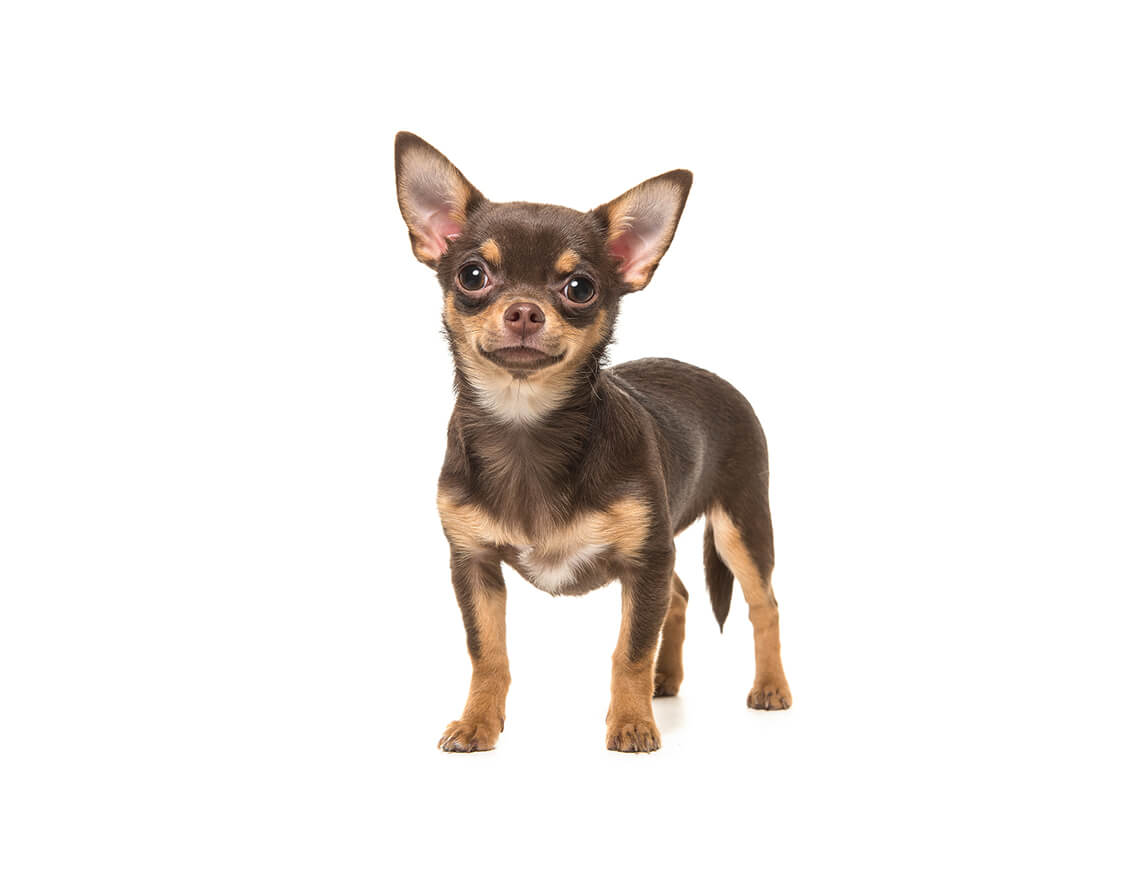
Chihuahua (Smooth Coat)

The Chihuahua is a dainty, compact dog and the smallest of all dog breeds. It’s rapidly becoming one of the most popular and is often depicted as the glamourous companion of celebrities. But, there’s more than meets the eye beyond just cute looks as the Chihuahua is highly intelligent and boasts a long lifespan.


The need-to-know


  • Dog suitable for experienced owners
  • Basic training required
  • Enjoys gentle walks
  • Enjoys walking half an hour a day
  • Little toy dog
  • Minimum drool
  • Requires grooming once a week
  • Non hypoallergenic breed
  • Very vocal dog
  • Guard dog. Barks and alerts
  • Great with other pets
  • Great family dog
Lifespan:
10–18 years
Weight:
1.8–2.7kg
Height:
15–23cm
Colours:
The Chihuahua has two coat types: short-haired and long-haired and comes in a variety of colours including solid colours such as: black; white; fawn; chocolate; grey or silver and tricolours such as: chocolate, black or blue with tan and white. They may
Size:
Small
Kennel Club Group:
Toy
Personality

The Chihuahua tends to bond closely with one or two people, with whom they will be curious, lively and intelligent, as well as deeply and constantly affectionate. However, without adequate socialisation, the breed will not take kindly to strangers and can appear nervous, yappy and even snappy. Chihuahuas must be socialised as early as possible or they will become anxious in new environments and will not get along with strangers, children and other household pets.


The Chihuahua will suit an owner who may have little space in their homes but still want a lively, affectionate companion who will be able to come everywhere with them as this is not a dog who is easily able to tolerate owner absences.


History and Origins

A small dog, called a Techichi, was an important part of Toltec and Aztec cultures. Techichi were the pets of the wealthy and were cremated with the dead in order to take on the deceased's sins so that the person could enter the next world without angering the gods. The dogs were also supposed to guide the deceased through the underworld and fight off evil spirits. Some believe that the Chihuahua is the product of breeding between the Techichi and a small, hairless dog from Asia.The Chihuahua is a state in Mexico and it’s from this state that the modern Chihuahua dog breed was first exported to America. Theory has it that the modern breed developed from the ancient strains of the Techichi, mixed with small dogs of Mexico, Arizona and Texas.

Nutrition and Feeding

Toy dogs have a fast metabolism, meaning they burn energy at a high rate, although their small stomachs mean that they must eat little and often. Small-breed foods are specifically designed with appropriate levels of key nutrients and smaller kibble sizes to suit smaller mouths. This also encourages chewing and improves digestion.

Exercise

The Chihuahua can adapt to however much exercise you would like to give, within reason. Chihuahuas tend to have bursts of energy where they play excitedly, but do not need a lot of walking – half an hour daily should suffice. It’s recommended that Chihuahuas wear a harness instead of a collar due to their fragile tracheas (windpipes.)

Other Information

Health and common issues


As with many small breeds, the Chihuahua can suffer from kneecaps that may temporarily slip out of place (a condition known as patella luxation) and a windpipe problem. The shape of their head can make them prone to water on the brain (hydrocephalus), and some eye problems.


Space requirements


The perfect dog for a small urban space, although they do need to have access to the outdoors for exercise and very frequent toileting.


Training chihuahuas


Chihuahuas are surprisingly smart and when it comes to training, should be treated as a ‘real dog’ as they really enjoy working with their owners. Chihuahuas have even been seen in the main ring at Crufts competing in Heelwork to Music! Just remember when you are training your Chihuahua to use the tiniest of treats as rewards. Like many toy dogs, Chihuahuas often find toilet training difficult, and this may well be that owners are unaware of just how tiny their digestive systems are and they need to go out far more often than they expect. They will be quite mature before they can go through the night.


Best family dog breeds


While the Chihuahua can get on with everyone in the family, they are generally too small for young children and not able to cope with boisterous games. While many dogs are traditionally thought of as being good with children, all dogs and children need to be taught to get on with and respect each other, and be safe together. Even so, dogs and young children should never be left alone together and adults should supervise all interactions between them.


Did you know?


  • The Chihuahua is famous for being the smallest dog in the world.
  • Their popularity has soared recently as the preferred and pampered pet of celebrities and this has led to irresponsible breeding.
  • Chihuahua’s shiver a lot but that doesn’t always mean they’re cold, they also do it when they’re excited or scared too!
  • The current smallest dog living is a Chihuahua called Milly, standing at just 9.65cm tall!
  • In terms of brain size in comparison to body, the Chihuahua has the biggest brain of all dog breeds.


Zoomed product photo

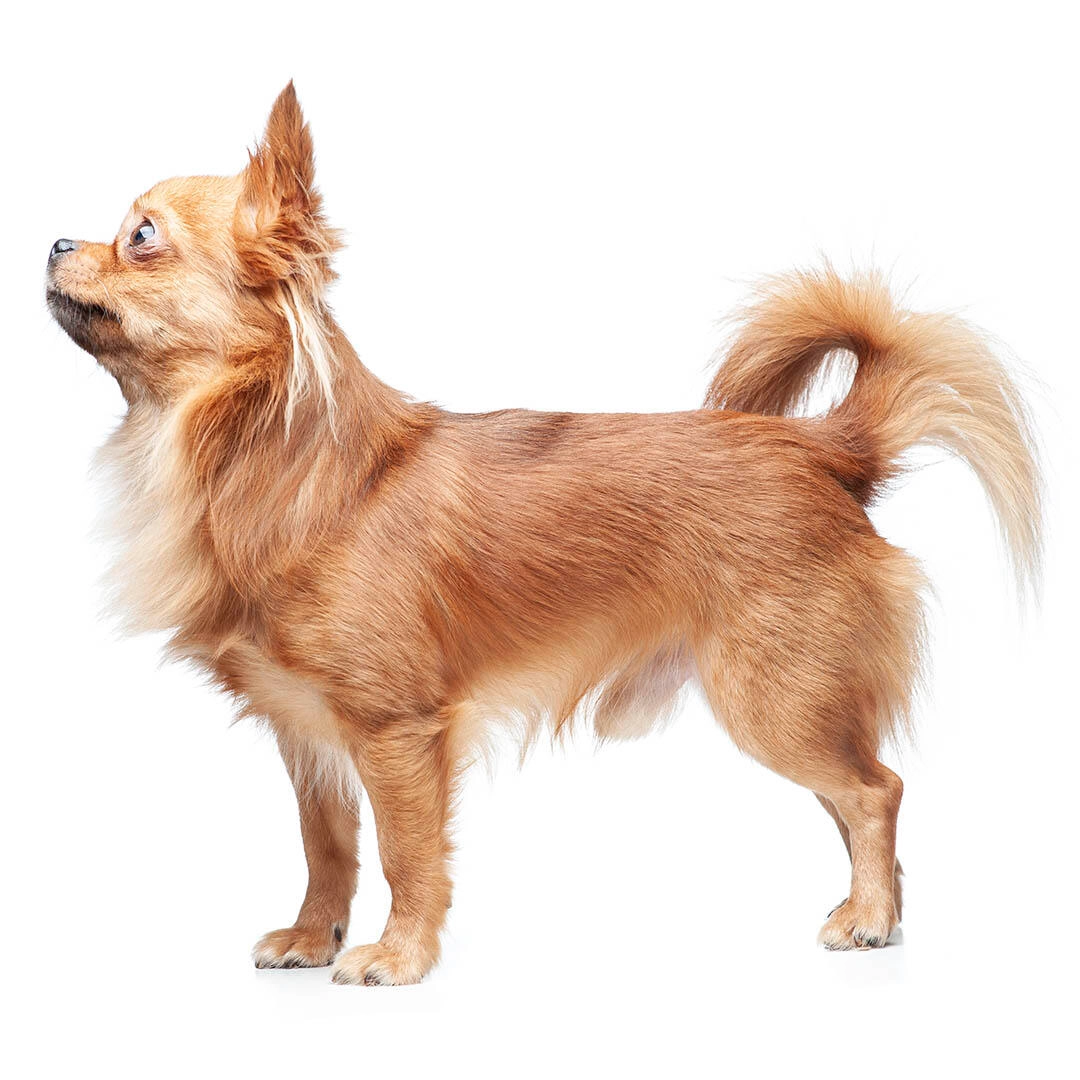
Chihuahua (Long Coat)

The Toy-sized long-haired Chihuahua has a flat or slightly wavy coat that comes in a variety of colours from fawn to black. The ears should be dripping with fringe, a substantial ruff encircles the neck, and the legs should be well feathered. A dainty, compact dog, adults measure 15-23cm and weigh between 1.8-2.7kg.


The need-to-know

  • Dog suitable for experienced owners
  • Basic training required
  • Enjoys gentle walks
  • Enjoys walking half an hour a day
  • Little toy dog
  • Minimum drool
  • Requires grooming once a week
  • Non hypoallergenic breed
  • Very vocal dog
  • Guard dog. Barks and alerts
  • Great with other pets
  • Great family dog
Lifespan:
10–18 years
Weight:
1.8–2.7kg
Height:
15–23cm
Colours:
The Chihuahua has two coat types: short-haired and long-haired and comes in a variety of colours including solid colours such as: black; white; fawn; chocolate; grey or silver and tricolours such as: chocolate, black or blue with tan and white. They may a
Size:
Small
Kennel Club Group:
Toy
Personality

The long-haired Chihuahua tends to bond closely with one or two people, with whom he will be curious, lively and intelligent, as well as deeply and constantly affectionate. However, without adequate early socialisation, the breed will not take kindly to strangers and can appear nervous, yappy and even snappy. Chihuahuas must be socialised as early as possible or they will become anxious in new environments and will not get along with strangers, children and other household pets. They are a clannish breed and enjoy being with other Chihuahuas.


History and Origins

The Toy-sized long-haired Chihuahua has a flat or slightly wavy coat that comes in a variety of colours from fawn to black. The ears should be dripping with fringe, a substantial ruff encircles the neck, and the legs should be well feathered. A dainty, compact dog, adults measure 15-23cm and weigh between 1.8-2.7kg.

Nutrition and Feeding

Toy dogs have a fast metabolism, meaning they burn energy at a high rate, although their small stomachs mean that they must eat little and often. Small-breed foods are specifically designed with appropriate levels of key nutrients and smaller kibble sizes to suit smaller mouths. This also encourages chewing and improves digestion.

Exercise

The long-haired Chihuahua can adapt to however much exercise you would like to give it, within reason. Chihuahuas tend to have bursts of energy where they play excitedly, but do not need a lot of walking – half an hour daily should suffice. It is recommended that Chihuahuas wear a harness instead of a collar due to their fragile tracheas (windpipes).

Other Information

Health and common issues


As with many small breeds, the Chihuahua can suffer from kneecaps that may temporarily slip out of place (luxating patellas) and a windpipe problem. The shape of their head can make them prone to water on the brain (hydrocephalus), and some eye problems.


Best family dog breeds


While many dogs are traditionally thought of as being good with children , all dogs and children need to be taught to get on with and respect each other, and be safe together. Even so, dogs and young children should never be left alone together and adults should supervise all interactions between them.


Zoomed product photo

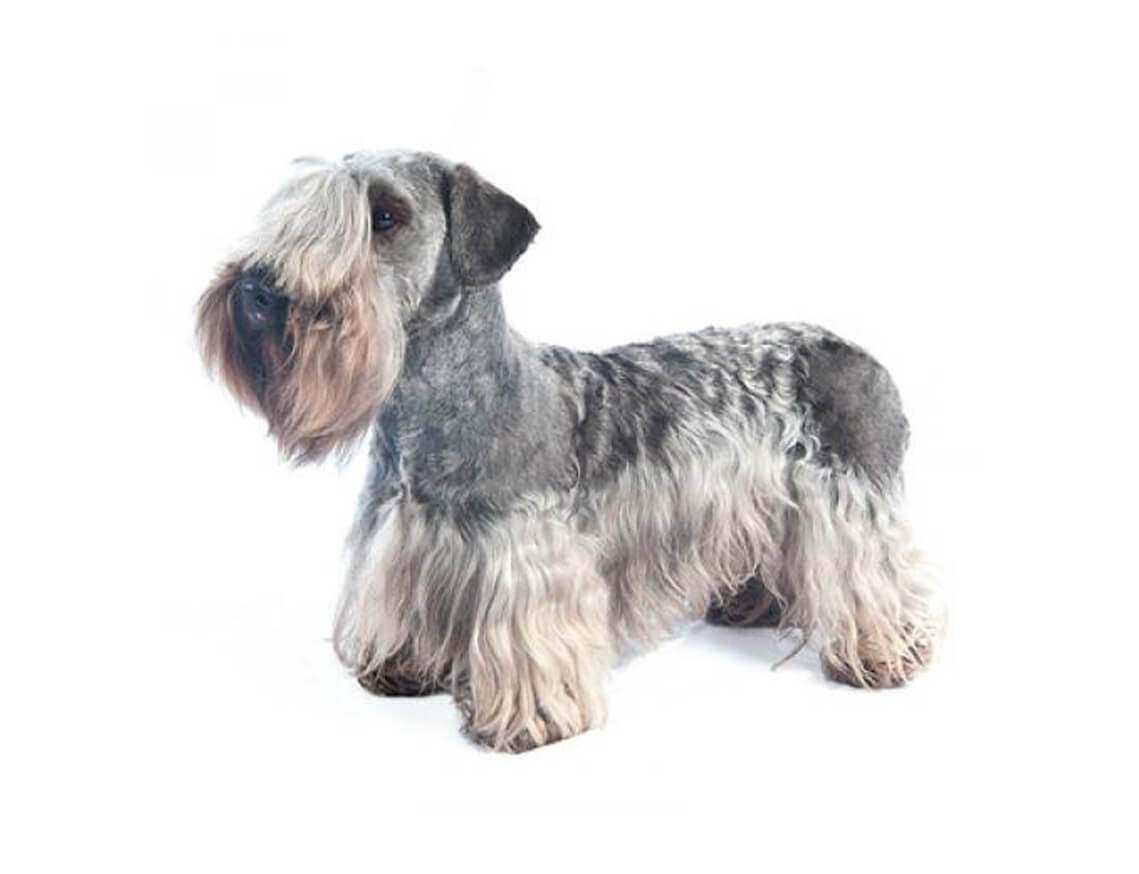
Cesky Terrier

The Cesky Terrier is a small/medium-sized, short-legged dog standing at 25-32cm when fully grown and weighing 6-10kg. The ideal height for adult dogs is 29cm and for females 27cm. The long coat comes in grey-blue or light brown.


The need-to-know


  • Dog suitable for owners with some experience
  • Some training required
  • Enjoys gentle walks
  • Enjoys walking an hour a day
  • Small dog
  • Minimum drool
  • Requires grooming every other day
  • Non hypoallergenic breed
  • Very vocal dog
  • Guard dog. Barks and alerts
  • May require training to live with other pets
  • May require training to live with kids
Personality

The Cesky Terrier is a gentle-natured terrier when it comes to people. He can be reserved with those he doesn't know, but is friendly with those he's acquainted with. His working instincts are still keen – he is a tough and agile dog, with a fair amount of energy and stamina. He can be stubborn, but with the right motivation can show off his versatility and has competed in the canine sports of obedience and agility.


History and Origins

A relatively new breed, this national dog of the Czech Republic was created by Frantisek Horak, a breeder and geneticist, in 1949. Horak enjoyed hunting and decided to cross the Scottish Terrier with a Sealyham Terrier, to produce a smaller dog that would work in a pack and also go to ground, fitting into burrows that defeated the Scottie and Sealyham. The Cesky Terrier dog breed was used for hunting everything from fox, rabbit and game to wild boar!

Nutrition and Feeding

Small dogs have a fast metabolism, meaning they burn energy at a high rate, although their small stomachs mean that they must eat little and often. Small-breed foods are specifically designed with appropriate levels of key nutrients and smaller kibble sizes to suit smaller mouths. This also encourages chewing and improves digestion.

Exercise

The Cesky Terrier breed needs about an hour's exercise a day. His hunting instincts can come to the fore on an off-lead walk, so do ensure his recall is reliable before letting him off the lead in public areas.

Other Information

Health and common issues


The Cesky Terrier is generally a healthy dog. However, in common with many smaller breeds, they can also suffer from kneecaps that may temporarily slip out of place (luxating patellas).


Best family dog breeds


While many dogs are traditionally thought of as being good with children , all dogs and children need to be taught to get on with and respect each other, and be safe together. Even so, dogs and young children should never be left alone together and adults should supervise all interactions between them.


Zoomed product photo

Cavalier King Charles Spaniel

A small spaniel with a short, but definite muzzle, large brown eyes and silky fur, the Cavalier dog's colours are black and tan, ruby, red and white (Blenheim) and tricolour (chestnut markings on a pearl white background). Adults measure 30-33cm and weigh 5.5-8kg.


The need-to-know
 

  • Dog suitable for non-experienced owners
  • Basic training required
  • Enjoys active walks
  • Enjoys walking one to two hours a day
  • Medium dog
  • Some drool
  • Requires grooming once a week
  • Non hypoallergenic breed
  • Chatty and vocal dog
  • Not a guard dog
  • May require training to live with other pets
  • Great family dog
Lifespan:
10–15 years
Weight:
4.5–10kg
Height:
30–40cm
Colours:
The colours of the Beaglier can be any combination that’s common to the Beagle or Cavalier King Charles Spaniel, including: tricolour; blue, white and tan; white and tan; badger pied; hare pied; lemon pied; lemon and white; red and white; tan and white; b
Size:
Small to Medium
Personality

This is an affectionate, undemanding family dog that is friendly with everyone, so he makes a good companion for sensible children and the more active elderly. They are not excessive barkers but will announce strangers. They are no guard dogs however, as they greet most people warmly. Cavalier King Charles Spaniels get along with everyone, including cats and other small pets. Being relatively small and easygoing, they make good travel companions.


History and Origins

The original Cavalier King Charles Spaniel dog breed was developed from the toy spaniels pictured in the work of 16th, 17th and 18th century painters such as Titian and Gainsborough. They were very common as a ladies' pet and were used to warm laps. King Charles II was so fond of his spaniels he could not be parted from them. By 1800, the snub-nose variety had taken over in popularity and the original spaniel was nearly lost. Only the Duke of Marlborough kept a line alive, breeding them at Blenheim castle. In 1926, an American, Roswell Eldridge, tried to re-establish the original dog of the Cavalier King Charles Spaniels by offering a prize for a dog with the appearance of the dogs in the historical portraiture. The prize was given out at Crufts for the then substantial sum of £25.

Nutrition and Feeding

Small dogs have a fast metabolism, meaning they burn energy at a high rate, although their small stomachs mean that they must eat little and often. Small-breed foods are specifically designed with appropriate levels of key nutrients and smaller kibble sizes to suit smaller mouths. This also encourages chewing and improves digestion.

Exercise

A King Charles Spaniel will adapt to whatever amount of exercise you feel able to give but do need some regular exercise or they will put on the pounds. About an hour's daily exercise is a good guide but they also enjoy games and training in which they can excel.

Other Information

Health and common issues


The most common inherited problems affecting the Cavalier King Charles Spaniel are heart disease, and a brain/spinal disorder (syringomyelia). As with many breeds, they can also suffer from various hereditary eye disorders, and hip dysplasia (a condition that can lead to mobility problems). Eye testing, hip scoring, brain/spine and heart assessment of dogs prior to breeding is therefore very important.


Best family dog breeds


While many dogs are traditionally thought of as being good with children , all dogs and children need to be taught to get on with and respect each other, and be safe together. Even so, dogs and young children should never be left alone together and adults should supervise all interactions between them.


Zoomed product photo

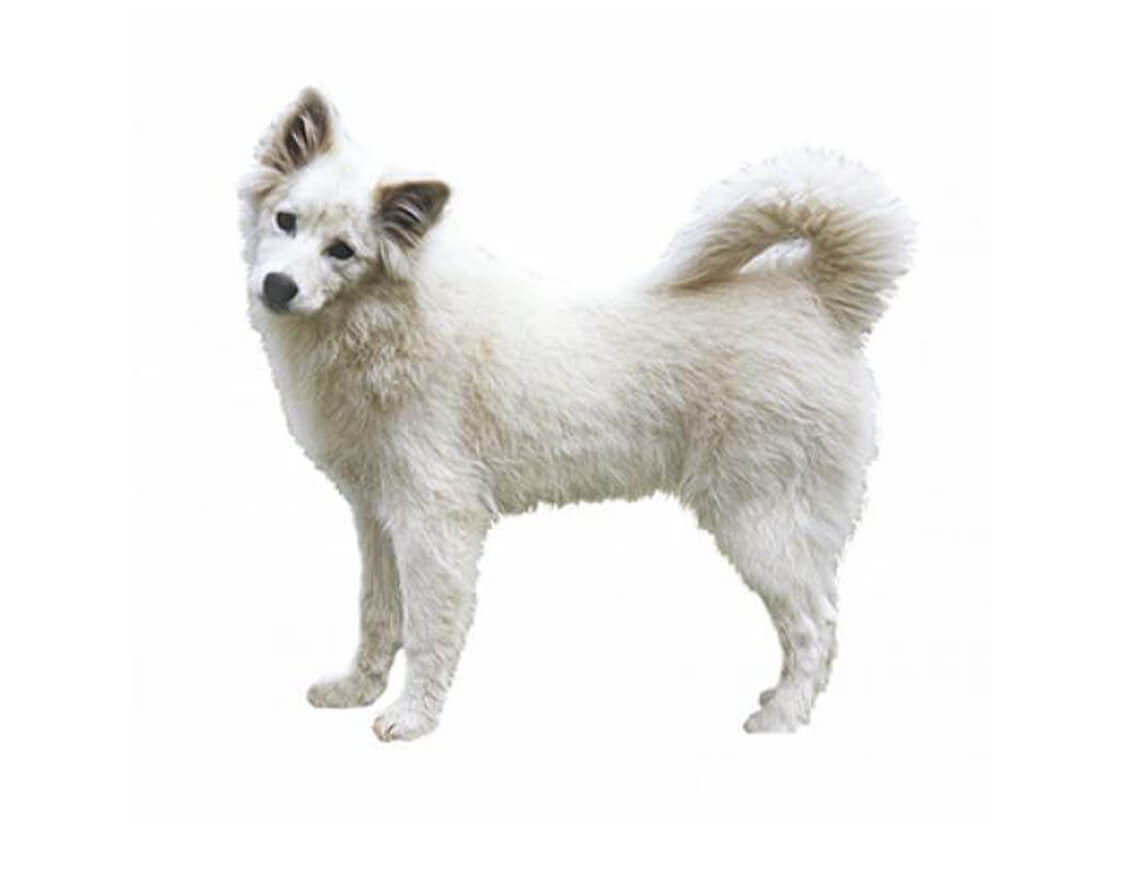
Canadian Eskimo Dog

A large spitz-type dog, with a broad chest, thick coat, large bushy tail (that can be carried over the back) and erect ears, this is a striking, powerful dog that comes in black and white, grey and white, red and white, sable and white, and white and black. Males stand at 58-70cm and weigh 30-40kg when fully grown and females are 50-60cm tall and weigh 18-30kg.


The need-to-know
 

  • Dog suitable for experienced owners
  • Extra training required
  • Enjoys active walks
  • Enjoys walking more than two hours a day
  • Large dog
  • Heavy drool
  • Requires grooming daily
  • Non hypoallergenic breed
  • Very vocal dog
  • Guard dog. Barks and alerts
  • May require training to live with other pets
  • May require training to live with kids
Personality

The Canadian Eskimo dog is very much a specialist working breed rather than an average pet dog. Bred to pull weights of up to 80kg over 70 miles a day in the harshest of Arctic conditions, he does not thrive in an ordinary domestic set-up! Pack-orientated, he is nevertheless affectionate to people and is playful, curious and vocal.


History and Origins

The Canadian Eskimo dog breed worked with Inuit hunters to find seal breathing holes and hold large predators at bay, such as polar bears. It was also used as a sled dog. It is said there were 20,000 Canadian Eskimo dogs in its native homeland in the 1920s, but in just 50 years, with the development of the snowmobile, this number dropped to just 200, as sled dogs were simply no longer needed. A dedicated breeder set out to save the breed, but the Canadian Eskimo dog remains quite a rarity outside of Canada.

Nutrition and Feeding

Large breed dogs, as well as having large appetites, benefit from a different balance of nutrients including minerals and vitamins compared to smaller-breed dogs.

Exercise

The Canadian Eskimo dog needs a great deal of exercise to fulfil his needs – at least two hours of daily exercise. An energetic hobby such as sled-racing is a must, though warm-weather energetic exercise should be avoided because of the possibility of heat exhaustion.

Other Information

Health and common issues


The Canadian Eskimo dog is generally a robust dog with few breed specific health problems.


Best family dog breeds


While many dogs are traditionally thought of as being good with children , all dogs and children need to be taught to get on with and respect each other, and be safe together. Even so, dogs and young children should never be left alone together and adults should supervise all interactions between them.