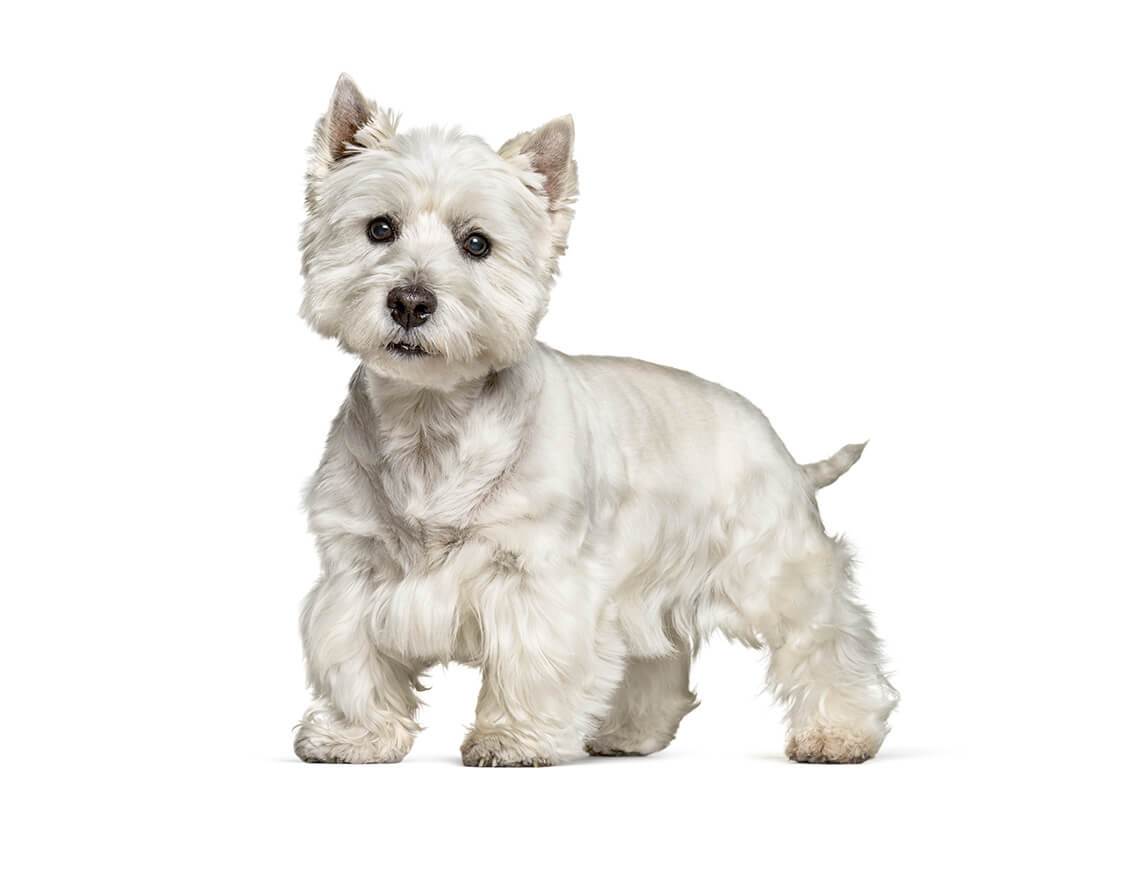
Machine Name
dog
Zoomed product photo

Chorkie

The Chorkie is one of the smaller designer crossbreeds, which is growing in popularity around the world.

The breeds that make up the Chorkie are the Chihuahua (long coat or smooth coat) and the Yorkshire Terrier. The Chorkie can be a first cross (with one Chihuahua and one Yorkshire Terrier parent), can be bred back to one of the original breeds or be two Chorkies bred together - so there are varieties in size, shape, colours and coat types, but in all cases this is an extremely small companion dog.


The need-to-know


  • Dog suitable for non-experienced owners
  • Basic training required
  • Enjoys gentle walks
  • Enjoys walking half an hour a day
  • Little toy dog
  • Minimum drool
  • Requires grooming every other day
  • Non hypoallergenic breed
  • Chatty and vocal dog
  • Not a guard dog
  • May require training to live with other pets
  • May require training to live with kids
Lifespan:
12–15 years
Weight:
3.5–6.5kg
Height:
15–23cm
Colours:
The Chorkie can come in any colour common to the Chihuahua or Yorkshire Terrier, including: Brown, white, silver, blue, black, steel blue and tan Their colouring can be solid or a mix of colours
Size:
Small
Personality

Like most crossbreeds, the personality of a Chorkie depends on the parents and how they have been bred and reared, but both parents are affectionate dogs who bond closely to their owners.


The Chorkie may be a tiny dog - but they have no idea that they are! This is a tiny companion dog who will enjoy training and games (and possibly some impromptu gardening!) - but will mostly enjoy being with their owner.


The personality of a Chorkie is more consistent when they are first crosses (F1). As a line is successively bred, they can be either bred back to one of the original breeds (and so strengthen either the Chihuahua or the Yorkshire Terrier personalities) or else be bred to another Chorkie - in which case there is less predictability in temperament (and in-breeding becomes more of a potential issue).


History and Origins

The Chorkie likely originated in the United States in the early 1990s, when designer breeders purposely mixed the Chihuahua and the Yorkshire Terrier for the first time. The Chorkie quickly grew in popularity, thanks to its cute looks and small size, allowing it to fit into any family’s lifestyle, no matter how small their home and garden. To understand this relatively new breed properly requires an understanding of the two breeds involved in its make-up. The Chihuahua originated in Mexico and is widely known as one of the smallest and popular breeds of all time. Despite this widespread popularity, no one really knows much about their history and there are many theories surrounding it. Some believe that the Chihuahua dates back to the Aztec period where they were the companions of high-born individuals. The legend also states that when their owners died, their Chihuahua would be buried with them as they were thought to show them the way to the afterlife. Others think that the breed came much later in the Middle Ages and was the result of mixing Spanish lapdogs with the existing small breeds of the country. Whereas some people believe that Chinese dogs played a hand in creating the Chihuahua – which could be a possible reason for the long-haired variant. Although their roots aren’t clear, they were popular in Mexico during the 19th century and that extended to American visitors too who would take a Chihuahua back home as a memento. Yorkshire Terriers on the other hand came from England and Scotland and it’s thought that Scottish Weavers brought a small terrier with them during a period of immigration from Scotland to Yorkshire and Lancashire in the 1850s. These ‘Broken-Haired Scotch Terriers’ interbred with existing local terriers to provide a working dog who quickly became popular as a very effective factory and mining vermin-killer, and that was of a small enough size that could be carried in their owner’s pocket. Further breeds were used to perfect this Northern ratter including possibly: the Manchester Terrier, the Maltese, the Skye Terrier, the Dandie Dinmont terrier, and the now extinct Paisley and Clydesdale Terriers. Shown as the Scotch Terrier in 1861, the dog later became known as the Yorkshire Terrier and was recognised by the Kennel Club in 1886. While the breed was a working ratter, the Yorkshire Terrier soon became popular with wealthy ladies as a companion, and this popularity led to selective breeding to make them even smaller. Interestingly while the dog got smaller, their coat length stayed the same - hence the long coats that can still be seen on show dogs. The Chorkie can have any combination of the two breeds in their appearance, behaviour and temperament.


Nutrition and Feeding

Toy dogs have a fast metabolism, meaning they burn energy at a high rate, although their small stomachs mean that they must eat little and often. Small-breed foods are specifically designed with appropriate levels of key nutrients and smaller kibble sizes to suit smaller mouths. This also encourages chewing and improves digestion. Your dog’s diet needs to have the right balance of all the main nutrient groups including a constant supply of fresh water. It's important to conduct regular body condition scores to ensure you keep your dog in ideal shape, and remember to feed them at least twice daily in accordance with the feeding guidelines of their particular food.

Exercise

While this is a surprisingly active small dog, the Chorkie will be happy with half an hour walking each day (on a harness) - as long as they have plenty of gentle games and owner interaction. All exercise should be done with care however as this is a tiny dog who can’t walk quickly and can be easily frightened and injured by other dogs.

Other Information

Health and common issues


One aim with crossbreeds is to dilute or eliminate any inherited health issues that may exist within one or other of the breeds. This dilution or elimination is only likely if only one parent is the carrier of any particular condition, and where this is a first cross (F1). As this can’t always be guaranteed, both breeds should be health tested prior to breeding: Chihuahua - they can be prone to eye problems and also a potential windpipe problem. They can also suffer from hydrocephalus and like many small breeds can be prone to luxating patella’s. Yorkshire Terriers - this is a fairly healthy long-lived breed, but like many small dogs can have issues with luxating patella and there are other common health issues too. Responsible breeders should be prioritising behaviour as high as health and so it’s important to find a good breeder. A well-bred Chorkie should be outgoing and confident and not nervous, shy or fearful, and never aggressive. This does require early and ongoing socialisation.


Space requirements


This is a small dog who can live in a flat or a smaller property, as long as they have access to the outdoors for toileting and walks.


Training chorkies


The Chorkie is far smarter than many people think and they will enjoy learning tricks and playing gentle games - and should be trained to walk on a lead and harness as well as come back when called. This is a breed that needs early and ongoing socialisation so they gain confidence with people and other dogs.


Best family dog breeds


The Chorkie is generally too small and delicate (especially as a puppy) to make a good family dog. They tend to bond closely to one person and are not suitable for families with young children.


Did you know?


  • The Chorkie is also known as the Yorkiechi, Chiyorkie, Yorkie-chi, Yorkchi, York-chi, Chiorkie and York Chi.
  • Chorkie’s aren’t currently recognised by the UK Kennel Club as they’re a mixed breed.
  • This dog breed is extremely intelligent and they’re known to pick things up very quickly!
  • They can be quite vocal and like the sound of their own voice so training will be required.


Zoomed product photo

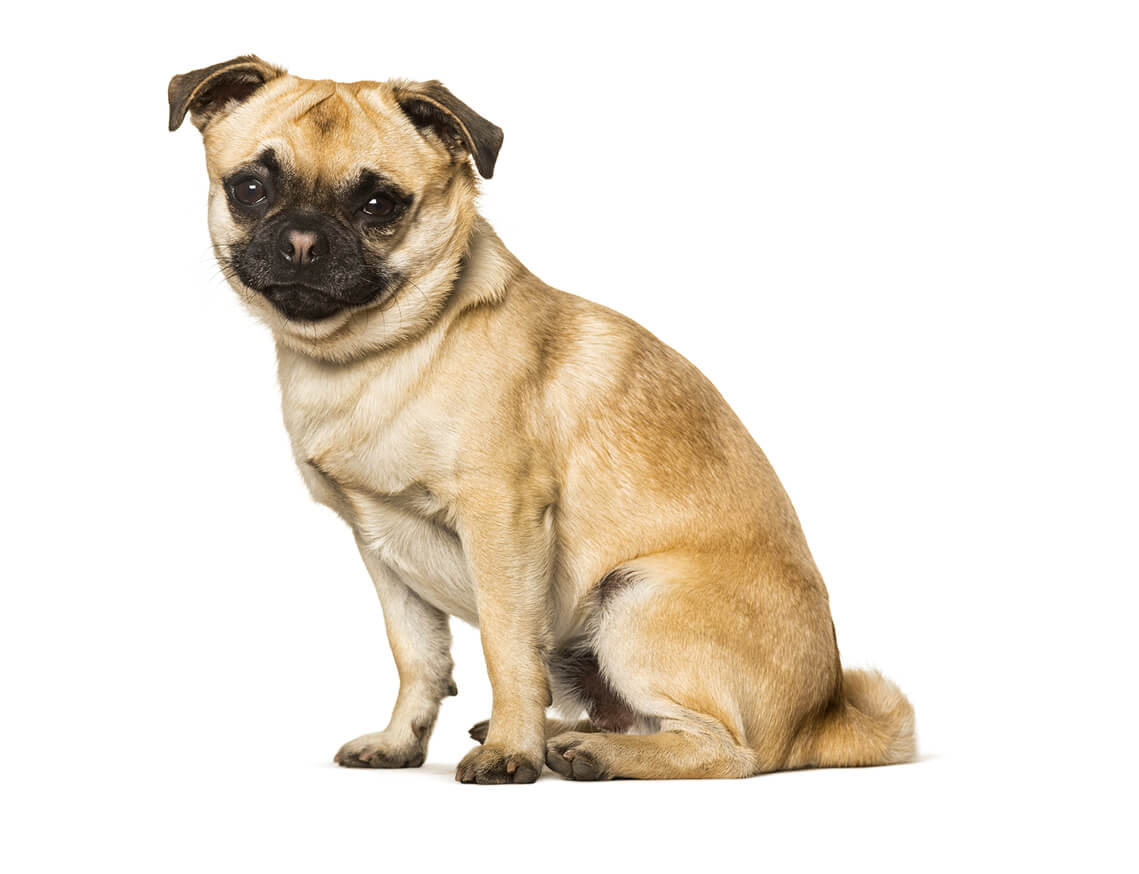
Chug

The Chug is one of the smaller designer crossbreeds, which is growing in popularity around the world.

The breeds that make up the Chug are the Chihuahua (long coat or smooth coat) and the Pug. The Chug can be a first cross (with one Chihuahua and one Pug parent), can be bred back to one of the original breeds or be two Chugs bred together - so there are varieties in size, shape, colours, coat types and health, but in all cases this is an extremely small companion dog.


The need-to-know


  • Dog suitable for non-experienced owners
  • Basic training required
  • Enjoys gentle walks
  • Enjoys walking half an hour a day
  • Little toy dog
  • Minimum drool
  • Requires grooming once a week
  • Non hypoallergenic breed
  • Quiet dog
  • Not a guard dog
  • May require training to live with other pets
  • May require training to live with kids
Lifespan:
10–13 years
Weight:
4.5–9kg
Height:
25–35cm
Colours:
The Chug can come in any of the colours common to the Chihuahua or Pug including: Brown, black, fawn, silver, apricot, cream or white Their coats may be solid or a mix of colours
Size:
Small
Personality

Like most crossbreeds, the personality of a Chug depends on the parents and how they have been bred and reared, but both the Chihuahua and the Pug are affectionate dogs who bond closely with their owners.


The Chug may be a tiny dog, but they have no idea that they are, as both breeds have large personalities! The personality of a Chug seems to be more consistent when they are first crosses (F1). As a line is successively bred, they can be either bred back to one of the original breeds (and so strengthen either the Chihuahua or the Pug personalities) or else be bred to another Chug - in which case there is less predictability in temperament (and in-breeding becomes more of a potential issue).


Responsible breeders should be prioritising behaviour as high as health and so it is important to find a good breeder. A well-bred Chug should be outgoing and confident and not nervous, shy or fearful. This does require early and ongoing socialisation.


History and Origins

The Chug originated in the early 2000s in the United States. There’s no specific breeder that claims they created the breed, but it’s thought that it was developed in order to breed out some of the unhealthier attributes of the Pug, such as the short snout. Although the Chug is a very recent breed, the Chihuahua and Pug have a long history, so long in fact, it’s under debate where they actually originated from to begin with! There are several theories about where the Chihuahua came from including the Aztec period, the Middle Ages and some believe that Chinese dogs contributed to the breed we know and love today. However, what is clear is that they were very popular in 19th century Mexico and they were brought into America by tourists who would often take home a dog or puppy as a memento. The Pug on the other hand is widely known as a Chinese dog breed and are thought to date back as far as the Han dynasty (B.C. 206 to A.D. 200). The breed came to European shores in the late 1500s and early 1600s when China began trading with Europe, and then eventually came to England in 1688 with William III and Mary II when they set to claim the throne. Pugs became incredibly popular with people around the world, especially in the European courts and even Queen Victoria was a fan, keeping 36 of them and breeding and showing them. The Chug can have any combination of the two breeds in their appearance, behaviour and temperament.

Nutrition and Feeding

Toy dogs have a fast metabolism, meaning they burn energy at a high rate, although their small stomachs mean that they must eat little and often. Small-breed foods are specifically designed with appropriate levels of key nutrients and smaller kibble sizes to suit smaller mouths. This also encourages chewing and improves digestion. Your dog’s diet needs to have the right balance of all the main nutrient groups including a constant supply of fresh water. It's important to conduct regular body condition scores to ensure you keep your dog in ideal shape, and remember to feed them at least twice daily in accordance with the feeding guidelines of their particular food.

Exercise

The Chug will be happy with half an hour walking each day (on a harness), as long as they have plenty of gentle games and owner interaction. All exercise should be done with care however as this is a very small dog who can’t walk quickly, can be easily frightened and badly injured by other dogs, even in play.

Other Information

Health and common issues


One aim with crossbreeds is to dilute or eliminate any inherited health issues that may exist within one or other of the breeds. This dilution or elimination is only likely if only one parent is the carrier of any particular condition, and where this is a first cross (F1). As this can’t always be guaranteed, all parents should be health tested prior to breeding: Chihuahua: they can be prone to eye problems and also a potential windpipe problem. They can also suffer from hydrocephalus and like many small breeds can be prone to luxating patella’s. Pug: this breed is prone to several health issues. With their flattened face and short nose, they can have breathing problems, and also issues with their skin, eyes, and teeth. Certain health tests should be done including: Hemivertebrae testing, patella testing, as well as a Pug Dog Encephalitis DNA test. As the Pug is a brachycephalic dog, be sure to do your research on what this means and the potential health issues that come with owning a flat faced dog.


Space requirements


This is a small dog who can live in a flat or a smaller property as long as they have access to the outdoors for toileting and walks.


Training chugs


The Chug can be a smart little dog and most will enjoy learning tricks and playing gentle games. They should be trained to walk on a lead and harness, as well as come back when called. This is a breed that needs early and ongoing socialisation so they gain confidence with people and other dogs.


Best family dog breeds


The Chug can in theory make a good family dog, but is generally too small and delicate (especially as a puppy) for a young or active family. They tend to bond closely to one person, so they’re ideal to singles or couples that can be home most of the day.


Did you know?


  • Due to their shorter snouts, Chugs can be prone to heat stroke so require additional care during the summer months.
  • Chug is also known as the Pugwawa and the Pughuahua.
  • They have very affectionate natures and love spending time with their family.
  • Chugs aren’t currently recognised by the UK Kennel Club as they’re a mixed breed.


Zoomed product photo

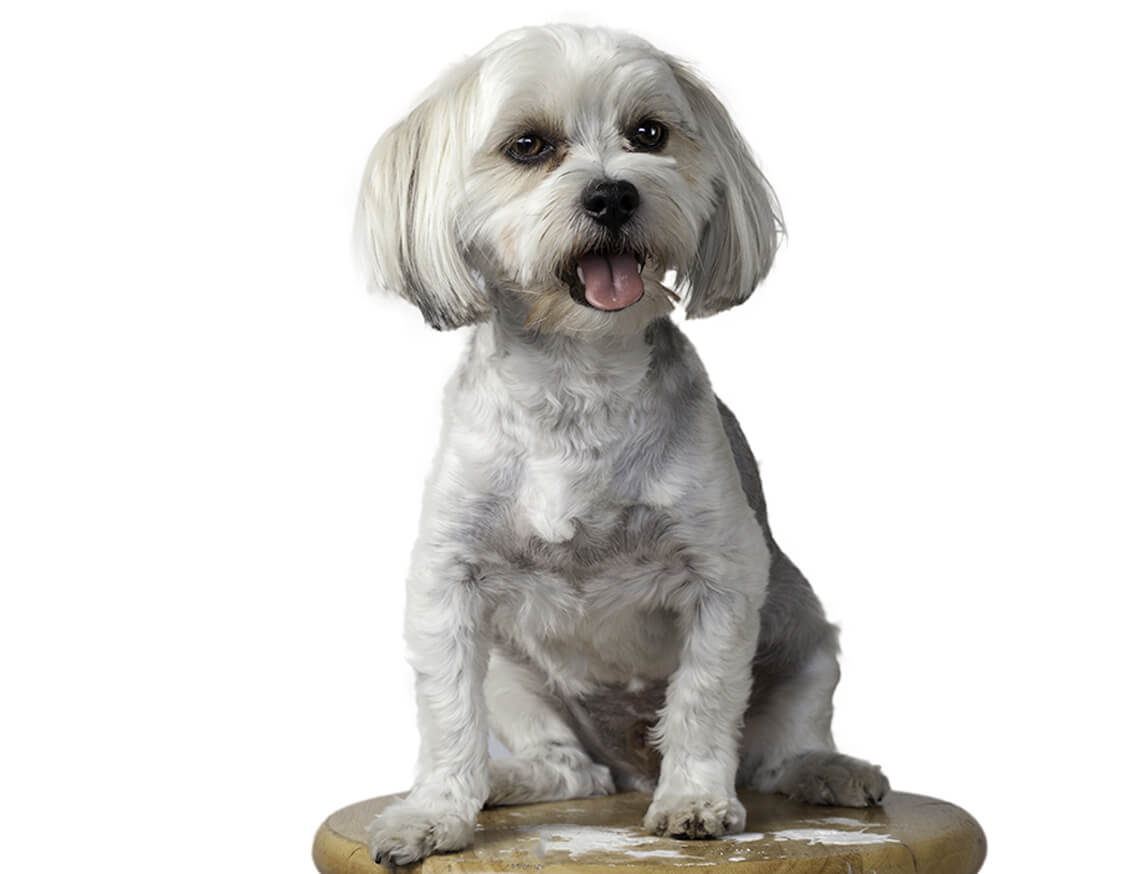
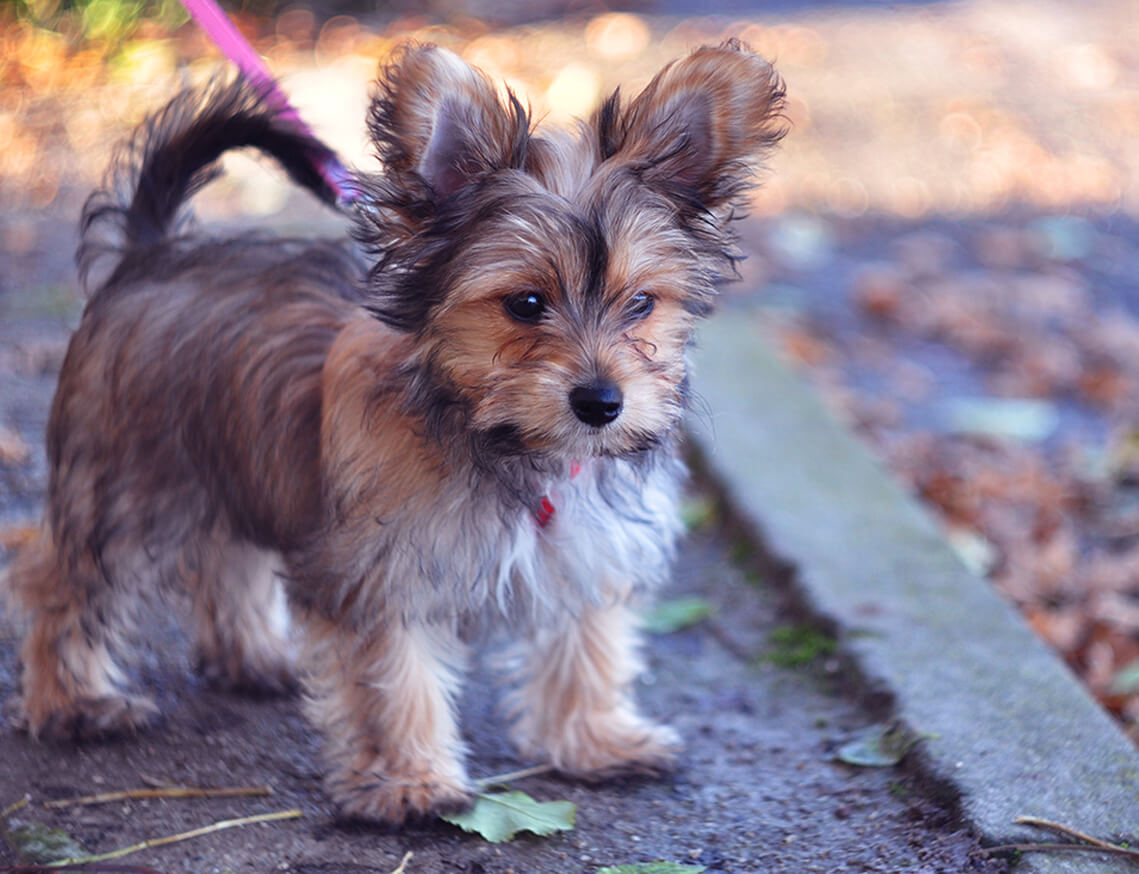
Morkie

The Morkie is one of the smaller designer crossbreeds, which is growing in popularity around the world due to its loving nature and fluffy looks.

The breeds that make up the Morkie are another two fluffballs, the Maltese and the Yorkshire Terrier, but depending on how they have been bred, this crossbreed has a lot of variety in terms of size, shape, colours and coat types. The Morkie can be a first cross (with one Maltese and one Yorkshire Terrier parent), they can be bred back to one of the original breeds or be two Morkies bred together. But in all cases, this is a very small and friendly companion dog.


The need-to-know


  • Dog suitable for non-experienced owners
  • Basic training required
  • Enjoys gentle walks
  • Enjoys walking an hour a day
  • Little toy dog
  • Minimum drool
  • Requires grooming every other day
  • Don't mind
  • Chatty and vocal dog
  • Not a guard dog
  • May require training to live with other pets
  • May require training to live with kids
Height:
The height of a Morkie depends on the size of the parents used, but it’s usually between 19 and 25cm Maltese: not exceeding 25cm Yorkshire Terrier: 18–20cm
Colours:
The colours of a Morkie can vary as well and can be any mixture of the colours of their parents Maltese: Pure white but slight lemon markings are permissible Yorkshire Terrier: Steel blue and tan
UK Kennel Club Groups:
Toy
Personality

Like most crossbreeds, the personality of a Morkie depends on the parents and how they have been bred and reared. But with both parents being affectionate dogs, who bond closely to their owners, the little Morkie will usually inherit these loveable qualities.


Nutrition and Feeding

Toy dogs have a fast metabolism, meaning they burn energy at a high rate. Because of their small stomachs, they must eat little and often. Small-breed foods are specifically designed with appropriate levels of key nutrients and smaller kibble sizes to suit smaller mouths. This also encourages chewing and improves digestion. Your dog's diet needs to have the right balance of all the main nutrient groups including a constant supply of fresh water. It's important to conduct regular body condition scores to ensure you keep your dog in ideal shape, and remember to feed him at least twice daily in accordance with the dog feeding guidelines of his particular food.

Exercise

While this is a surprisingly active small dog, the Morkie will be happy with half an hour to an hour’s walking each day, as long as they have plenty of games and owner interaction.

Ideal Owner

The Morkie would suit an owner or a family with older sensible children and may have a smaller property. They are a fun companion who doesn’t need a great deal of exercise, but will still enjoy joining in all the family’s activities. They do not like to be left alone and so would need an owner who is either at home most of the time or can take their dog with them wherever they go.

Other Information

History and origins


  • Like many of the designer crossbreeds, the Morkie originated in the United States in a quest to find a small companion dog that would fit into any family’s lifestyle no matter how small their home and garden.
  • The two breeds that go into the formation of the Morkie are the Maltese and the Yorkshire Terrier.


Health and common issues


One aim with crossbreeds is to dilute or eliminate any inherited health issues that may exist within one or other of the breeds. This dilution or elimination is only likely if only one parent is the carrier of any particular condition, and where this is a first cross (F1). As this can’t always be guaranteed, all parents should be health tested prior to breeding: Maltese: there are no required health tests but eye testing should be considered. Like many small breeds, they can be prone to luxating patellas. Yorkshire Terriers: this is a fairly healthy long-lived breeds but like many small dogs can have issues with luxating patella and there are other health issues that require owners to ensure they get puppies form a reputable source.


Potential issues


Separation related behaviour problems are very common in the Morkie. The Morkie can be a bit of a barker - especially if bored or if left alone. Like many toy breeds, toilet training can be slow and so owners need to be patient and consistent.


Space requirements


This is a small dog who can live in a flat or a smaller property, as long as they have access to the outdoors for toileting and walks.


Training morkies


The Morkie is far cleverer than many people think and they will enjoy learning dog tricks and games. They should be trained to walk on a lead and harness as well as come back when called. While this may look like a cute fluffy dog, the Morkie can be surprisingly game when out and can chase squirrels and even the neighbour’s cat! This is a breed that needs early and ongoing dog socialisation so they gain confidence with people and other dogs.


Family friendly dog breeds


The Morkie makes a fun family companion but as they are small and rather delicate, they suit families with older, sensible children.


Did you know?


Morkies are really tiny at birth, weighing usually a little less than 140 grams.
 

Zoomed product photo

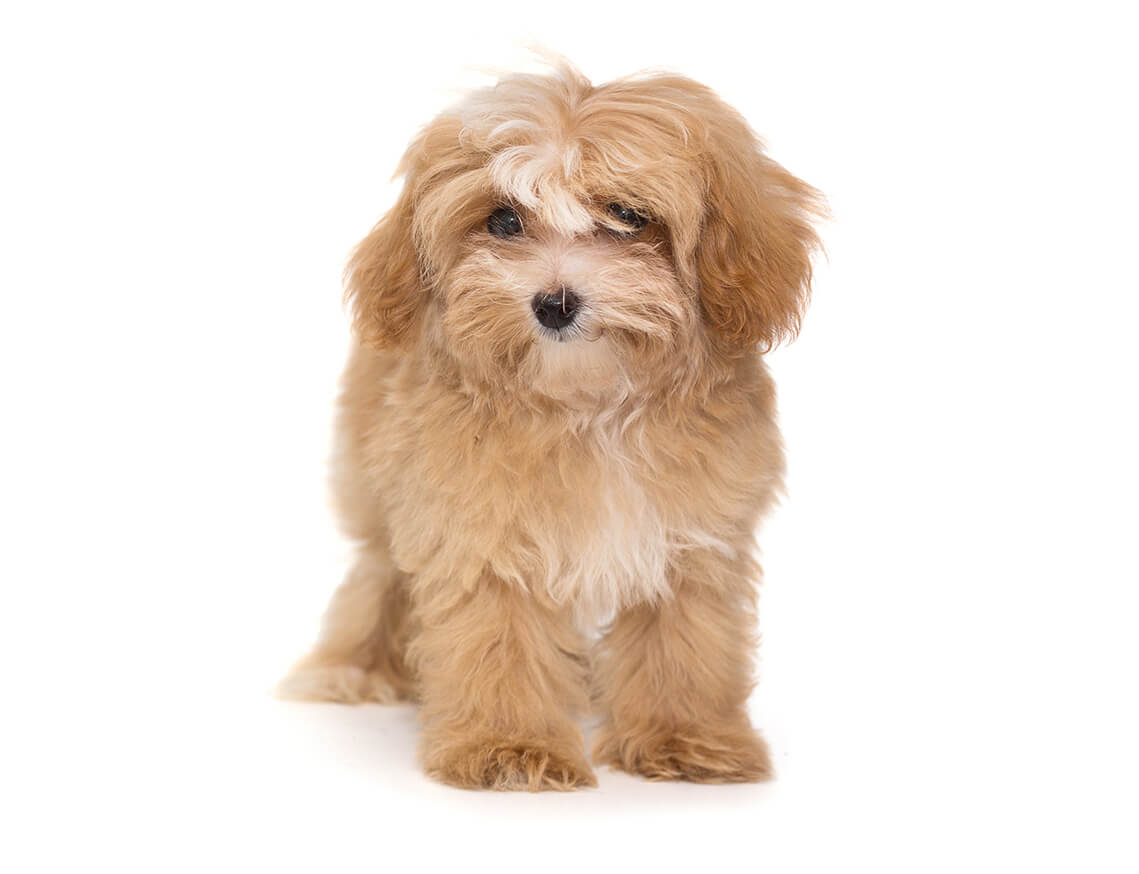
Maltipoo

The Maltipoo is one of the smaller designer crossbreeds, which is growing in popularity. The breeds that make up the Maltipoo are the Maltese and the Poodle (Toy or sometimes Miniature).

Maltipoos can vary in size, shape, coat types and temperaments, depending on how they have been bred, but in all cases this is a small companion dog. The Maltipoo can be a first cross (with one Maltese and one Poodle parent, they can be bred back to one of the original breeds or be two Maltipoos bred together.


The need-to-know


  • Dog suitable for non-experienced owners
  • Basic training required
  • Enjoys gentle walks
  • Enjoys walking an hour a day
  • Little toy dog
  • Minimum drool
  • Requires grooming daily
  • Don't mind
  • Chatty and vocal dog
  • Not a guard dog
  • Great with other pets
  • May require training to live with kids
Height:
The usual height of a Maltipoo depends on the size of the parents used. They can vary widely from 24cm to 36cms, but are usually on the smaller end of that range. Maltese - not exceeding 25cm; Poodle - Toy under 28cm; Miniature between 28-38cm
Colours:
The usual colours of a Maltipoo vary as well and can be any of these solid colours with or without white markings Maltese: Pure white but slight lemon markings are permissible Poodle: All solid colours
UK Kennel Club Groups:
Toy (Maltese) and Utility (Shih Tzu)
Personality

Like most crossbreeds, the personality of a Maltipoo depends on the parents and how they have been bred and reared, but both parents are affectionate companion dogs who bond closely to their owners.


Despite their small size the Maltese is a comparatively robust little dog who as long as they are well-bred and socialised, are active, friendly, trusting and alert. They bond very closely to their owners and will want to go everywhere with them.


Nutrition and Feeding

Toy dogs have a fast metabolism, meaning they burn energy at a high rate. Their small stomachs mean that they must eat little and often. Small-breed foods are specifically designed with appropriate levels of key nutrients and smaller kibble sizes to suit smaller mouths. This also encourages chewing and improves digestion. Your dog's diet needs to have the right balance of all the main nutrient groups including a constant supply of fresh water. It's important to conduct regular body condition scores to ensure you keep your dog in ideal shape and remember to feed him at least twice daily and in accordance with the dog feeding guidelines of his particular food.

Exercise

While this is a surprisingly active small dog, the Maltipoo will be happy with half an hour’s walking each day, as long as they have plenty of games and owner interaction.

Ideal Owner

The Maltipoo would suit an owner or a family with older sensible children who may have a smaller property or just want a fun companion who doesn’t need or want a great deal of exercise - but will still enjoy joining in all the family’s activities. They do not like to be left alone and so would need an owner who is either at home most of the time or can take their dog with them wherever they go.

Other Information

History & origins


  • Like many of the designer crossbreeds, the Maltipoo originated in the United States in a quest to find a small companion dog that didn’t shed and that would fit into any family’s lifestyle no matter how small their home and garden.
  • The two breeds that go into the formation of the Maltipoo are the Maltese and the Poodle.


Health and common issues


One aim with crossbreeds is to dilute or eliminate any inherited health issues that may exist within one or other of the breeds. This dilution or elimination is only likely if only one parent is the carrier of any particular condition, and where this is a first cross (F1). As this can’t always be guaranteed, all parents should be health tested prior to breeding: Maltese - there are no required health tests but eye testing should be considered. Many small breeds can also be prone to luxating patellas. Poodle - eye tests and hip scoring should be done. Information on health tests for both breeds can be found on the Kennel Club’s website. Separation related behaviour problems are very common with Maltipoos. The Maltipoo can be a bit of a barker - especially if bored or if left alone. Like many toy dogs, toilet training can be slow in this crossbreed and so owners need to be patient and consistent.


Space requirements


This is a small dog who can live in a flat or a smaller property as long as they have access to the outdoors for toileting and walks.


Training maltipoos


The Maltipoo is far cleverer than many people think and they will enjoy learning tricks and games. They can be trained to walk on a lead and harness as well as come back when called. While this may look like a cute fluffy dog, the Maltipoo can be surprisingly game when out and can chase squirrels and even the neighbour’s cat! This is a breed that needs early and ongoing dog socialisation so they gain confidence with people and other dogs.


Family friendly dog breeds


The Maltipoo makes a fun family companion but as they are small and rather delicate, they suit families with older sensible children.


Zoomed product photo

Cockapoo

The Cockapoo is one of the more established crossbreeds, consisting of the Cocker Spaniel (show type or working) and the Poodle (Toy or Miniature), in rarer cases the American Cocker Spaniel may be used.

It’s relatively easy to find reputable Cockapoo breeders as there are many breed clubs which are run by dedicated people that care about the breed. These clubs are committed to the responsible breeding and ensuring all puppies and dogs are as healthy and good tempered as possible.

The Cockapoo can be a first cross (with one spaniel and one poodle parent), can be bred back to one of the original breeds, or be two Cockapoos bred together - so there are varieties in size, shape, coat types and temperaments.


The need-to-know


  • Dog suitable for non-experienced owners
  • Some training required
  • Enjoys vigorous walks
  • Enjoys walking one to two hours a day
  • Small dog
  • Minimum drool
  • Requires grooming daily
  • Not a guard dog
  • May require training to live with other pets
  • May require training to live with kids
Lifespan:
12–15 years
Weight:
3–8.5kg
Height:
25–40cm
Colours:
The Cockapoo can be any of the colours common to the Cocker Spaniel or the Poodle including: black; red; orange; brown; combinations of black with white; liver with white; red and white; blue roan; orange roan; black roan; particolours and tricolours
Size:
Small to Medium
Personality

Like most crossbreeds, the personality of a Cockapoo depends on the parents and how they have been bred and reared.


It’s clear from looking at the two breeds that make up the Cockapoo that this is an active dog who needs a lot of exercise and input (often more than many new owners expect) - and needs to be a part of the family. When the crossbreeding turns out as expected, the Cockapoo possesses all of the intelligence of the Poodle with the spirit of the Cocker Spaniel, resulting in a wonderful companion.


The personality of a Cockapoo seems to be more consistent when they are first crosses (F1). As a line successively bred, they can be either bred back to one of the original breeds (and so strengthen either the Spaniel or the Poodle personalities) or else be bred to another Cockapoo - in which case there is less predictability.


History and Origins

The Cockapoo is one of the oldest and most established of the ‘designer crossbreeds’ and originated in the US as far back as the 1960s. The idea of the Cockapoo was to create a non-shedding, active and intelligent companion dog who required less coat care than other breeds of a similar size.While there are breed clubs in the UK and all over the world, the Cockapoo currently isn’t recognised by any international Kennel Clubs. To properly understand the origins of the breed requires an understanding of the two breeds that go into the formation of the Cockapoo.

Nutrition and Feeding

Your dog's diet needs to have the right balance of all the main nutrient groups including a constant supply of fresh water. It's important to conduct regular body condition scores to ensure you keep your dog in ideal shape, and remember to feed them at least twice daily in accordance with the feeding guidelines of their particular food.

Exercise

Both the breeds that make up the Cockapoo are active and enjoy exercise and will be happy with between an hour or two hours every day. They will also enjoy games, training, interactive toys and being involved in all family activities too.

Other Information

Health and common issues


One aim with crossbreeds is to dilute or eliminate any inherited health issues that may exist within one or other of the breeds. This dilution or elimination is only likely if only one parent is the carrier of any particular condition, and where this is a first cross (F1). As this can’t always be guaranteed, all parents should be health tested prior to breeding: Cocker Spaniel - eye tests and hip scoring should be done, and there are several DNA tests that may also be required. Poodle - eye tests and hip scoring should be done. The Cockapoo Club of GB also suggests that where relevant, testing should be done for: Progressive retinal atrophy Retinal Dysplasia Glaucoma Hip Dysplasia Familial Nephropathy Von Willebrand Disease Phosphofructokinase (PFK) disease


Space requirements


The Cockapoo isn’t a large dog and doesn’t need a huge amount of space, however they are very active and will appreciate a garden and access to the great outdoors for the long walks they will need.


Training cockapoos


This is a very active dog who is smart and busy and will need training if you want any hopes of a quiet life! They are a joy to train as both the breeds are intelligent and love working with their owner, but they will learn bad habits as quickly as good ones so reward-based training should start early and be ongoing. This is a great breed for dog sports such as agility or even pet gundog work, and they will love having an active job to do. It’s important to train a Cockapoo to enjoy handling and grooming (as they will need a lot of it) and to happily give up any prizes they may rather hold onto, always using positive, reward-based methods. Given they have a working gundog background, they should be well socialised with cats (who they can learn to live with happily), but always be watched with caution around other small animals and birds.


Best family dog breeds


If the Cockapoo is sourced from a reliable breeder and well-trained from puppyhood, they will make fabulous family dogs, be a total joy to own and will get on with everyone. In other words, almost the perfect dog! However, an untrained or bored Cockapoo can easily become unruly and overly boisterous, so always make sure to provide them with plenty of mental stimulation and adequate training.


Did you know?


  • The Cockapoo isn’t currently recognised by the UK Kennel Club due to it being a mixed breed.
  • Cockapoos produce low amounts of dander and hair, so they’re popularly chosen as dogs for those with allergies or sensitivities.
  • They’re known as ‘people dogs’ and love to spend time with their families.
  • Cockapoos don’t have a strong doggy odour (providing regular grooming and trimming is carried out).


Zoomed product photo

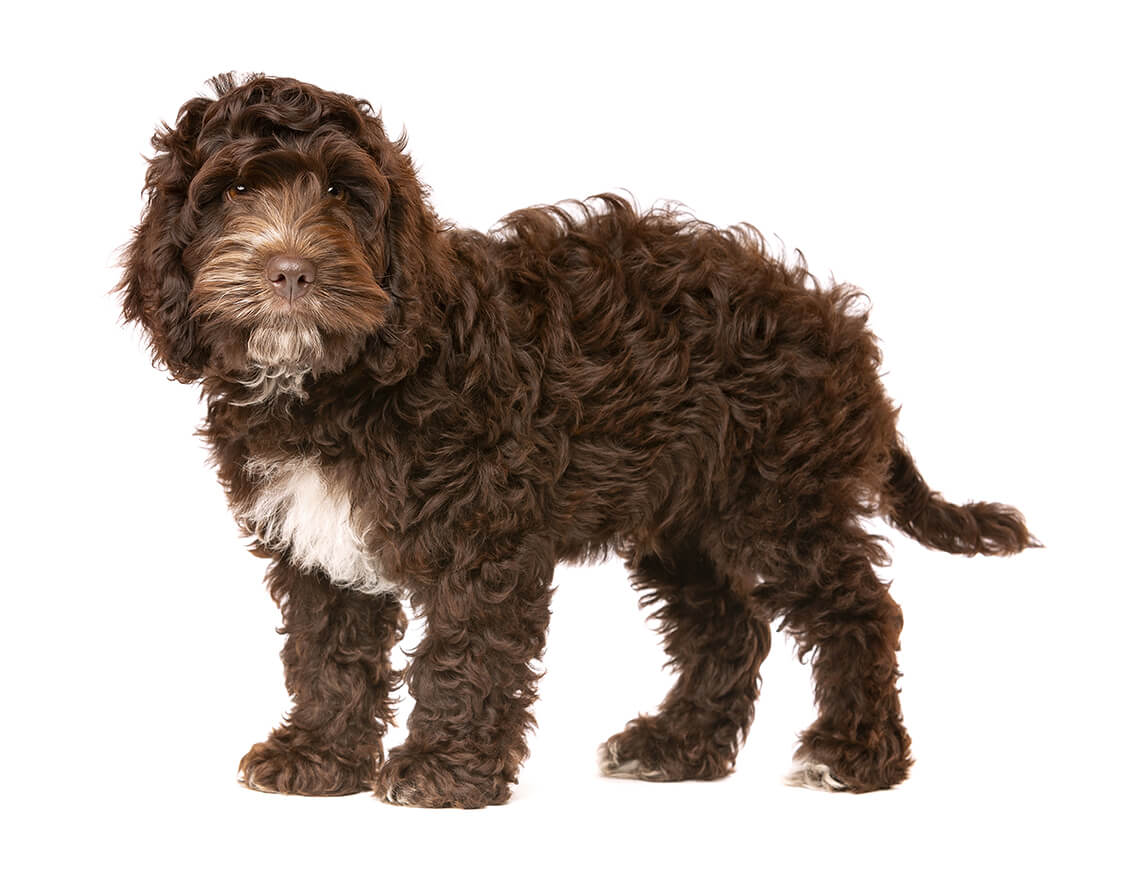
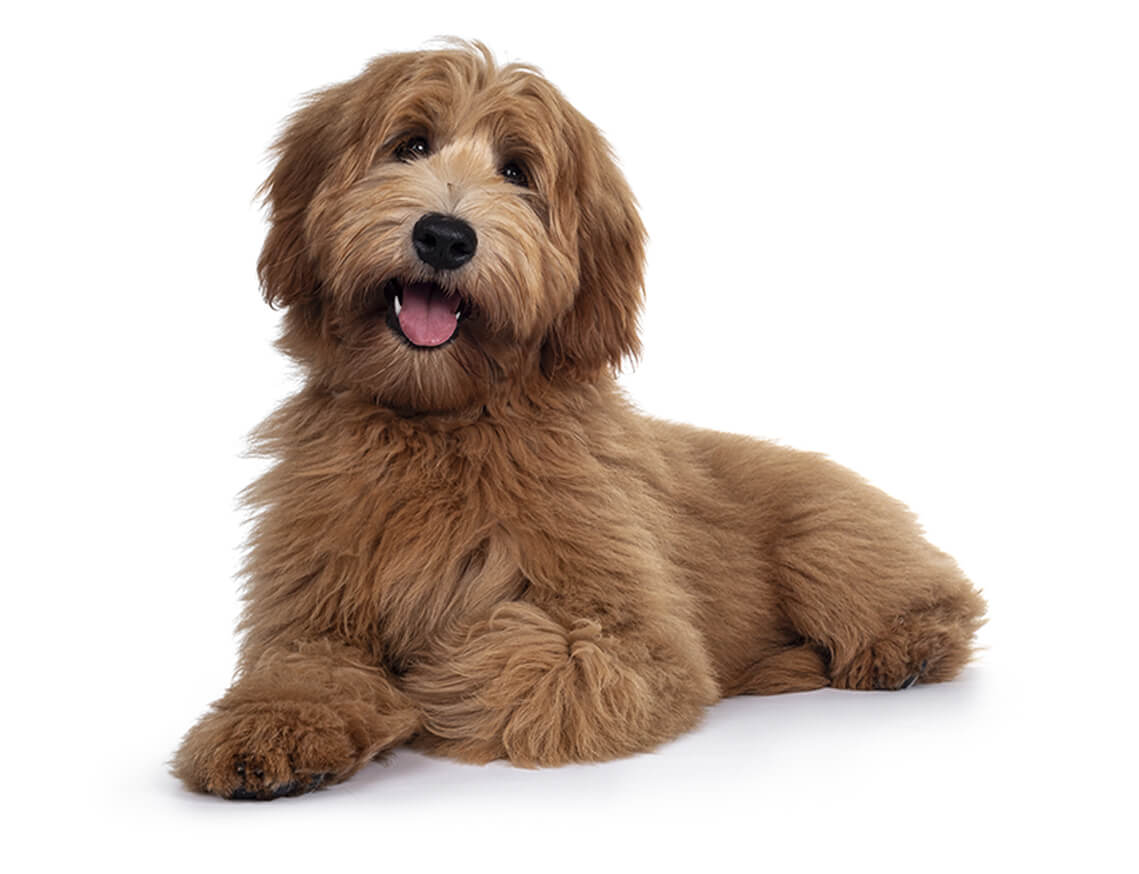
Labradoodle

The Labradoodle is one of the more established crossbreeds, so if you want to add one to the family, you’ll be happy to know it’s fairly easy to find reputable breeders. The breeds that make up the Labradoodle are the Labrador Retriever (show type or working) and the Standard Poodle (or sometimes the Miniature Poodle).

The representatives of this crossbreed can vary in size, shape, coat types and temperaments, depending on how they have been bred. The Labradoodle can be a first cross (with one Labrador and one Poodle parent, they can be bred back to one of the original breeds or be two Labradoodles bred together.

There are breed clubs set up and run by dedicated people who would like to see the Labradoodle become a recognised breed. So make sure you look out for those breeders that breed them responsibly and ensure all parents are health tested.


The need-to-know


  • Dog suitable for non-experienced owners
  • Basic training required
  • Enjoys active walks
  • Enjoys walking one to two hours a day
  • Large dog
  • Some drool
  • Requires grooming daily
  • Non hypoallergenic breed
  • Chatty and vocal dog
  • Not a guard dog
  • May require training to live with other pets
  • May require training to live with kids
Height:
The usual height of a Labradoodle depends on the size of the parents used so can vary widely, going from 30cm to 70cm Labrador Retriever: 55-57cm Poodle – Standard: over 38cm Miniature: 28-38cm
Colours:
The usual colours of a Labradoodle can vary as well, depending on the parents’ coat colours Labrador: Black, yellow or liver/chocolate. Yellows range from light cream to red fox Poodle: All solid colours
UK Kennel Club Groups:
Gundog (Labrador Retriever) and Utility (Poodle)
Personality

Like most crossbreeds, the personality of a Labradoodle depends on the parents and how they have been bred and reared.


The Labrador Retriever is an active, friendly, loving dog who thrives on human companionship, wanting nothing more than to please their owners (except perhaps eat and jump in any water they can find!). They are ideal pets where there are children around and they get on well with other household animals. Labradors are a very happy breed, extremely affectionate, constantly wagging their tails and always on the go. They are easily trained, being eager to learn and please and can turn their paw to just about anything. They are total foodies however - which helps with their training but not their waistlines!


History and Origins

The Labradoodle is one of the best-known and established of the ‘designer crossbreeds’. It originated in Australia in the 1970s when the Australian Guide Dog Association received an enquiry from a lady in Hawaii requesting a Guide Dog that wouldn’t cause her allergies to flare up. She chose Australia because the animal health arrangements meant that a dog bred there could come straight into her home in Hawaii without having to spend time in quarantine.The Association were already using Labradors as guide dogs, and so they needed to cross one with a non-shedding breed. They imported a white Standard Poodle from Sweden that had excellent working bloodlines - and the first (intentional) Labradoodle litter was born.

Nutrition and Feeding

Large breed dogs, as well as having large appetites, benefit from a different balance of nutrients including minerals and vitamins compared to smaller-breed dogs. Labradoodles like most large breed dogs can be prone to bloating and stomach problems, but smaller, more frequent meals can help minimise this risk. The Labradoodle diet needs to have the right balance of all the main nutrient groups including a constant supply of fresh water. It's important to conduct regular?body condition?scores to ensure you keep your dog in ideal shape, and remember to feed him at least twice daily in accordance with the dog feeding guidelines of his particular food.

Exercise

Both the breeds that make up the Labradoodle are highly active and enjoy exercise and will be happy with two hours plus every day. But they will still enjoy games, training, interactive toys and being involved in all family activities at the rest of the time too.

Other Information

Health and common issues


One aim with crossbreeds is to dilute or eliminate any inherited health issues that may exist within one or other of the breeds. This dilution or elimination is only likely if only one parent is the carrier of any particular condition, and where this is a first cross (F1). As this can’t always be guaranteed, all parents should be health tested prior to breeding: Labrador Retriever - eye tests and hip and elbow scoring should be done, including several DNA tests Poodle - eye tests and hip scoring Some Labradoodle clubs also suggest that there are several potential health issues, and affected dogs should not be bred from (and where possible relevant testing should be done): Progressive retinal atrophy Hereditary cataracts Hip Dysplasia Elbow Dysplasia Familial Nephropathy Von Willebrand Disease Sebaceous Adenitis Addison’s Disease Epilepsy Canine Autoimmune Thyroiditis


Space requirements


The Labradoodle is a large active dog and so needs a good-sized living space - plus they are very active and so will appreciate a large garden and access to the great outdoors for the long walks they will need.


Training labradoodles


Dog training is important for this very active, smart and busy dog. They are a joy to train as both the breeds are intelligent and love working with their owner - but they will learn bad habits as quickly as good ones so reward-based training should start early and be ongoing. This is a great breed for dog sports such as agility or even pet gundog work - and they will love having an active job to do. It is important to train a Labradoodle to enjoy handling and grooming (as they will need a lot of it) and to happily give up any prizes they may rather hold onto - always using positive, reward-based methods. Given they have a working gundog background, they should be well socialised with cats (who they can learn to live with happily) but they should be watched with caution around other small animals and birds.


Family friendly dog breeds


The Labradoodle is close to being the perfect family dog. If the Labradoodle is sourced from a reliable breeder, and well-trained from puppyhood, they will make fabulous family dogs, be a total joy to own and will get on with everyone. An untrained or bored Labradoodle can however easily become unruly and overly boisterous.


Did you know?


Labradoodles make great therapy dogs. Their warm personality is often a match for people with autism or physical disabilities.


Zoomed product photo

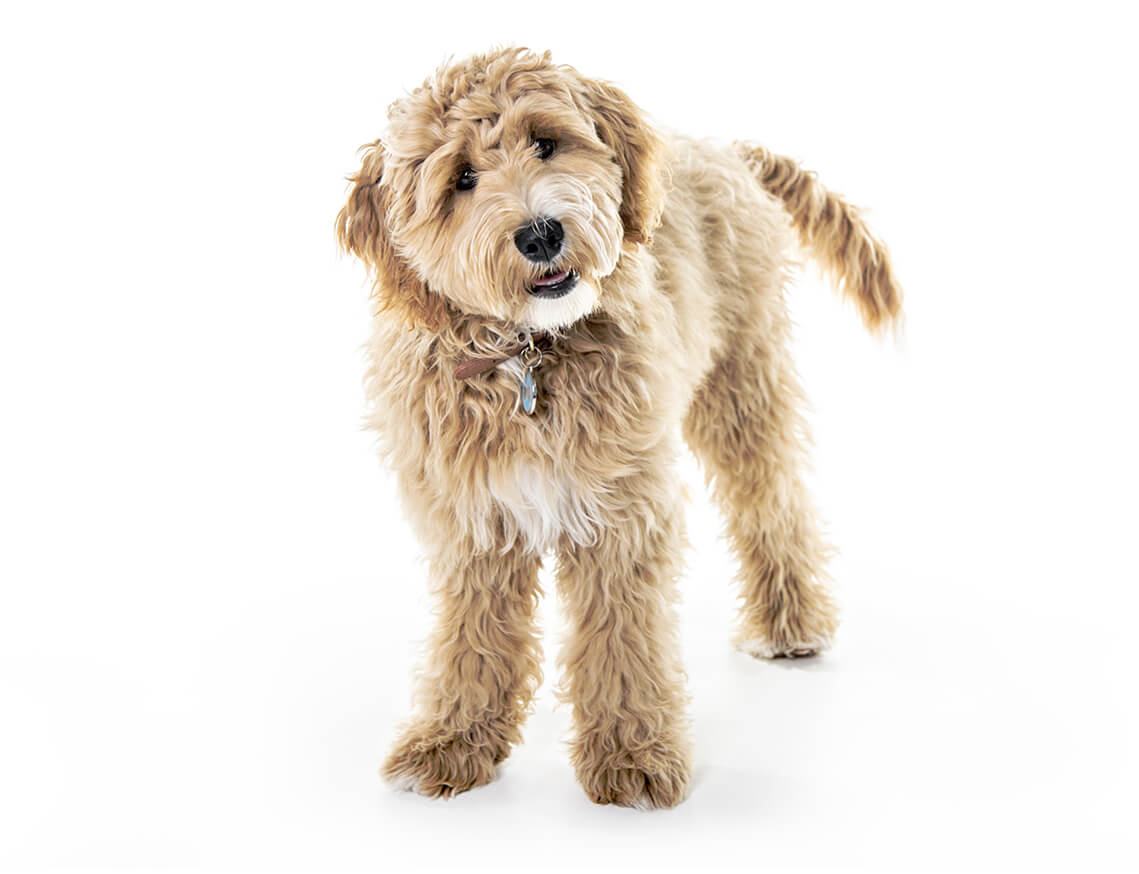
Goldendoodle

The Goldendoodle is a cross between a Golden Retriever (show type or working) and the Standard Poodle (sometimes Miniature will be used to produce a smaller dog). Developed due to the success of the Labradoodle, this breed is growing in popularity all across the world.

The Goldendoodle can be a first cross (with one Retriever and one Poodle parent), can be bred back to one of the original breeds or be two Goldendoodles bred together, so there are varieties in size, shape, coat types and temperaments.


The need-to-know


  • Dog suitable for non-experienced owners
  • Some training required
  • Enjoys active walks
  • Enjoys walking one to two hours a day
  • Large dog
  • Some drool
  • Requires grooming daily
  • Non hypoallergenic breed
  • Don't mind
  • Not a guard dog
  • May require training to live with other pets
  • May require training to live with kids
Personality

Like most crossbreeds, the personality of a Goldendoodle depends on the parents and how they have been bred and reared.


It’s clear from looking at the two breeds that make up the Goldendoodle that this is an extremely active dog who needs a lot of exercise and input (often more than many new owners expect) and being highly social, needs to be a part of the family.


The personality of a Goldendoodle seems to be more consistent when they are first crosses (F1). As a line is successively bred, they can be either bred back to one of the original breeds (and so strengthen either the Retriever or the Poodle personalities) or else be bred to another Goldendoodle, in which case there is less predictability in temperament (and in-breeding becomes more of a potential issue). Some breeders will cross Goldendoodles and Labradoodles which adds to the unpredictability of the offspring.


History and Origins

The Goldendoodle is one of the newest ‘Doodle’ types and was first intentionally bred in the 1990s, following the success of the Cockapoo and Labradoodle. Due to the fact it’s still a relatively new breed, it requires knowledge of the two breeds involved in its creation in order to learn more.The Goldendoodle can have any combination of the two breeds in their appearance, behaviour and temperament.

Nutrition and Feeding

Large breed dogs, as well as having large appetites, benefit from a different balance of nutrients including minerals and vitamins compared to smaller-breed dogs. Goldendoodles like most large breed dogs can be prone to bloating and stomach problems, smaller, more frequent meals can help minimise this risk. Your dog's diet needs to have the right balance of all the main nutrient groups including a constant supply of fresh water. It's important to conduct regular body condition?scores to ensure you keep your dog in ideal shape, and remember to feed them at least twice daily in accordance with the feeding guidelines of their particular food.

Exercise

Both the breeds that make up the Goldendoodle are highly active, enjoy exercise and will be happy with two hours plus every day. They will also enjoy games, training, interactive toys and being involved in all family activities too.

Other Information

Health and common issues


One aim with crossbreeds is to dilute or eliminate any inherited health issues that may exist within one or other of the breeds. This dilution or elimination is only likely if only one parent is the carrier of any particular condition, and where this is a first cross (F1). As this can’t always be guaranteed, all parents should be health tested prior to breeding: Golden Retriever - eye tests and hip and elbow scoring should be done, and there are several DNA tests that may also be required Poodle - eye tests and hip scoring should be done Information on DNA health tests for both breeds can be found on the Kennel Club’s website and via their respective breed clubs.


Space requirements


The Goldendoodle is a large, active dog that needs a good-sized living space. Plus, they will appreciate a large garden and access to the great outdoors for the long walks they will need.


Training goldendoodles


This is a very active dog who is smart and busy and will need training if you want any hopes of a quiet life! They are a joy to train as both the breeds are intelligent and love working with their owner, but they will learn bad habits as quickly as good ones, so reward-based training should start early and be ongoing. The Goldendoodle can be more sensitive than the Labradoodle and any rough handling can worry them greatly, so all training and handling should be positive and reward-based. This is a great breed for dog sports such as agility or even pet gundog work and they will love having an active job to do. It’s important to train a Goldendoodle to enjoy handling and grooming (as they will need a lot of it) and to happily give up any prizes they may rather hold onto, always using positive, reward-based methods. Given that both breeds that go into the Goldendoodle have a working gundog background, they should be well socialised with cats (who they can learn to live with happily), but they should be watched with caution around other small animals and birds.


Best family dog breeds


If the Goldendoodle is sourced from a reliable breeder and well-trained from puppyhood, they will make fabulous family dogs, be a total joy to own and will get on with everyone. In other words, almost the perfect dog! However, an untrained or bored Goldendoodle can easily become unruly and overly boisterous so be sure to provide them with plenty of exercise and mental stimulation.


Did you know?


  • Despite the Goldendoodle’s popularity it’s not currently recognised by the UK Kennel Club as it’s a mixed breed.
  • The Goldendoodle is sometimes known as the ‘Groodle’.
  • Goldendoodle’s make excellent assistance dogs and have been used as guide dogs, service dogs, therapy dogs and sniffer dogs.
  • They’re not very good guard dogs as they’re too friendly, preferring to lick strangers rather than bark at them!


Zoomed product photo

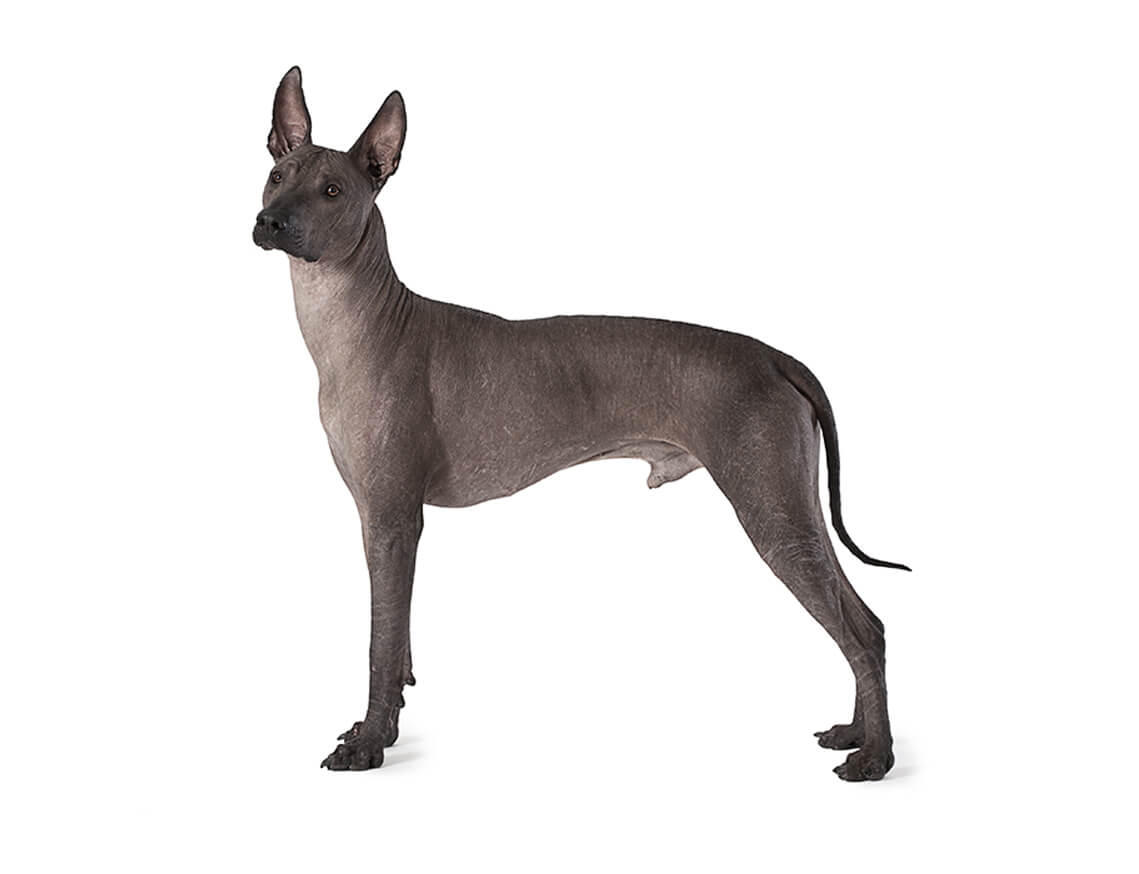
Mexican Hairless Dog (Xoloitzcuintle)

The Mexican Hairless Dog or Xoloitzcuintle, called the Xolo for short, is a hairless dog with soft skin. Slightly longer than they are tall with a slim, elegant build, they come in three size varieties and also a haired version which should have a short, tight, flat and smooth coat with no undercoat. 
Hairless varieties should have a smooth, elastic yet close-fitting skin. Some tufts of hair are permitted on the forehead, face, and back of the neck.


The need-to-know


  • Dog suitable for experienced owners
  • Some training required
  • Enjoys gentle walks
  • Enjoys walking an hour a day
  • Medium dog
  • Minimum drool
  • Requires grooming once a week
  • Hypoallergenic breed
  • Quiet dog
  • Guard dog. Barks and alerts
  • May require training to live with other pets
  • May require training to live with kids
Lifespan:
12-15 years
Colours:
Solid black, grey, red, liver, bronze or blonde, with or without spots of any colour including white markings
Sizes & Heights:
The three sizes are Miniature: 25-35cm; Intermediate: 36-45cm; and Standard; 46-60cm
UK Kennel Club Groups:
Utility
Personality

Shy and reserved with strangers, the Mexican Hairless Dog is in fact an intelligent, loving companion with family. Described as peaceful and contented, they are alert to their environment and will bark to alert their owners to the presence of strangers or unusual activity. As may be expected, they are warm and cuddly and will appreciate a warm jumper or coat in cooler weather, and can be found burrowed under blankets or your duvet when temperatures drop.


History and Origins

Country of Origin: Mexico


Thought to be an ancient breed, the Mexican Hairless or Xolo has been associated with the peoples of Central and South America for around 3000 years. Revered by the Aztecs, the name Xoloitzcuintle (say ‘sholo-eats-QUEENT-ly’) means ‘dog god’ (or ‘dog of the god Xolotl’ who was the god of deformed things, and a hairless dog seemed to fulfil that description). They were thought to have special powers of healing transmitted to them from the gods. They were also used as a gift to the gods and were sacrificed and eaten.


Nutrition and Feeding

The Miniature Mexican Hairless dog is a small dog that has a fast metabolism, meaning they burn energy at a high rate, although their small stomachs mean that they must eat little and often. Small-breed foods are specifically designed with appropriate levels of key nutrients and smaller kibble sizes to suit smaller mouths. This also encourages chewing and improves digestion. The Intermediate and Standard diets need to have the right balance of all the main nutrient groups including a constant supply of fresh water. It's also important to conduct regular?body condition?scores to ensure you keep your dog in ideal shape and remember to feed him at least twice daily and in accordance with the feeding guidelines of his particular food. Discover more about how to offer your dog a balanced diet with our easy-to-follow guide.

Exercise

Miniature Mexican Hairless dogs need about half an hour of daily dog exercise and the Intermediate and Standard need about an hour. Ensure whichever size you have has plenty of mental exercise in the form of training and puzzle solving games and activities. Do ensure they are protected from the elements (both the warm and cold) before taking them outside.

Other Information

Health and common issues


The main health problems encountered in the Mexican Hairless dog are related to their skin, being particularly predisposed to sunburn given the lack of protection from fur. Dental problems also occur quite frequently.


Space requirements


The Mexican Hairless does not need a large home, however they will appreciate a warm and comfortable house, soft bedding and need a very secure garden as they are excellent climbers, agile jumpers and generally clever escape artists! Country or town, as long as they have plenty of exercise both mental and physical, they will be happy.


Training mexican hairless dog (xoloitzcuintle)


Intelligent and quick to learn, the Mexican Hairless needs careful dog socialisation due to their naturally wary, reserved nature. Capable of high levels of dog training if this is done sensitively using positive reinforcement-based methods. All sizes of Mexican Hairless will benefit from basic training and in particular a good recall and training to ignore livestock or small furries, as they will hunt and chase.


Best family dog breeds


A good family dog for those with older children or teenagers, puppies can be rather boisterous, loud and can play bite enthusiastically so may not suit homes with very small children. While many dogs are traditionally thought of as being good with children, all dogs and children need to be taught to get on with each other and be safe together. Even so, dogs and young children should never be left alone together and adults should supervise all interactions between them.


Did you know?


  • They were not specially bred to be hairless and the gene that causes hairlessness is a spontaneous mutation. There will normally be a mix of both haired and hairless puppies in each litter. The gene that produces hairless puppies also affects dentition, with hairless puppies prone to missing teeth.
  • Often thought to be hypoallergenic and so good for those with allergies, this is in fact only true if the allergy is to the hair. If the allergy is related to saliva or dander, then the Xolo is no more hypoallergenic than any other dog!


Zoomed product photo

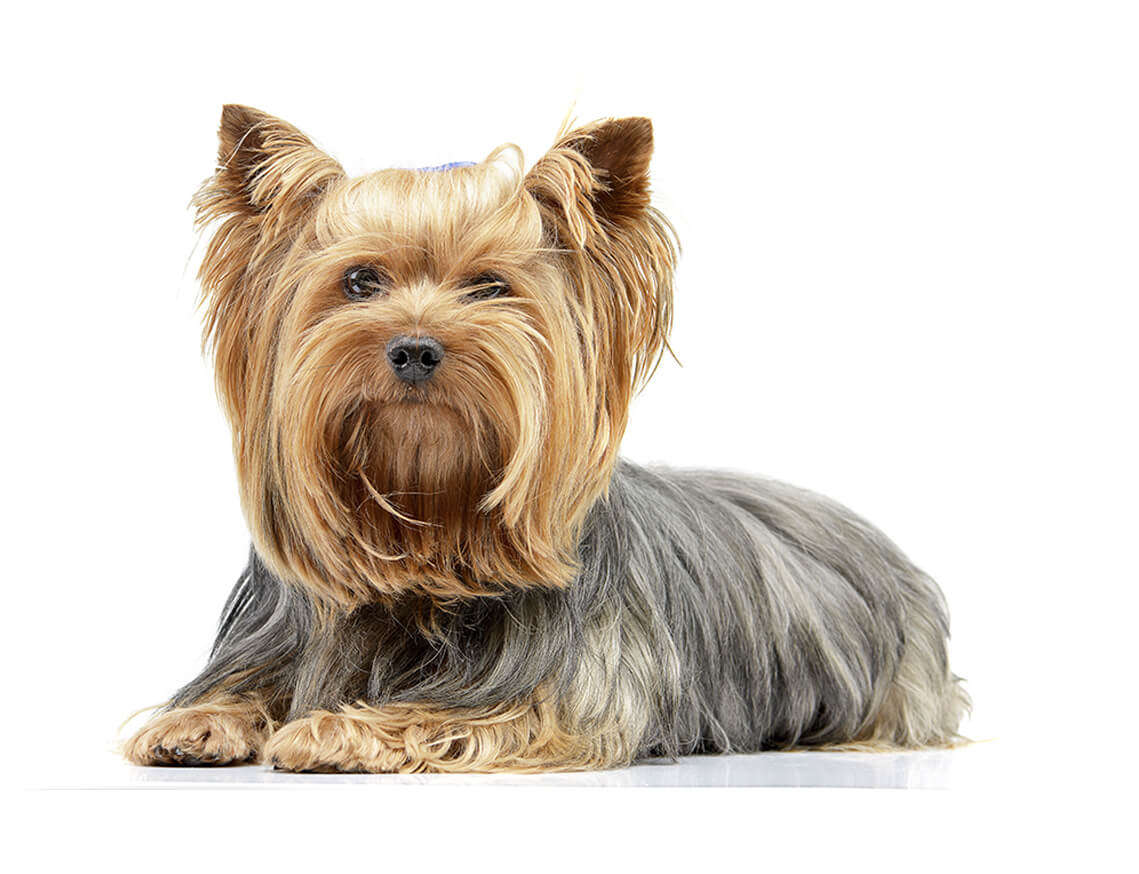
Yorkshire Terrier

A toy breed, the Yorkshire Terrier dog is best known for his full flowing tresses of a texture quite similar to human hair. The coat colouring is unusual too, being a steel blue and gold (rich tan). He has an air of importance about him, holding his head high.


The need-to-know


  • Dog suitable for non-experienced owners
  • Basic training required
  • Enjoys active walks
  • Enjoys walking an hour a day
  • Little toy dog
  • Minimum drool
  • Requires grooming every other day
  • Hypoallergenic breed
  • Very vocal dog
  • Guard dog. Barks and alerts
  • May require training to live with other pets
  • May require training to live with kids
Lifespan:
13–16 years
Weight:
No more than 3.2kg
Height:
18-20cm
Colours:
Steel blue, gold (rich tan)
Size:
Small
Kennel Club group:
Terrier
Personality

The Yorkshire Terrier is a small dog with a big attitude. This is a dog that will one minute happily snuggle on grandma's knee and enjoy a good cuddle, and the next minute leap through the air and tear after the neighbour's dog promising to show it who is boss. Yorkies are terriers after all, and will protect their territory valiantly.


This is a huge dog in a small body! He is lively and curious and into everything – and owners will have to get used to being tailed everywhere by their inquisitive (and often noisy) shadow. This is a dog who needs lots of exercise and stimulation – he loves long walks but also needs games in the house to keep his busy mind occupied.


History and Origins

Country of Origin:  Germany


Known as the Grey Ghost, the Weimaraner’s origins spring form the court of the Grand Duke Karl August of Weimar sometime around 1810. His aim was to breed a perfect hunting dog and so crossed German Pointers, French Hounds and Bloodhounds to produce a dog that would be as happy hunting bears as they would be birds. He also wanted a head-turning dog that would be a status symbol for the nobility.The breed was closely guarded in Germany, until just before the outbreak of the Second World War, when a breeder managed to acquire a male and two females and take them to the US. In 1943, the AKC recognised the breed but it wasn’t until the 1950s that they made their way to the UK.


Nutrition and Feeding

Toy dogs have a fast metabolism, meaning they burn energy at a high rate, although their small stomachs mean that they must eat little and often. Small-breed foods are specifically designed with appropriate levels of key nutrients and smaller kibble sizes to suit smaller mouths. This also encourages chewing and improves digestion.

Exercise

To keep your Yorkie healthy and fit, daily exercise is a must. Yorkshire Terriers love walking and will trot on for miles if allowed. A short walk will please a Yorkie so long as he gets a good sniff around and some mental stimulation. Do remember that Yorkshire Terriers aren't just lap dogs, though, and do like to run, fetch and play like any dog. A minimum of half an hour of exercise is needed by an adult daily.

Ideal Owner

The Yorkshire Terrier will suit an owner who wants a big personality in a small package, who doesn’t mind a bit of noise and who enjoys grooming. This is another breed who doesn’t like to be left, and so a home-loving owner is needed.

Other Information

Health and common issues


Yorkshire Terrier dogs tend to have a long lifespan. Nevertheless, they are predisposed to eye problems, kneecaps that may temporarily slip out of place, a specific thigh bone disease, bladder stones, a windpipe disorder and congenital liver disease.


Space requirements


The Yorkshire Terrier enjoys being a country dog but is equally happy in a flat as long as he has access to the outdoors for exercise and toileting. Close neighbours may not enjoy the sound of his voice, however!


Training yorkshire terriers


Yorkshire Terriers are surprisingly clever and can be taught basic exercises easily - although can often be selectively obedient if he is distracted by something exciting! They should be taught to walk on a collar and lead and early and ongoing socialisation in a class with other small dog puppies is vital to prevent them being nervous around other dogs. If they are to live with cats, it is best to find a breeder who rears the puppies with cats and that they are introduced early. He may never get on with strange cats, however.


Best family dog breeds


Yorkshire Terriers are not great family dogs as they are too small and delicate for exciting games and some have a traditional terrier short fuse! They can live with older sensible children, however. While many dogs are traditionally thought of as being good with children, all dogs and children need to be taught to get on with and respect each other, and be safe together. Even so, dogs and young children should never be left alone together and adults should supervise all interactions between them.


Did you know?


  • The Yorkshire Terrier was bred to hunt and kill rats in the coal mines – and so be small enough to fit in a miner’s pocket!
  • While the Chihuahua is recognised as the world’s smallest breed, the world’s smallest ever dog was a Yorkshire Terrier who was only 6cm high.
  • One brave Yorkshire Terrier called Smoky was an American Air Force mascot who flew on 12 combat missions and was awarded eight battle stars. She went on to become the first Therapy Dog on record visiting wounded airmen and soldiers in hospital.


Zoomed product photo

West Highland White Terrier

The sharp contrast of sparkling dark eyes and button nose, against crisp white fur and sharply pricked ears gives the West Highland White Terrier or ‘Westie’ an attractive appearance. With a compact body, fox-like head and hard, shaggy double coat, the Westie is unmistakable for any other breed.


The need-to-know


  • Dog suitable for non-experienced owners
  • Some training required
  • Enjoys active walks
  • Enjoys walking an hour a day
  • Small dog
  • Some drool
  • Requires grooming every other day
  • Non hypoallergenic breed
  • Chatty and vocal dog
  • Guard dog. Barks and alerts
  • May require training to live with other pets
  • May require training to live with kids
Lifespan:
12 – 16 years
Weight:
7 – 10kg
Height:
White
Size:
Small
UK Kennel Club Groups:
Terrier
Personality

Courageous, cheeky, jaunty and affectionate, loyal to their families and friends, the Westie is understandably an appealing little dog. Perfectly capable of being trained to a high level with the right encouragement, they still retain that working terrier nature, willing to take on foe many times their size. Not afraid to be confrontational, the Westie is a good watch dog, alerting the whole household loudly to anything they believe constitutes ‘trouble’.


History and Origins

Country of Origin:  Scotland


Like many of the Scottish terriers, the Westie was bred to work, hunting otter, fox and other vermin. Unlike any others however they are always white in colour for a unique and tragic reason. Back in the 1600s, Col. Malcolm if Poltalloch was out hunting when he mistook his beloved dark coloured terrier for a fox, shooting and killing him. After that he vowed only to have white dogs to ensure that could never happen again.First called the Poltalloch Terrier, the breed only appeared in the show-ring under the name of West Highland White Terrier in 1904 and has gone on to be one of the best-loved of all the terrier breeds.


Nutrition and Feeding

Small dogs have a fast metabolism, meaning they burn energy at a high rate, although their small stomachs mean that they must eat little and often. Small-breed foods are specifically designed with appropriate levels of key nutrients and smaller kibble sizes to suit smaller mouths. This also encourages chewing and improves digestion.

Exercise

Westies need walks – an hour of exercise per day, but more if you have the time. This is a playful and energetic little dog so providing a variety of walking routes, games, training and puzzle solving exercise is essential.

Other Information

Health and common issues


The most common health problem encountered are skin allergies. The breed can also be affected by an inherited bone disorder of the jaw. Check the Kennel Club website and the breed club for further health information.


Space requirements


Small and compact, the Westie is not difficult to house. A secure garden is essential as they are capable of jumping many times their own height, squeezing through small spaces and digging enthusiastically under an obstacle. Suited to town or countryside, but training will be needed to teach a Westie not to alert bark to every noise or moving object.


Training west highland white terrier


The Westie will enjoy training as long as you set them up to believe it was all their own idea. They will work hard for food rewards and toys they can chase, tug and rag about. Early work on recall, and socialisation to children, cats and livestock is important. An intelligent and versatile dog, if you enjoy training there is no reason the Westie cannot compete well in a variety of dog sports and competitions.


Best family dog breeds


A great companion for older children who can respect a dog’s need for space and take part in training and exercise. Small breeds are not ideal for very young children who find it very difficult to differentiate between ‘toy’ and ‘real live animal’ and terriers are unlikely to suffer such treatment without reaction. While many dogs are traditionally thought of as being good with children, all dogs and children need to be taught to get on with and respect each other, and be safe together. Even so, dogs and young children should never be left alone together and adults should supervise all interactions between them.


Did you know?


  • With their bright white coat and dark eyes and nose, the Westie been a long-standing favourite of artists and advertisers for many years. From Gallant the Westie who featured in artist Marjorie Turner’s works in the early 1900’s, to the Black &; White Scotch whisky brand, Rheingold beer and as the face of several dog food brands, the Westies attractive face is undeniably appealing.  They also appeal to celebrities and even royals with owners having included HRH The Duchess of Cambridge, Matthew Mc
  • Conaughey, Whoopi Goldberg, Hugh Laurie and many others.
  • Despite their small size they have an incredibly loud bark. Interestingly, they were actually bred this way so that if they ever got stuck underground when hunting, their owner could locate them. West Highland Terriers have very sensitive skin on their ears and they can get sunburnt – so make sure you pop on some dog-safe sunscreen! Westie’s were developed to have a super strong tail that they can be pulled out by if they ever get stuck in a hole.