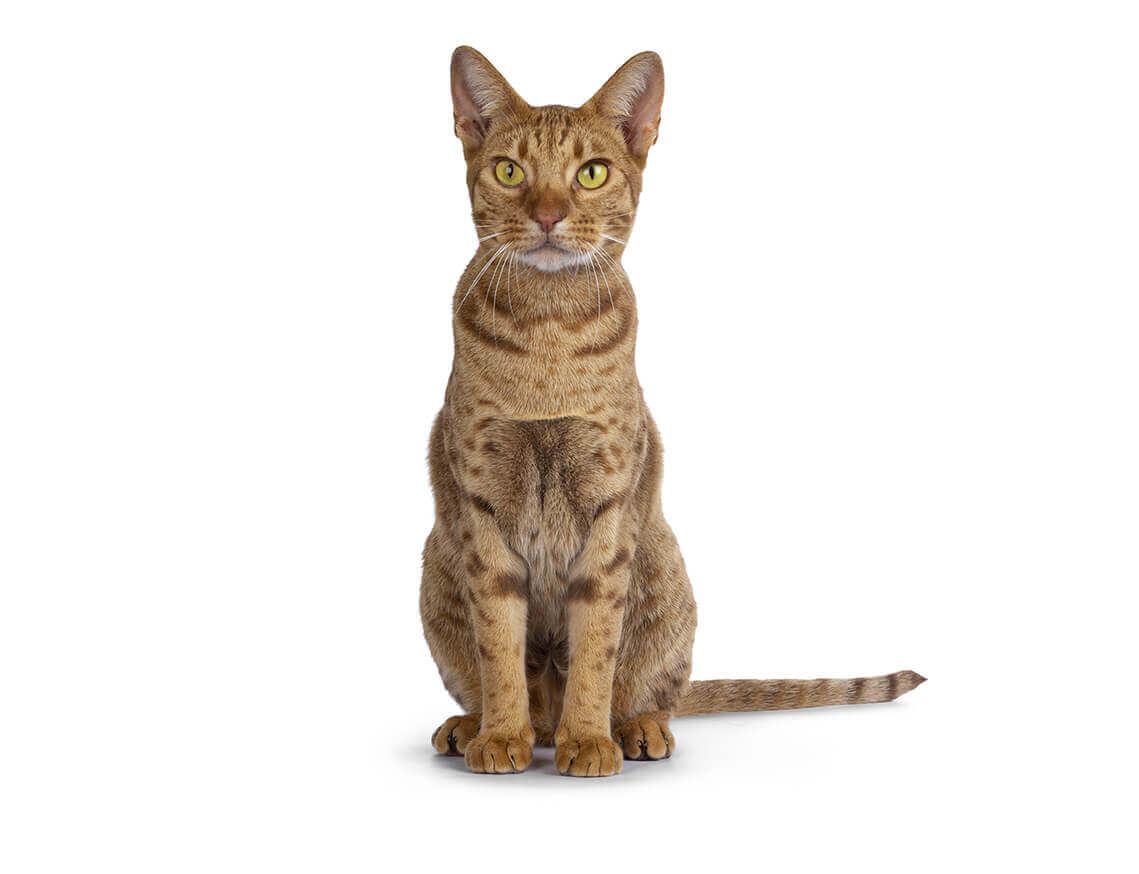
The Ocicat is a medium to large cat with a well-spotted coat. The chest is deep and broad and the legs are powerful and well-muscled. The head is wedged-shaped with a 'squareness' to the jaw. The large, wide-set, tufted ears help give it a wild look. The Ocicat's coat is short and sleek with a satin texture. The spots are well scattered in a distinctive pattern on the sides of the body, shoulders, and hindquarters, extending down the legs and onto the belly. The forehead displays the distinctive tabby 'M'. The tail shows alternate spots and rings of darker colour ending with a dark tip. The Ocicat comes in many colours.
The need-to-know
- Highly active and inquisitive cat
- Sociable and dependent cat
- Very talkative cat
- Lean and elegant cat breed
- Requires grooming once a week
- Non hypoallergenic breed
- Outdoor cat
- May require familiarisation before living with children
Personality
Although the Ocicat has been bred to look like a wild cat, its temperament does not reflect this. The breed is intelligent and playful, curious, and friendly and can be demanding of attention. They prefer like all active cats to have company and are very happy with human companions. But if the humans are out at work all day, having two may help to provide companionship.
History and Origins
Country of Origin: USA
Other Names: : Oci
The Ocicat cat breed is a relatively new breed of cat that resulted from some experimental matings in the 1960s in America. Breeders were trying to produce an Abyssinian pointed Siamese but instead produced a kitten with an amazing coat of gold spots on an ivory background. He looked like the wild Ocelot, hence the name Ocicat. American Shorthairs were introduced into the breeding programme, which brought the lovely silver colours and strong musculature and bone.
Nutrition and Feeding
Every cat is unique and each has their own particular likes, dislikes, and needs when it comes to food. However, cats are carnivores and every cat must obtain 41 different and specific nutrients from their food. The proportion of these nutrients will vary depending on age, lifestyle, and overall health. So it's not surprising that a growing, energetic kitten needs a different balance of nutrients in her diet than a less active senior cat. Other considerations to bear in mind are feeding the right quantity of food to maintain 'ideal body condition' in accordance with feeding guidelines and catering to individual preference regarding wet or dry food recipes.
Other Information
Health and common issues
There are no inherited disorders reported for the Ocicat breed at present.
Best cat breeds for children
While this breed is not widely recognised as one of the best breeds for children, all cats are different and with the proper familiarisation may still be able to live with children.